





Georgian Inlaid Washstand
These georgian inlaid washstand examples are timber pieces built for personal hygiene, offering neat corner forms and refined boxwood or satinwood details.
Georgian Inlaid Washstand
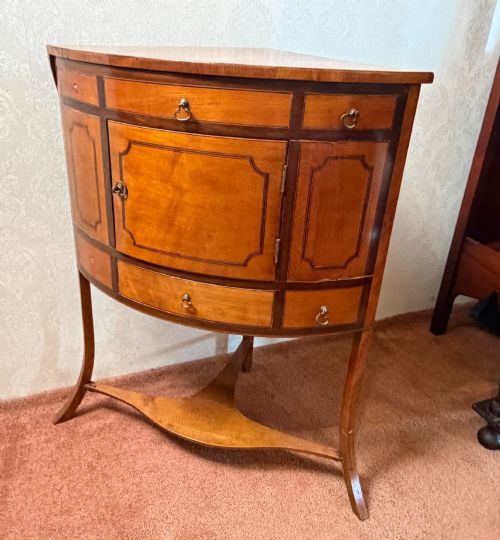
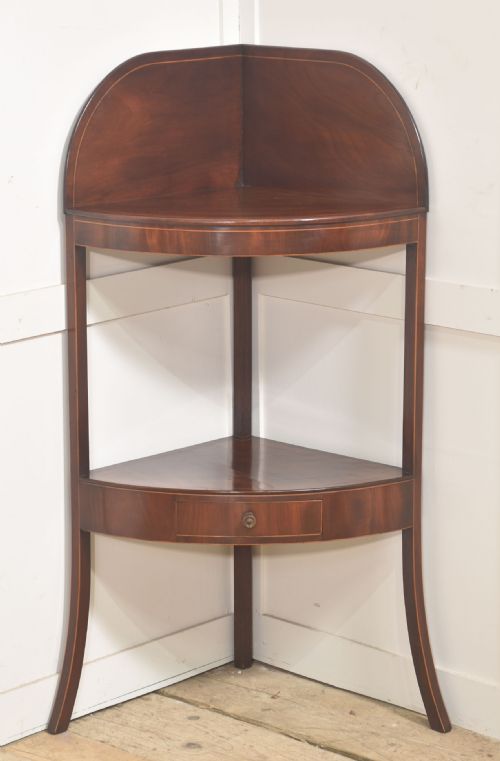
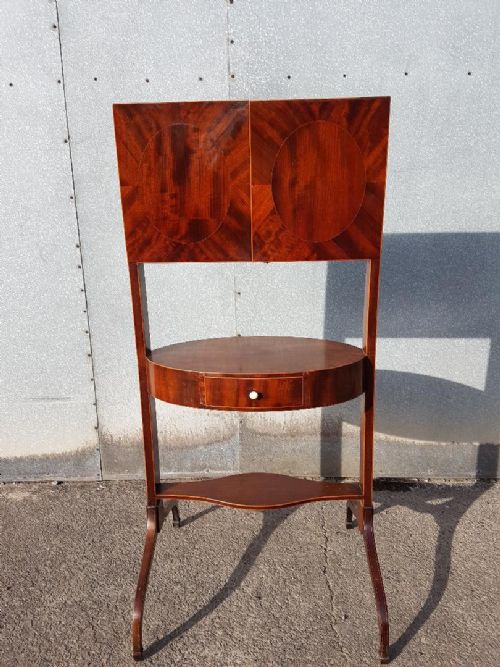
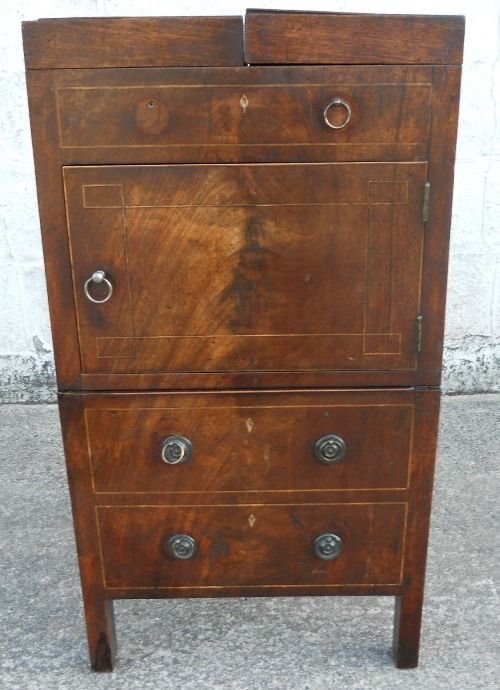
A georgian inlaid washstand is a piece of furniture designed for the bedroom or dressing room during the late eighteenth and early nineteenth centuries. The listings show forms ranging from corner washstands to freestanding gentleman's cabinets, often featuring boxwood or satinwood inlay.
Most examples found on this page date from the Georgian and Regency periods, alongside later nineteenth and early twentieth century interpretations in the George III style. Corner washstands dominate the selection, built specifically to utilise bedroom angles efficiently.
Makers adapted these pieces with folding tops, tambour doors, and integrated basins to serve daily grooming needs. The combination of mahogany with contrasting stringing defines the visual character of the standard pieces you will encounter here.
How they were made
Cabinetmakers built these pieces primarily using solid mahogany and mahogany veneers, selected for strength and deep grain colour. Structural carcass work relied on traditional timber framing to support marble tops or timber surfaces.
Decoration relied heavily on contrasting stringing and banding in boxwood and satinwood, occasionally incorporating marquetry inlay. Brass fittings such as small knobs or handles appeared on cupboard doors and drawer fronts.
Georgian Inlaid Washstand Retail Price Guide 2026
Typical asking prices for georgian inlaid washstand among the pieces listed under this phrase on Sellingantiques today, from the lower quarter to the upper quarter. They describe what is for sale here now, not the wider market.
Some gentleman's washstands include clever hidden mirrors that pop up when you least expect a morning surprise.
What varies in quality
Quality rests upon the crispness of the boxwood or satinwood inlay and the selection of figured mahogany timber for the exterior surfaces. Better examples display precise geometric stringing that follows the curved bow fronts without interruption.
The sophistication of the internal mechanism, such as folding tops or fitted basins, separates standard utility pieces from finer cabinet work. Maker attribution, demonstrated by stamps like Gillows, elevates the standing of an individual piece.
Gillows Lancaster
The Georgian Inlaid Washstand Glossary
- Washstand
- A piece of furniture designed to hold a basin, jug, and washing accessories for personal grooming.
- Corner washstand
- A triangular form specifically constructed to fit neatly into the corner of a room.
- Boxwood inlay
- Light-coloured contrasting wood inserted into the darker mahogany surface to create decorative lines and borders.
- Gentleman's washstand
- A compartmentalised cabinet intended for male grooming supplies, often featuring fitted mirrors and multiple small drawers.
- Tambour
- A sliding door made of narrow vertical strips of timber glued to a canvas backing, allowing it to curve around corners.
Georgian Inlaid Washstand: Frequently Asked Questions
What is a georgian inlaid washstand?
A georgian inlaid washstand is a timber cabinet designed for the bedroom to hold washing equipment and grooming accessories during the eighteenth and nineteenth centuries.
These pieces frequently feature mahogany construction accented with boxwood or satinwood stringing, built either as freestanding units or space-saving corner models.
How were corner washstands used?
Corner washstands were positioned in bedroom angles to save floor space while providing a stable surface for a wash basin and pitcher.
Many included upper tiers for water jugs and lower cupboards or drawers to store soaps, towels, and shaving gear out of sight.
What is the difference between Georgian and Regency examples?
Georgian pieces generally display restrained straight lines or subtle bow fronts with delicate boxwood stringing and bracket feet.
Regency examples often embrace bolder curves, richer mahogany grains, and sometimes heavier proportions influenced by classical revival styles.