


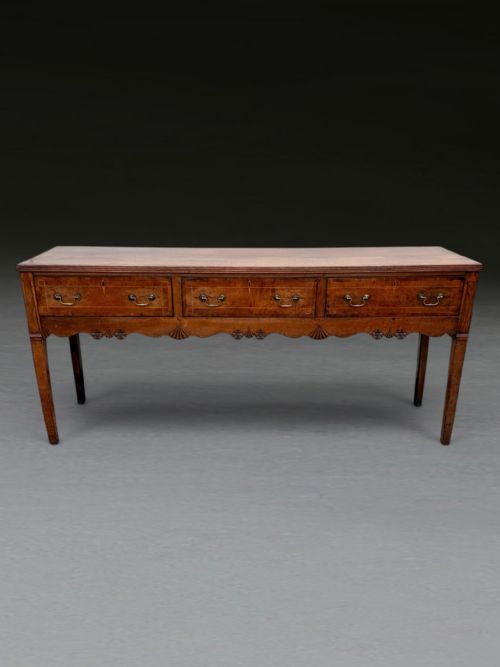
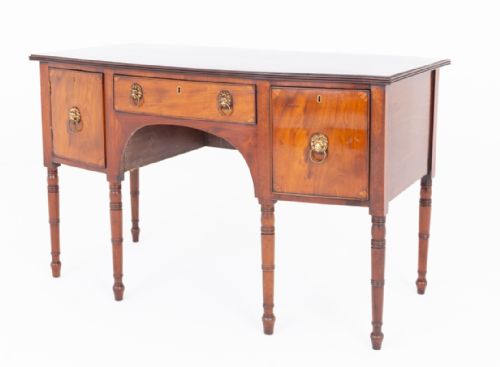
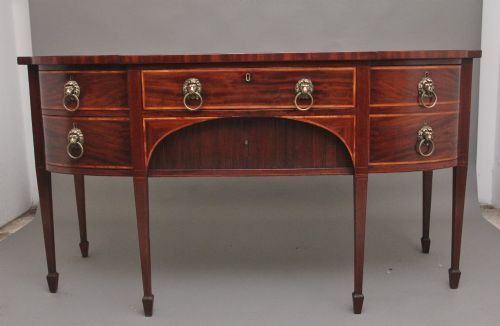
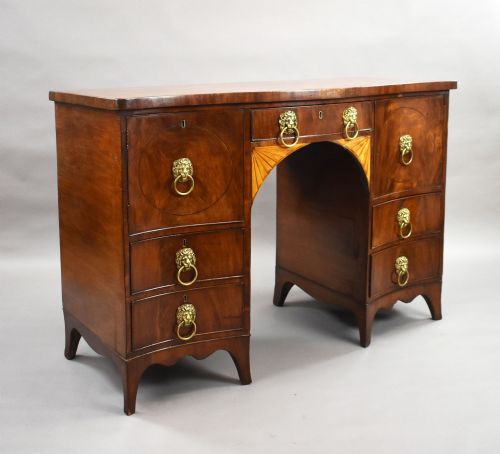





Georgian Inlaid Serving Table
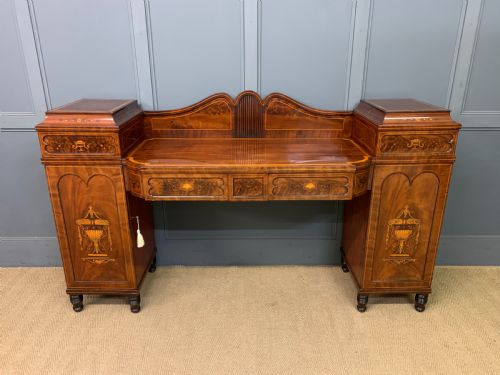
A georgian inlaid serving table provides generous dining room storage while bringing rich mahogany and delicate woodwork into the home.
Georgian Inlaid Serving Table
When you search for a georgian inlaid serving table, you encounter substantial dining furniture designed for formal entertaining during the eighteenth and nineteenth centuries. The listings here encompass related forms including sideboards, serpentine servers, and console tables from the Georgian, Regency, and Edwardian eras.
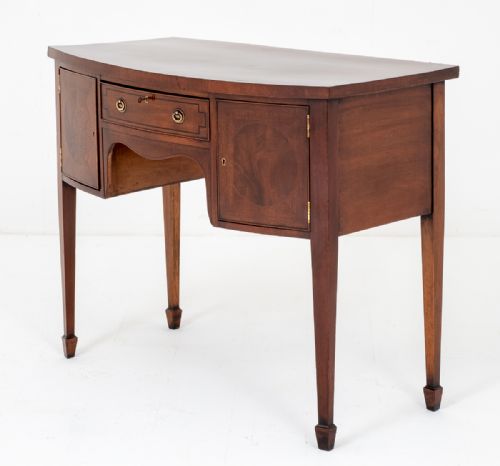
The version you are most likely to meet on this page is a mahogany sideboard or serving table featuring boxwood or satinwood inlay, often with a bow front or serpentine profile. These pieces range from authentic period examples to later revival interpretations spanning into the twentieth century.
How they were made
Cabinetmakers constructed these tables primarily from solid mahogany and oak, utilising dense hardwoods to ensure structural stability for heavy dining service. Selected flame mahogany veneers provided richly figured surfaces on drawer fronts and top panels.
Decorative detailing relied on precision woodworking techniques such as boxwood and satinwood inlay, along with ebony stringing to create sharp geometric borders. Brass hardware, including handles and occasional inlay strips, completed the construction.
Georgian Inlaid Serving Table Retail Price Guide 2026
Typical asking prices for georgian inlaid serving table among the pieces listed under this phrase on Sellingantiques today, from the lower quarter to the upper quarter. They describe what is for sale here now, not the wider market.
Current listings feature pieces spanning the Georgian, Regency, Victorian, and Edwardian periods, constructed primarily in mahogany with oak linings.
What varies in quality
The distinction between standard examples and superior pieces rests upon the crispness of the cabinetwork and the subtlety of the timber selection. Finely figured flame mahogany and intricate, precisely fitted wood inlay separate master workshops from provincial production.
Proportion and architectural balance also define the upper tier, where serpentine and bow fronts maintain smooth, uninterrupted curves. Original brass hardware and clean secondary timbers like oak further elevate an individual piece.
The Georgian Inlaid Serving Table Glossary
- Serpentine front
- A furniture front characterised by a concave central section flanked by two convex ends, or the reverse. This undulating profile requires advanced woodworking skill to execute cleanly.
- Bow front
- A convex, outwardly curved front contour popular on sideboards and serving tables. It softens the room's geometry while increasing interior storage depth.
- Satinwood inlay
- A decorative technique employing contrasting pale, golden satinwood inserted into darker primary woods. It creates bright linear patterns and geometric borders.
- Stringing
- A narrow strip of contrasting wood inlaid into channels on a furniture surface. It outlines panels, drawers, and legs with a delicate dark or light line.
- Dresser base
- A low cabinet featuring drawers and cupboards, serving a function similar to a sideboard. These pieces originate from both country workshops and formal dining rooms.
Georgian Inlaid Serving Table: Frequently Asked Questions
How were serving tables used?
These tables stood in dining rooms to hold platters, serving dishes, and silverware during large meals. They provided a staging surface for food before service.
In grand houses, servants used them to carve meats and pour drinks away from the main dining table.
How do I spot a reproduction?
Examine the secondary timbers inside drawers and beneath the top boards for modern machine tool marks. Period pieces display hand-cut joinery and aged oak or deal linings.
Check the inlay for modern glues and synthetic dyes. Authentic eighteenth-century work shows natural material shrinkage and mellowed patination.
Where should I place it?
A serving table fits naturally against a dining room wall to anchor the space and provide practical surface area. Its shallow depth also suits wide hallways and drawing rooms.
Keep the piece away from direct sunlight and heat sources to protect the mahogany veneers and delicate boxwood inlay.
What is the difference between a sideboard and a serving table?
Serving tables generally present an open frame with fewer drawers, functioning primarily as display and serving surfaces. Sideboards incorporate built-in banks of drawers and cupboards for enclosed storage.
Over time, makers blended these forms, leading overlap in how historical pieces are described.