
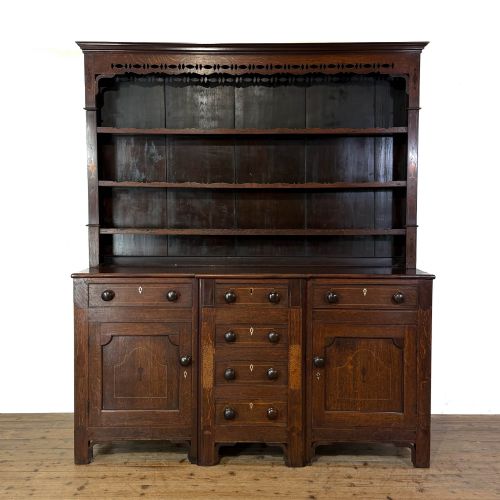
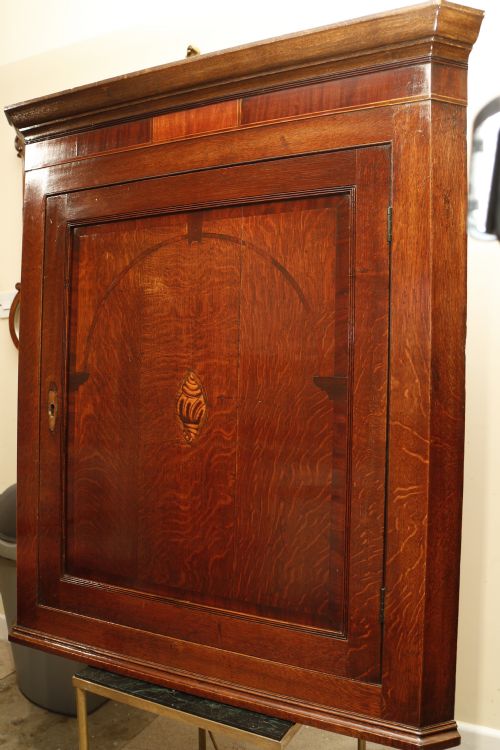


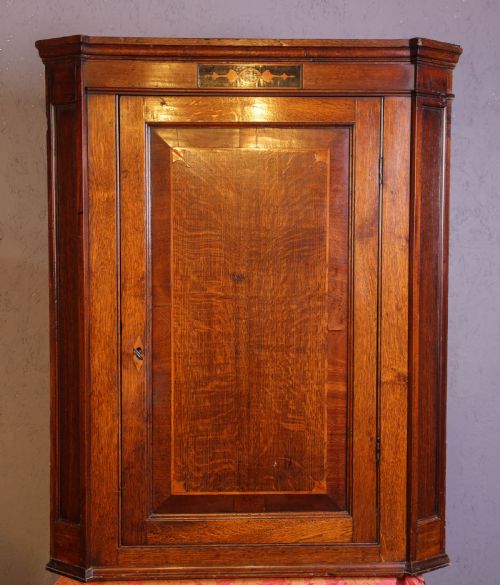


Georgian Inlaid Oak Cupboard
A georgian inlaid oak cupboard brings together robust country timber and delicate decorative detail to anchor a traditional room.
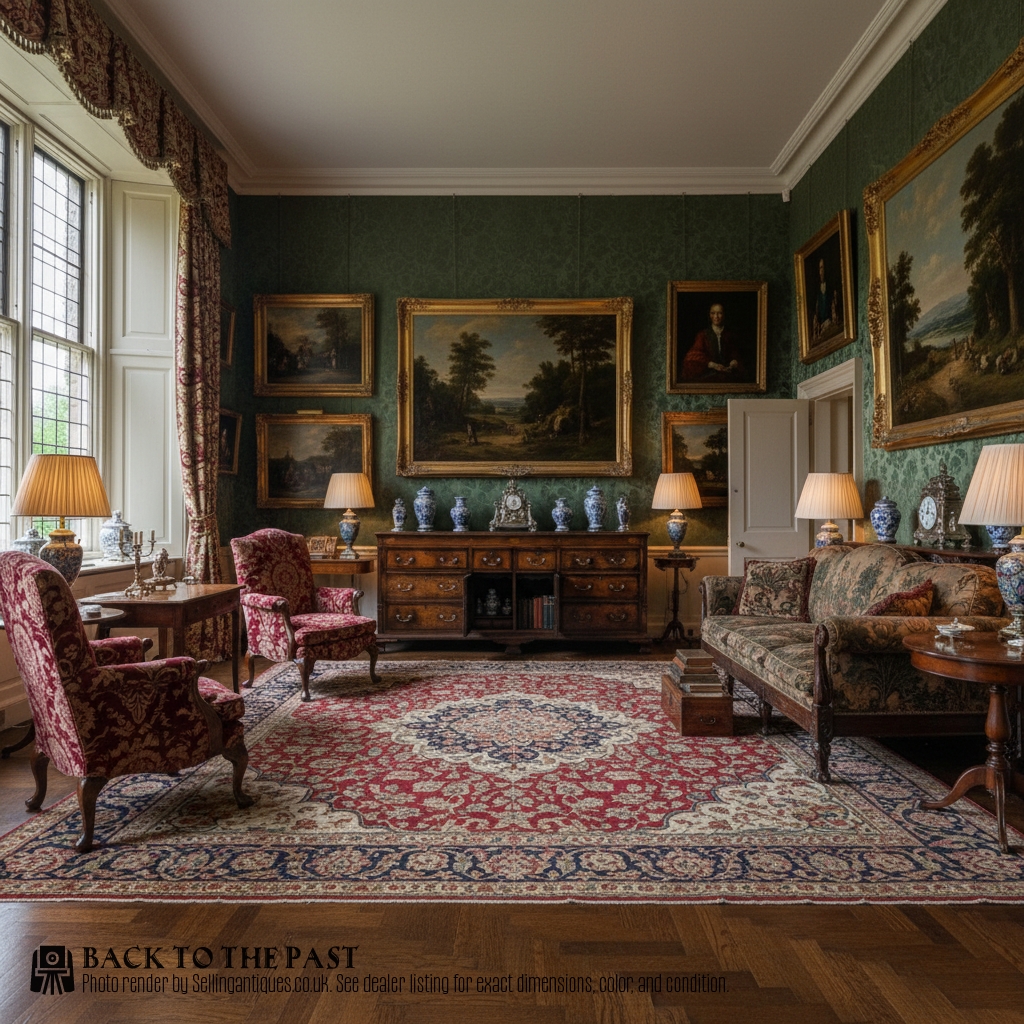
Georgian Inlaid Oak Cupboard
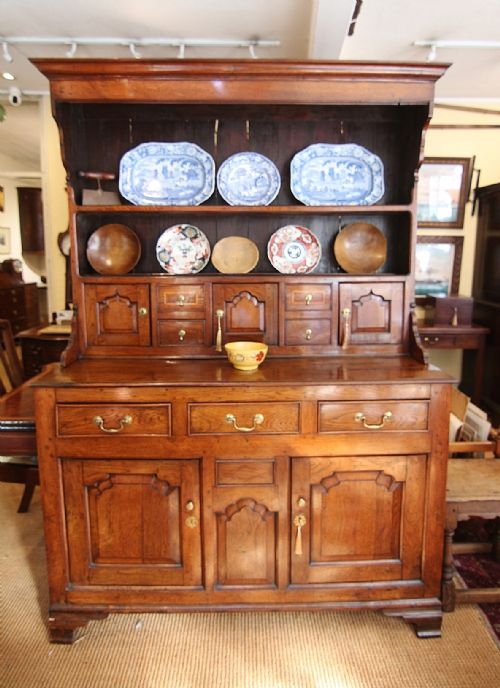
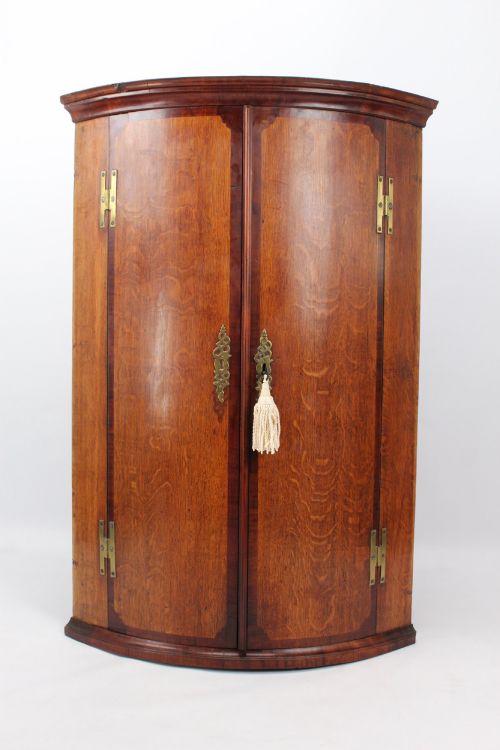
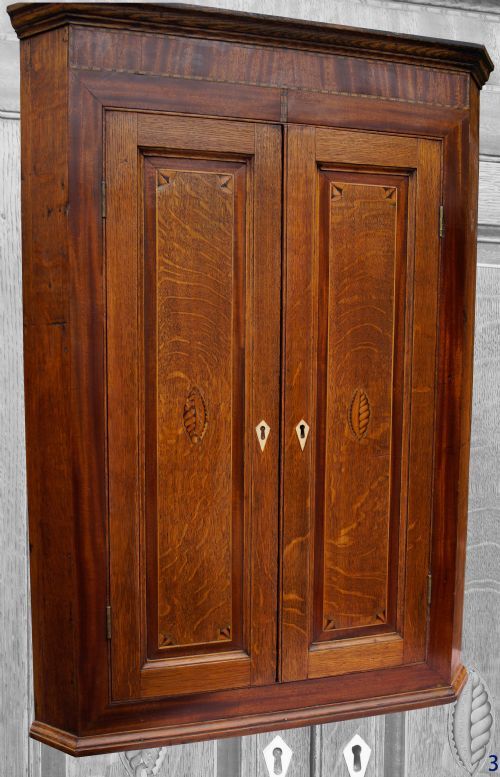
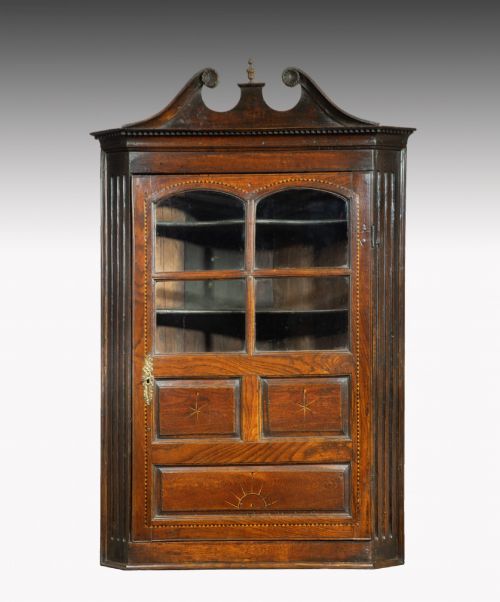
When you search for a georgian inlaid oak cupboard, you encounter a variety of practical storage forms rooted in eighteenth and nineteenth century provincial life. The selection spans wall-hanging corner cupboards, bow front cabinets, and larger press or housekeepers cupboards.
Regional pieces frequently originate from Wales and Lancashire, including dresser bases and chests on stand alongside fitted corner units. These items served daily domestic storage needs in country houses and rural properties.
The objects combine utilitarian oak construction with stylistic influences from the Georgian period, often expressed through regional vernacular traditions. Corner cupboards and wall-hanging cabinets dominate the current selection.
Materials and Technique
Makers built these pieces primarily using solid oak for structural integrity, often pairing it with mahogany crossbanding or fruitwood and burr elm for decorative contrast. Timber selection reflected local availability and the specific requirements of provincial cabinet making.
Inlay techniques such as marquetry and wood inlay ornament the primary surfaces, accompanied by brass hinges, escutcheons and glass panels. Craftspeople integrated bone details and panelled doors to enhance the visual depth of the woodwork.
One wall cupboard carries a carved date of 1763, recording a moment when George III sat on the British throne.
Craftsmanship and Proportion
The standard of a georgian inlaid oak cupboard depends upon the precision of its joinery and the integration of its decorative elements. Superior examples display balanced proportions, particularly in bow front and corner configurations where alignment is vital.
The complexity and execution of the fruitwood or mahogany inlay separate standard utility pieces from finer regional work. Well-preserved brass hardware, interior shelving arrangement, and original surface patination further distinguish higher quality items.
The Georgian Inlaid Oak Cupboard Glossary
- Crossbanding
- A strip of veneer applied to the border of a panel, running perpendicular to the grain of the central timber. This technique frames the surface and provides visual contrast.
- Marquetry
- An elaborate assembly of varied wood veneers fitted together to form decorative patterns or pictorial designs. It appears on drawer fronts and cabinet doors.
- Corner Cupboard
- A storage unit specifically designed to fit into the ninety-degree angle of a room. These were produced in both floor-standing and wall-hanging formats.
- Dresser Base
- A low sideboard fitted with drawers and cupboards, historically used for food preparation and storage in the kitchen or dining area.
- Escutcheon
- A protective plate surrounding a keyhole, usually made of brass to prevent wear on the surrounding oak timber.
Georgian Inlaid Oak Cupboard: Frequently Asked Questions
Where were these cupboards placed originally?
These cabinets found practical placement in domestic spaces where floor area required careful management, particularly in dining rooms, parlours and kitchens. Corner units utilised dead space effectively while keeping everyday items close to hand.
Larger press and housekeepers cupboards stood against primary walls to store linens, provisions and tableware. Their sturdy construction suited the heavy demands of rural household administration.
How do I identify a regional style?
Regional characteristics emerge through specific timber combinations, local construction methods and distinct inlay motifs. Welsh and Lancashire pieces often display individual joinery traits that separate them from standard English provincial work.
Cabinet makers in different counties utilised local fruitwoods alongside oak, creating variations in colour and decorative emphasis that point to specific workshops.
What is the difference between hanging and standing cupboards?
Wall-hanging cupboards feature brackets or fixing points designed to secure the cabinet directly to room wall structures. They save floor space and usually occupy corners.
Standing cupboards, including dresser bases and chests on stand, rest directly on the floor. They offer greater internal volume and often incorporate working surfaces on top.
How should I care for oak furniture?
Oak requires stable environmental conditions away from direct heat sources and dramatic humidity fluctuations. This prevents timber movement, warping and stress on historical joints.
Periodic application of suitable wax polish preserves the natural sheen of the wood and nourishes the surface without building up excessive residue over the inlay.