

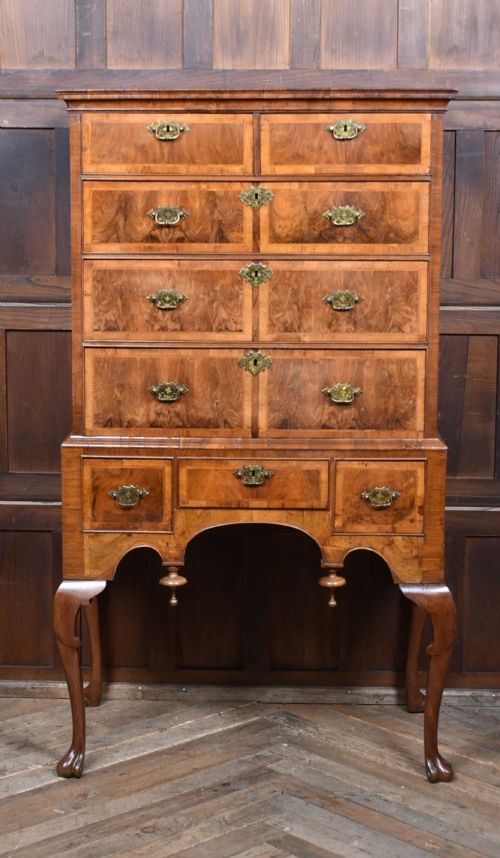
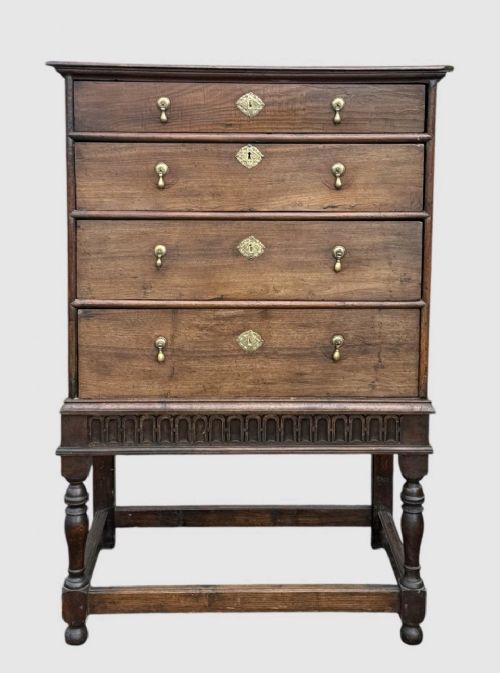
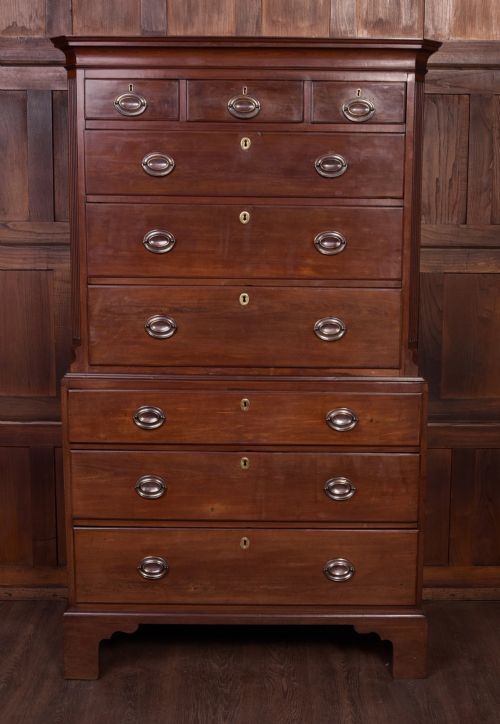
Georgian Highboy Cabinet
A georgian highboy cabinet brings monumental presence to a room, stacking storage high in rich mahogany, walnut or oak.
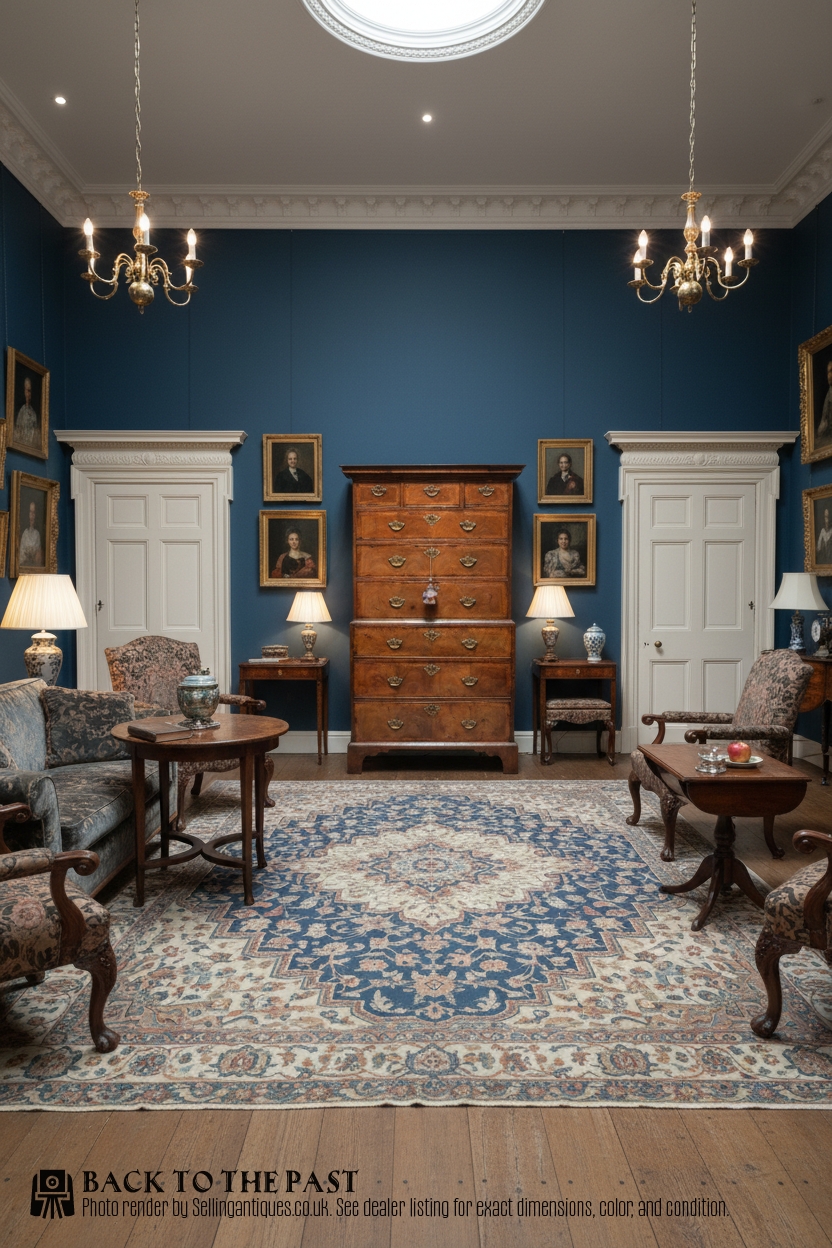
Georgian Highboy Cabinet
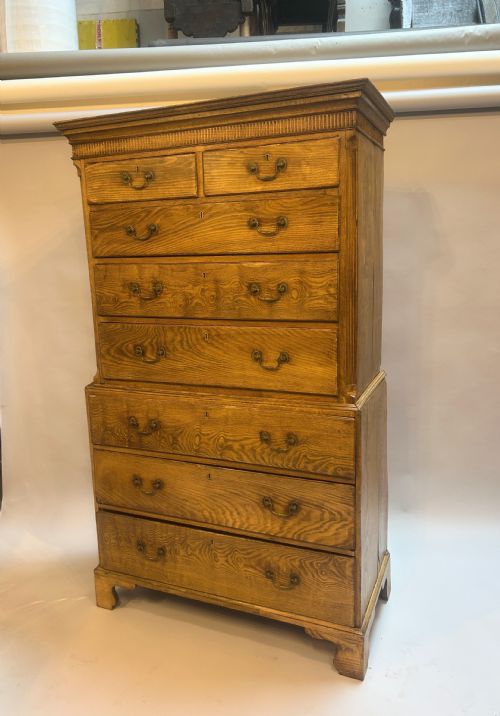
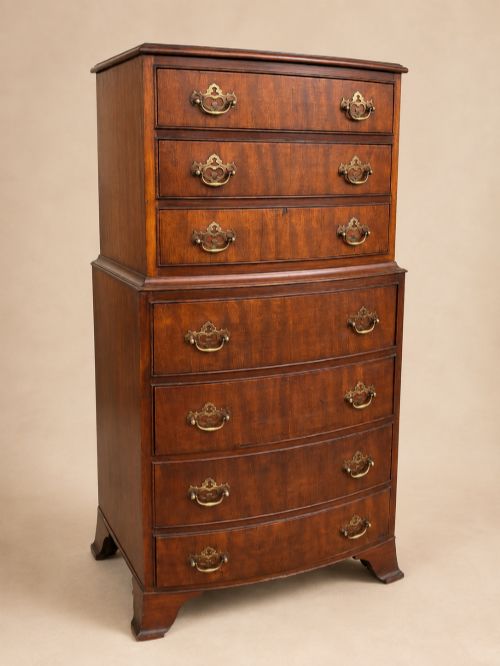
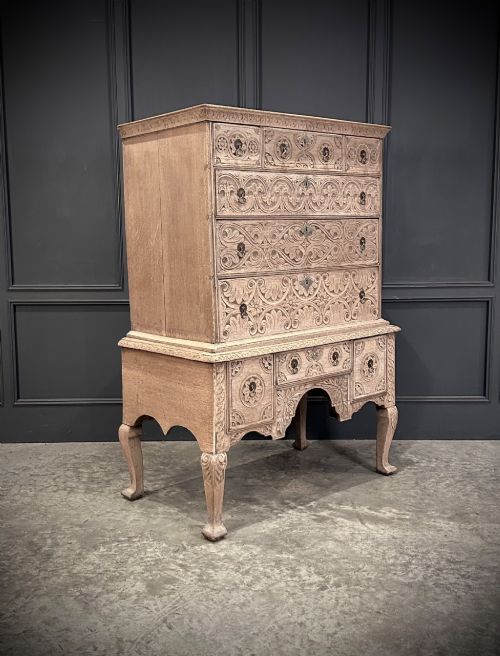
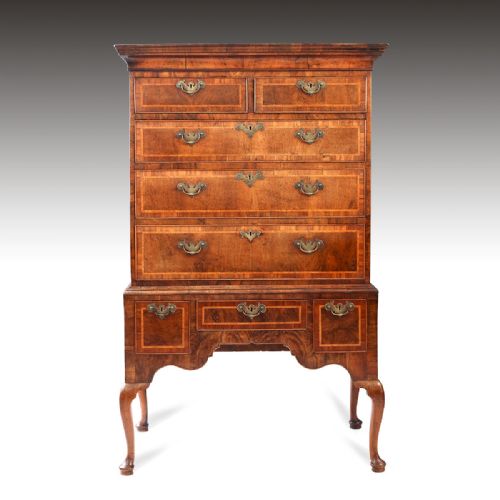
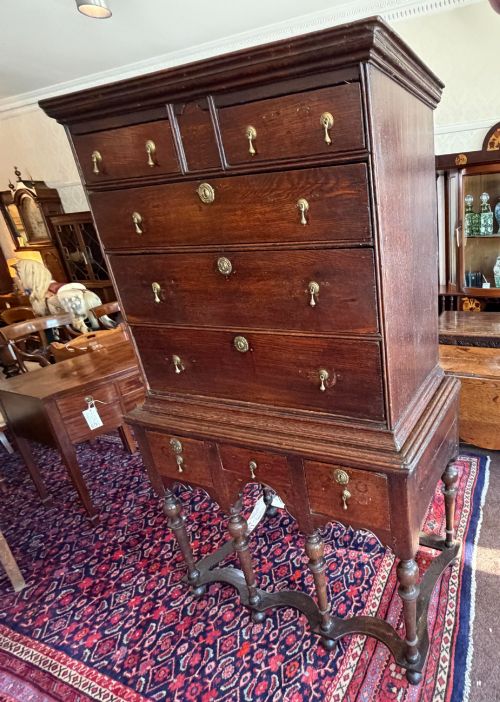
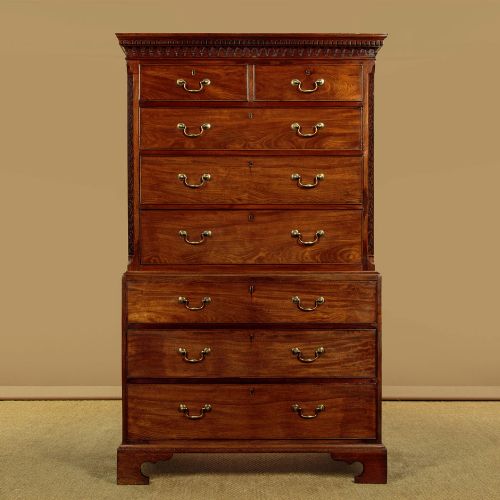
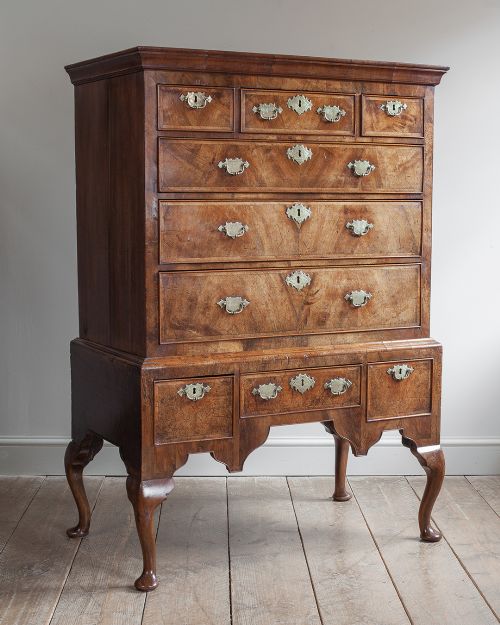
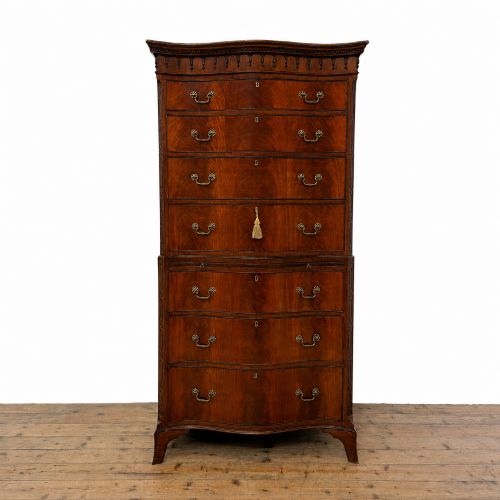
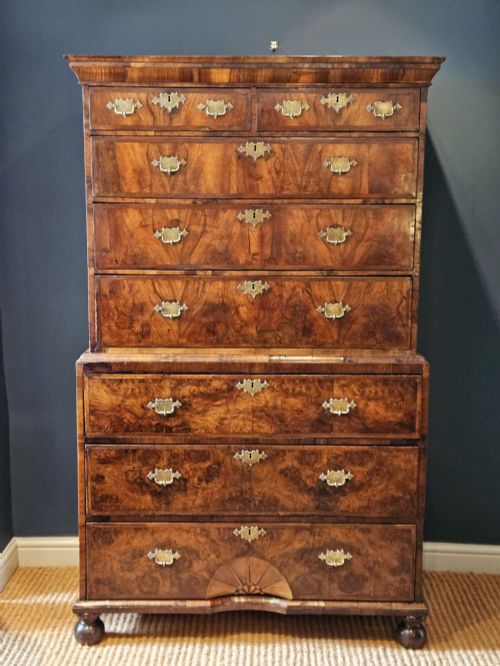
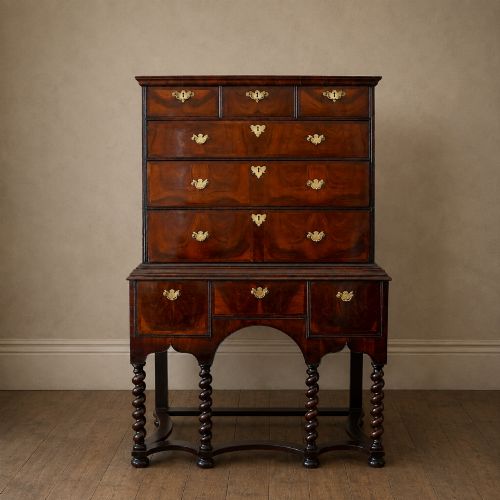
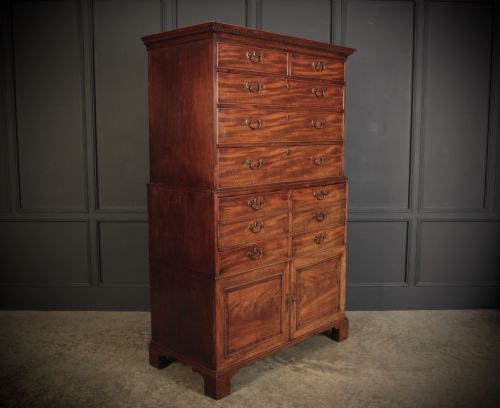
A georgian highboy cabinet combines a chest of drawers sitting upon a dedicated lower stand or a larger chest on chest structure. These pieces span periods from the early eighteenth century through the reign of George III, offering tall vertical storage with distinct lower legs or multiple stacked drawer tiers.
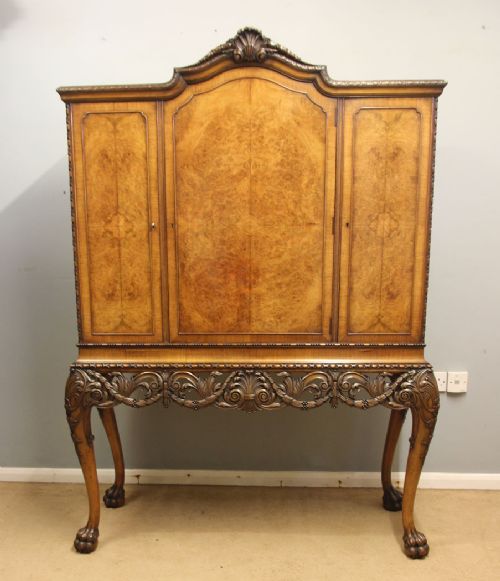
The versions most frequently met on this page include walnut and mahogany examples from the eighteenth century, alongside later revivals in oak and burr walnut. Forms range from compact chests on stands with cabriole legs to grand tallboys featuring secretaire compartments and dentil cornices.
Materials and construction methods
Cabinetmakers constructed these pieces primarily using solid timbers and fine veneers of mahogany, walnut, and oak over secondary woods like pine. Craftsmen applied burr walnut veneers and boxwood inlay to create rich figured surfaces on drawer fronts and upper cornices.
Joinery relied on tight dovetail construction for drawer boxes and mortise and tenon frames for the supporting stands. Brass drop handles, batwing backplates, and escutcheons completed the hardware mounted onto the drawer faces.
Georgian Highboy Cabinet Retail Price Guide 2026
Typical asking prices for georgian highboy cabinet among the pieces listed under this phrase on Sellingantiques today, from the lower quarter to the upper quarter. They describe what is for sale here now, not the wider market.
Listings feature walnut, mahogany, oak, and burr walnut timbers across eighteenth-century and revival periods.
Distinctions in quality and execution
The finest examples display careful timber selection, matching grain patterns across successive drawer fronts and upper facades. Superior pieces preserve original brass hardware, stable patination, and uncompromised internal drawer linings without extensive timber replacement.
Proportion and structural harmony set masterworks apart from simpler utilitarian pieces, particularly in the delicate curve of cabriole legs on stands or the crisp execution of blind fretwork and cornicing on tall chests.
The Georgian Highboy Cabinet Glossary
- Tallboy
- A tall chest of drawers made in two sections, typically stacking a smaller set of drawers upon a larger base chest.
- Chest on Stand
- A drawer cabinet elevated on a distinct frame with legs, often featuring cabriole supports typical of earlier periods.
- Walnut Veneer
- Thin slices of decorative walnut timber applied over a secondary wood foundation to produce highly figured geometric patterns.
- Secretaire
- A specialised drawer that folds down to reveal a writing surface fitted with small internal compartments and pigeonholes.
- Cornice
- The ornamental moulded projection crowning the top section of a tall cabinet or chest on chest.
Georgian Highboy Cabinet: Frequently Asked Questions
What is a highboy cabinet?
A highboy cabinet is a tall storage furniture piece composed of multiple stacked drawers, often split into an upper and lower section or elevated on a frame with legs.
These pieces provide vertical storage capacity while maintaining a narrow footprint, making them suitable for bedrooms and dressing rooms.
How do I date a Georgian cabinet?
Dating relies on observing timber choices, hardware styles, structural joinery, and the overarching design period from the early walnut era through the later mahogany reigns.
Earlier pieces often feature walnut veneers and cabriole legs on stands, whereas later Georgian examples lean toward solid mahogany, bracket feet, and classical cornice details.
Are chest on chest cabinets secure?
Chest on chest cabinets divide into two separate modular sections to facilitate transport, resting the upper case securely upon the lower chest.
This two-part construction made moving heavy timber furniture up staircases feasible for historical households and simplifies relocation today.