




Georgian Hearth Set
A georgian hearth set brings together steel, brass, and iron to tend a coal or wood fire with proper weight and balance.
Georgian Hearth Set
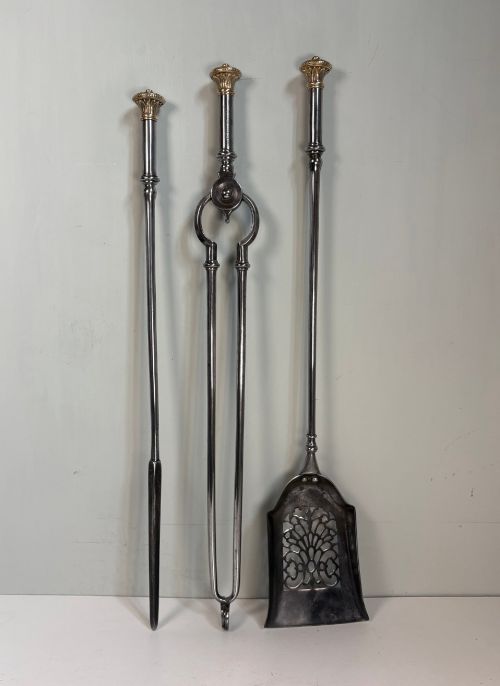
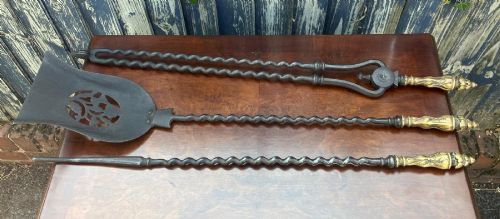
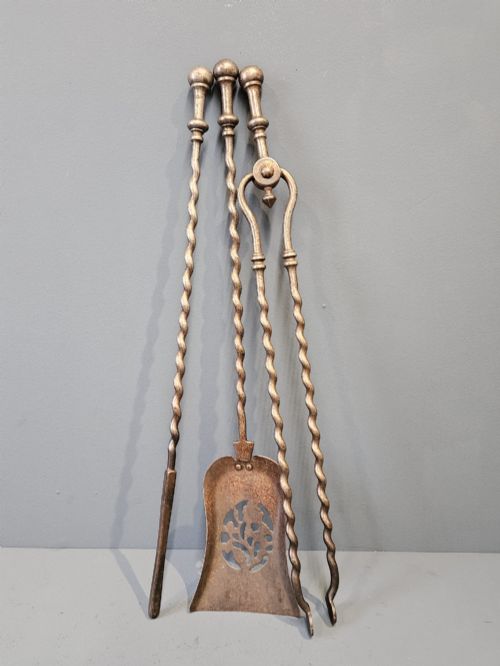
A georgian hearth set gathers the essential implements required to manage an open grate, most commonly comprising tongs, a shovel, and a poker. You will encounter these groupings formed primarily during the Georgian, Regency, and early nineteenth-century periods, often accompanied by associated fireside accessories.
The objects take various physical forms across the listings, ranging from polished steel companion sets to robust brass suites and cast iron fire baskets. Many surviving examples date from the George III and George IV eras, reflecting the domestic priorities of period drawing rooms and parlours.
While some configurations remain strictly focused on the core three-piece fire iron arrangement, other related kitchenware and domestic metalware occasionally appear within the broader category. Buyers seeking an authentic period interior gravitate towards these matched iron and brass tools for daily use or display beside the hearth.
Materials and construction
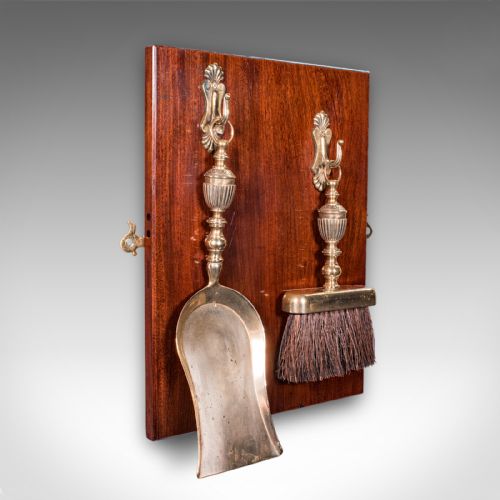
Makers utilised durable metals such as steel, wrought iron, and cast iron to withstand the intense heat of the coal fire. Brass and gilt brass elements frequently provided decorative contrast on handles, finials, and mounts.
Techniques relied heavily on forging and polishing, with burnished steel requiring skilled labour to achieve a smooth, reflective finish. Brass components were often cast and turned before being assembled with the main iron shafts.
Georgian Hearth Set Retail Price Guide 2026
Typical asking prices for georgian hearth set among the pieces listed under this phrase on Sellingantiques today, from the lower quarter to the upper quarter. They describe what is for sale here now, not the wider market.
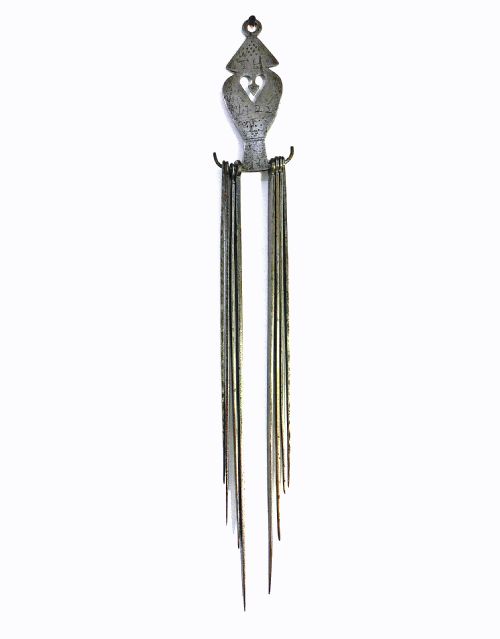
Among the heavy iron and steel, a lone eighteenth-century meat skewer set complete with its original engraved holder makes an unexpected appearance.
Distinctions in quality
Quality reveals itself in the substantial weight of the metal and the integrity of the joins between handles and shafts. Superior sets demonstrate careful balance and clean proportions across each individual implement.
The refinement of the surface finish distinguishes standard utilitarian equipment from finer parlour pieces. Finely turned brass details and evenly polished steel surfaces indicate greater attention from the maker.
The Georgian Hearth Set Glossary
- Fire irons
- The collective term for the poker, shovel, and tongs used to tend a domestic fire. These implements were typically displayed upright in a stand or fender.
- Polished steel
- A metal finish achieved through abrasive smoothing to create a bright, reflective surface. This treatment was common on finer Regency and Georgian companion sets.
- Gilt brass
- Brass that has been treated with a thin layer of gold or gold-coloured wash to enhance its appearance. It appears on the decorative mounts and handles of select fire tools.
- Cast iron
- Iron poured into a mould to form solid shapes and decorative components. It provides durability and heat resistance for grates and heavy hearth furniture.
- Wrought iron
- Iron heated and shaped with hammers by a blacksmith. This material provides the structural strength needed for long fire tools.
Georgian Hearth Set: Frequently Asked Questions
What is included in a georgian hearth set?
A standard set generally contains a poker, a shovel, and a pair of tongs designed to manage coal or wood on an open fire.
Additional pieces such as brushes or accompanying stands occasionally form part of larger companion arrangements.
How do I date a georgian hearth set?
Dating relies on stylistic clues, manufacturing techniques, and the types of metals utilised across the pieces. Forms from the George III and Regency periods often feature specific handle turns and material combinations.
Comparing the construction methods of the shafts and joins helps distinguish eighteenth-century work from later nineteenth-century revivals.
Should I use antique fire tools?
Many buyers choose to use sturdy steel and iron tools for their intended purpose in an active fireplace. Gentle use maintains their character without causing undue modern damage.
Finer brass or gilt items are sometimes reserved strictly for decorative display to preserve their surface finish.
Why mix brass and steel on tools?
The combination offered both durability and visual contrast for the formal drawing room hearth. Steel provided the strength needed for the active part of the tool, while brass added brightness.
This pairing became particularly popular during the Regency period when decorative metalwork gained prominence.