
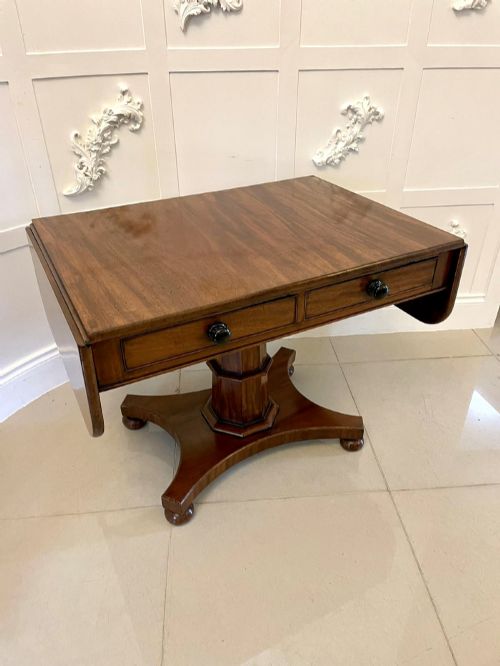
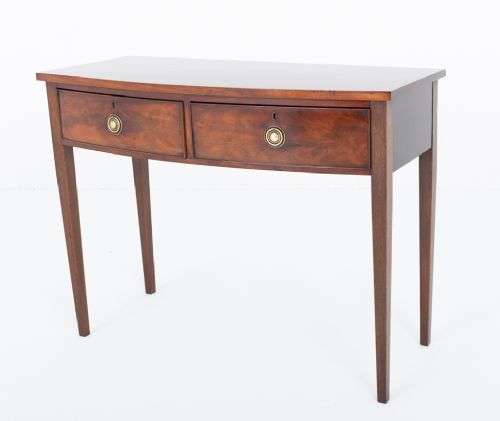
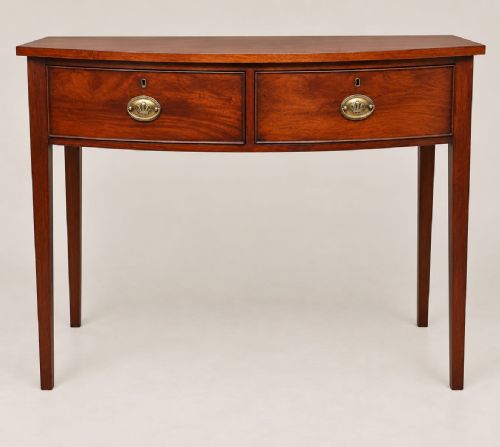
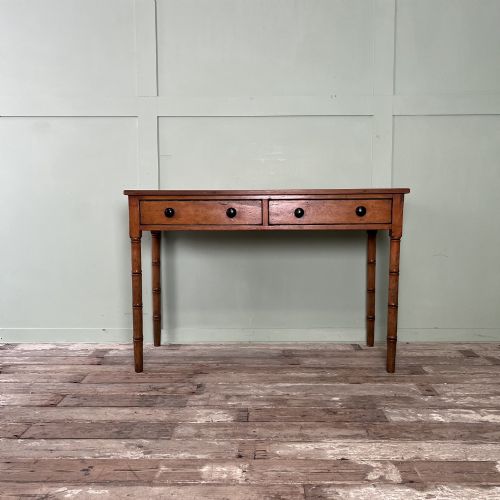
Georgian Hall Console Table
When you search for a georgian hall console table, you are looking for architectural proportion and solid timber built to stand against a passage wall.
Georgian Hall Console Table
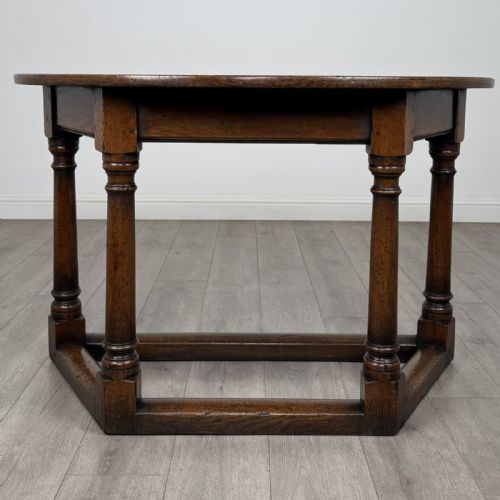
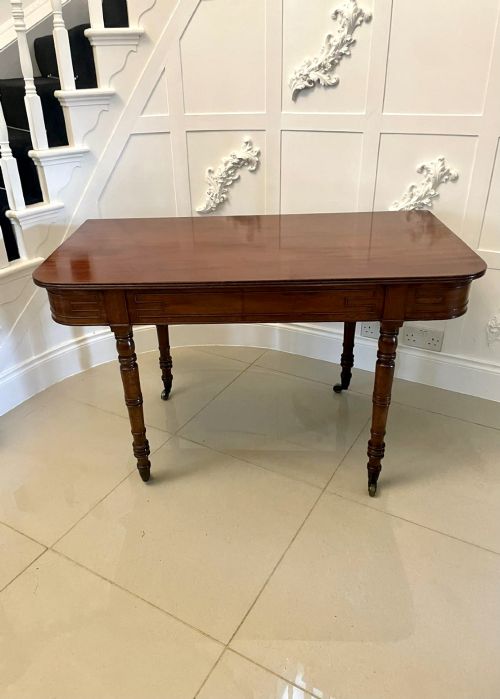
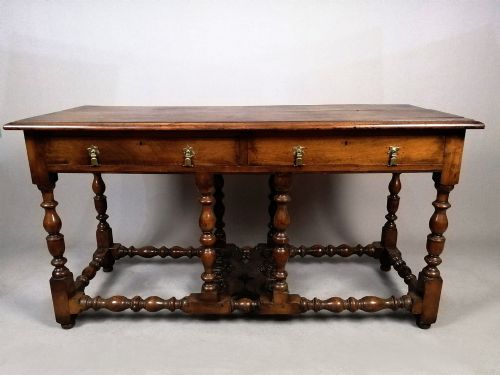
A georgian hall console table serves as a formal or country house surface designed to occupy narrow entrance spaces without blocking the passageway.
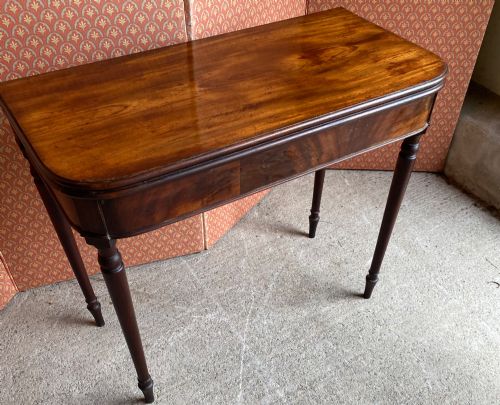
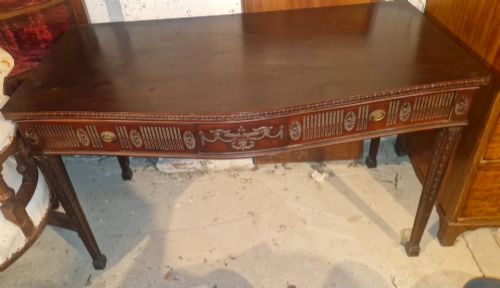
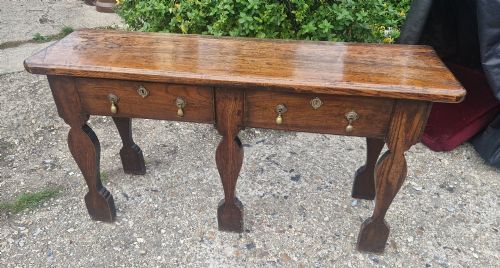
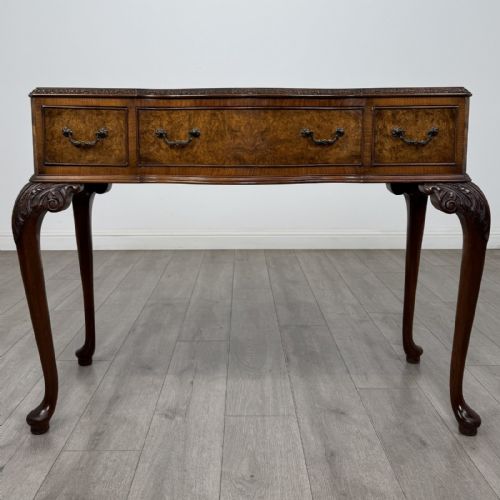
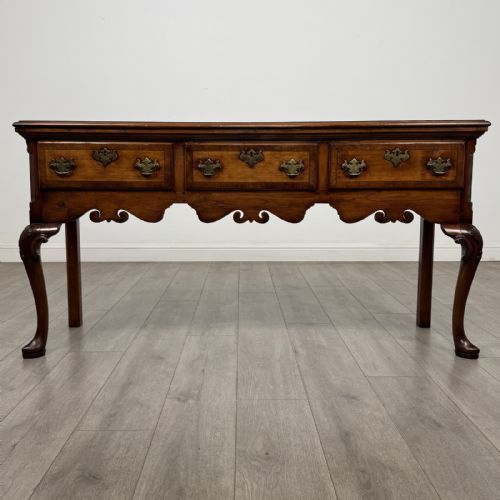
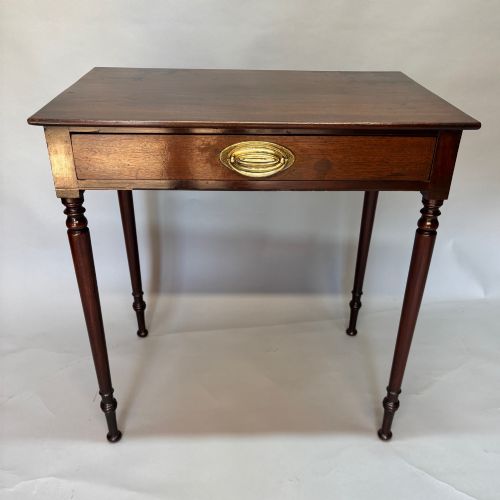
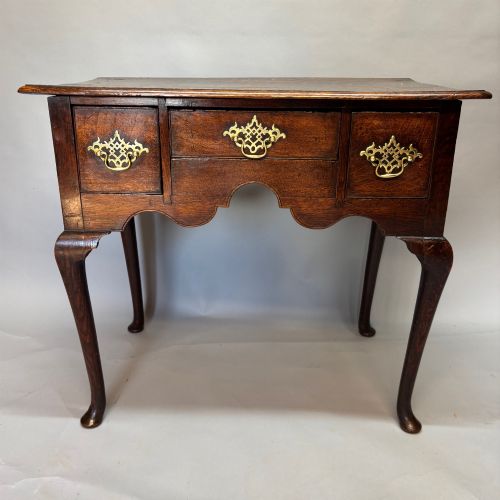
The pieces appearing on this page span the 18th century, the Regency period, and later revivals, taking forms such as demi-lune shapes, straight-fronted serving tables, and lowboys.
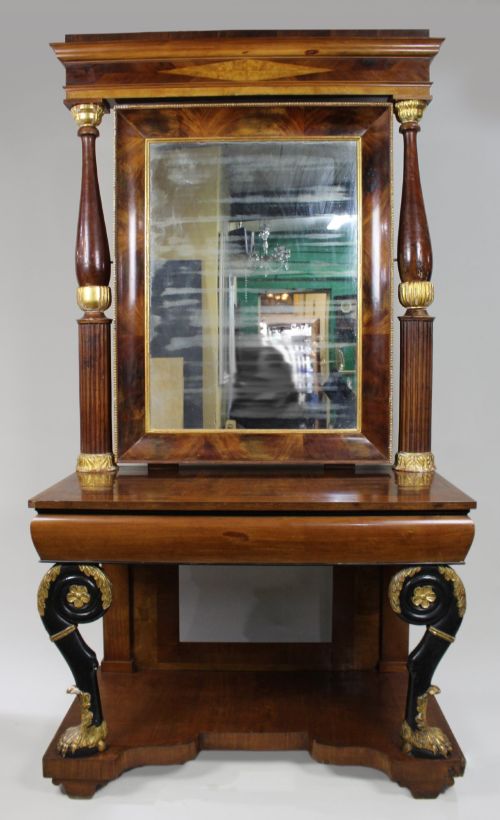
Makers often built these tables in pairs to balance grand architectural interiors, utilising mahogany, oak, and walnut to create a striking first impression for visitors.
Materials and Construction
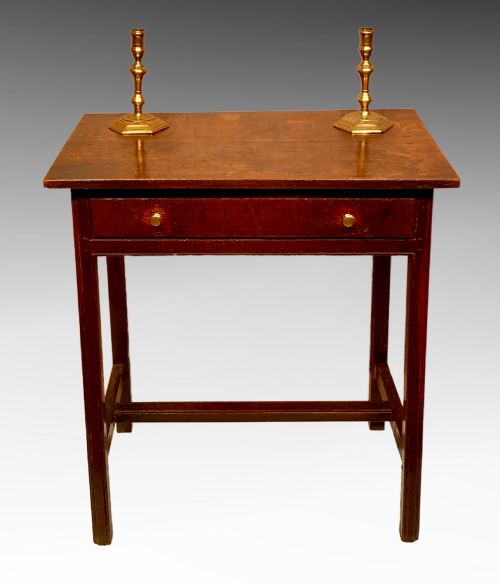
Cabinetmakers relied heavily on dense tropical hardwoods like figured and burr mahogany, alongside domestic timbers such as oak, elm, and fruitwood for foundational structures.
Surfaces frequently display book-matched wood veneers, delicate inlay work, or marble and painted finishes, supported by stable frame joinery and occasionally cabriole legs.
Listings feature oak, mahogany, walnut, and elm spanning the Georgian period, the 19th century, and later revivals.
Assessing Quality and Craftsmanship
The distinction between ordinary utility pieces and finer examples rests on the selection of timber figure, such as highly figured mahogany or burr walnut, and the crispness of carved details.
Original proportions and untouched surface patination separate authentic 18th-century forms from later reproductions, whilst symmetrical pairs command greater architectural harmony.
W.Williamson & Sons
The Georgian Hall Console Table Glossary
- Demi-lune
- A half-moon shape popular for console tables designed to sit flat against a wall. This profile allowed tables to project minimally into narrow hallways.
- Lowboy
- A small oak or walnut table featuring one or more drawers, often utilised as a side table or dressing surface in early periods.
- Veneer
- A thin layer of highly figured wood applied over a secondary timber base to create a decorative surface pattern.
- Cabriole leg
- A furniture leg that curves outward in a convex swell and tapers inward to a foot, typical of earlier Georgian design.
- Serpentine
- A gently undulating front edge curving outward at the centre and inward at the sides, adding movement to case pieces.
Georgian Hall Console Table: Frequently Asked Questions
Where did people place these tables?
These tables stood primarily in entrance halls, corridors, and reception rooms to hold lamps, letters, or decorative objects.
Their shallow depth ensured they remained out of the main pathway while providing a formal surface for guests to see.
How do I distinguish oak from mahogany pieces?
Oak furniture typically dates from earlier country house traditions, displaying visible grain patterns and a warm, golden-brown hue.
Mahogany became dominant later in the 18th century, offering a dense, reddish-brown tone suitable for finer urban cabinetmaking.
Can I use a console table as a desk?
Many surviving forms incorporate single or multiple drawers beneath the top surface, making them suitable for light writing tasks.
Buyers often select these versatile tables to function as compact writing desks in modern studies or bedrooms.
What is a demi-lune shape?
A demi-lune shape forms a half-circle, allowing the flat back edge to sit flush against a hallway wall.
This specific geometry maximises surface area while maintaining a narrow footprint in restricted spaces.