



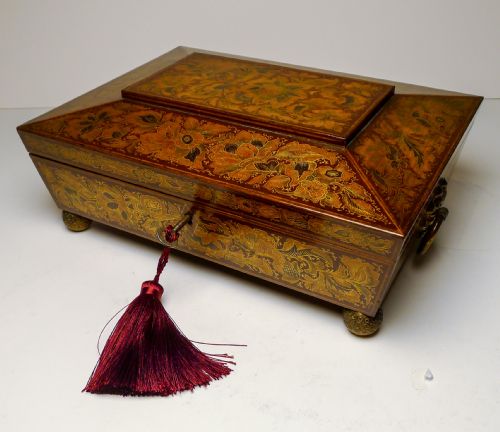

Georgian Gold Box
A georgian gold box carries personal tokens, snuff or scents in precious metals and polished tortoiseshell.
Georgian Gold Box
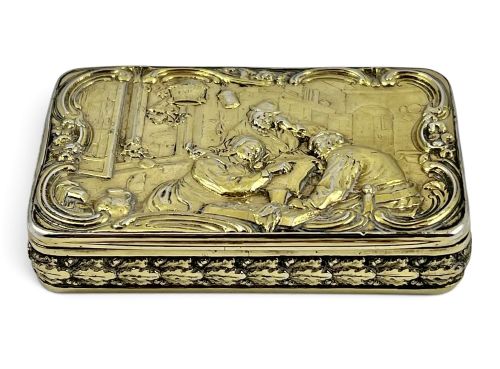
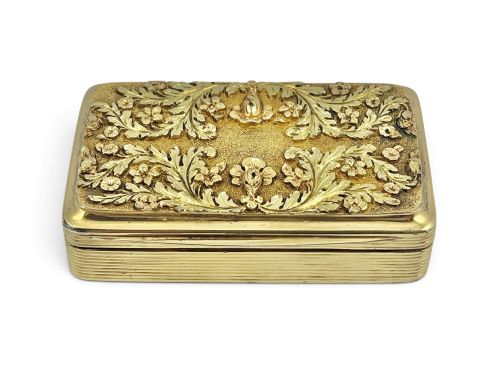
A georgian gold box typically appears as a compact container designed for snuff, vinaigrette or personal keepsakes. The selection spans the Georgian, Regency and 18th Century periods, incorporating gold, silver-gilt, tortoiseshell and lacquer.
Makers shaped these objects into book forms, oval receptacles and novelty figures alongside flat pocket containers. The items originate from English, Scottish and continental workshops dating from the late 18th century through to the early decades of the 19th century.
Collectors encounter snuff boxes and vinaigrettes most frequently on this page, often paired with decorative panels, agate or engraved scenes. Desk sets and work tables occasionally join the smaller pocket pieces.
Materials and Techniques
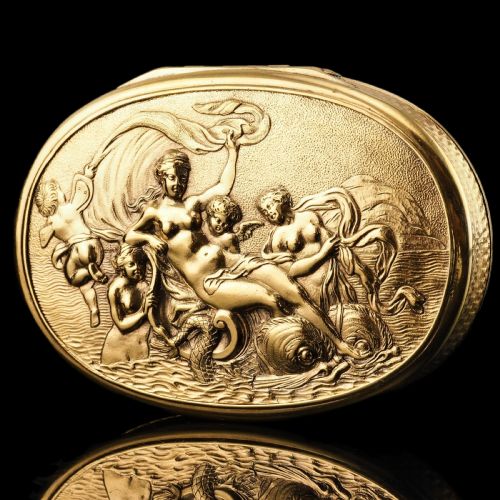
Goldsmiths utilised 18ct gold, vari-coloured gold and silver-gilt to construct the rigid bodies of these containers. Surface decoration relied on engine-turning, repoussé motifs and intricate engraving.
Pique inlay, tortoiseshell, horn and lacquer provided alternative exterior surfaces for boxes produced during the Regency and Georgian eras. Artisans applied gold wire and delicate metal points into shell bases to create patterned lids.
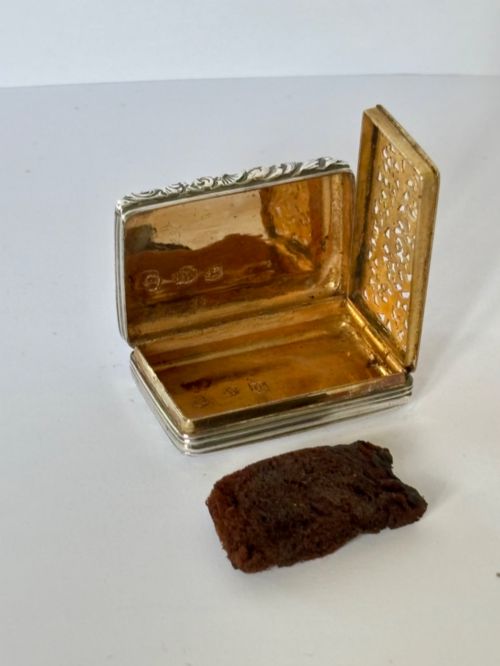
Perforated internal grilles distinguished vinaigrettes from standard snuff containers, allowing the release of scented sponges. Hinge placement and precise closure mechanisms required skilled metalworking to secure the contents.
Georgian Gold Box Retail Price Guide 2026
Typical asking prices for georgian gold box among the pieces listed under this phrase on Sellingantiques today, from the lower quarter to the upper quarter. They describe what is for sale here now, not the wider market.
Fish swim across metalwork surfaces as articulated silver-gilt vinaigrettes designed to wiggle in the palm.
Evaluating Craftsmanship
The distinction between standard output and exceptional work lies in the sharpness of the chasing and the weight of the metal utilised. Engraved scenes of mythological figures or royal presentation inscriptions elevate the historical standing of a piece.
The precision of the hinge mechanism and the exactness of the lid closure demonstrate the original maker's skill. Retained original elements, such as fitted leather cases or internal sponge components, complete the integrity of the surviving object.
Jacob Amyand·Giles Loyer·Nathaniel Mills·Alexander James Strachan·Charles Rawlings·Edward Farrell·William Parker
The Georgian Gold Box Glossary
- Vinaigrette
- A small ornamental box containing a sponge soaked in aromatic vinegar. These containers feature hinged pierced grilles inside the lid.
- Pique
- A method of decorating tortoiseshell or ivory by inlaying tiny gold or silver pins and strips. Artisans heated the metal points before pressing them into the softened shell surface.
- Engine-turning
- A mechanical technique for producing intricate geometric patterns on metal surfaces. The process utilises a lathe to engrave precise regular lines.
- Silver-gilt
- Silver that has been coated with a thin layer of gold on its surface. This treatment provides the appearance of solid gold while utilising a silver base.
- Chinoiserie
- A European artistic style reflecting Chinese motifs and decorative techniques. Artisans applied these designs to lacquered boxes and penwork items.
Georgian Gold Box: Frequently Asked Questions
What is a georgian gold box used for?
These containers held dry snuff for inhalation or aromatic vinegar contained within a soaked sponge for refreshment.
Owners also utilised smaller receptacles for dental toothpicks, sewing needles or personal keepsakes.
What materials are common in these boxes?
Makers constructed the bodies primarily from 18ct gold, silver-gilt and sterling silver.
Exteriors frequently incorporate tortoiseshell, mother of pearl, agate panels or painted enamel scenes.
How should I care for tortoiseshell?
Keep tortoiseshell pieces away from direct sunlight and extreme heat to prevent warping or cracking.
Clean the surface gently with a dry or slightly damp soft cloth without harsh chemical polishes.