
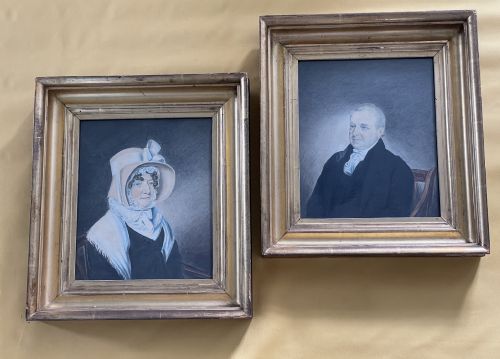
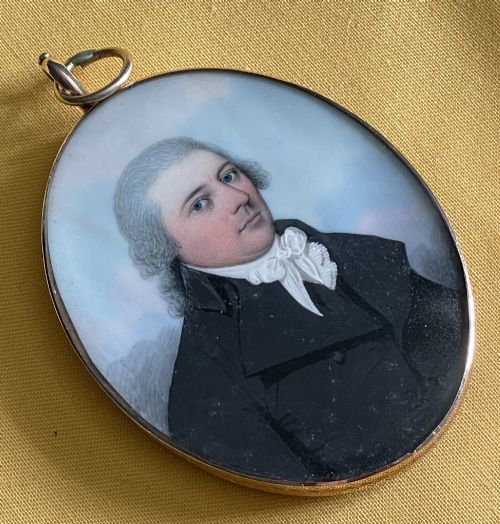


Georgian Gentleman Watercolour Painting
A georgian gentleman watercolour painting captures the quiet dignity of past eras through delicate brushwork on paper and ivory.
Georgian Gentleman Watercolour Painting
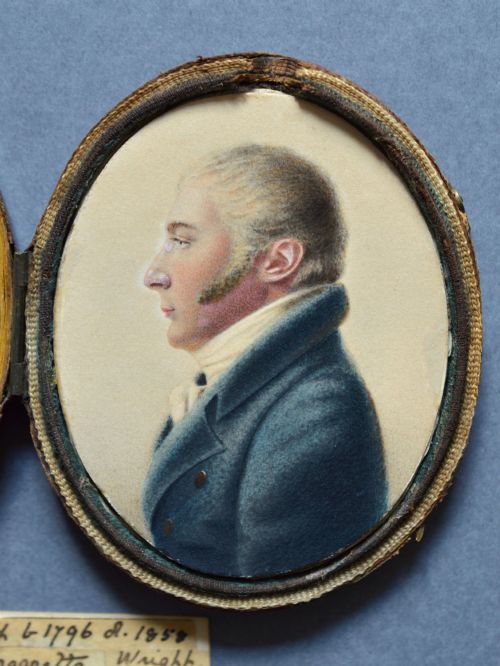
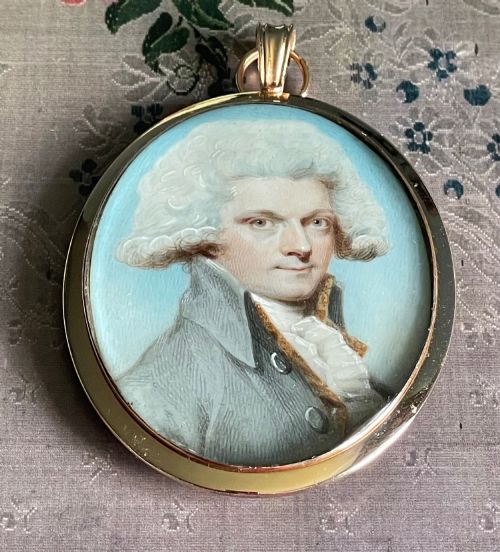
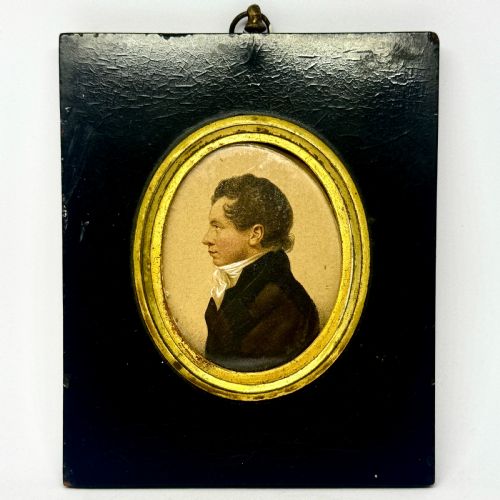
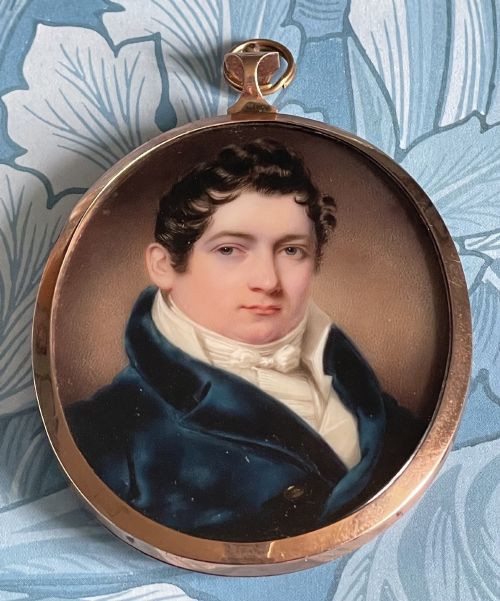
A georgian gentleman watercolour painting comprises small-scale portrait miniatures and framed works created during the eighteenth and nineteenth centuries. You will frequently encounter intimate portrait miniatures painted on ivory or paper, often housed in protective frames or gilt metal stands.
The pieces on this page span the Georgian and Regency periods through to early Victorian times, reflecting changing fashions in male dress and portraiture. These works range from formal likenesses by named miniaturists to naive folk art depictions of country gentlemen.
Materials and techniques
Makers utilised subtle washes and stippling techniques to render flesh tones, fabrics, and hair textures in miniature scale. The support material largely determined the method, with ivory providing a luminous ground that enhanced the pigment.
The listings feature works executed in watercolour on both paper and ivory across the eighteenth and nineteenth centuries.
Evaluating quality and execution
The distinction between standard works and exceptional pieces lies in the precision of the facial likeness and the psychological depth of the sitter. Master painters captured character and expression with immense economy of line, whereas lesser works remain stiff and formulaic.
Condition of the delicate paper or ivory surface and the originality of the contemporary frame significantly influence the standing of a piece. Well-preserved works retain their original pigment saturation without fading or water damage.
Charles Shirreff·John C D Engleheart·Frederick Buck·George Engleheart·Samuel Cotes·Diana Hill·AE Chalon·John Barry·Thomas John Horsley·J F Marie Huet Villiers·Francis Wheatley·George Hargreaves·Thomas Woolnoth·Frederick Tayler
The Georgian Gentleman Watercolour Painting Glossary
- Miniature painting
- A small-scale portrait created with meticulous detail, usually executed on ivory, vellum, or paper. These portable works were often kept as personal tokens of affection.
- Ivory support
- A thin slice of elephant tusk used as a painting surface. Its translucent quality allowed light to pass through the watercolour wash, lending a lifelike glow to skin tones.
- Regency period
- A British historical era spanning from the early nineteenth century defined by neoclassical elegance. Portraiture from this time often shows sitters in high-collared coats and cravats.
- Gilt metal
- Base metal treated with a thin layer of gold or gold-coloured finish. This material frequently appears in the surrounds and stands of portable portrait miniatures.
Georgian Gentleman Watercolour Painting: Frequently Asked Questions
How were these miniature paintings displayed?
These small portraits were typically framed in wood, housed in pocket cases, or mounted on gilt metal stands for placement on desks and mantelpieces.
Owners often kept them in private rooms or carried them during travel as personal mementos of family members.
How do I identify a Georgian portrait?
Georgian portraits generally feature clothing styles typical of the late eighteenth century, such as powdered hair, cravats, and tailored waistcoats.
Examining the backing materials, framing techniques, and handwritten inscriptions on the reverse helps confirm the period.
What is the difference between paper and ivory?
Paper supports absorb watercolour pigment directly and often appear in larger framed artworks, while ivory provides a smooth, reflective surface that enhances luminous skin tones.
Miniatures on ivory require careful environmental control to prevent warping or cracking of the delicate ground.
Are these portraits signed by the artists?
Some miniatures bear the artist signature or initials along the edge of the painted surface, though many historical works remain unattributed.
Attribution often relies on stylistic comparison with documented works by known miniaturists of the period.