


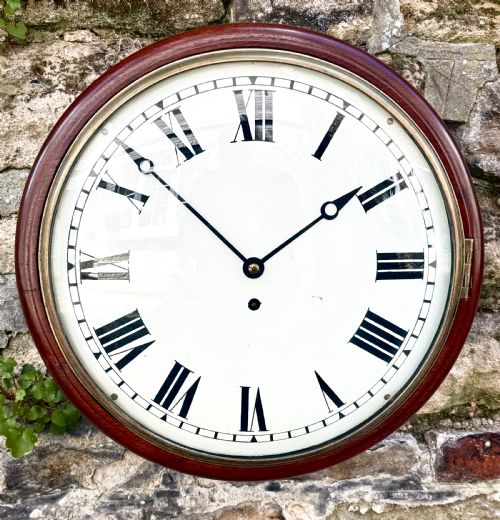


Georgian Fusee Dial Clock
A georgian fusee dial clock is a precise timekeeper driven by a conical pulley and chain, valued for reliable movement and clean wall-hung design.
Georgian Fusee Dial Clock
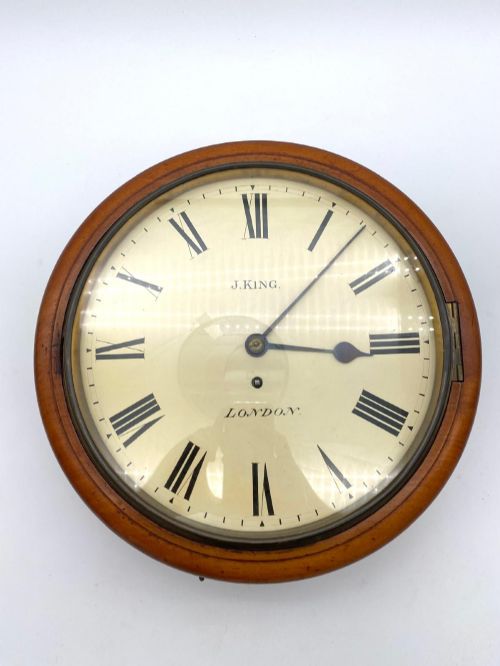
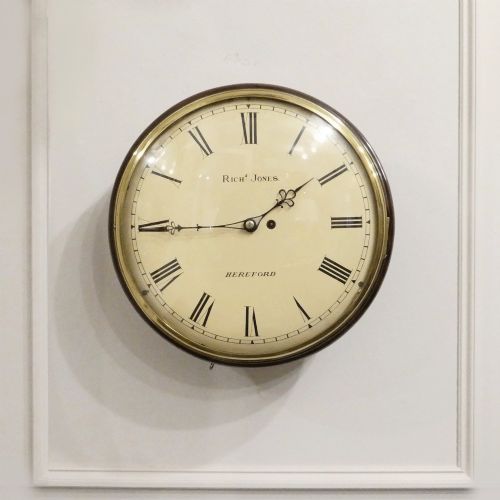
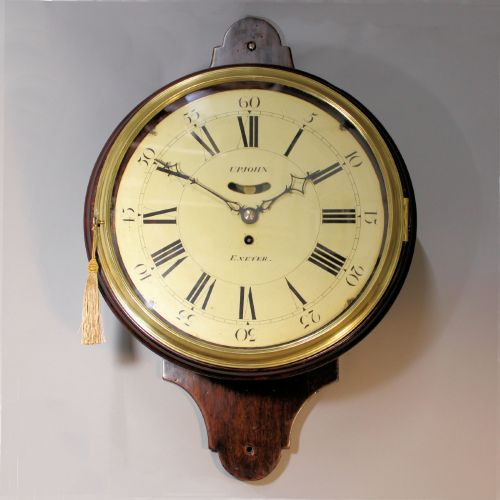
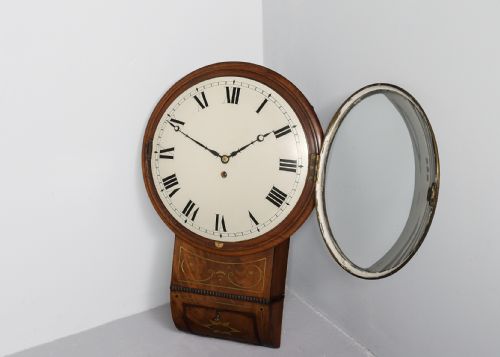
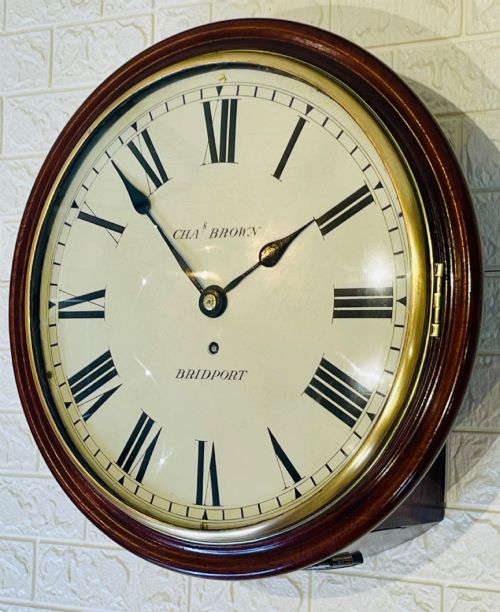
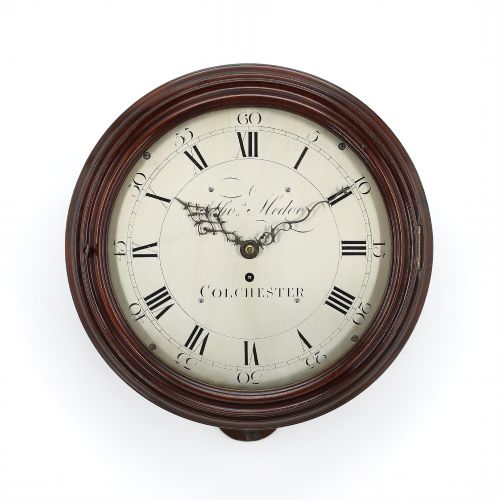
A georgian fusee dial clock is primarily a circular wall timepiece designed for public and domestic spaces during the eighteenth and nineteenth centuries. These pieces appear in forms such as standard wall clocks, drop-dial variants, and tavern clocks.
The objects originate from periods including the Georgian, Regency, and Victorian eras, alongside specific dates from seventeen hundred to eighteen ninety. Makers from regional centres and London produced these instruments in mahogany, ebonised wood, and brass.
Buyers encounter wall clocks with convex, bowed, wooden, or silvered metal dials housed in timber frames. The selection includes drop-dial shapes, salt box styles, and chisel bottoms alongside traditional round faces.
How they were made
Makers constructed the primary cases using solid mahogany or ebonised wood, often incorporating brass inlay, gilt mounts, or glass viewing doors. The internal mechanisms rely on steel components and brass gear trains driven by a fusee movement.
Dials were formed from painted metal, silvered metal, or carved wood, featuring Roman or Arabic numerals. Verge escapements and chain drives regulated the movement to maintain steady timekeeping across the duration of the wind.
Georgian Fusee Dial Clock Retail Price Guide 2026
Typical asking prices for georgian fusee dial clock among the pieces listed under this phrase on Sellingantiques today, from the lower quarter to the upper quarter. They describe what is for sale here now, not the wider market.
Listings feature movements driven by single and twin chain fusee mechanisms across the eighteenth and nineteenth centuries.
What varies in quality
Quality rests in the precision of the mechanical work and the integrity of the timber case. Examples bearing signatures from notable makers often display superior internal finishing and refined dial craftsmanship.
The degree of original material remaining in the movement and case distinguishes fine survivals. Cabinets with clean proportions, well-fitted bezels, and authentic dial paint represent the upper end of the range.
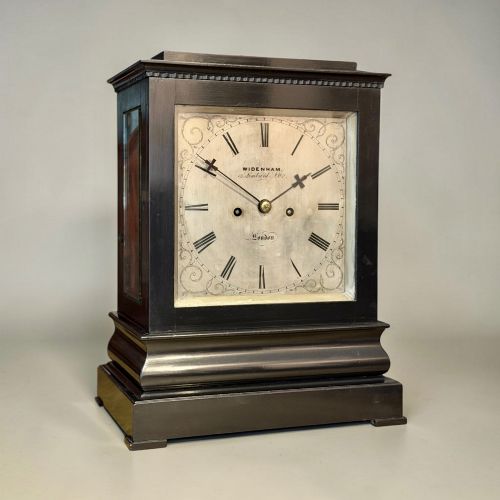
Upjohn of Exeter·Richard Jones of Hereford·Widenham of London·Ellicott and Smith·Joseph Bird of Stroud·Thomas Hedge of Colchester·Richard Rooker·Somersall London·Francis Perigal London·Osborn of Kingsbridge·William Hardy London·Chater and Son London·Haley and Milner London·John Thwaites·Atkins of Warwick·William Smith London
The Georgian Fusee Dial Clock Glossary
- Fusee
- A conical pulley used to equalise the declining power of the mainspring as it unwinds. This device ensures steady force reaches the escapement throughout the running period.
- Verge escapement
- An early escapement mechanism employing a crown wheel and pallets to control the release of power. It creates the characteristic ticking action found in older timepieces.
- Drop dial
- A wall clock featuring a circular dial positioned above an extended wooden case. The lower box often holds a glazed pendulum window.
- Silvered metal
- A brass dial plate treated with a silver solution to create a pale metallic finish. Numerals and maker names are typically engraved and darkened for legibility.
- Bracket clock
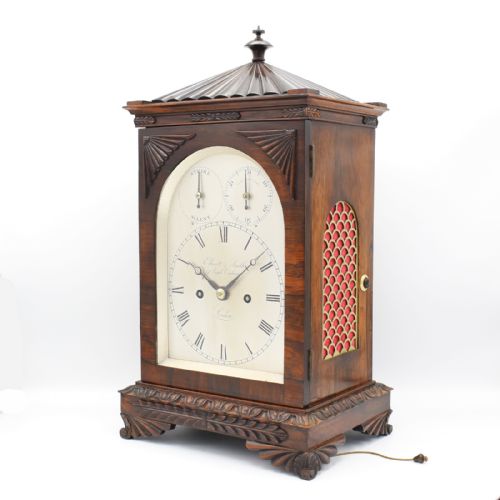
- A portable table or shelf clock intended for domestic placement. These pieces frequently feature striking trains and carrying handles.
Georgian Fusee Dial Clock: Frequently Asked Questions
How do you wind a fusee wall clock?
Winding requires inserting a key into the dial aperture and turning it steadily clockwise until the mechanism reaches resistance. Care must be taken not to overwind the spring.
Most single fusee clocks require winding once a week to maintain accurate timekeeping. Twin fusee models that include striking trains may need more frequent attention.
Where were these clocks originally hung?
These timepieces were placed in locations requiring clear time visibility, such as hallways, kitchens, public taverns, and municipal rooms. Their distinct dial shapes ensured easy reading from a distance.
Domestic spaces also accommodated smaller bracket clocks on tables or shelves. Wall-hung versions relied on secure fixings attached to structural timber.
How do you distinguish a wooden dial?
A wooden dial consists of a shaped wooden disc painted and lettered by hand. These faces appear on specific regional and London clocks from the Georgian and Regency eras.
They differ from metal dials through their grain structure visible from the rear and their specific response to atmospheric humidity changes.