



Georgian Fretwork Table
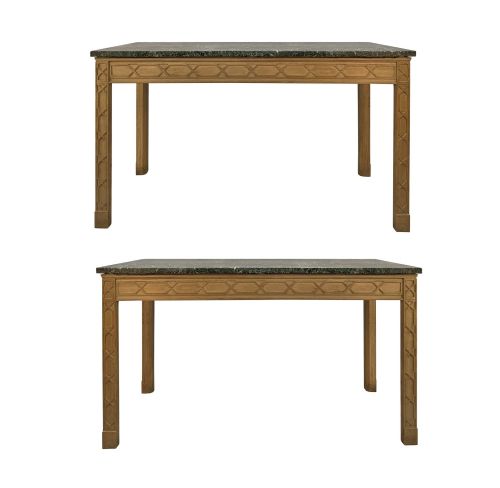
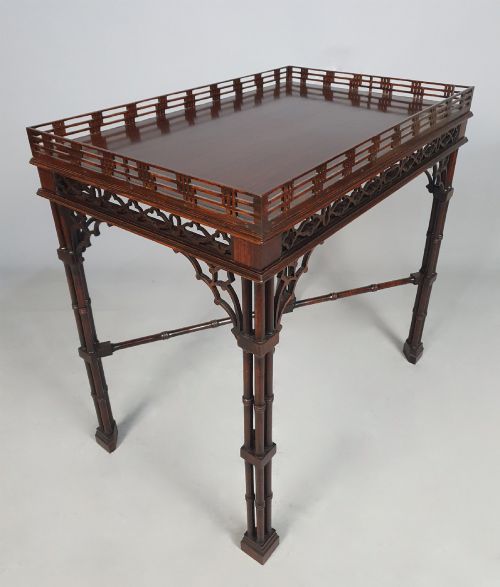
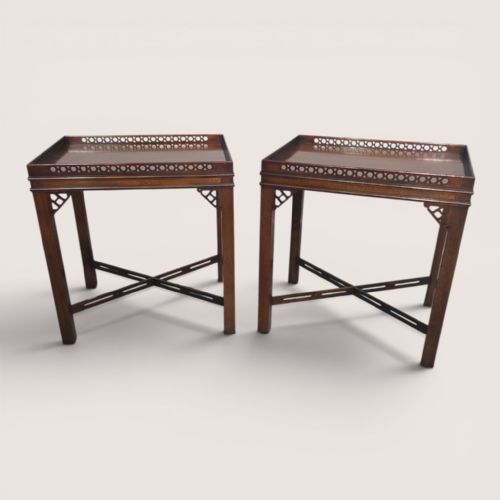
A georgian fretwork table combines architectural piercing with cabinet timber, offering collectors a surface defined by intricate openwork brackets and classical proportions.
Georgian Fretwork Table
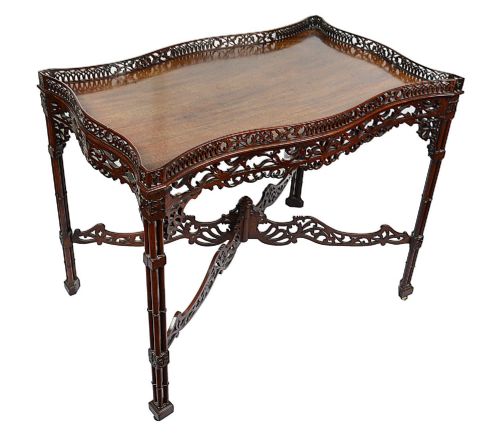
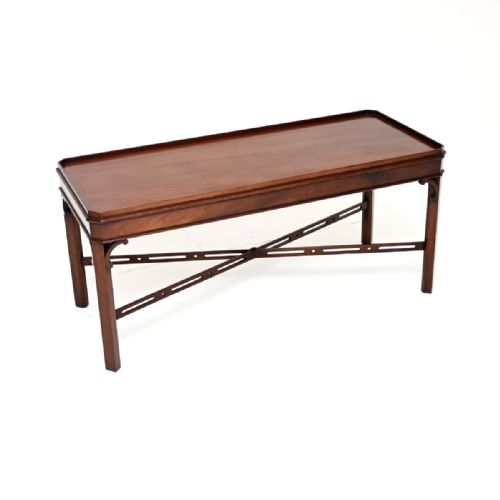
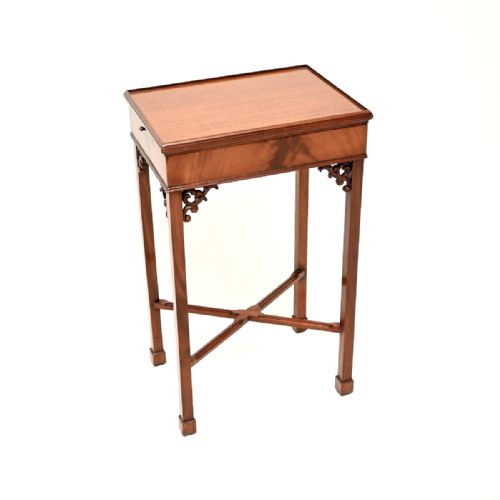
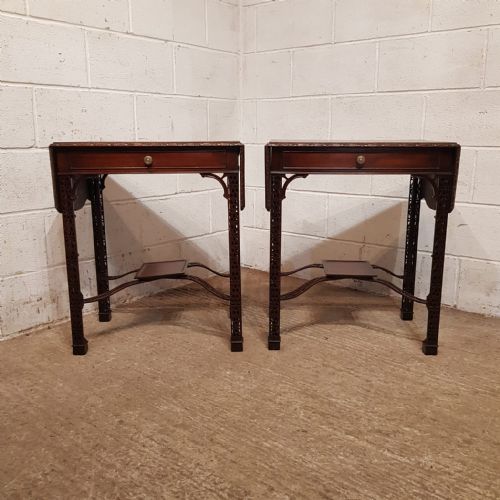
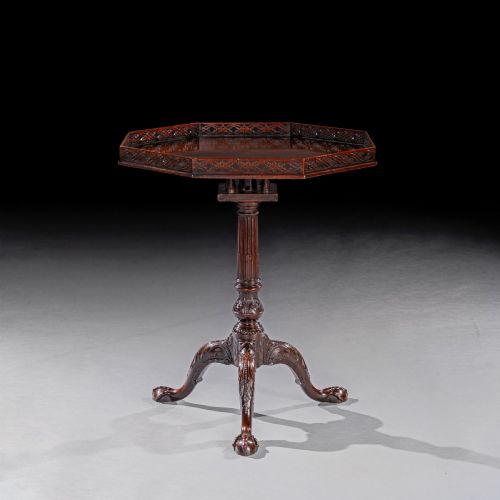
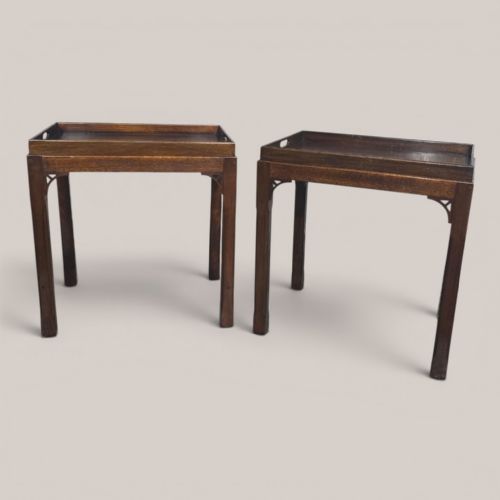
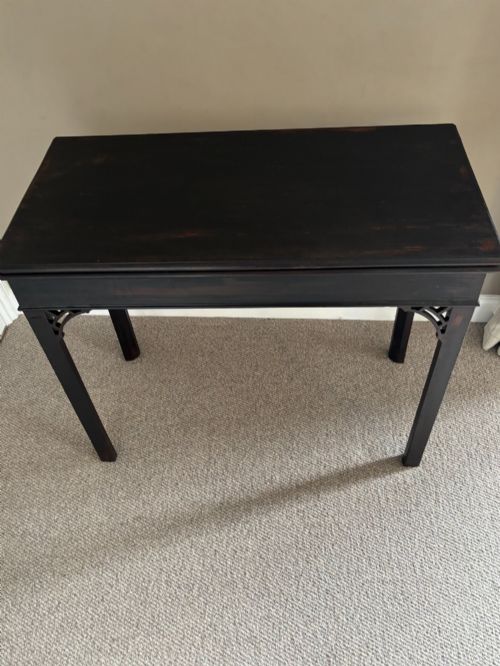
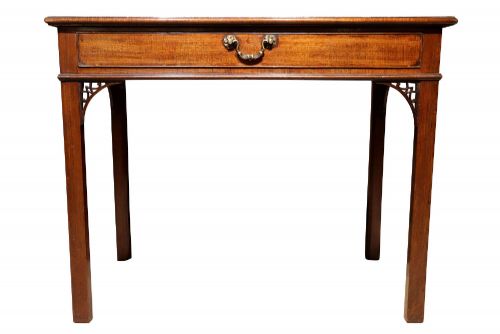
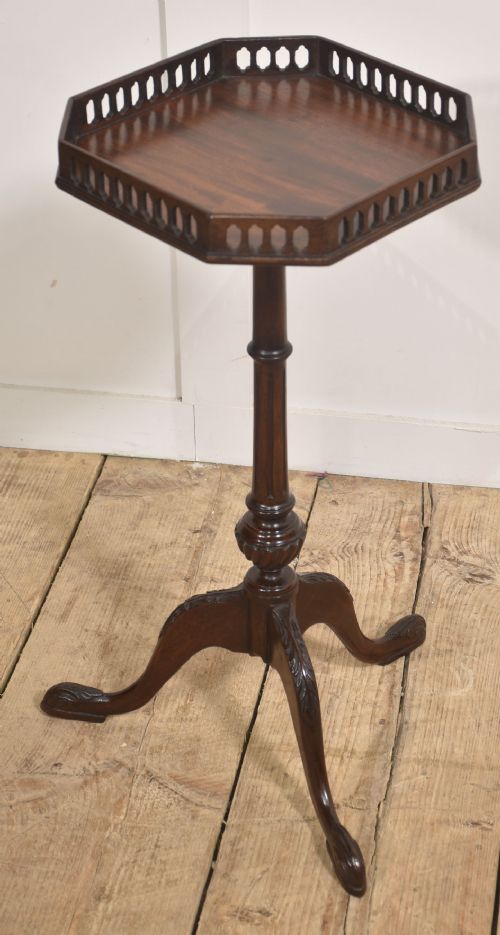
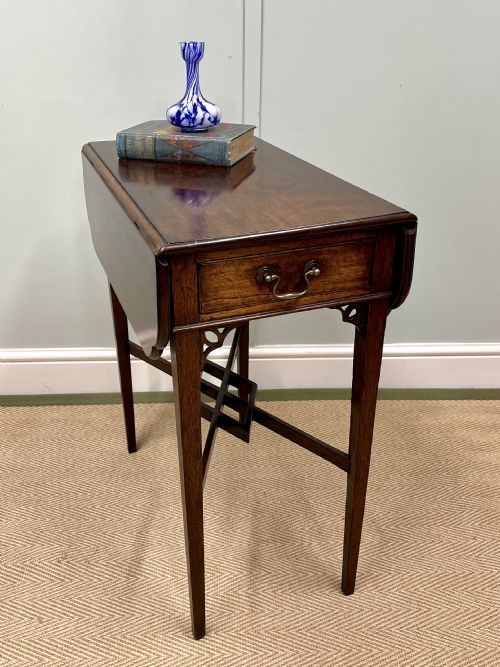
A georgian fretwork table typically appears as a silver table, side table, or card table from the eighteenth century or later revival periods. These pieces serve as display surfaces or occasional tables, featuring characteristic pierced decoration.
The selection includes authentic eighteenth-century examples alongside nineteenth-century revival interpretations in the Chippendale and Chinese Chippendale styles. Oak, walnut, and padauk join mahogany as the primary woods employed across these varied forms.
Materials and construction
Cabinetmakers utilised dense timbers like mahogany, walnut, and padauk to execute delicate pierced brackets and intricate frames without structural failure. Brass hardware frequently accompanies these designs on card tables and drop-leaf variants.
Joinery relies on traditional framing methods, allowing fretwork panels to be applied beneath rails or along table legs. Surface finishing highlights the natural grain of the hardwood while supporting applied carved details.
Georgian Fretwork Table Retail Price Guide 2026
Typical asking prices for georgian fretwork table among the pieces listed under this phrase on Sellingantiques today, from the lower quarter to the upper quarter. They describe what is for sale here now, not the wider market.
Silver tables and card tables dominate the furniture forms, frequently incorporating Gothic and Chinese Chippendale pierced brackets.
Craftsmanship and design
Quality rests in the crispness of the pierced fretwork and the depth of the carved timber details rather than simple age alone. Superior pieces display precise geometric or gothic piercing that remains sharp and uniform across every bracket.
Timber selection dictates the visual weight of the object, with well-figured mahogany or walnut elevating the piece. The integration of structural elements with decorative piercing marks the difference between standard production and master cabinetwork.
The Georgian Fretwork Table Glossary
- Fretwork
- Openwork ornamentation cut from thin boards in geometric or interlaced patterns. This technique defines the decorative character of the tables.
- Chippendale
- A style of eighteenth-century English furniture characterised by rococo, gothic, or Chinese influences. It heavily inspires the fretwork tables found in this category.
- Silver table
- A specialised occasional table with a raised gallery edge designed for displaying tea or silver items. They often feature elaborate fret-cut brackets beneath the top.
- Lowboy
- A small low table with drawers, typically standing on four legs, functioning as a dressing table or side table. These appear in oak and walnut within the period listings.
- Concertina action
- An expanding frame mechanism used on card tables to support a folding top. This engineering allows the table to double its surface area when opened.
Georgian Fretwork Table: Frequently Asked Questions
How do I distinguish revival pieces?
Revival pieces from the nineteenth and early twentieth centuries often show mechanical saw marks and different secondary woods behind the primary mahogany. Examining the interior construction helps separate Georgian originals from later interpretations.
Cabinetmakers working during the revival periods adopted historical styles with enthusiasm, creating faithful copies that match the proportions of eighteenth-century prototypes.
Where were these tables used?
These tables served primarily in reception rooms, drawing rooms, and parlours as display surfaces for porcelain, tea service, or silver. Their decorative nature meant they stood against walls or in the centre of fashionable rooms.
Card tables and Pembroke versions offered functional versatility, transforming from compact side furniture into gaming or writing surfaces when needed.
How do I care for mahogany surfaces?
Mahogany requires stable room humidity and protection from direct sunlight to preserve the rich colour and finish. Regular dusting with a dry lint-free cloth maintains the timber without building up heavy wax residues.
Avoid placing these tables near heat sources or damp areas, as the dense hardwoods and delicate fretwork components remain sensitive to rapid environmental changes.