
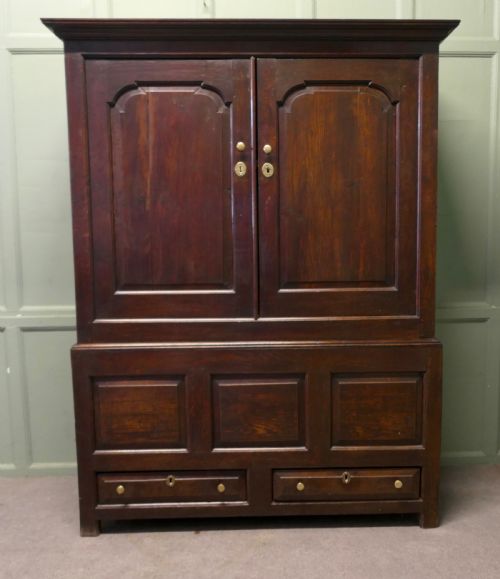
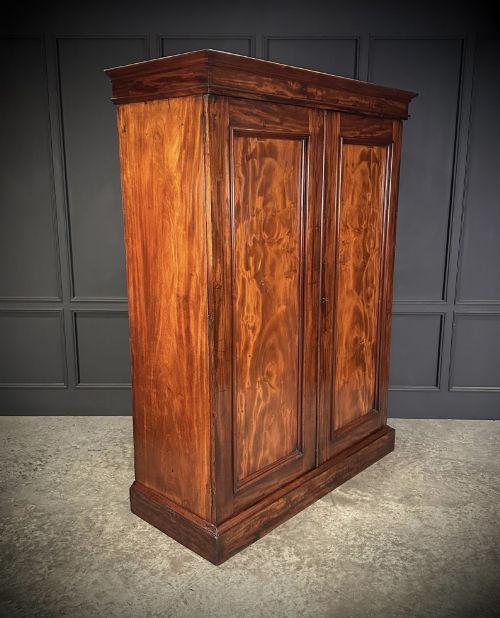

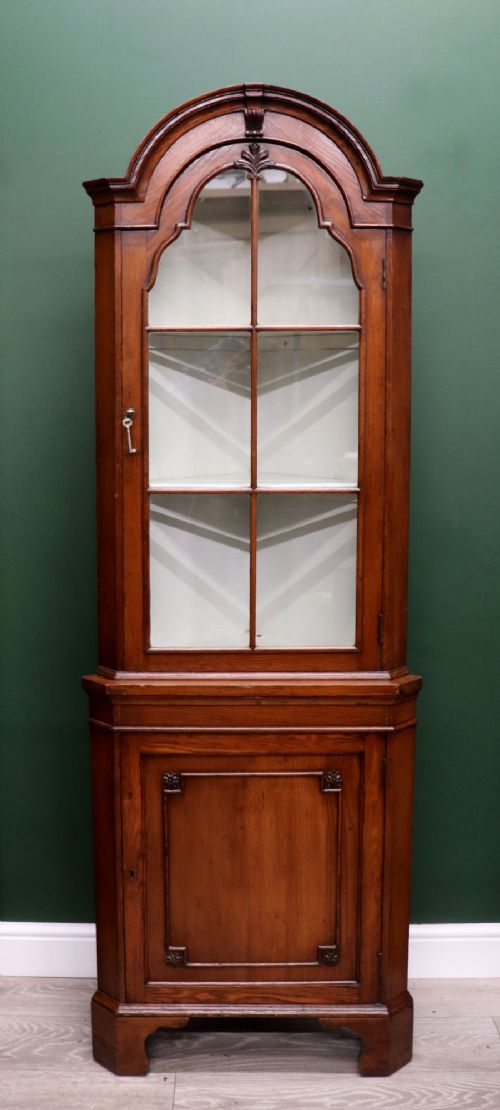
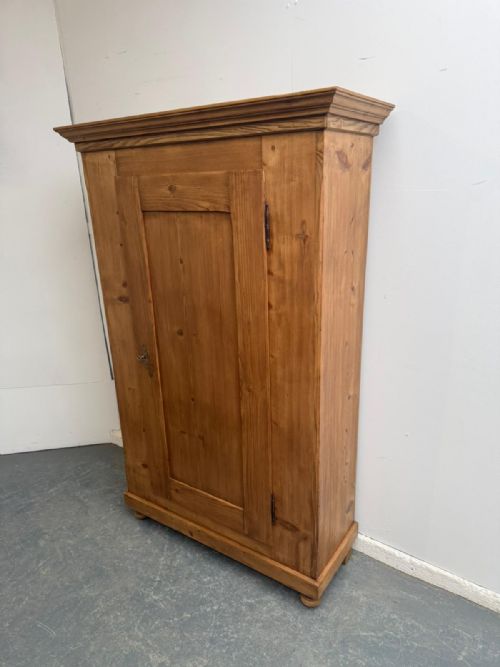
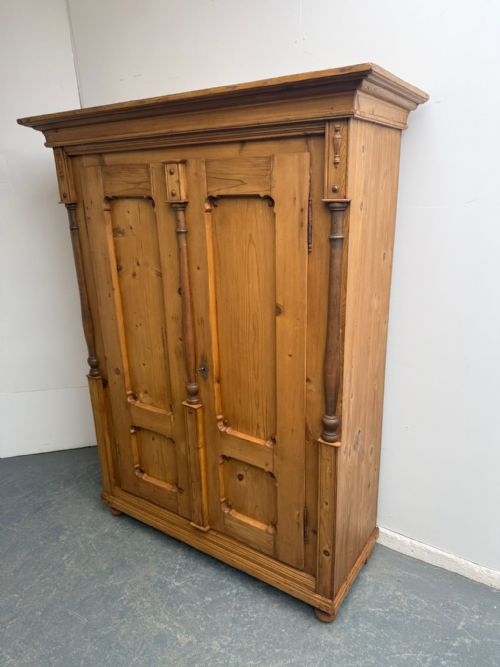


Georgian Freestanding Cupboard
A georgian freestanding cupboard brings solid timber presence to a room, offering generous storage through centuries-old joinery.
Georgian Freestanding Cupboard
When you search for a georgian freestanding cupboard, you encounter substantial storage furniture designed to stand away from the wall rather than hang as a fixture. The selection on this page includes tall housekeepers cupboards, kitchen storage units, wardrobes, and numerous corner cabinets built to utilise awkward room angles.
The majority of pieces span the eighteenth and nineteenth centuries, with later revivals appearing in oak, pine, and mahogany. Forms range from rustic pine food cupboards to polished mahogany wardrobe designs, reflecting both formal domestic interiors and vernacular country houses.
How they were made
Carpenters built these cupboards primarily in oak and pine for utilitarian domestic use, alongside mahogany for grander reception rooms. Panels are traditionally set into sturdy frames to accommodate seasonal timber movement without splitting.
Surfaces receive various finishes, from clear wax on raw grain to historic layers of paint, while brass or iron hardware secures the doors. Glazed upper sections utilise individual glass panes held in wooden glazing bars.
Historic food cupboards often retain traces of bread crumbs and flour in the corners from long-forgotten country kitchens.
What varies in quality
Quality rests in the selection of timber and the integrity of the original construction rather than surface polish alone. Dense, well-figured oak and flame mahogany veneers indicate pieces made for prominent domestic spaces.
Proportion and restraint define superior examples, where cornices, panel mouldings, and base plinths balance the substantial mass of the cupboard. Alterations to feet, cornices, or interior shelving shift a piece away from its original state.
The Georgian Freestanding Cupboard Glossary
- Housekeepers cupboard
- A large storage piece traditionally used in country houses to store linen, dry goods, and household supplies. These units often feature multiple doors enclosing linen slides or hanging space.
- Corner cabinet
- A triangular or multi-sided cupboard designed to fit neatly into a room angle. Versions appear as single floor-standing units or two-part designs with glazed upper doors.
- Flame mahogany veneer
- A decorative wood veneer sliced from timber where the grain creates a flickering, flame-like pattern. Cabinetmakers applied this to prominent surfaces of formal nineteenth-century pieces.
- Pot board
- An open lower shelf on a dresser or cupboard used originally for storing pots and heavy kitchen utensils. This feature appears frequently on vernacular country furniture.
- Panelled
- A method of construction where a central wooden floating panel sits within a grooved frame. This technique prevents the timber from cracking as humidity changes.
Georgian Freestanding Cupboard: Frequently Asked Questions
Where should I place a corner cabinet?
A corner cabinet fits into unused room angles, turning dead space into functional display or storage. These freestanding units anchor empty corners without dominating the floor area.
Ensure the height and swing of the door clear any skirting boards, architraves, or nearby furniture before positioning the cabinet in your room.
How do I care for waxed pine furniture?
Apply a traditional beeswax polish sparingly and buff with a soft cloth to maintain the satin sheen on antique pine. Avoid placing these cupboards near direct heat sources that dry out the timber.
Keep surfaces away from moisture by using coasters and wiping spills immediately to protect the historic wax finish.
What is the difference between a housekeepers cupboard and a wardrobe?
A housekeepers cupboard typically contains internal shelving or linen slides designed for domestic storage. Wardrobes focus primarily on vertical hanging space for garments.
Many examples share a tall multi-door format, but their internal configurations reflect their original domestic functions.