
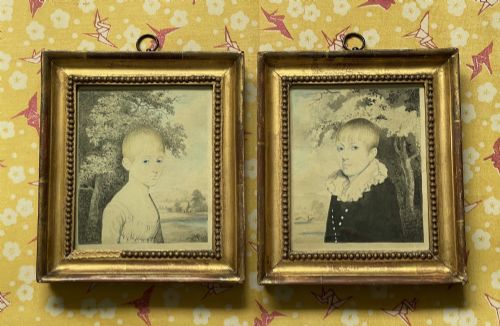

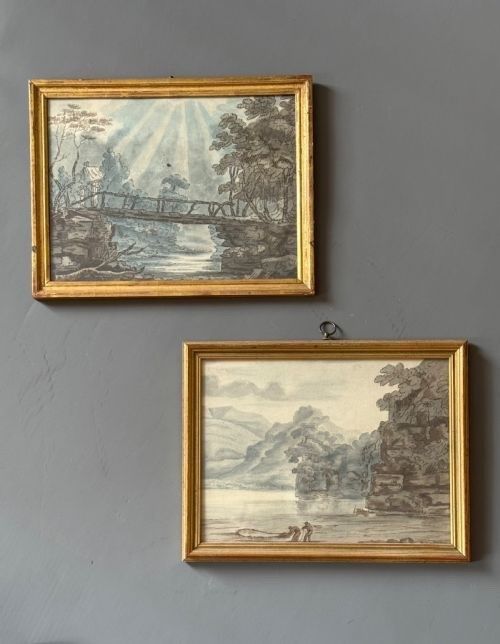
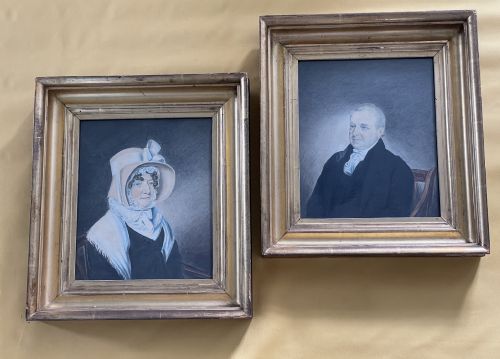
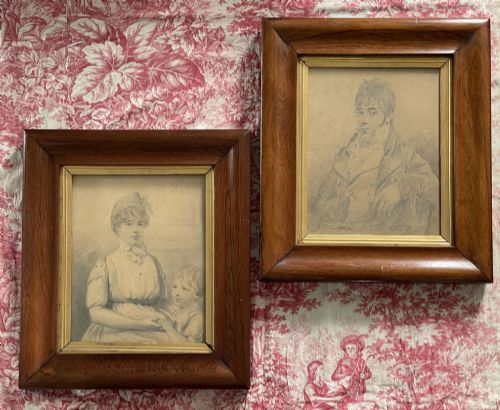
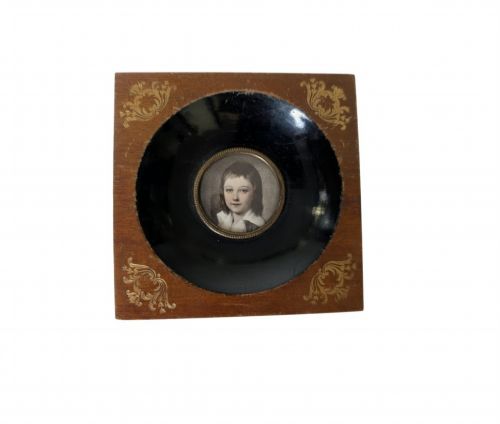
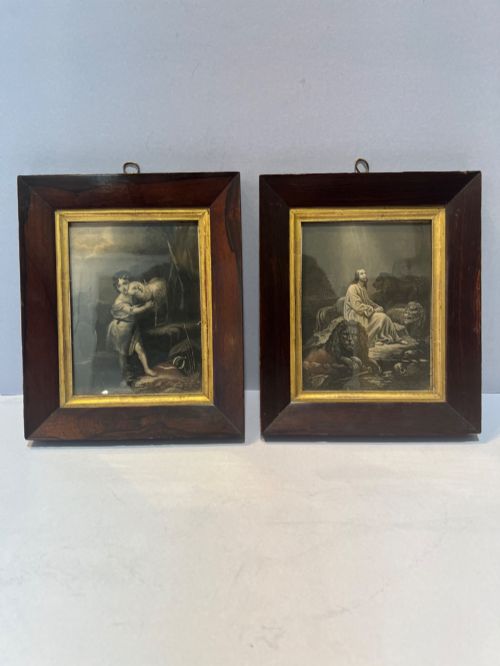
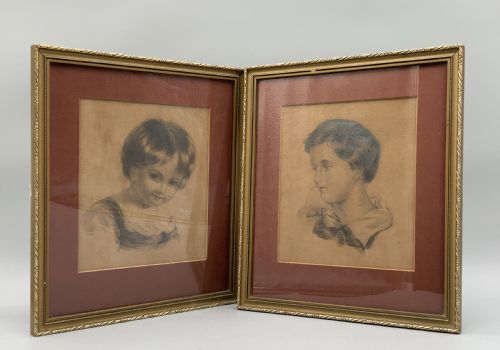
Georgian Framed Artwork Pair
A georgian framed artwork pair brings matched balance and historical depth to a wall, uniting portraiture, landscape, or botanical studies within period surrounds.
Georgian Framed Artwork Pair
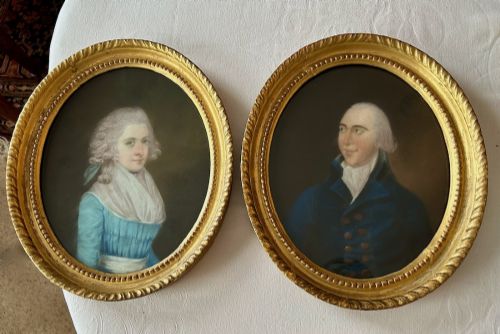
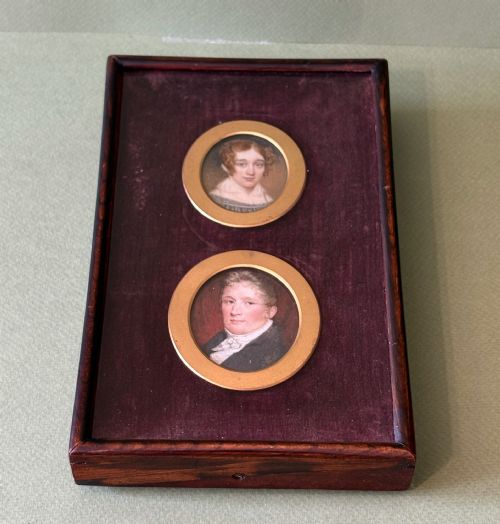
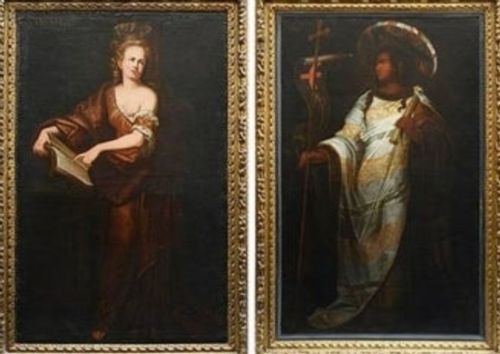
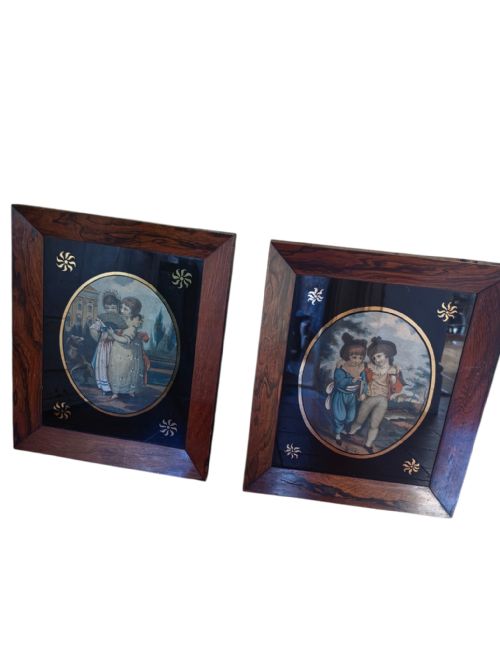
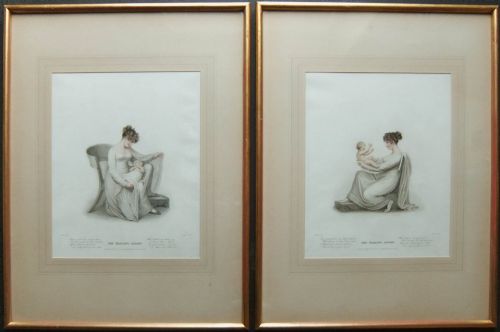
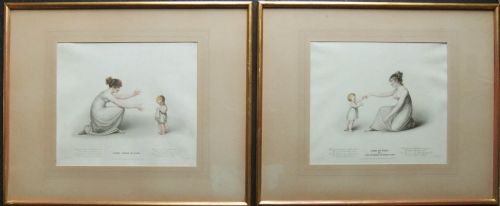
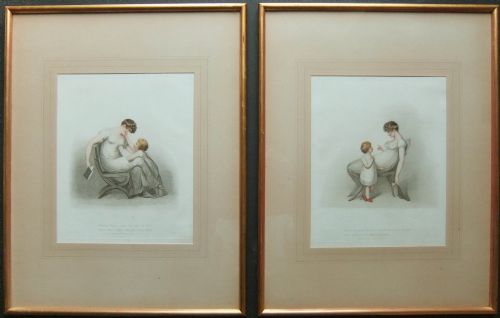
When searching for a georgian framed artwork pair, collectors encounter matched sets originating primarily from the eighteenth and nineteenth centuries. These groupings frequently take the form of portrait pairs, landscape scenes, or companion prints created during the Georgian and Regency eras.
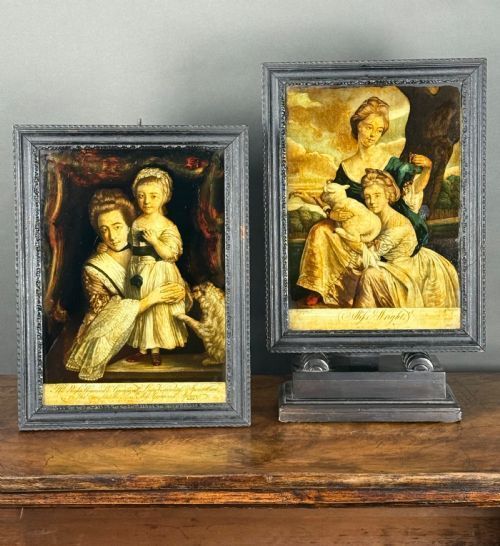
The selections available span various visual mediums, including delicate watercolours, oil paintings, reverse glass mezzotints, and detailed engravings. Many feature domestic subjects, romantic ruins, or classical depictions housed in their original wood or gilt surrounds.
How they were made
Makers utilised traditional supports such as canvas, paper, enamel, and glass to construct these paired works. Pigments, ink, and gold leaf were applied by hand to create intricate watercolours, oil paintings, and pen and ink drawings.
Framing materials commonly involved wood, giltwood, and rosewood, occasionally accented with brass or metal embellishments. These enclosures were built specifically to protect and complement the paper or canvas artworks contained within.
One historical set preserves unusual metal embellishments stitched directly onto the clothing of printed children.
What varies in quality
The standard of execution in a georgian framed artwork pair depends largely on the precision of the draughtsmanship and the preservation of the surface medium. Hand-painted watercolours and oil works exhibit distinct brushwork granularity, whereas prints rely on the clarity of the plate impression.
The integrity of the associated frame contributes significantly to the overall character of the piece. Surviving examples retaining their original giltwood, rosewood, or glass mounts command greater interest among collectors seeking period authenticity.
Adam Buck·Jacobus Houbraken·Robert Sayer·Giovanni Paolo Panini·Thomas London·Buffon·Thomas Woolnoth·Claude Lorrain·John Boydell·H. Alken·G Morland
The Georgian Framed Artwork Pair Glossary
- Mezzotint
- A printmaking process where the copper plate is roughened to achieve tonal gradations. This technique allows for rich, velvety dark areas and subtle light contrasts.
- Reverse glass painting
- An artwork created by applying pigment directly to the back of a glass sheet. When viewed from the front, the image gains a glossy, luminous finish.
- Giltwood
- Wood that has been coated with a thin layer of gold leaf or gold paint. It frequently appears on decorative frames from the Georgian and Regency periods.
- Tinsel picture
- A form of collage popular in the nineteenth century featuring printed figures embellished with tinsel, fabric, and silk. These works were typically housed in small, dark wood frames.
- Silhouette
- A solid profile portrait, usually cut from black paper or painted onto card or plaster. They are often framed in pairs and date from the late eighteenth or early nineteenth century.
Georgian Framed Artwork Pair: Frequently Asked Questions
How should I hang a matched artwork pair?
These pieces function best when hung at eye level with consistent spacing between them to maintain their visual dialogue. Aligning the centre point of the frames with the viewer's eye ensures correct balance on the wall.
Avoid placing them in direct sunlight or damp environments, as the paper, watercolours, and antique wood frames can suffer irreversible fading or warping over time.
Are these works always original period pieces?
The selections recorded here span the eighteenth and nineteenth centuries, capturing genuine historical methods and materials. Each set reflects the aesthetic standards of its respective decade of production.
Examining the backing boards, paper ageing, and frame construction assists in confirming the historical context of the items.
What subjects are most common in these sets?
Portrait pairs depicting gentlemen, ladies, or children appear frequently alongside landscape views and classical architectural ruins. Narrative pairings detailing moral or domestic themes are also common.
Botanical studies and military formations occasionally supplement these domestic portrait and landscape subjects.