



Georgian Footrest
A georgian footrest provides low support for tired feet, appearing in walnut and mahogany from the eighteenth century onwards.
Georgian Footrest
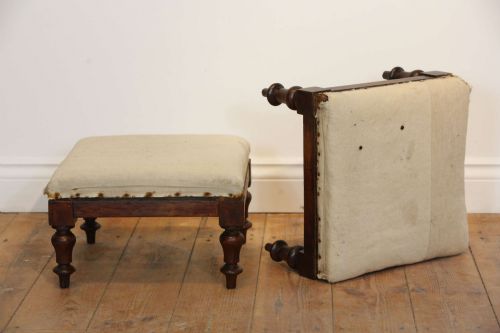
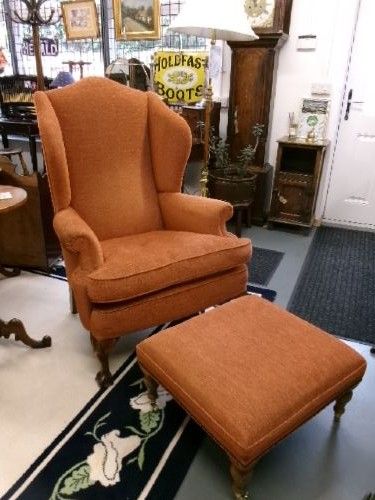
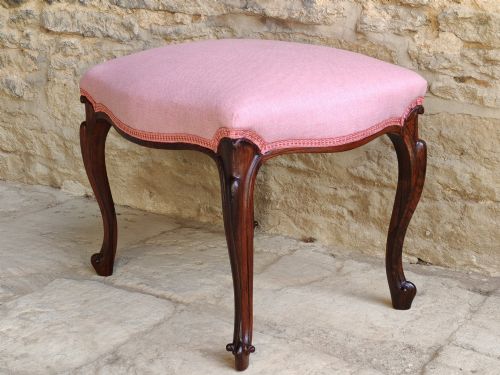
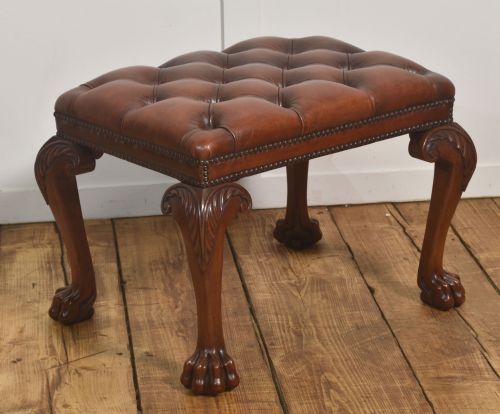
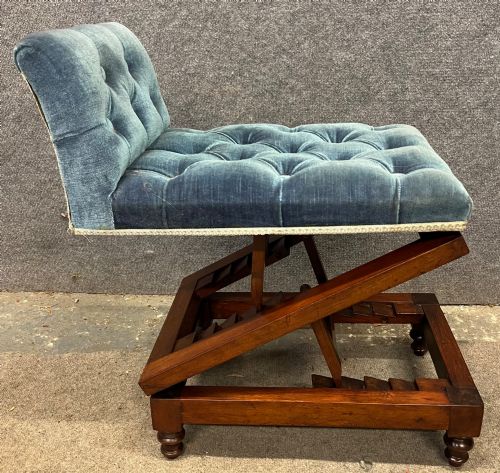
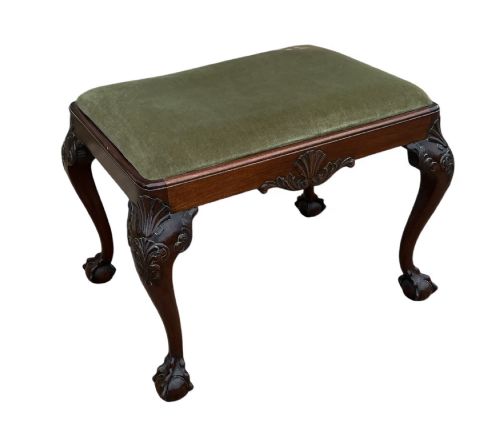
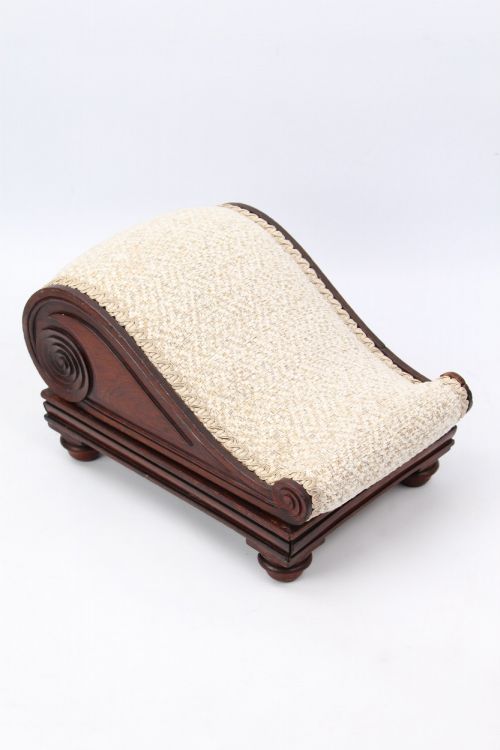
A georgian footrest encompasses a variety of low stools and gout stools designed to elevate the feet while seated in a chair or armchair. The selection includes pieces from the eighteenth century alongside later nineteenth century revivals and twentieth century interpretations.
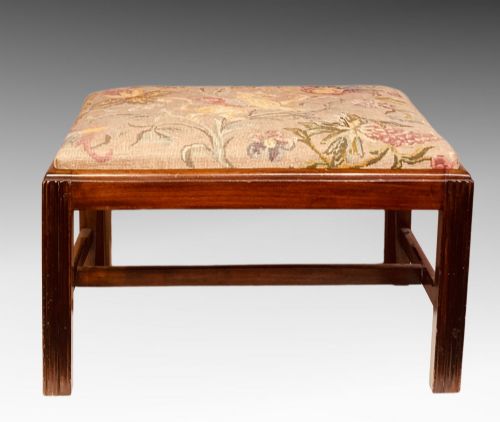
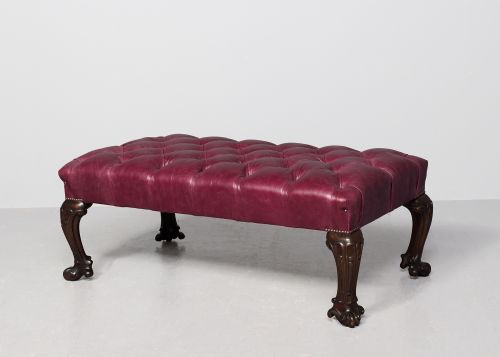
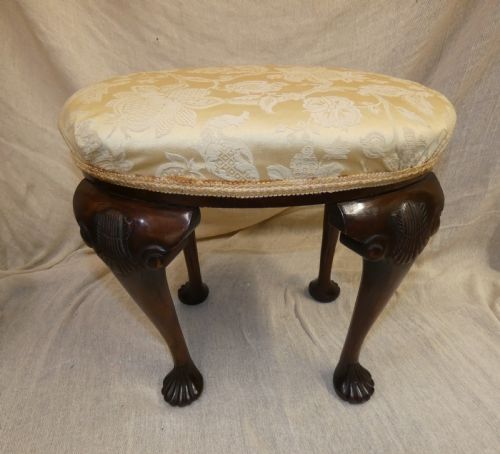
Makers fashioned these supports in diverse configurations, ranging from simple mahogany frames to elaborate ottomans with brass decoration, rosewood finishes, and X frame curule designs. Walnut examples frequently showcase Queen Anne style cabriole legs and needlepoint upholstery.
Buyers will encounter compact dressing stools, long footstools, and specialised reclining variants alongside matching armchairs. Many items reflect Georgian, Regency, and Chippendale aesthetics spanning from 1780 through the Edwardian era.
Materials and construction
Craftsmen built the frames of a georgian footrest primarily from solid timber such as mahogany, walnut, rosewood, beechwood, and oak. Carved details often define the legs and aprons, utilising traditional joinery methods suited to domestic seating furniture.
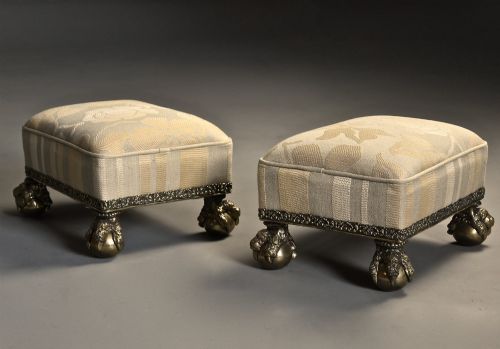
Upholstery forms a vital component of these pieces, incorporating textiles like fabric, velvet, wool, tweed, tapestry, red hide, and leather. Brass mounts, lion paw feet, and buttoned details frequently add decorative and structural finish to the designs.
Georgian Footrest Retail Price Guide 2026
Typical asking prices for georgian footrest among the pieces listed under this phrase on Sellingantiques today, from the lower quarter to the upper quarter. They describe what is for sale here now, not the wider market.
Materials documented across these seating items include mahogany, walnut, rosewood, beechwood, brass, wool, velvet, and tapestry.
Assessing quality in construction
The standard of a georgian footrest depends on the crispness of the timber carving and the integrity of the frame construction. Pieces featuring robust hardwoods like mahogany or walnut with well-defined joinery indicate superior craftsmanship.
The selection of covering materials also marks the tier of the piece, where fine needlepoint, textured tapestry, or buttoned red hide show greater attention to historical detail. Original brass decoration and integrated adjusting mechanisms for gout stools further elevate the piece.
Miles & Edwards
The Georgian Footrest Glossary
- Gout stool
- A specialised footrest featuring an adjustable mechanism to elevate and support the foot of a sufferer. These items often appear in nineteenth-century contexts.
- Cabriole leg
- A furniture leg that curves outward and then tapers inward, frequently terminating in a pad or claw foot. This form is common on walnut Queen Anne style pieces.
- Curule
- An X-shaped frame design derived from ancient Roman seats. Such framing adds architectural interest to antique footstools.
- Needlepoint
- A type of canvas work embroidery used for upholstery. It provides decorative textured covers on period stools.
Georgian Footrest: Frequently Asked Questions
What is a gout stool?
A gout stool is an adjustable footrest designed specifically to elevate and rest a painful foot. These pieces often include mechanical tilt functions.
They appear in materials like mahogany and beechwood, frequently paired with upholstered pads for comfort during long periods of sitting.
How do I identify a Georgian footrest?
Identification relies on observing the timber, such as mahogany or walnut, and stylistic indicators like Chippendale or Queen Anne carving. Many pieces date from the eighteenth century or later revival periods.
Details such as brass decoration, needlepoint covers, and X-frame structures help distinguish the specific era and design lineage of the stool.
Where were footstools used?
These supports were placed beside armchairs and firesides in domestic rooms to provide extra comfort and warmth. They complemented larger seating arrangements in parlours and dressing rooms.
Shorter stools doubled as dressing furniture, while longer ottomans served multiple seating and resting functions.
How should I care for antique upholstery?
Maintenance requires gentle cleaning suitable for historical textiles like wool, velvet, tapestry, or leather. Avoiding direct sunlight prevents fading of the fabric and timber.
Checking the stability of the wooden frame periodically ensures the piece remains sound for continued domestic use.