

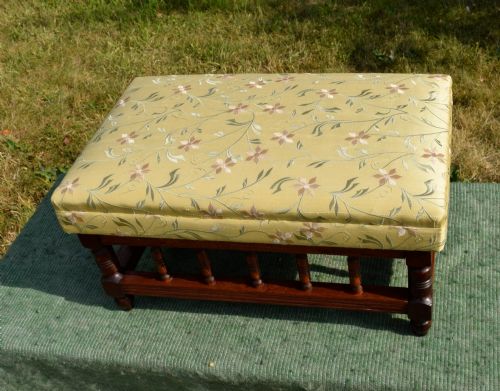
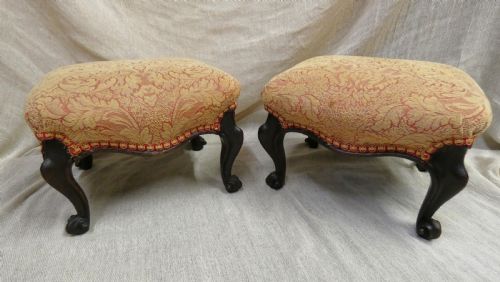


Mahogany Upholstered Footrest
A mahogany upholstered footrest brings warmth and solid timber framing to the fireside, offering dependable support for tired feet through centuries of domestic life.
Mahogany Upholstered Footrest
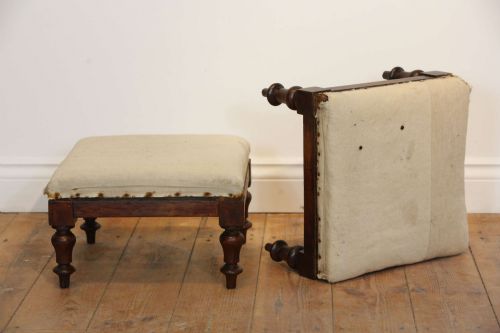
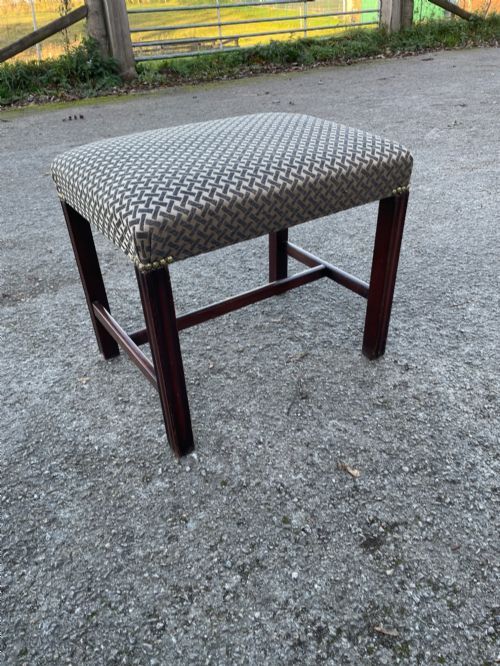
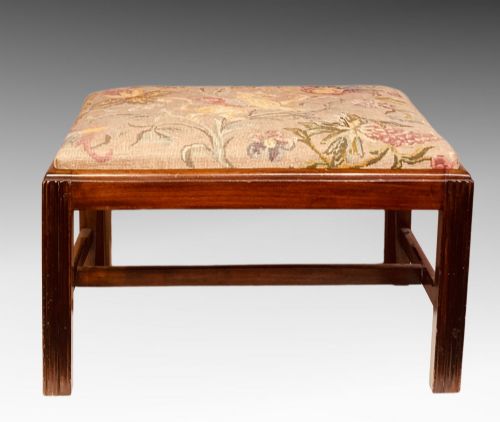
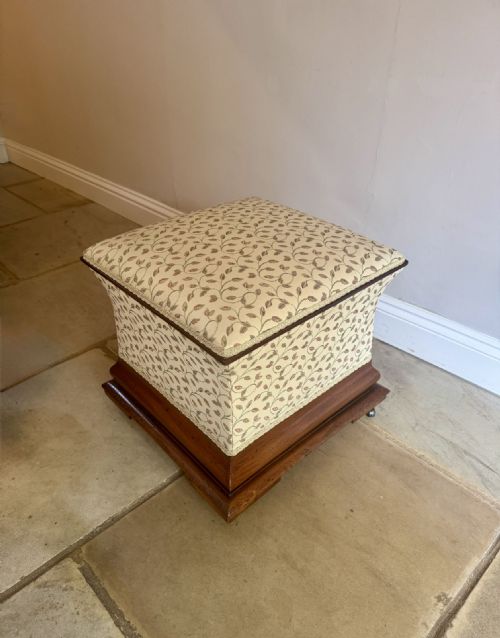
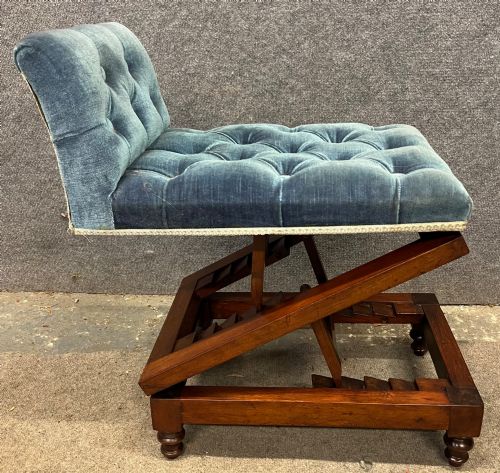
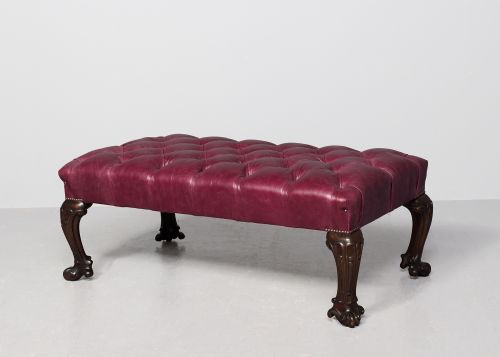
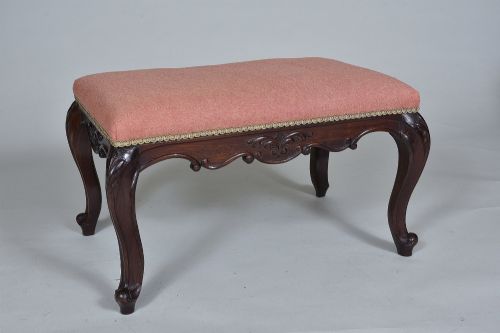
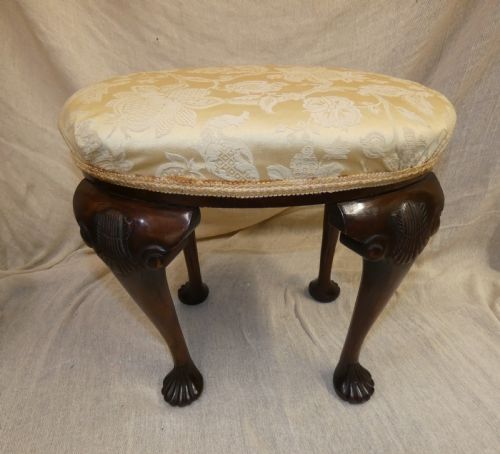
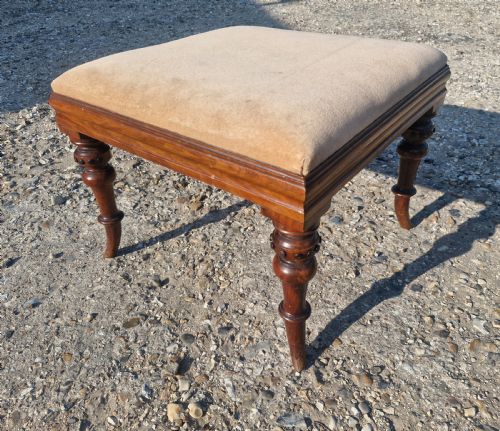
A mahogany upholstered footrest serves as a low seat or support, frequently encountered in Victorian, Regency and 18th-century forms across this selection. Pieces appear under various names including footstools, ottomans, gout stools and dressing stools, reflecting diverse historical domestic uses.
Makers shaped these frames from dense mahogany, pairing the rich timber with textiles such as wool, tapestry, velvet, leather and tweed. Styles range from plain rectangular frames to revival designs drawing on Chippendale, Queen Anne and Georgian traditions.
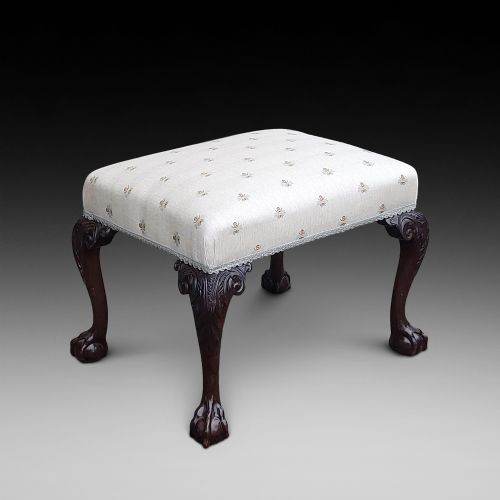
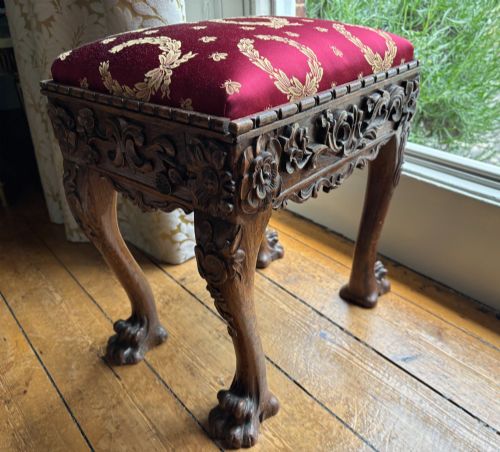
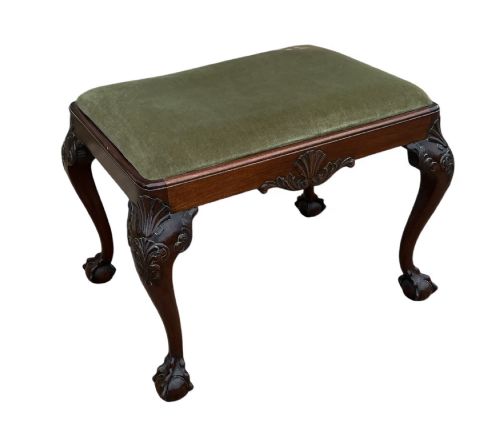
Surviving examples span compact fireside rests to long ottomans and pairs of stools fitted with cabriole legs, brass castors or lions paw feet. Each piece demonstrates how cabinet makers adapted seating supports to changing interior fashions from the Georgian era into the 20th century.
Materials and construction methods
Carpenters constructed the primary frames using solid mahogany, valued for its durability, deep reddish-brown tone and capacity to take crisp carved detail. Frames often feature traditional joinery, supporting applied ornamentation such as carved scrolls or cabriole legs.
Upholstery techniques combined sturdy internal webbing or stuffing with top layers of wool, velvet, tapestry, needlepoint or buttoned leather hide. Brass elements appear in hardware, castors and decorative details, complementing the dark timber frames.
Mahogany Upholstered Footrest Retail Price Guide 2026
Typical asking prices for mahogany upholstered footrest among the pieces listed under this phrase on Sellingantiques today, from the lower quarter to the upper quarter. They describe what is for sale here now, not the wider market.
A high chair built for gaming sits quietly among the footrests, proving that Victorians took their card-playing posture very seriously indeed.
Judging quality and proportion
Quality rests in the crispness of timber carving, the balance of proportions between frame and upholstery, and the integrity of the mahogany structure. Superior examples display thoughtful detailing such as carved cabriole legs, lion paw feet or scroll terminals rather than plain utilitarian lines.
The choice of covering material and the precision of the upholstery work further distinguish finer pieces, whether finished in buttoned leather, Liberty fabric or hand-worked tapestry. Original brass castors and uncompromised frame joints elevate a piece above standard domestic output.
Howard and Sons·Mathew Gregson
The Mahogany Upholstered Footrest Glossary
- Cabriole leg
- A furniture leg that curves outward at the knee and tapers inward to an ankle, frequently terminating in a pad or claw foot. This form derives from classical furniture design and appears widely on 19th-century seating.
- Gout stool
- A specialised footrest designed with an adjustable incline to elevate and support a foot affected by gout or injury. These functional pieces often date from the Regency and Victorian periods.
- Ottoman
- A low, upholstered seat or footstool typically lacking arms or a back, sometimes built with internal storage space. Larger examples provide substantial seating capacity alongside foot support.
- Tapestry
- A heavy textile woven with pictorial or decorative designs, commonly used for historical upholstery on stool tops. Needlepoint versions also feature heavily in period seating.
- Castor
- A small wheel fitted to the base of a furniture leg to ease movement across flooring. Brass versions are common on substantial Victorian and Regency stools.
Mahogany Upholstered Footrest: Frequently Asked Questions
What is a gout stool?
A gout stool is an adjustable footrest designed to elevate the leg at a comfortable angle for resting or medical relief. These pieces often feature pivoting mechanisms to alter the height of the padded surface.
They appear primarily in 19th-century contexts where comfort took specialised forms. The padded top is usually covered in leather or heavy textile to support the foot securely.
Where were footstools used?
Footstools were traditionally placed beside firesides, armchairs and dressing tables to provide extra comfort and elevation. Smaller variants fitted easily into carriage interiors or compact parlour settings.
Longer ottomans served double duty as low seating benches in larger drawing rooms. Their portability allowed owners to move them around the home as daily needs shifted.
How to date a stool?
Dating relies on examining the timber grain, leg styles, upholstery methods and overall joinery techniques. Regency pieces often showcase brass feet and scroll ends, while Victorian versions favour cabriole legs and buttoned upholstery.
Later 20th-century revivals imitate earlier Georgian forms but generally employ different internal construction materials. Comparing the piece against documented design books helps narrow down the period of manufacture.