
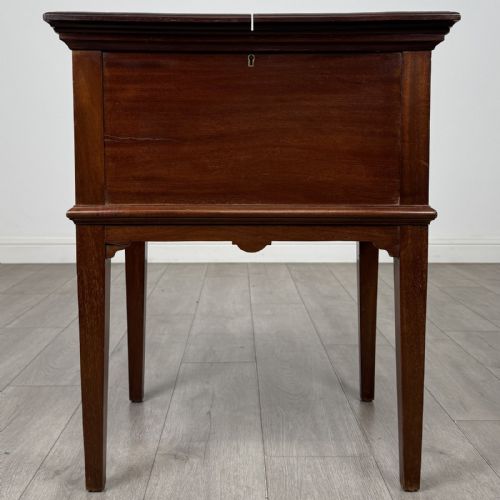
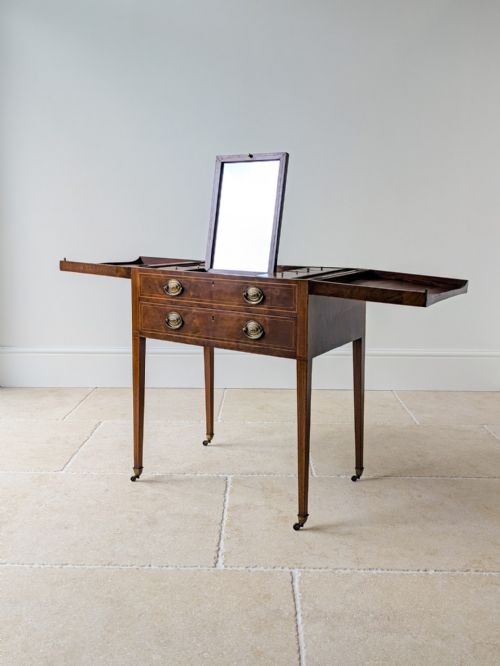
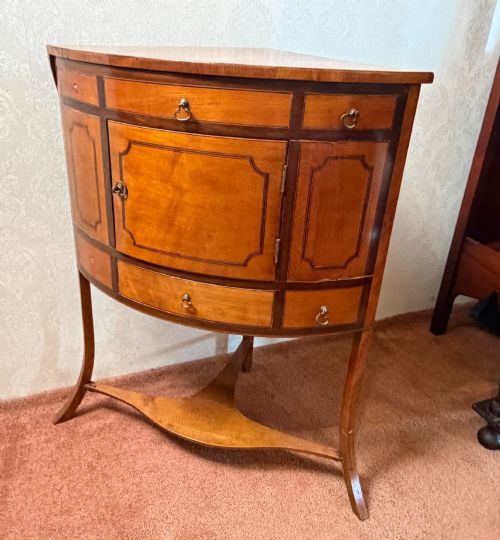
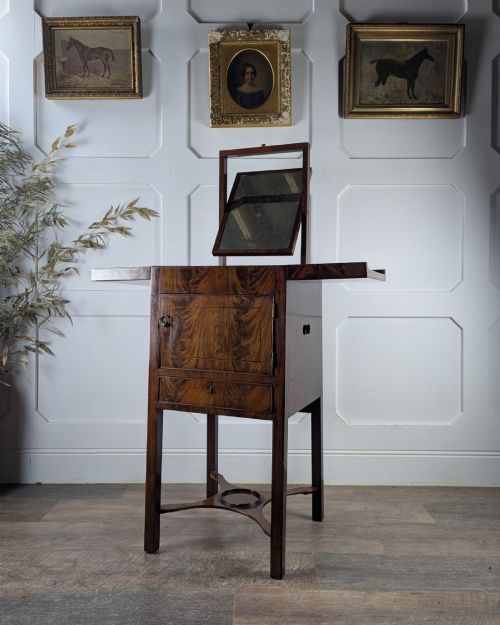
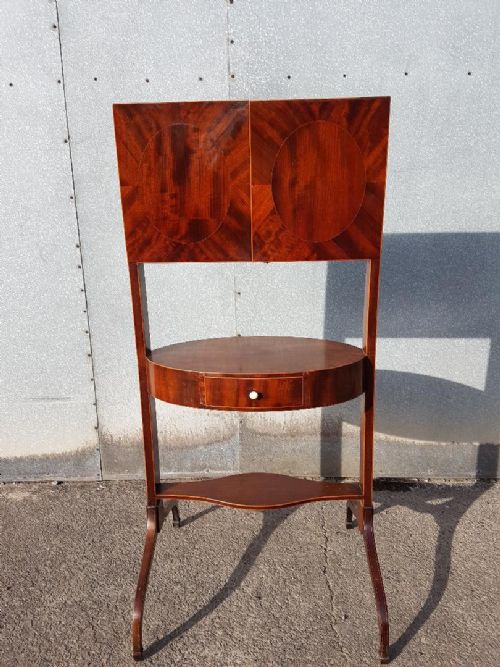


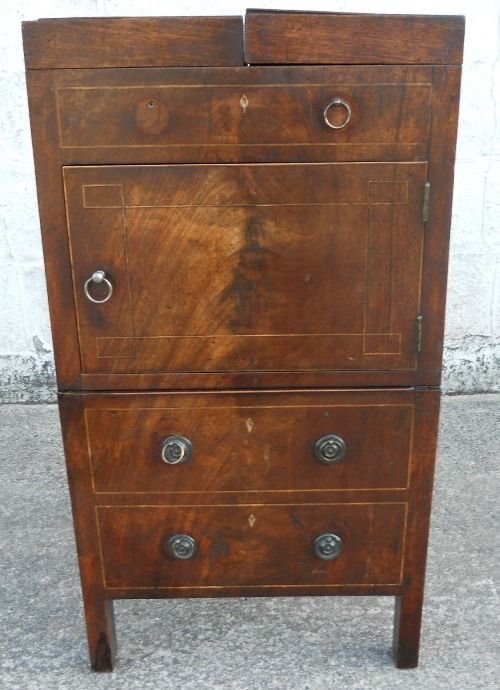
Georgian Folding Washstand
A georgian folding washstand is a clever piece of hidden utility, bringing refined timber work and ingenious compartments to period bedrooms.
Georgian Folding Washstand
A georgian folding washstand is a compact item designed for personal ablutions, taking the form of corner units, bow fronts, and campaign pieces. These items serve as both washstands and dressing tables, often concealing mirrors and basins behind hinged tops.
The examples seen on this page span the 18th century, the Georgian era, and around 1800. They bridge the gap between freestanding furniture and fitted cabinetry, designed to fold away neatly when not in use.
Makers and craftsmen produced these items to suit gentleman's quarters and guest rooms alike. Buyers will encounter corner configurations alongside straight-fronted campaign designs that fold for travel.
How they were made
Cabinetmakers built these pieces primarily in mahogany and Cuban mahogany, augmented by contrasting satinwood and boxwood inlay. Timber selection emphasised rich grain and durability for daily use.
Construction techniques involved hinged fold-down tops, tambour cabinets, and fitted interiors that housed glass and brass elements. Joinery was precise to allow folding sections to operate smoothly within tight tolerances.
Some gentleman's washstands include secret compartments once used to hide small wig curlers.
What varies in quality
The distinction between standard items and superior examples lies in the finesse of the timber and the complexity of the interior fittings. Elaborate satinwood veneers and crisp boxwood stringing elevate a piece above plain mahogany versions.
Mechanical ingenuity also separates the tiers of production, seen in the smooth action of folding tops, tambour doors, and integrated mirrors. Maker attribution, such as stamps from known workshops, marks the highest grade of craftsmanship.
Gillows Lancaster
The Georgian Folding Washstand Glossary
- Tambour
- A flexible shutter door formed of narrow strips of wood glued to canvas. This allows cabinetmakers to enclose tight spaces without swinging doors.
- Campaign washstand
- A portable version designed to pack down for travel. These pieces feature robust construction to withstand movement.
- Stringing
- A thin inlay of contrasting wood used to outline panels and edges. Boxwood is frequently utilised for this decorative detail against darker timber.
- Triplate dressing table
- A dressing table fitted with three hinged mirrors. This arrangement allowed the user to view angles from the side during grooming.
- Bow front
- A convex curved front to a cabinet or washstand. This shape softens the profile of the room and requires skilled joinery.
Georgian Folding Washstand: Frequently Asked Questions
What is a georgian folding washstand?
A georgian folding washstand is a piece of antique bedroom furniture designed to conceal washing and dressing equipment beneath a hinged top. They combine practical compartments with refined cabinet work.
These units often feature fold-down tops, mirrors, and storage for basins, making them versatile items for period interiors.
How were they used originally?
They were utilised in bedrooms and dressing rooms by gentlemen for morning ablutions and grooming. The folding mechanisms kept basins and pitchers out of sight when guests visited.
Some versions included tambour cabinets and spaces for shaving gear, functioning as early vanity stations.
Are corner washstands common?
Corner washstands were designed to fit neatly into the angles of smaller rooms, making efficient use of Georgian floor space. They often feature triangular or bow fronts.
These pieces share the same folding top mechanism as straight-fronted variants.
How do I identify the period?
Dating relies on timber choice, such as Cuban mahogany, alongside construction methods and inlay types like boxwood stringing. The Georgian era favoured specific proportions and understated hardware.
Cabinetmaker stamps, when present, offer a direct link to specific workshops of the 18th century.