
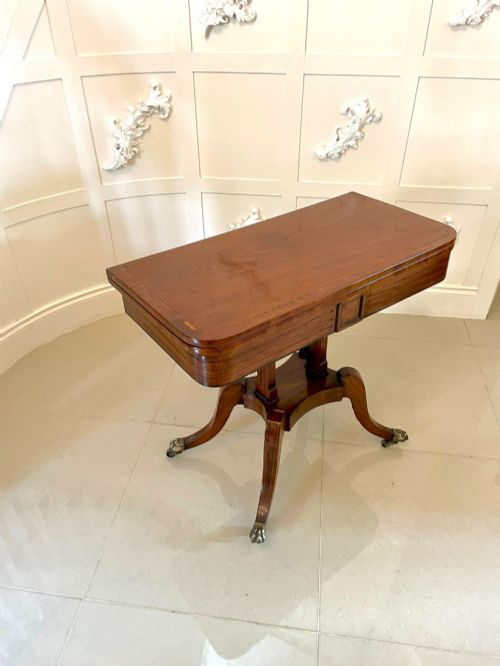
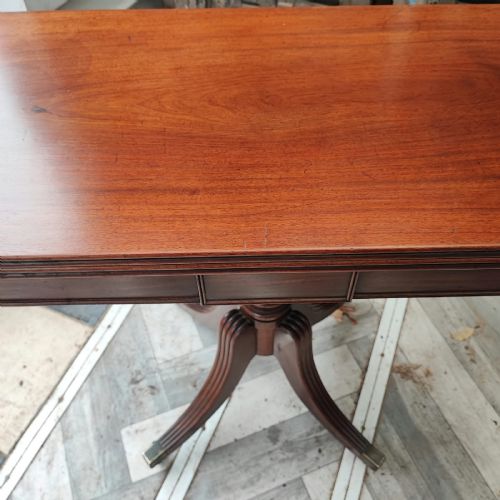


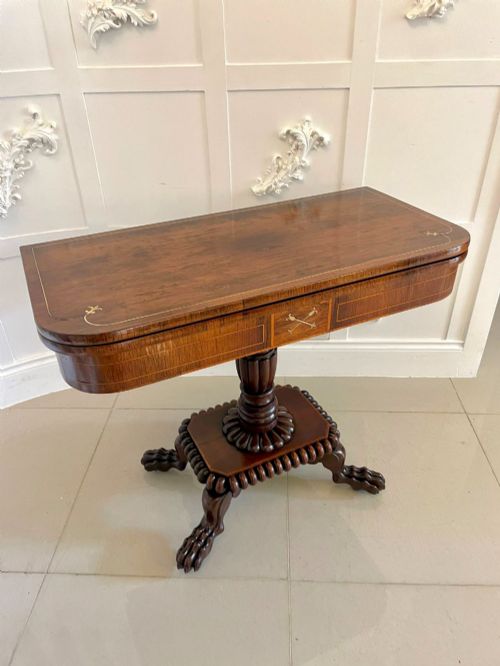
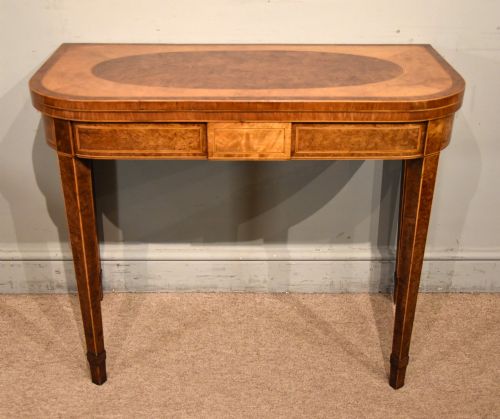
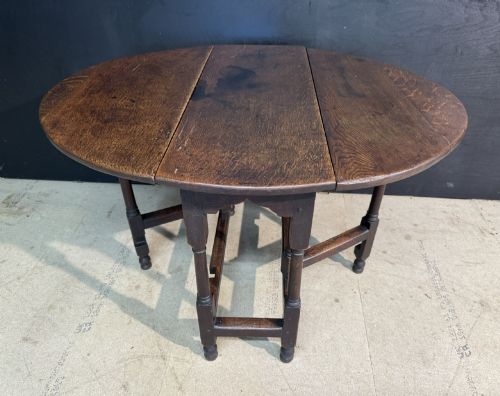
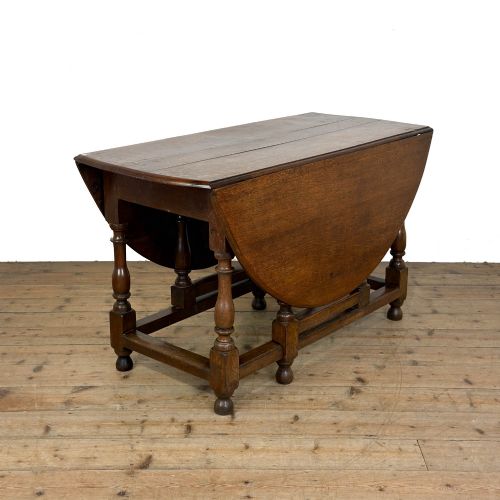
Georgian Folding Side Table
A georgian folding side table brings adaptable surface space into a room through clever hinges and drop leaves.
Georgian Folding Side Table
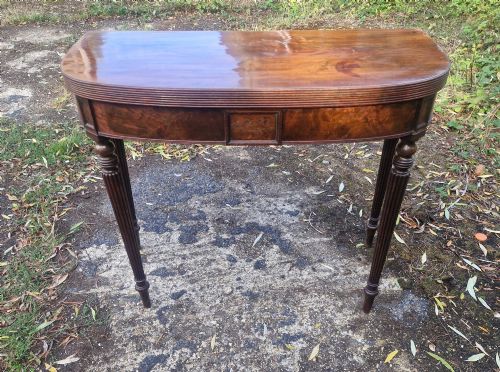
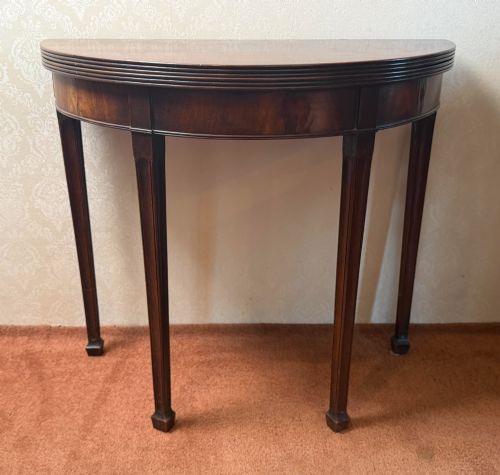
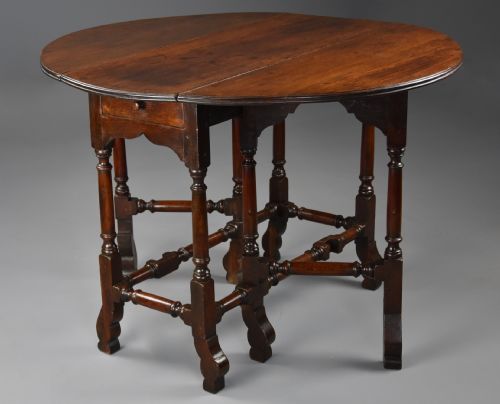
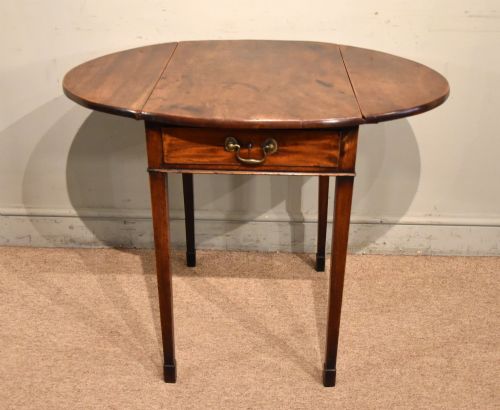
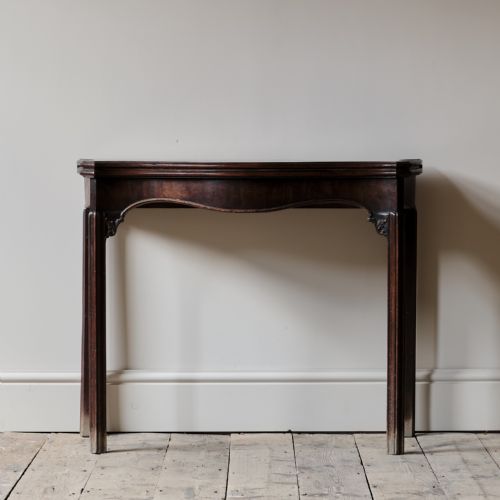
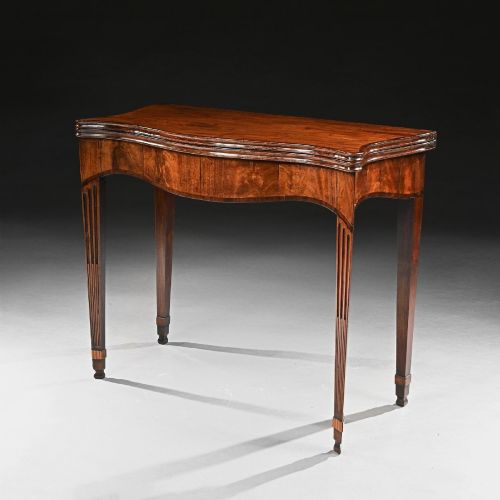
When you search for a georgian folding side table, you encounter practical items designed to expand when needed and fold back to save space against a wall. The selections span the eighteenth and nineteenth centuries, taking the form of card tables, tea tables, and console tables with hinged tops.
Mahogany dominates the material choices across the periods, frequently paired with walnut, oak, and satinwood detailing. These pieces appear under various stylistic headings such as George III, Regency, and Sheraton, reflecting the shifting tastes in British cabinet making from straightforward gateleg designs to sophisticated folding mechanisms.
How they were made
Cabinet makers utilised solid timbers alongside veneers, applying mahogany, burr yew wood, amboyna, and satinwood over secondary woods to create figured surfaces. Brass hardware supports the folding actions, while wood inlay and detailed carving define the decorative edges.
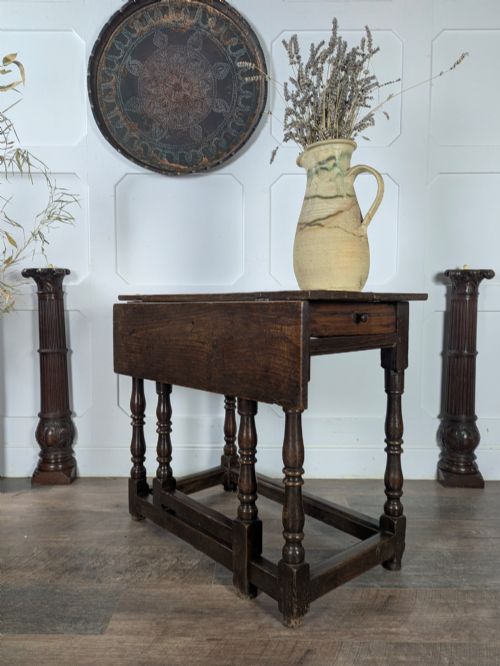
Construction methods rely on sturdy joints, concertina actions, and gateleg frames that support weight when the leaves open. Timber preparation and finishing produce natural patination on the wood surfaces without relying on heavy modern varnishes.
The listings show pieces spanning the eighteenth, nineteenth, and twentieth centuries, with mahogany as the most prominent material.
What varies in quality
The degree of figuration in the timber veneer separates standard examples from exceptional pieces, particularly where Honduras mahogany or burr yew displays depth. Original patination and surface colour show how well a table has aged under domestic care.
The precision of the folding mechanism and the stability of the legs when extended dictate the standard of construction. Subtle details such as inlaid banding, brass mounts, and well-fitted joints distinguish finer cabinet work from utilitarian pieces.
Gillows
The Georgian Folding Side Table Glossary
- Demi lune
- Having a half moon shape with a straight back edge intended to sit flush against a wall.
- Concertina action
- An expandable frame mechanism that extends outwards to support a folding table top evenly.
- Gateleg table
- A table with hinged legs that swing out like gates to support drop leaves.
- Patination
- The natural sheen and surface texture developed on wood over years of handling and polish.
- Butler tray
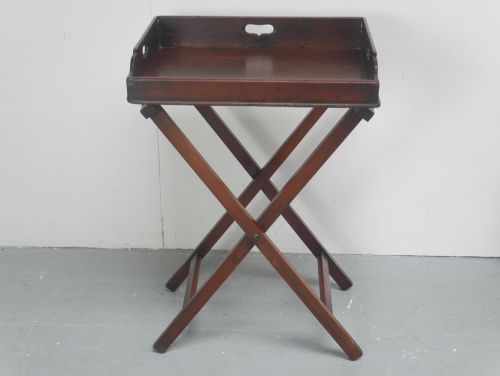
- A removable wooden tray with raised edges designed to rest upon a folding wooden stand.
Georgian Folding Side Table: Frequently Asked Questions
How were card tables used?
Card tables stood against a parlour wall with the top folded closed until visitors arrived for evening entertainment.
When unfolded, the hinged leaf revealed a baize or polished wood surface designed for holding counters and playing cards.
How do I identify a georgian table?
Identification relies on observing specific construction traits, wood types like mahogany and oak, and stylistic markers associated with periods such as George III or Regency.
Looking at the underside, joinery techniques, and timber ageing helps confirm the period of manufacture.
Can I use these tables daily?
These tables adapt well to modern rooms as side surfaces, sofa tables, or occasional desks when treated with care.
Avoiding excessive moisture and placing them away from direct heat sources preserves the antique timber and folding mechanisms.