


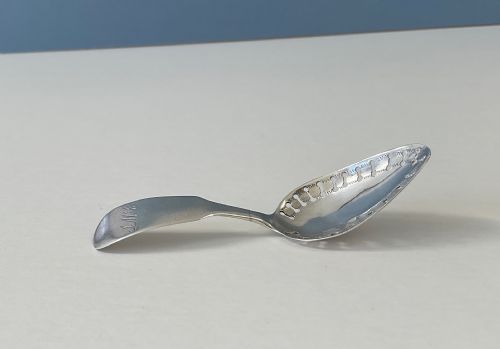


Georgian Flatware Tea Scoop
A Georgian flatware tea scoop is a small silver utensil designed for measuring loose leaves, prized for its miniature scale and domestic utility.
Georgian Flatware Tea Scoop
A georgian flatware tea scoop belongs to a class of small serving implements created to transfer dry leaves from a canister into the pot. Buyers inspecting this selection will find caddy spoons and sugar spoons dating from the eighteenth and nineteenth centuries.
The pieces typically take the form of miniature shovels or leaf designs, originating from London, Birmingham, Glasgow, Dublin, and various provincial workshops. Most examples here fall within the broader Georgian period spanning the late eighteenth and early nineteenth centuries.
How they were made
Silversmiths constructed these items primarily from sterling silver, occasionally employing silver-gilt finishes to line the bowl interiors. Metals were hammered, shaped, and engraved by hand to achieve the distinctive scoop and handle forms.
Techniques varied from plain polished surfaces to double struck decoration and naturalistic botanical motifs such as vine leaves and grapes. Makers applied punches for hallmarks to record the standard of metal, year of assay, and origin.
Georgian Flatware Tea Scoop Retail Price Guide 2026
Typical asking prices for georgian flatware tea scoop among the pieces listed under this phrase on Sellingantiques today, from the lower quarter to the upper quarter. They describe what is for sale here now, not the wider market.
Silversmiths turned tea measurement into botanical art, shaping solid silver into miniature vine leaves for the afternoon table.
What varies in quality
Quality rests upon the crispness of the chasing and the weight of the silver used in the bowl and handle. Elaborate naturalistic designs, such as articulated leaves or detailed provincial hallmarks, distinguish finer examples from plain utilitarian pieces.
The clarity of the makers marks and the preservation of original engraved decoration dictate the standing of an individual scoop. Proportion and balance in the small scale determine whether a piece represents standard commercial output or exceptional workshop skill.
Joseph Willmore·George Wintle
The Georgian Flatware Tea Scoop Glossary
- Caddy spoon
- A short-handled spoon designed specifically for measuring tea leaves from a caddy. These small implements formed part of the necessary dining equipment of the period.
- Silver-gilt
- Sterling silver that has been coated with a thin layer of gold, often applied to the bowl interior. This treatment protected the silver from discoloration caused by damp tea leaves.
- Hallmark
- A series of official stamps struck into the metal to guarantee the purity of the silver. These marks usually indicate the maker, assay office, and year of production.
- Provincial
- Descriptive of items made outside the major assay towns of London or Birmingham. Scottish provincial and Irish pieces show distinct local workshop characteristics.
- Double struck
- A decorative technique where the pattern is impressed onto both sides of the handle or stem. This creates a heavier feel and a more ornate relief.
Georgian Flatware Tea Scoop: Frequently Asked Questions
What is a georgian flatware tea scoop?
A georgian flatware tea scoop is a diminutive silver spoon fashioned to measure loose leaves into a tea caddy during the eighteenth and nineteenth centuries.
These pieces combine practical domestic utility with intricate silversmithing, often featuring shovel bowls or naturalistic leaf designs.
How were caddy spoons used?
They were kept alongside tea canisters to scoop dry leaves out safely without spilling.
Their short handles allowed them to fit neatly inside small storage containers while remaining close at hand for tea preparation.
How do I date a silver scoop?
Dating relies upon reading the hallmarked letters and symbols stamped directly into the silver by the assay office.
London, Birmingham, Glasgow, and Dublin offices used specific date letters that correspond to the active year of manufacture.
Why are some spoons gilt?
Silver-gilt finishes provided a protective layer of gold over the sterling silver base of the bowl.
This gold coating prevented the tannic acid in damp tea leaves from staining or corroding the underlying silver.
What is provincial silver?
Provincial silver refers to items manufactured in regional workshops outside the main city assay offices.
These pieces often display unique local maker marks and subtle variations in regional craftsmanship.