

Georgian Fitted Writing Desk
A georgian fitted writing desk brings domestic order through concealed drawers and fall-front writing surfaces.
Georgian Fitted Writing Desk
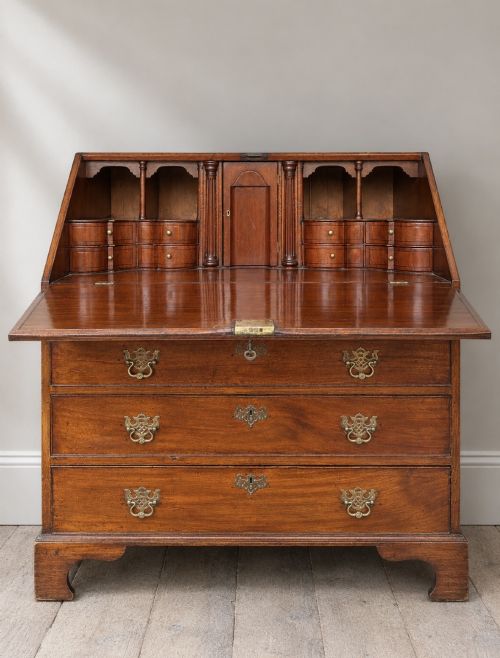
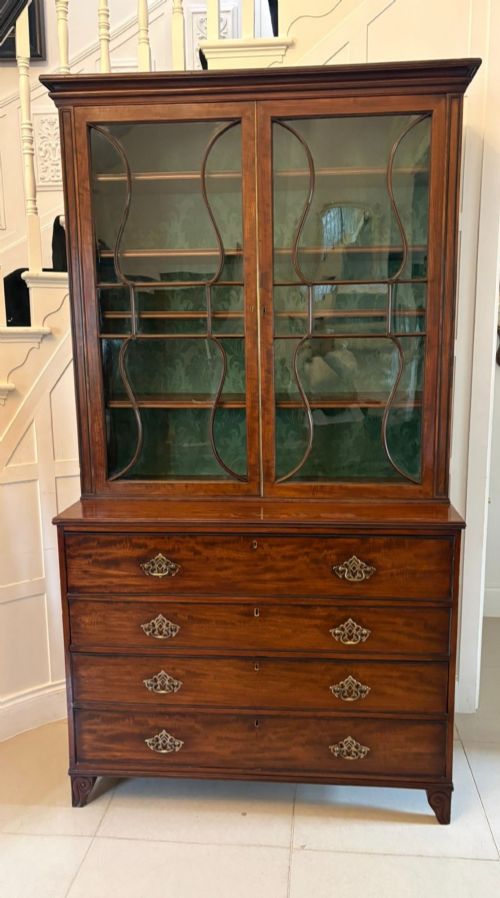
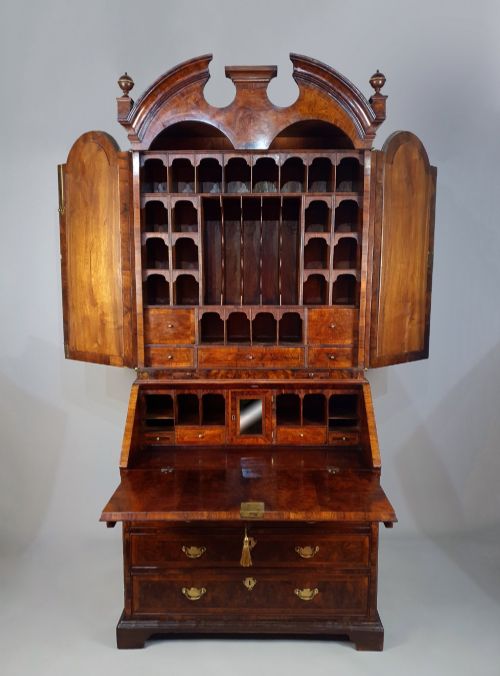
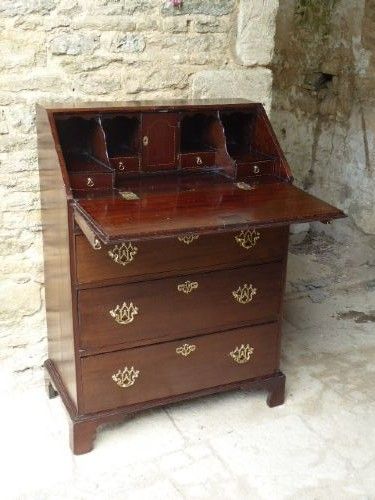
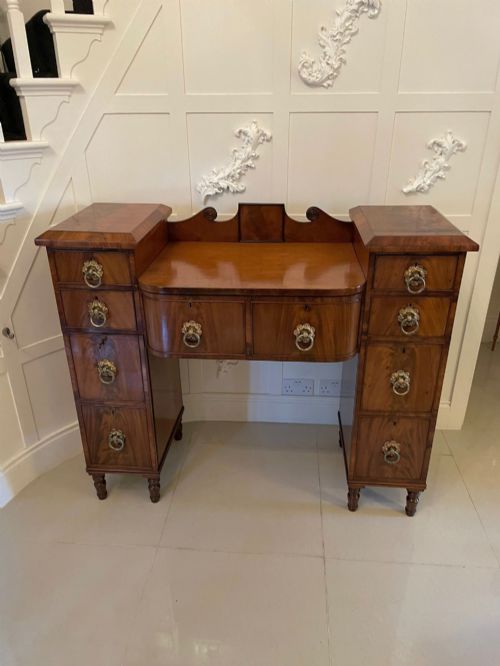
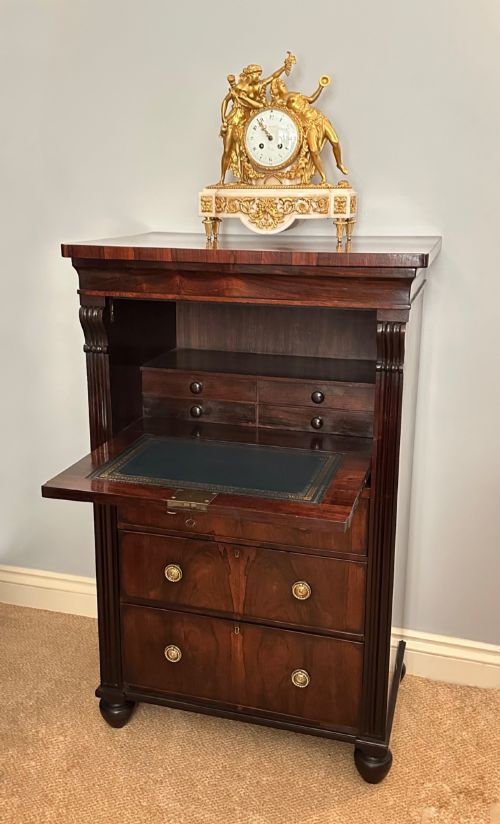
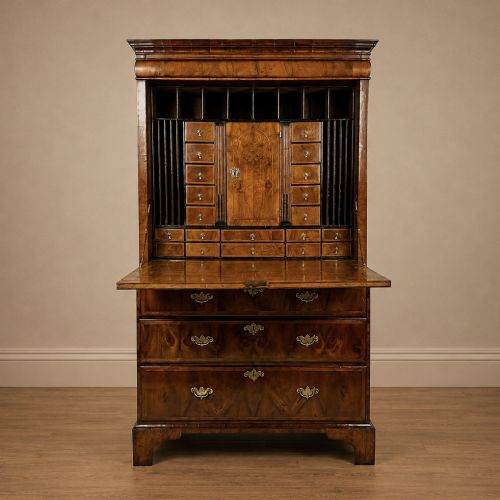
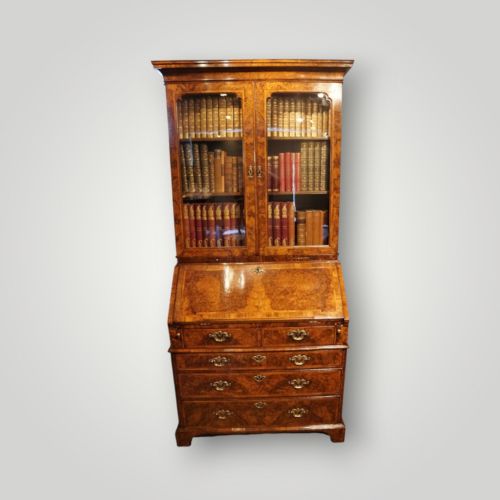
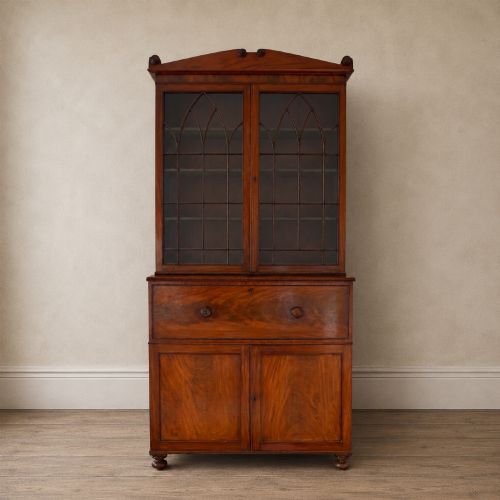
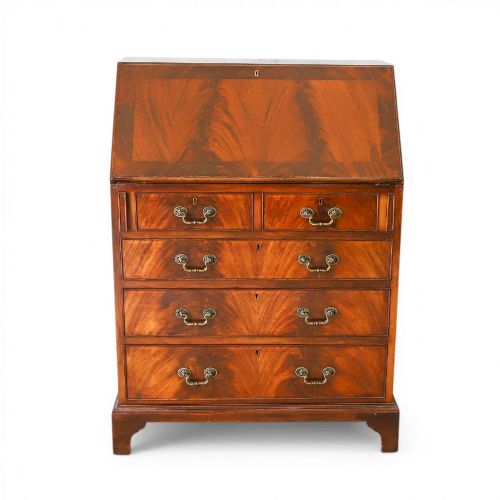
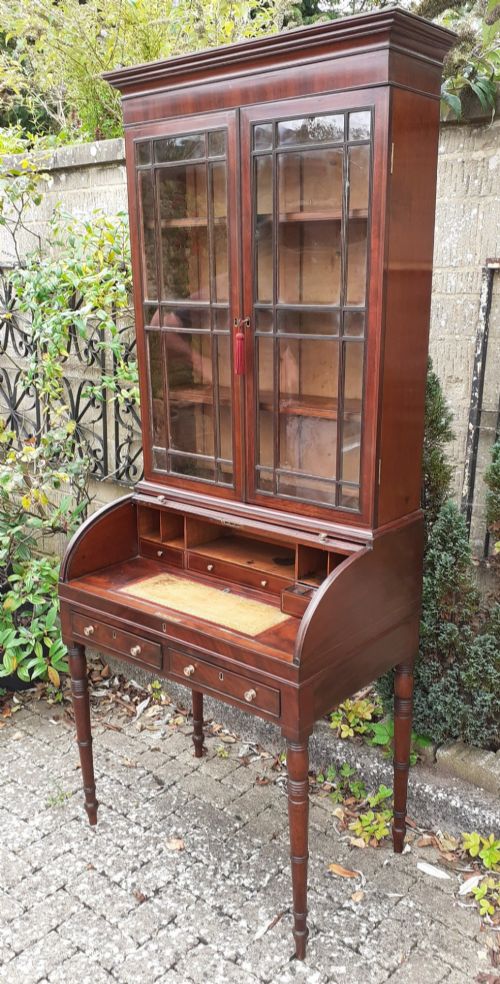
A georgian fitted writing desk appears across this selection primarily as a bureau, a bureau bookcase, or a secretaire chest housing internal compartments. These pieces originate predominantly from the Georgian, Regency, and eighteenth-century periods, alongside occasional nineteenth-century interpretations.
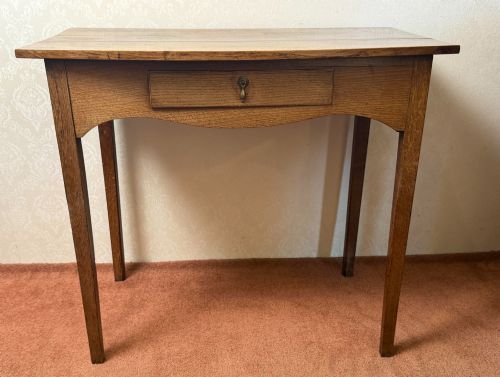
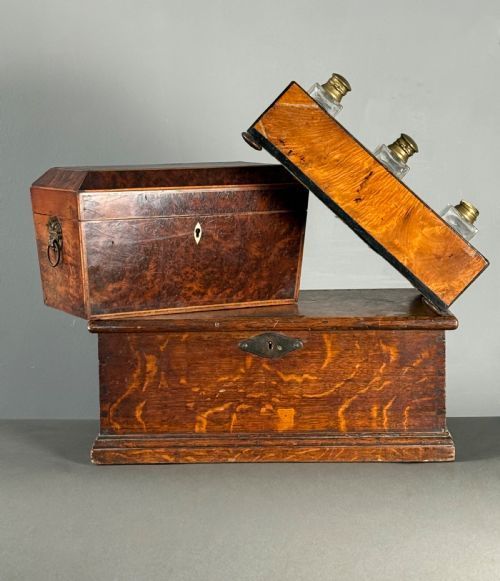
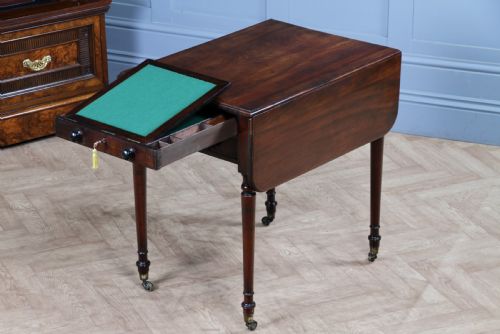
The buyer encounters tallboys, side tables, and compact writing boxes equipped with secret compartments alongside the standard drop-front bureau forms. Oak, mahogany, and walnut dominate the construction, reflecting the prevailing cabinet-making materials of the eighteenth and nineteenth centuries.
Materials and Construction
Cabinet-makers utilised solid timbers and veneers of mahogany, walnut, and oak, frequently framing the interior pigeonholes and small drawers in secondary woods. Brass fittings, baize linings, leather writing surfaces, and glass panel doors complete the structural execution of these desks.
Joinery techniques involve dovetail construction on drawer boxes and pegged frames on earlier oak examples, ensuring rigid housing for the intricate internal fittings.
Listings feature mahogany, oak, walnut, and rosewood across Georgian, Regency, and Victorian periods.
Quality and Distinction
The standard of timber selection and figure sets superior examples apart, particularly where figured mahogany, burr walnut, or flame veneers define the exterior surfaces. Grain matching across drawer fronts and fall-front panels indicates greater workshop competency.
The complexity and execution of the internal nest of small drawers, pigeonholes, and secret compartments dictate the sophistication of the desk. Crisp dovetailing and intact original brass hardware maintain the integrity of the piece.
Tudor and Burrey·Gillows of Lancaster
The Georgian Fitted Writing Desk Glossary
- Bureau
- A desk with a sloping hinged lid that drops to form a writing surface above a bank of drawers. It typically conceals a fitted interior of pigeonholes and small compartments.
- Secretaire
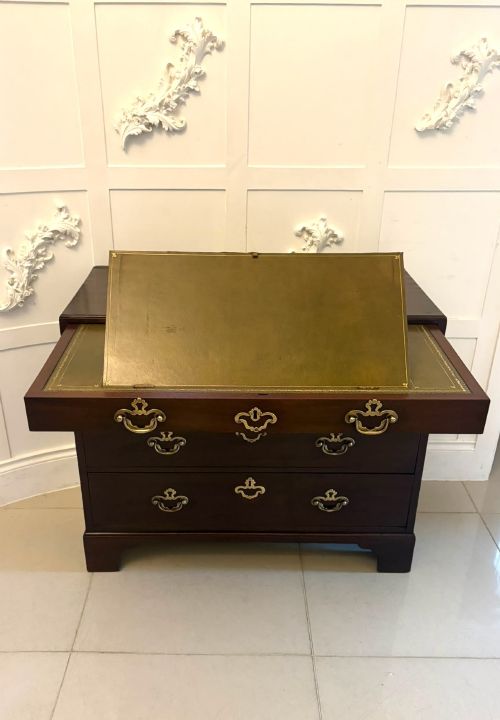
- A piece of furniture incorporating a concealed writing drawer or drop-front desk compartment disguised as a standard drawer or cabinet door. This form appears frequently in bookcases, chests, and sideboards.
- Writing Slope
- A portable or table-standing box with an angled lid designed to hold writing paper and provide a slanted writing surface. These objects often contain secret compartments and pen trays.
- Escritoire
- A writing cabinet or bureau originating in the seventeenth and eighteenth centuries, often featuring a fall-front writing flap. The term frequently applies to sophisticated walnut and mahogany cabinet forms.
- Bracket Feet
- Support feet shaped like a small bracket, positioned beneath the corners of case furniture such as chests and bureaux. They provide stable elevation without heavy proportions.
Georgian Fitted Writing Desk: Frequently Asked Questions
What is a georgian fitted writing desk?
A georgian fitted writing desk is a cabinet piece featuring a fall-front writing flap or pull-out drawer that conceals a collection of small drawers and pigeonholes. These domestic writing stations allowed writers to organise correspondence and store writing materials securely.
They range from compact portable boxes and bureau tables to large library bookcases and tallboys incorporating secretaire drawers.
How do I identify a georgian fitted writing desk?
Examination of the internal arrangement, timber selection, and construction methods helps identify the period and origin. Eighteenth-century pieces typically show hand-cut dovetailing in the secondary drawers and timber patination consistent with age.
Stylistic markers such as bracket feet, glazing bar arrangements, and brass hardware align with Georgian, Regency, or Queen Anne design conventions.
How were these desks used historically?
These desks served as private writing stations for household accounts, correspondence, and record-keeping in domestic parlours and studies. The internal pigeonholes and secret compartments kept sensitive documents and writing implements sorted and secure.
The drop-front or pull-out writing surface provided a stable desk area that could be closed up quickly to conceal the contents.
Where should I place a georgian fitted writing desk?
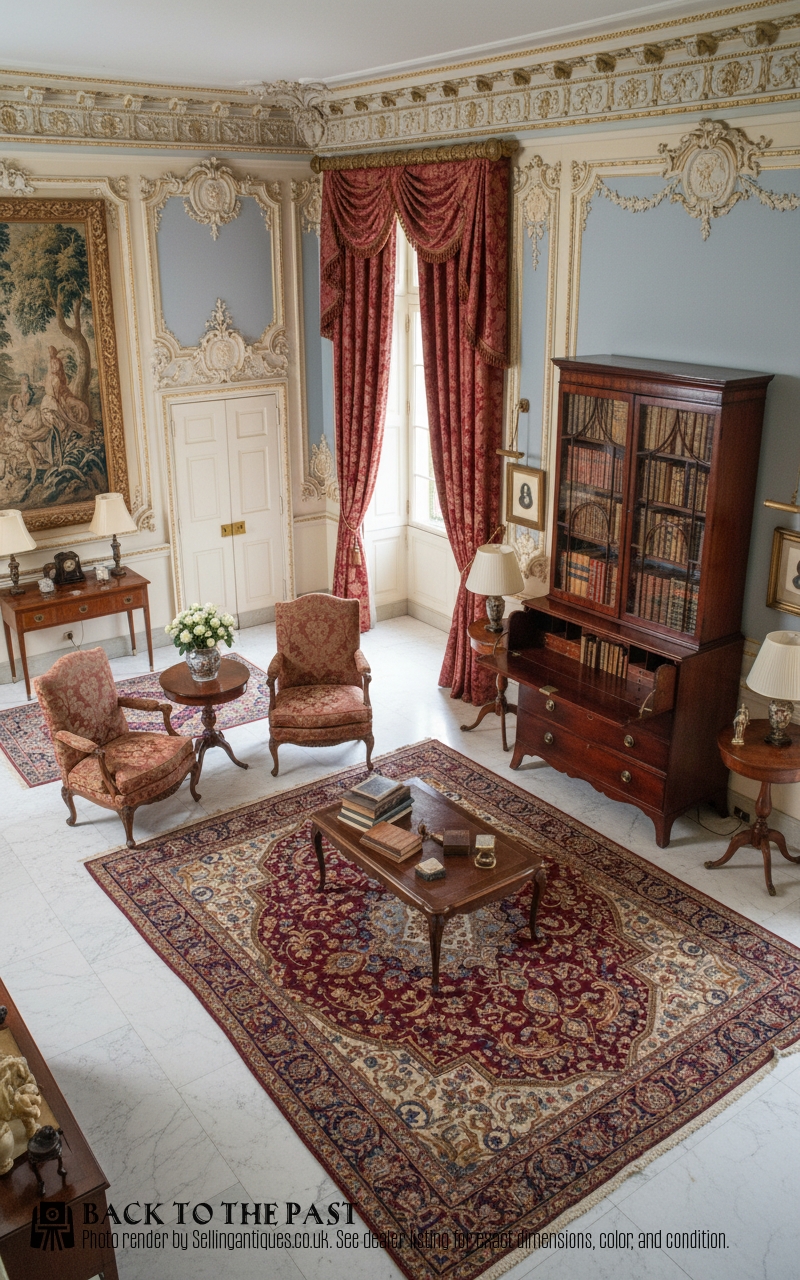
A georgian fitted writing desk suits studies, living rooms, or bedrooms where its compact footprint and storage capacity function practically. Placement should avoid direct sunlight and intense heat sources to protect the aged wood surfaces and leather or baize inserts.
Sufficient clearance must be allowed for the drop-front lid to open fully or for a chair to pull up comfortably.