


Georgian Etagere
A georgian etagere is a tiered open display stand built for holding books, music or decorative objects in proper rooms.
Georgian Etagere
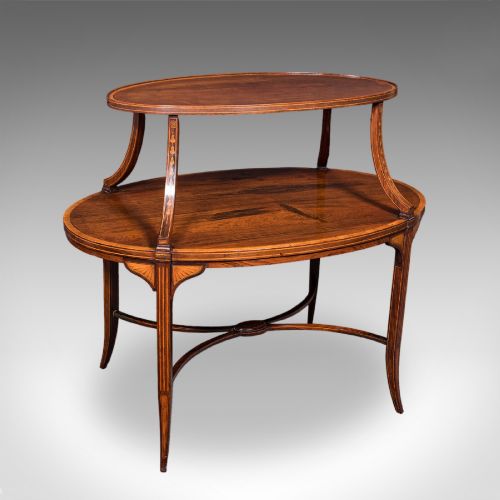
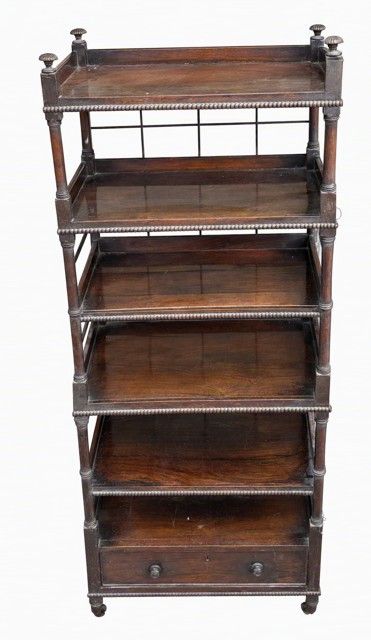
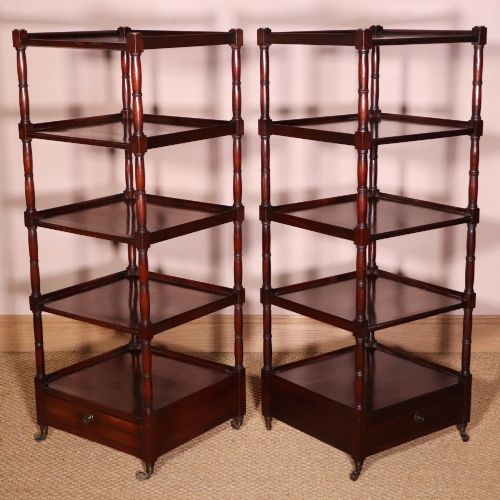
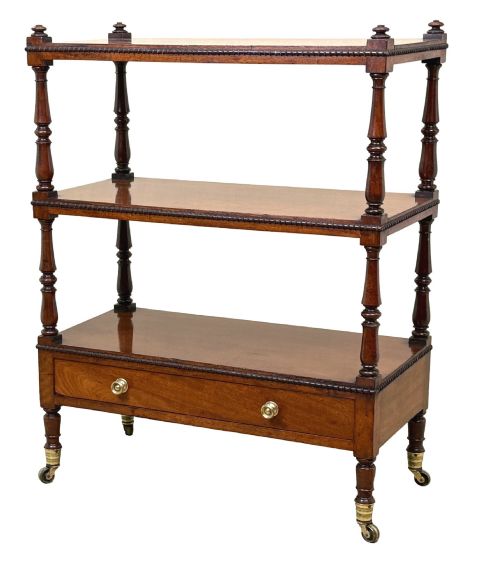
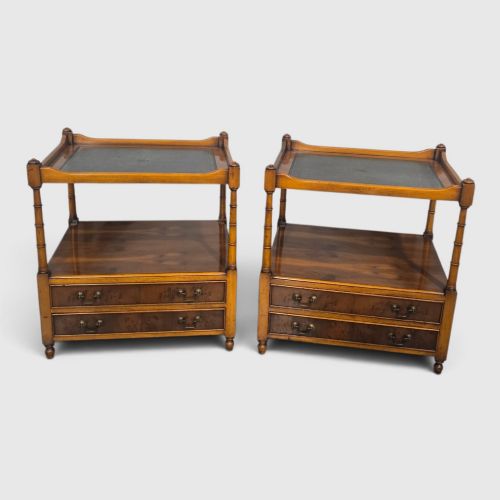
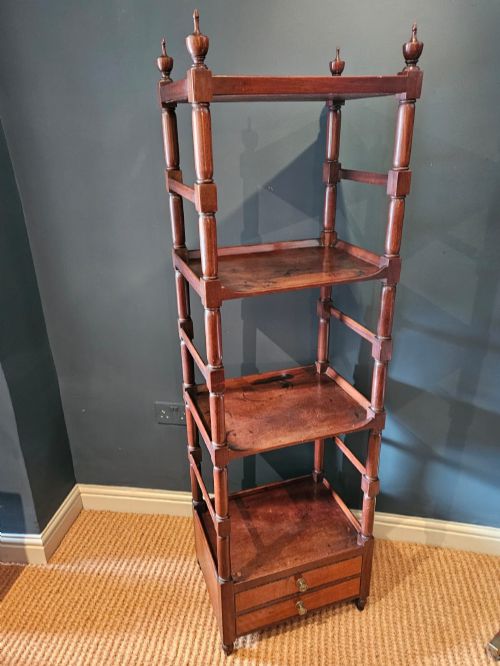
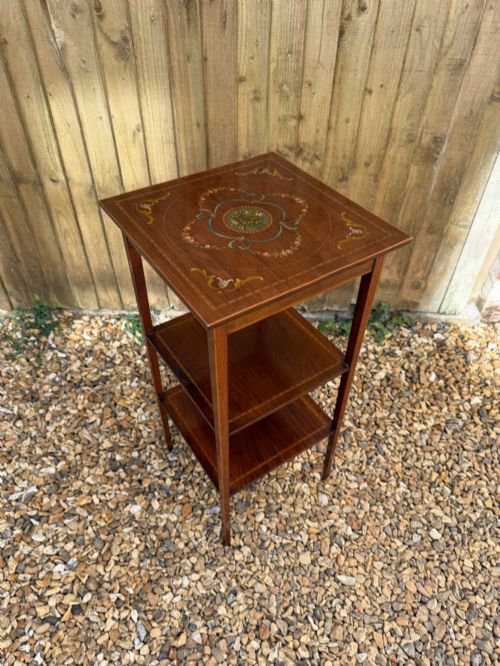
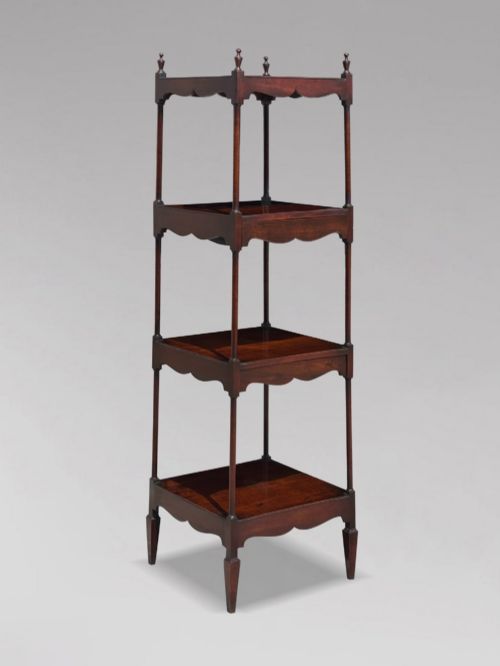
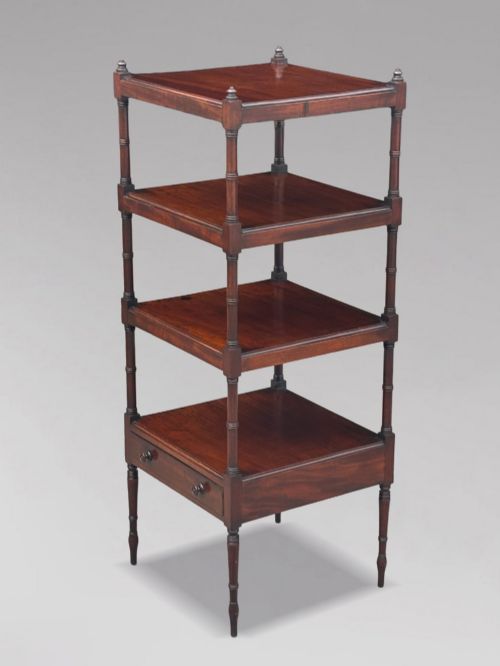
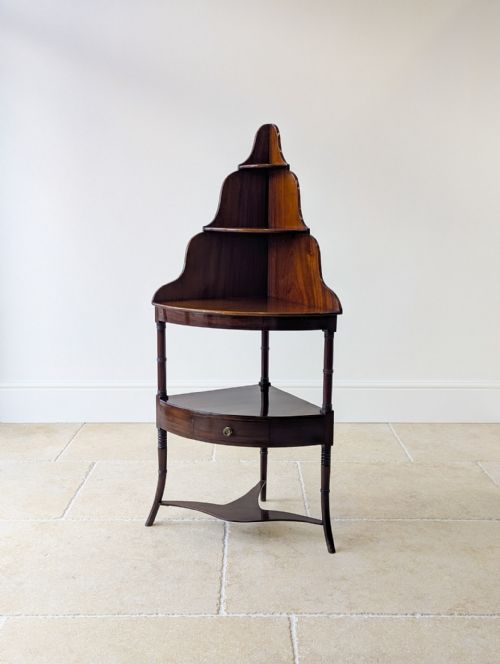
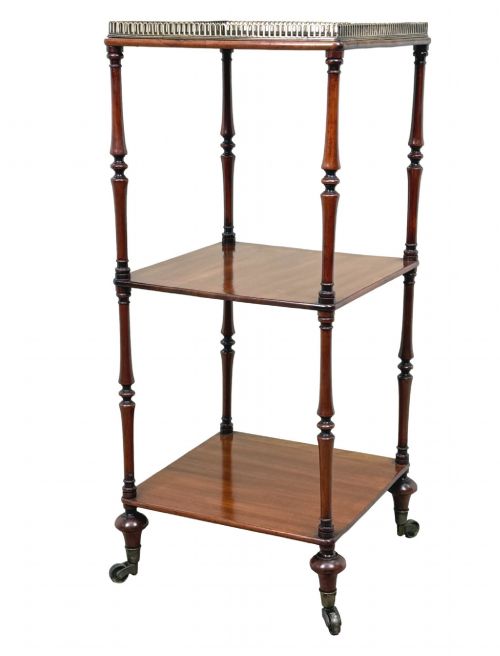
A georgian etagere appears primarily as a tiered open display stand, frequently referred to in listings as a whatnot or tiered corner stand. These pieces emerge across the Georgian, George III, George IV and Regency periods, spanning the late eighteenth century into the early nineteenth century.
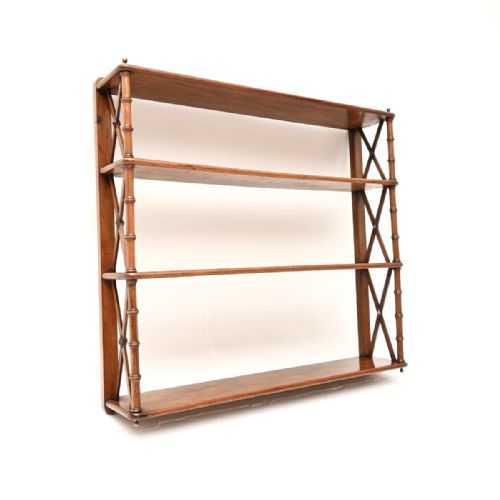
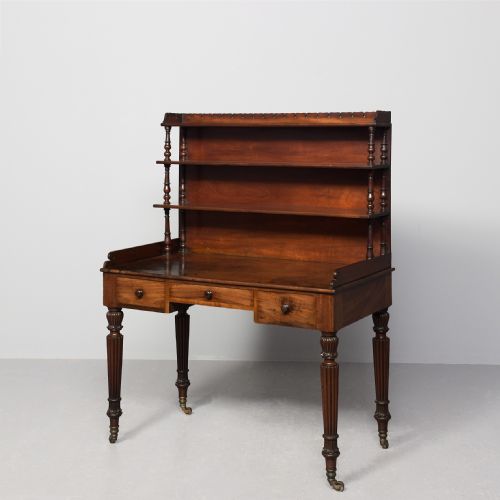
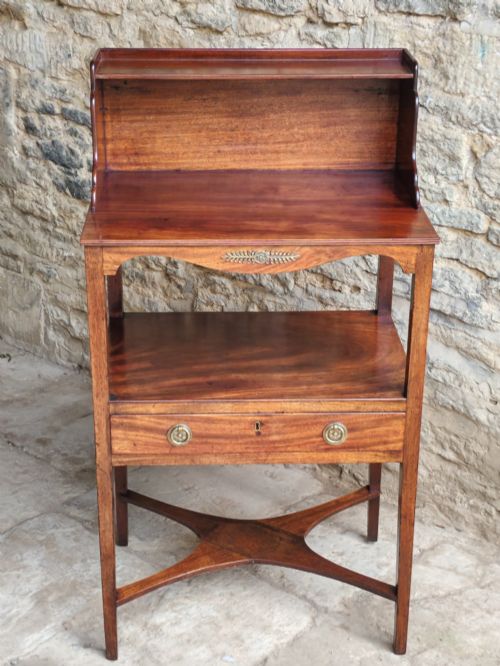
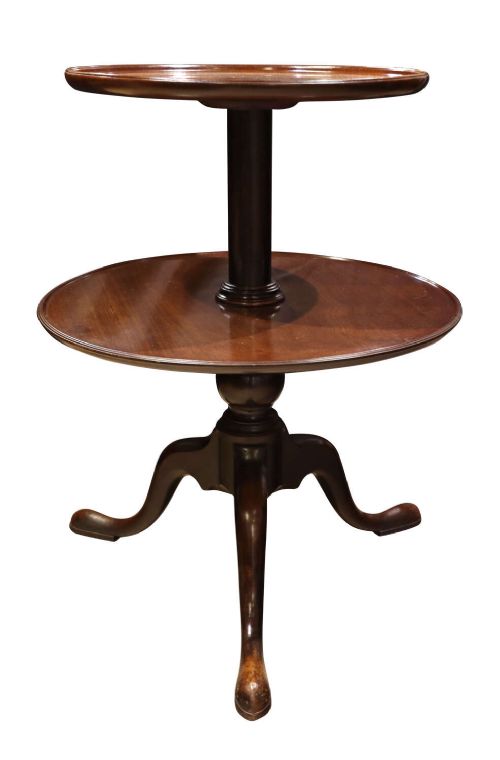
The versions most commonly met on this page include mahogany four-tier and three-tier standing units, alongside specialised forms such as music stands, wall-mounting bookcases, and tripod tables. Surviving examples demonstrate diverse configurations, ranging from tall freestanding shelving units to compact end tables and corner units designed to utilise domestic space efficiently.
Makers and cabinetmakers of the era produced these tiered stands to serve functional roles in libraries, drawing rooms, and bedrooms. The selection reflects both standard workshop production and finer bespoke cabinet work associated with notable regional cabinetmakers.
Judging quality
Quality rests upon the choice of timber and the crispness of the turning on the upright columns. Dense, finely figured mahogany and rich rosewood signify better workshops, whereas plainer woods indicate standard utilitarian output.
Structural proportion and joinery detail separate standard examples from superior pieces. Fine items display precise alignment across multiple tiers, elegant tapering supports, and carefully integrated drawer boxes rather than clumsy assembly.
Attribution to known makers or distinctive regional designs elevates certain pieces above standard workshop production. Refined brass fittings, delicate gallery rails, and unusual structural forms demonstrate superior craftsmanship.
Georgian Etagere Retail Price Guide 2026
Typical asking prices for georgian etagere among the pieces listed under this phrase on Sellingantiques today, from the lower quarter to the upper quarter. They describe what is for sale here now, not the wider market.
Listings feature mahogany, rosewood, oak, and walnut across Georgian, Regency, and nineteenth-century periods.
James Mein of Kelso·Gillows·Strahan of Dublin
The Georgian Etagere Glossary
- Etagere
- A movable tiered piece of furniture with open shelves designed for displaying ornaments, books or small items. It originates from French cabinetmaking and shares characteristics with the English whatnot.
- Whatnot
- A piece of furniture consisting of a set of open shelves for small objects, popular in the Georgian and Regency periods. The term emerged because owners placed miscellaneous items upon its tiers.
- Regency
- A British stylistic period spanning from eighteen eleven to eighteen twenty, defined by classical revival motifs and elegant proportions. Furniture from this era often incorporates exotic veneers and brass inlay.
- George III
- The period of British design spanning from seventeen sixty to eighteen twenty, encompassing robust cabinetmaking and evolving neoclassical styles. Pieces from this era form the foundation of many traditional collections.
- Tripod table
- A small occasional table supported by a central pillar resting on three legs. These items offer stable surfaces for display while occupying minimal floor space.
Georgian Etagere: Frequently Asked Questions
What is a georgian etagere used for?
These tiered stands served primarily to hold books, music folios, and decorative ornaments in principal rooms. Their open shelves allowed owners to store and display miscellaneous household items within easy reach.
In modern settings, they function effectively as display shelving, bedside tables, or corner stands for plants and collections. Their open construction keeps rooms feeling spacious while providing vertical storage.
How do I tell a georgian etagere from a victorian copy?
Early pieces from the Georgian and Regency periods rely on traditional timber framing, hand-cut joinery, and timbers such as solid mahogany or rosewood. The patination on older surfaces develops a deep, mellow warmth through decades of handling.
Later Victorian revivals often utilise machine-cut components, heavier mouldings, and different secondary woods. Examining the underside and the interior joints usually reveals the construction methods characteristic of each era.
Where should I place a tiered whatnot at home?
Corner units fit neatly into unused angles of a room, while rectangular freestanding versions suit spaces beside seating or against panelled walls. Their compact footprint makes them versatile additions to hallways, studies, and drawing rooms.
Avoid placing antique wooden furniture in direct sunlight or near active heat sources to protect the polished timber surfaces. Stable indoor humidity helps preserve the structural integrity of older joints and veneers.
What is the difference between an etagere and a whatnot?
The terms are largely interchangeable in British furniture history, though etagere derives from French terminology for a tiered display stand. Both describe open-shelved furniture designed for holding small possessions.
Listing descriptions often combine the terms to help buyers identify multi-tiered open shelving. Variations in regional terminology and cabinetmaker records account for the dual naming conventions.