


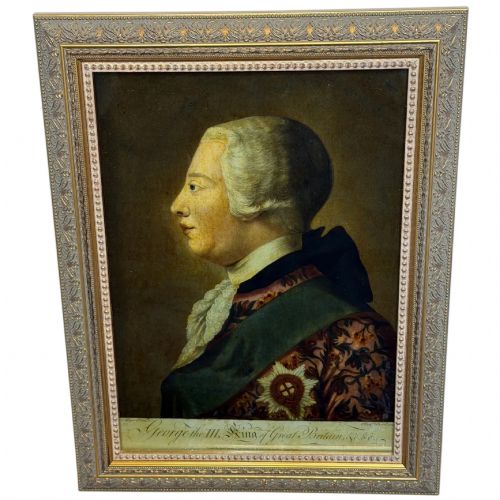

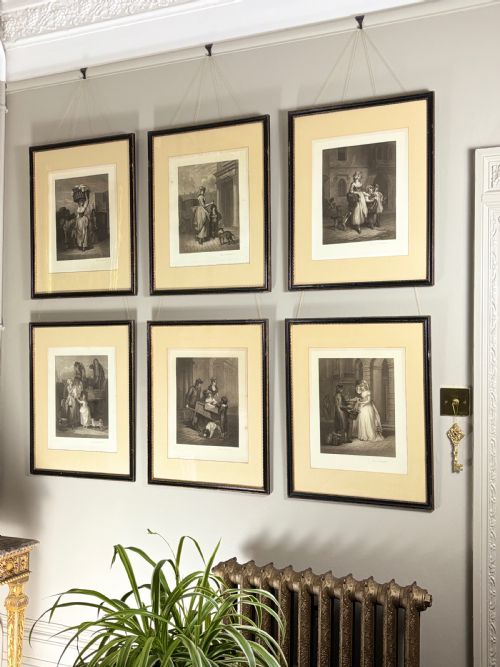


Georgian Engraving of London
A georgian engraving of london brings the historic capital into focus through detailed prints on paper.
Georgian Engraving of London
When you search for a georgian engraving of london, you encounter framed prints and portfolios depicting views of the River Thames, specific buildings, and city scenes.
The material record on this page ranges from eighteenth century copperplate engravings and hand-coloured prints to mezzotints produced across Georgian and Victorian periods.
Buyers most frequently meet framed topographical views, historical maps, and satirical prints that document the architecture and street life of the era.
Materials and Technique
The pieces rely primarily upon paper sheets inscribed through copperplate engraving and mezzotint techniques, often enhanced with hand-colouring.
Frames utilise woods such as maple and rosewood, preserving the delicate paper surfaces against environmental wear.
Georgian Engraving of London Retail Price Guide 2026
Typical asking prices for georgian engraving of london among the pieces listed under this phrase on Sellingantiques today, from the lower quarter to the upper quarter. They describe what is for sale here now, not the wider market.
Listings feature paper prints and maps spanning the Georgian, Victorian, and nineteenth-century periods.
Evaluating Quality
The crispness of the lines and the depth of the plate mark distinguish a superior impression from a worn or later copy.
Original hand-colouring, where present, exhibits deliberate control and subtlety that elevates the visual record above mass-produced alternatives.
Richard Purcell·Thomas G Appleton·Riepenhausen
The Georgian Engraving of London Glossary
- Engraving
- A printmaking technique where an artist cuts lines directly into a copper plate using a sharp tool called a burin. The resulting incisions hold the ink for transfer onto paper under pressure.
- Mezzotint
- A tonal printmaking method that allows half-tints to be produced by roughening the copper plate evenly. This technique creates rich dark backgrounds and smooth gradations of light.
- Copperplate
- A flat sheet of copper utilised as the matrix for engraving or etching detailed illustrations. These plates wore down over time, making early impressions sharper.
- Plate mark
- The indentation left on the paper by the edge of the metal plate during the printing press operation. Its presence confirms the use of traditional printing plates.
- Hand-coloured
- The application of watercolours or pigments by hand to a printed monochrome image. This adds realistic hues to architectural views and maps.
Georgian Engraving of London: Frequently Asked Questions
What subjects do these london prints show?
The subjects include panoramic views of the River Thames, historical buildings, maps of the city and its environs, and social satires of urban life.
These depictions offer a visual record of how the capital appeared and developed across the eighteenth and nineteenth centuries.
How should I frame an antique paper engraving?
Protect the paper by using acid-free mounting materials and framing with UV-filtering glass to prevent fading from light exposure.
Keep the framed print away from direct sunlight and damp environments to preserve the integrity of both the paper and the ink.
Are these prints original to the georgian period?
The selection includes genuine eighteenth and nineteenth-century impressions pulled from original plates, alongside later printings recorded in the evidence.
Examining the paper characteristics and the sharpness of the plate mark helps establish the printing era.
How do copperplate engravings differ from mezzotints?
Engravings rely on precise incised lines to form an image, producing sharp outlines and detailed architectural views.
Mezzotints build the image from dark tones to light, creating soft gradients suited to portraits and atmospheric scenes.