

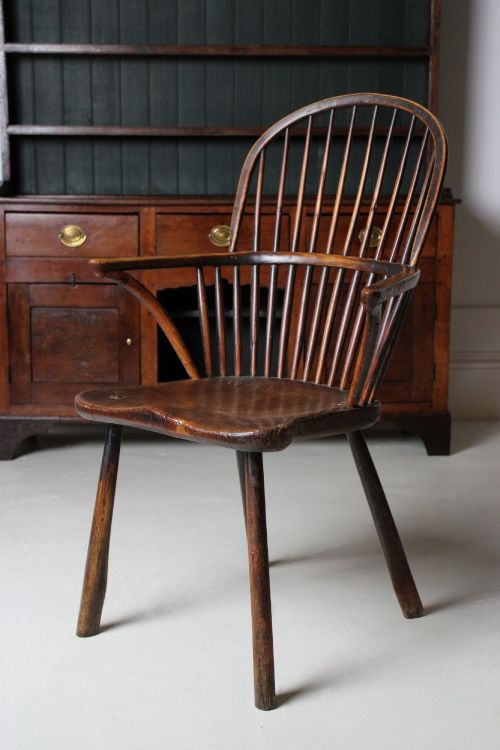
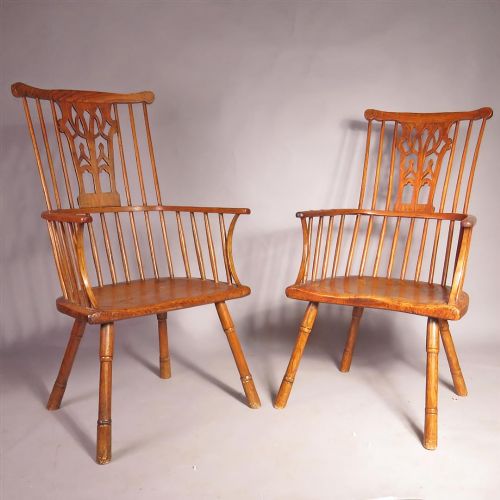
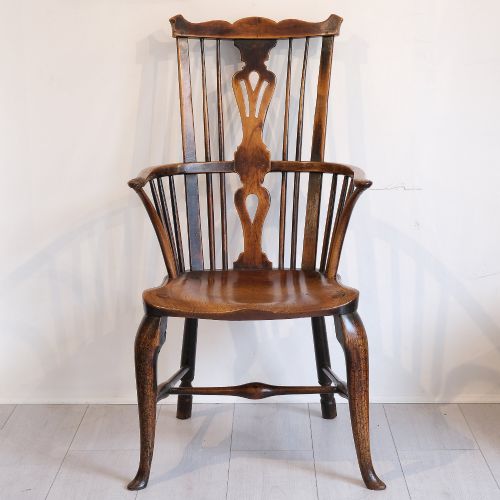
Georgian Elm Windsor Chair
When you search for a georgian elm windsor chair, you seek a traditional rustic seat shaped by country makers using native timbers.
Georgian Elm Windsor Chair
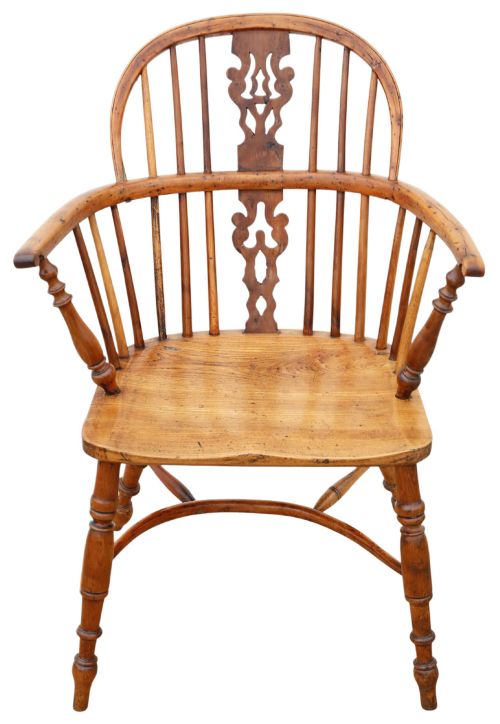
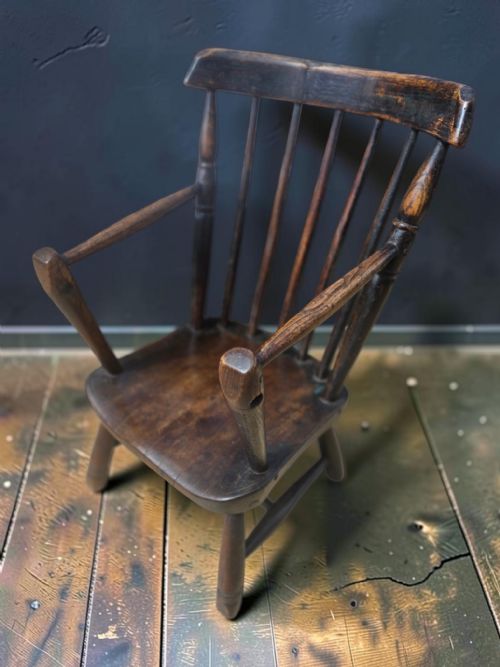
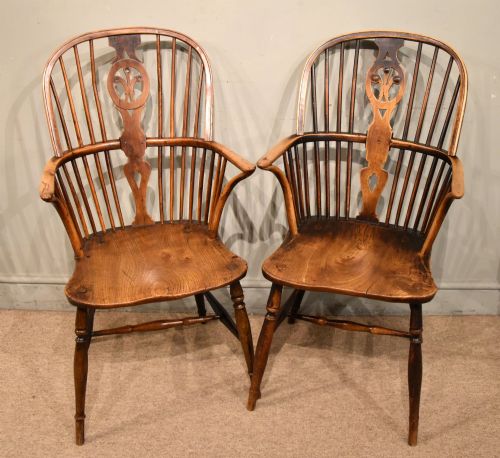
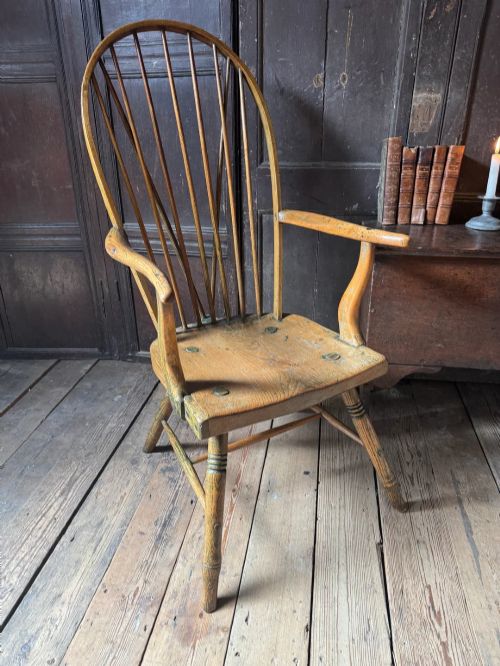
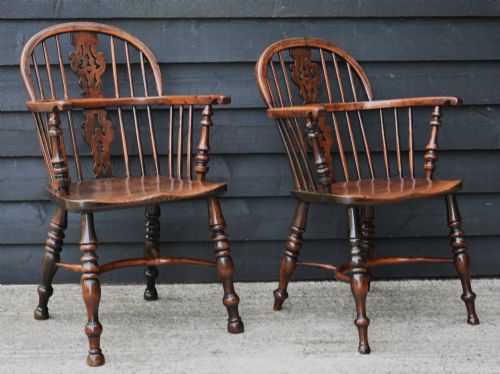
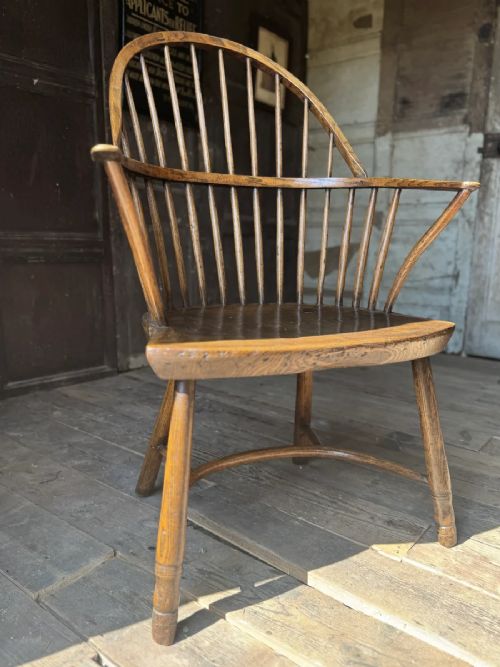
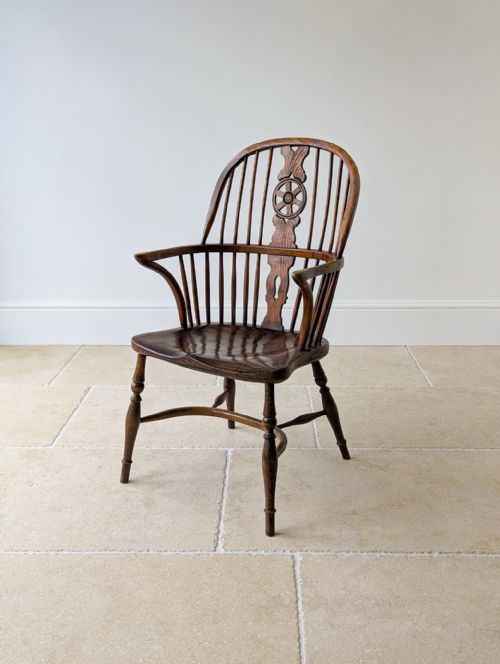
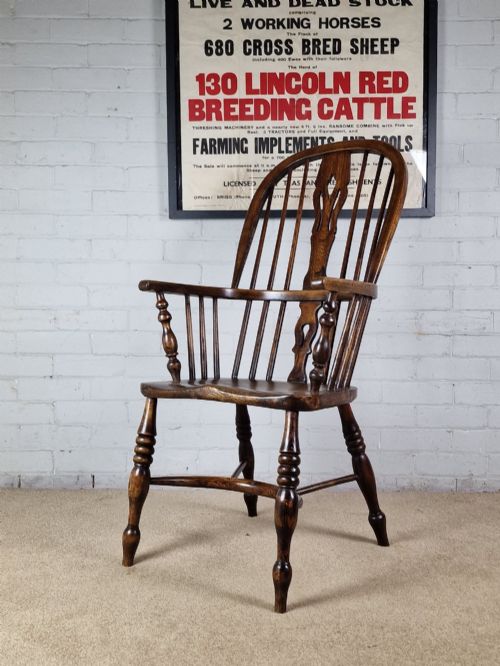
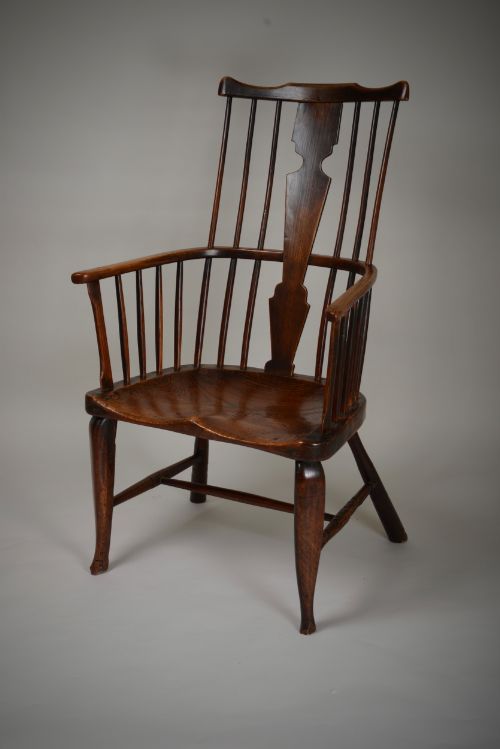
A georgian elm windsor chair combines a solid sculpted wooden seat with an upper assembly of spindles and a bentwood bow or comb back. These pieces emerge from English regional workshops during the eighteenth and nineteenth centuries, taking forms such as high-backs, low-backs, and wheel-backs.
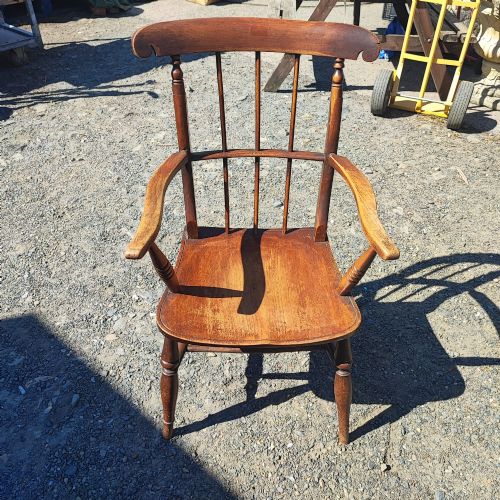
The most common examples met here pair a thick elm seat with ash underframing and spindles, often supported by turned legs joined by stretchers. Makers construct these chairs for everyday domestic utility in farmhouses, kitchens, and country houses, leading to survivors that display honest wear from generations of use.
Regional variations define the selection, with Thames Valley, West Country, and Lincolnshire hubs producing distinct back designs and turning patterns. Buyers encounter armchairs, carvers, and occasional children's chairs that reflect local vernacular traditions rather than strict London cabinet-making conventions.
Timbers and Construction Methods
Elm provides the primary material for the saddle-shaped seats, selected for its interlocking grain that resists splitting when wedged with legs and spindles. Chairmakers combine this tough timber with ash for the bent components and underframing, while yew and fruitwood occasionally appear in higher-status regional examples.
Construction relies on the stick-built technique where turned legs and back spindles fit directly into bored holes through the solid seat slab. Pegs and wedges secure these joints tightly without relying on extensive glue or complex joinery, allowing the wood to move naturally with seasonal humidity changes.
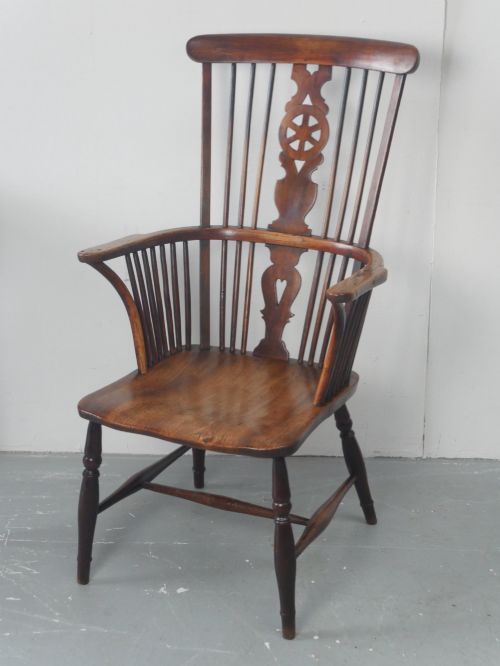
Makers occasionally recycled sturdy cartwheel parts into the central splats of nineteenth-century wheel-back chairs.
Distinctions in Execution and Proportion
Quality rests in the depth and comfort of the adzed seat squab, the grace of the bentwood bow curve, and the crispness of the leg turnings. Superior examples maintain balanced proportions where the rake of the legs provides both visual lightness and sturdy stability.
The choice of secondary woods also marks a distinction, as chairs utilising figured yew wood or rich fruitwood alongside elm command greater attention than utilitarian ash and beech variants. Original surface patination and minimal timber replacement preserve the integrity that collectors prize above heavily restored substitutes.
The Georgian Elm Windsor Chair Glossary
- Comb back
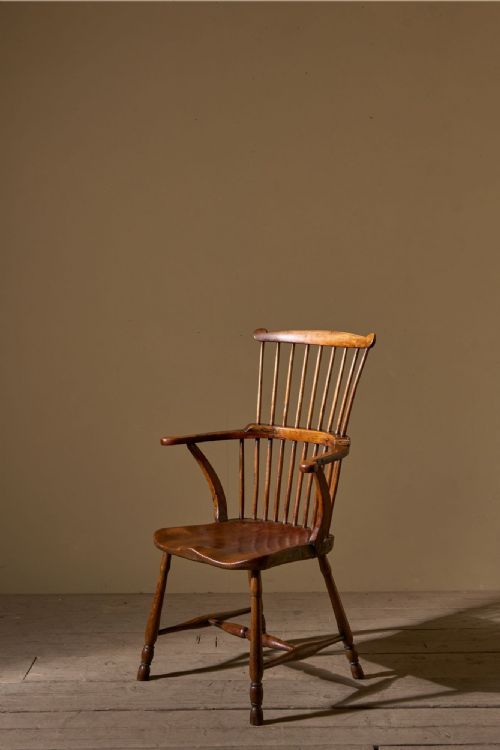
- A Windsor chair variation where the vertical spindles rise to a flat top rail resembling the teeth of a dressing comb. This regional form appears frequently on eighteenth-century examples.
- Crinoline stretcher
- An arched underframe reinforcement joining the legs of a Windsor chair in a continuous loop. It provides structural rigidity and often takes a subtle bow shape.
- Hoop back
- A continuous bentwood rail forming the arms and upper back of the chair in a single sweeping arc. It distributes weight evenly down to the solid seat.
- Vernacular
- Objects made by local regional craftsmen following traditional local patterns rather than metropolitan academic designs. These pieces suit rural domestic life.
- Wheel back
- A Windsor chair back featuring a pierced splat carved in the shape of a spoked cart wheel. This design gains popularity during the later Georgian period.
Georgian Elm Windsor Chair: Frequently Asked Questions
What is a windsor chair?
A windsor chair is a timber seat constructed by inserting individual spindles and legs directly into a thick, centrally excavated wooden plank.
Unlike framed chairs, this stick-built method relies on wedged tenons to hold the structural elements firmly in place.
How do I date a windsor chair?
Dating relies on observing tool marks, the species of secondary woods, and the evolution of back designs like the comb or wheel motif.
Earlier eighteenth-century variants tend to display simpler stick or comb backs with thick elm seats, while nineteenth-century pieces introduce varied turnings and steam-bent hoops.
Where were these chairs made?
Regional workshops across England produced these chairs, with notable concentrations in the Thames Valley, the West Country, and Lincolnshire.
Local timber availability dictated whether makers used yew, ash, or fruitwood alongside the standard elm seats.
How should I care for elm?
Keep elm furniture away from direct heat sources and sudden temperature swings to prevent the interlocking grain from splitting or warping.
Apply occasional traditional wax polish to nourish the surface and maintain the natural lustre of the timber over time.