
Georgian Drop Leaf
When you search for georgian drop leaf, you encounter tables engineered with folding flaps to adapt surface area for dining, writing, or occasional use.
Georgian Drop Leaf
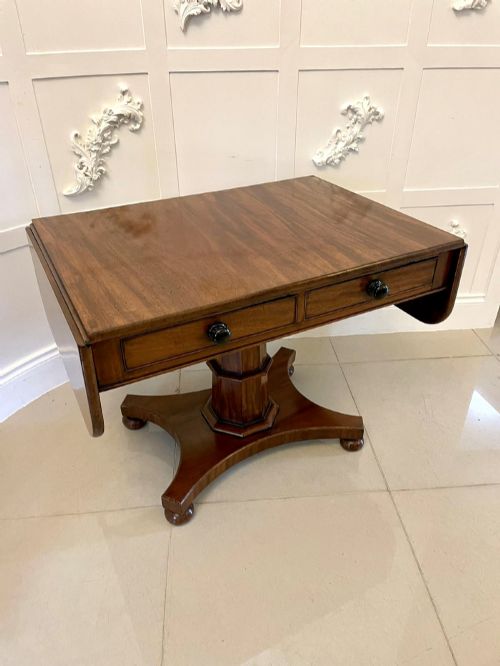
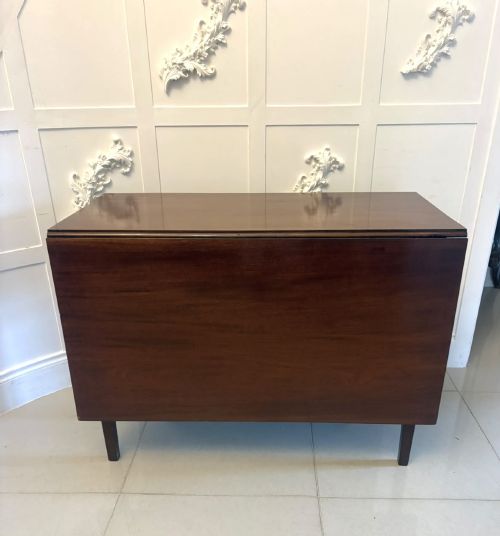
The category encompasses dining tables, pembroke tables, sofa tables, and gateleg tables produced across the eighteenth and nineteenth centuries. These pieces serve domestic spaces by offering extendable surfaces that fold down when floor space is needed.
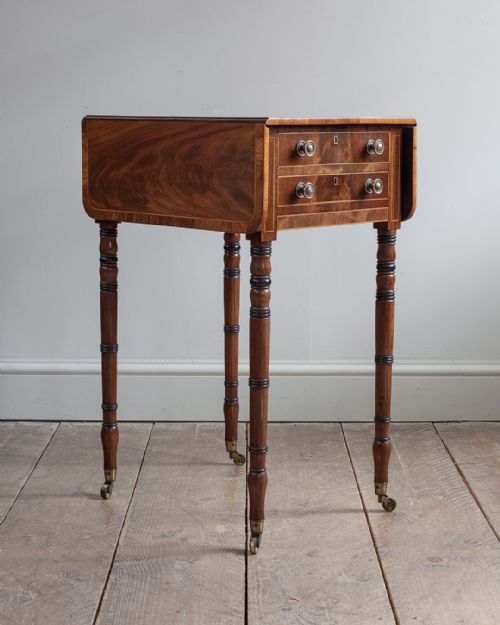
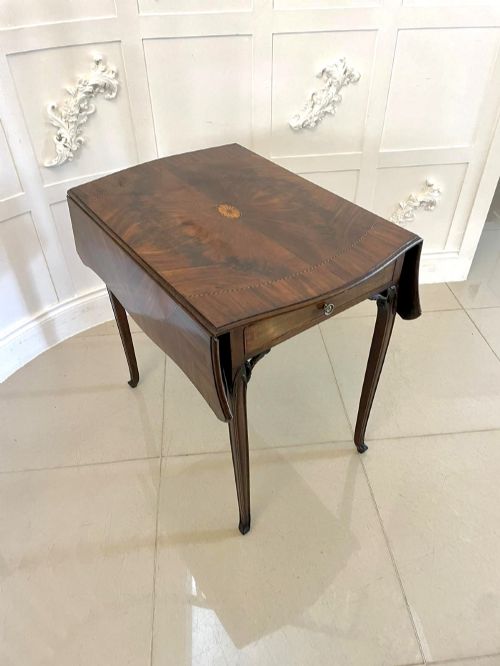
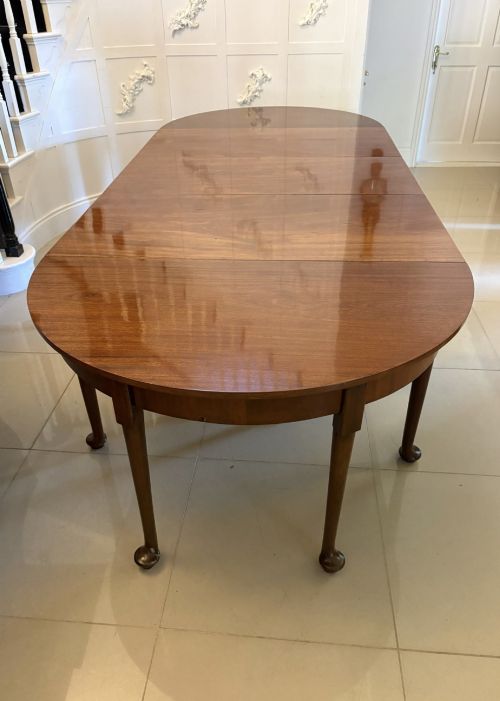
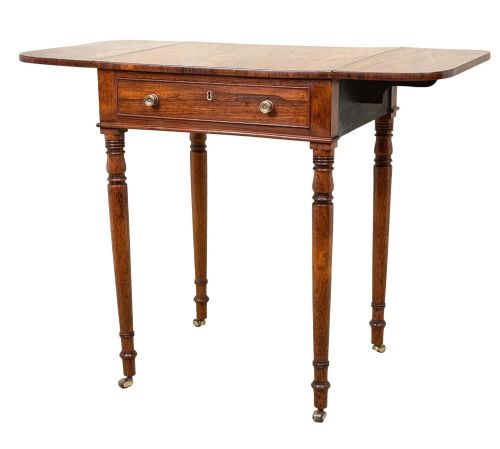
Mahogany and oak dominate the forms, frequently appearing as Pembroke tables with single or double drop flaps alongside larger gateleg dining versions. The evidence shows styles spanning George II, George III, and Regency periods.
Simpler country oak and red walnut examples sit alongside finely inlaid satinwood and rosewood pieces intended for more formal reception rooms.
Materials and construction methods
Cabinet makers utilised solid timbers such as mahogany, oak, and walnut, frequently selecting figured veneers for table tops and drawer fronts. Drop flaps require sturdy pivoting leg mechanisms or gatelegs to support the weight of the hinged leaves.
Inlay work incorporating boxwood and satinwood decorates the surfaces of formal Pembroke and writing tables, while brass fittings secure hinges and drawer pulls.
Listings feature mahogany, oak, rosewood, and walnut across periods spanning the eighteenth century, Regency, and Victorian eras.
Factors that define quality
The choice of timber grain, such as figured mahogany or Cuban mahogany, distinguishes standard utilitarian tables from finer parlour pieces. Precision in the joinery of the drop leaf hinges and the smoothness of the folding mechanism indicate superior cabinet making.
Original hardware, delicate crossbanding, and subtle inlay work elevate the refinement of the piece.
The Georgian Drop Leaf Glossary
- Drop Leaf
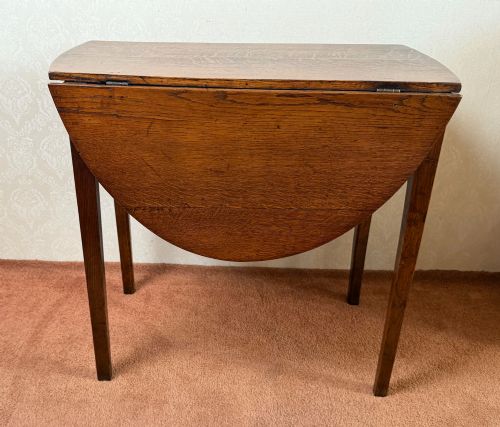
- A table with a fixed central section and hinged flaps that fold down to reduce the footprint. These flaps lift to create a larger surface when supported by swing legs or gates.
- Pembroke Table
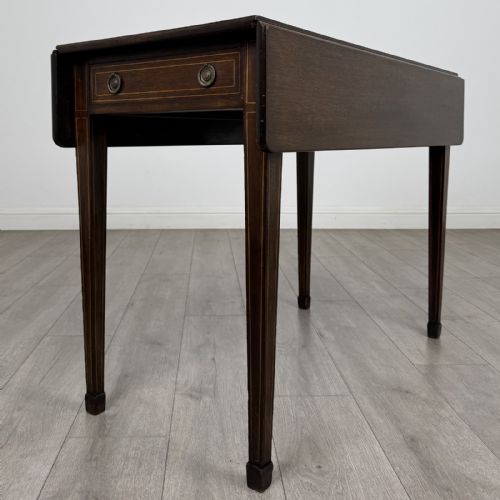
- A small rectangular table featuring two hinged drop leaves on opposing sides, frequently fitted with a drawer. They originated in the eighteenth century as versatile breakfast or writing tables.
- Gateleg Table
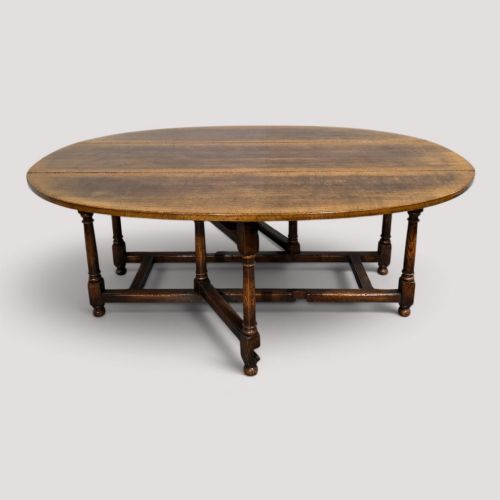
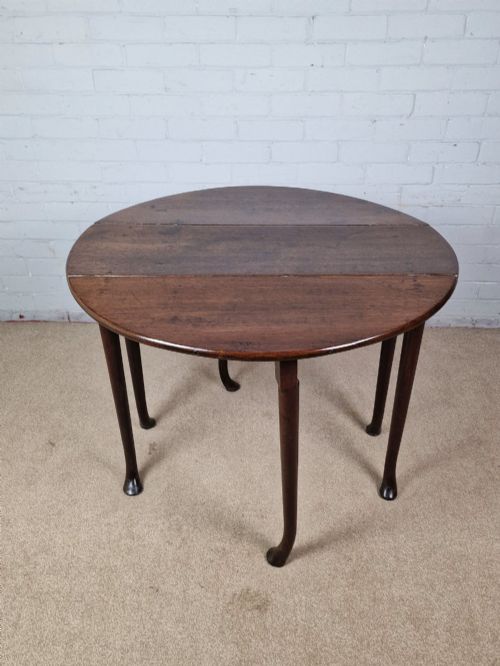
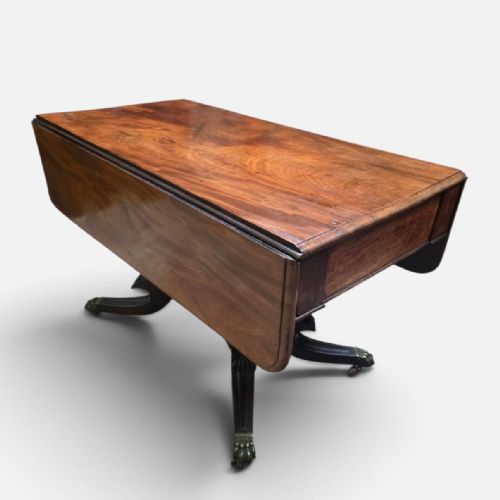
- A table featuring legs hinged to swing outward like a gate, providing direct support underneath the raised drop leaves. This construction allows large oval dining surfaces to collapse compactly.
- Pad Foot
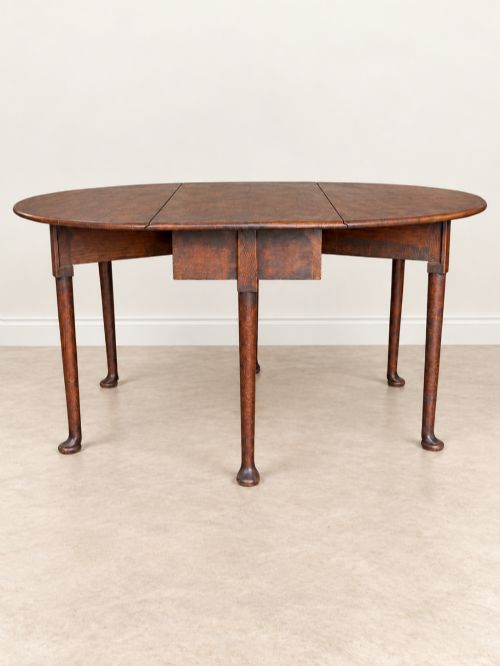
- A simple rounded foot resting flat on the floor, commonly seen on eighteenth-century cabriole legs. This foot style appears frequently on early mahogany and walnut drop leaf tables.
- Sofa Table
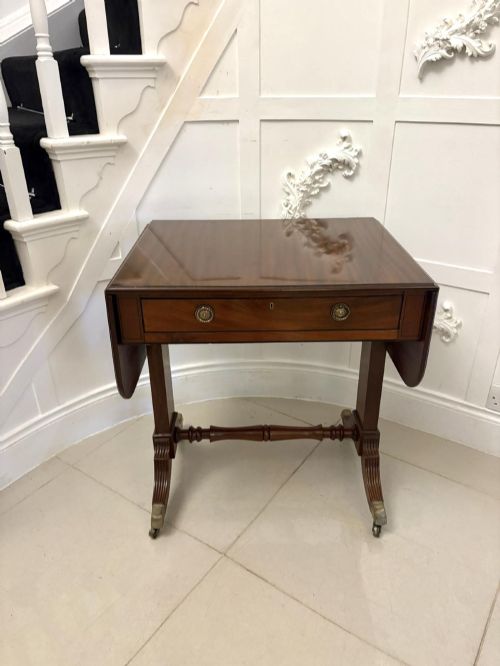
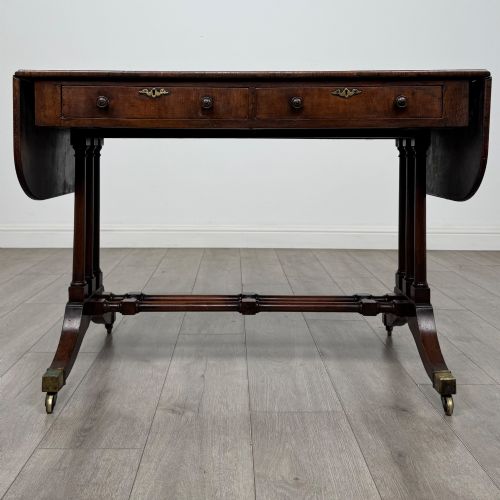
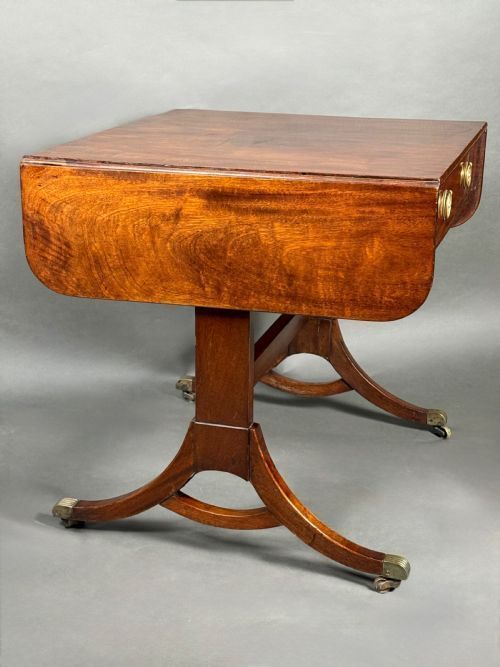
- A long, narrow table designed to stand in front of or behind a sofa, equipped with drop leaves on either end. Regency versions often incorporate dual pedestals and stretcher rails.
Georgian Drop Leaf: Frequently Asked Questions
What is a georgian drop leaf table used for?
These tables provide versatile surfaces that expand for dining or writing and fold down to save floor space when not in use. They function across dining rooms, parlours, and sitting rooms.
Smaller pembroke and occasional formats suit bedside or writing tasks, while large gateleg and dining variants accommodate multiple guests.
How do you tell a pembroke table from a gateleg table?
Pembroke tables typically feature two relatively narrow drop leaves on opposite sides and one or more small drawers. They rely on hinged brackets or a single swing leg to hold each leaf.
Gateleg tables feature larger oval or circular leaves supported by swinging frame legs that pivot out from the main structure to bear the weight.
Which woods were used for georgian drop leaf tables?
Mahogany is the predominant timber found in these pieces, alongside regional variants in solid oak and red walnut. Finer formal examples incorporate rosewood, satinwood, and decorative crossbanding.
Earlier eighteenth-century pieces often utilise heavy oak or Cuban mahogany, while later nineteenth-century versions introduce exotic veneers.
How do you date a drop leaf table?
Dating relies on timber selection, leg profiles, and structural joinery details associated with specific reigns and periods. Pad feet and cabriole structures point towards mid eighteenth-century production.
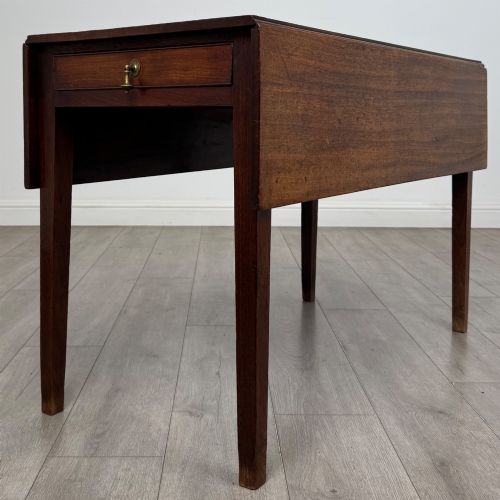
Straight tapered legs, boxwood stringing, and Pembroke proportions indicate late eighteenth or Regency eras, while later nineteenth-century pieces show Victorian revival characteristics.