

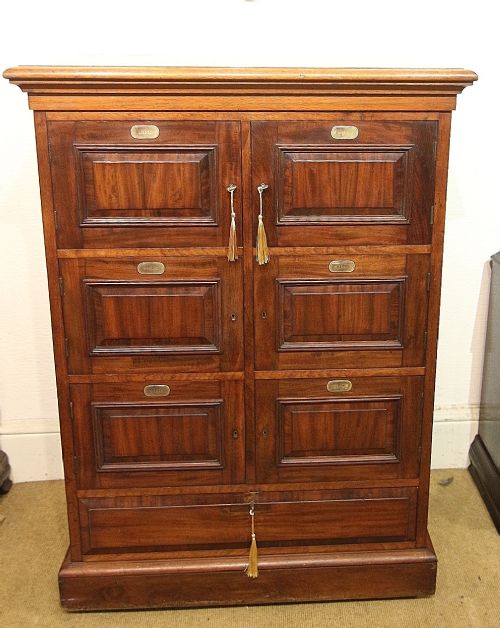
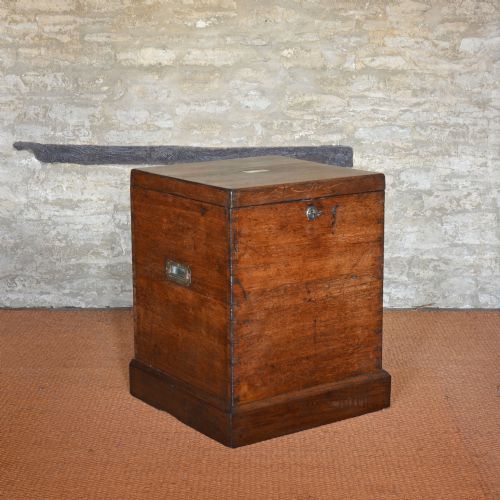
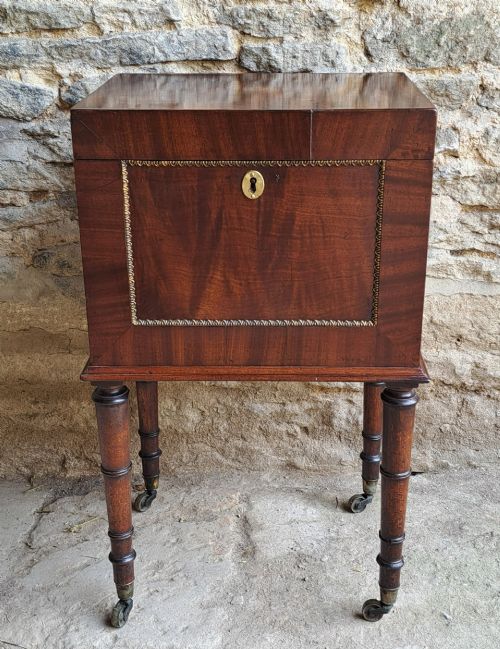
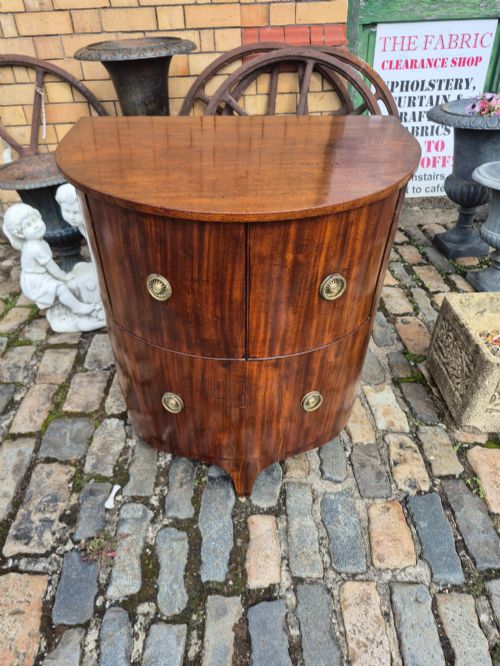




Georgian Drinks Chest
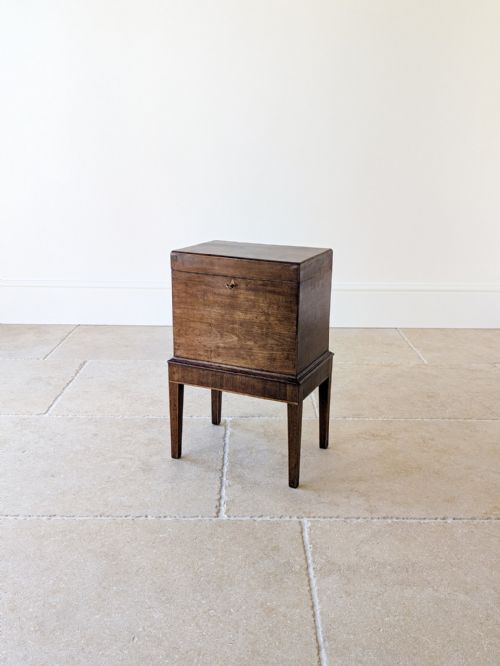
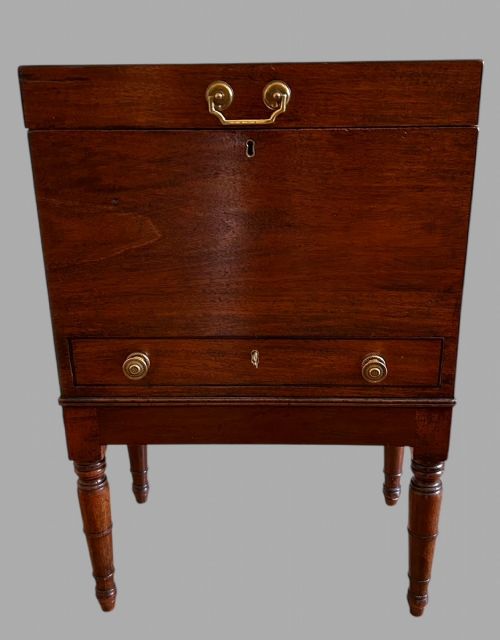
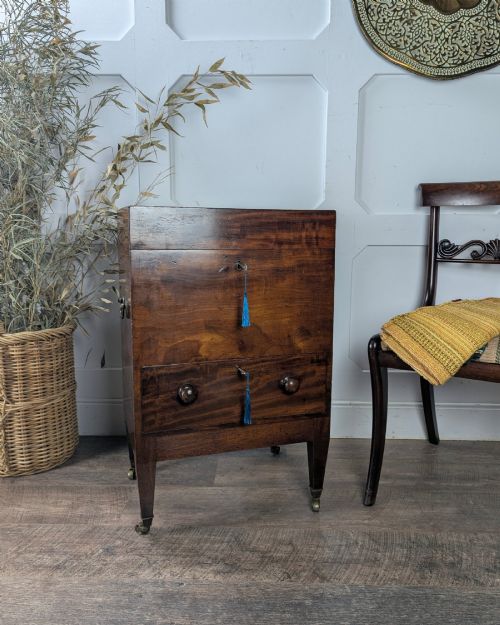
A georgian drinks chest sits quietly beneath the sideboard or beside the dining table, storing precious bottles and cooling wine for the evening.
Georgian Drinks Chest
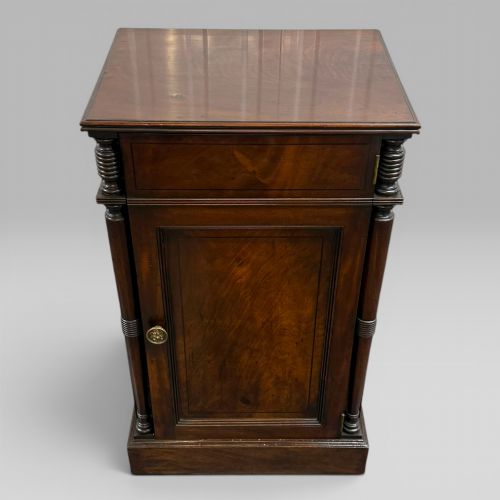
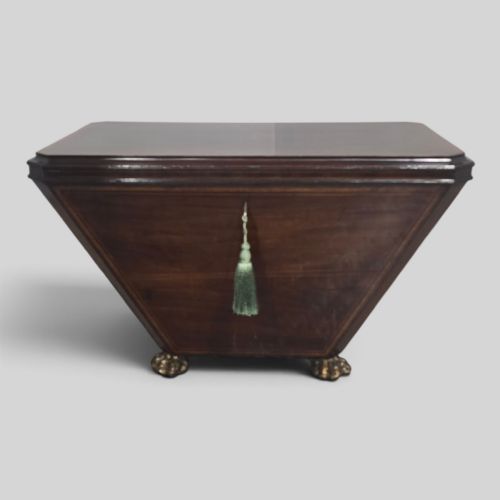
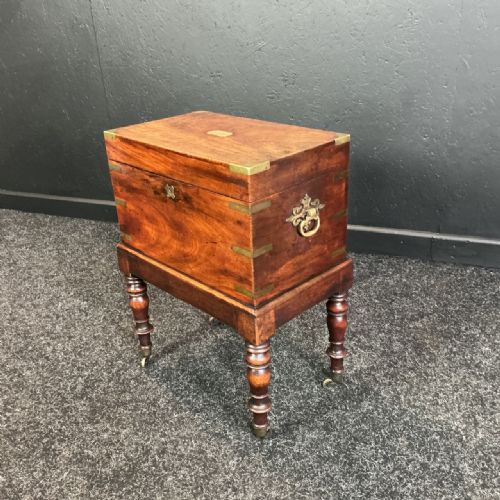
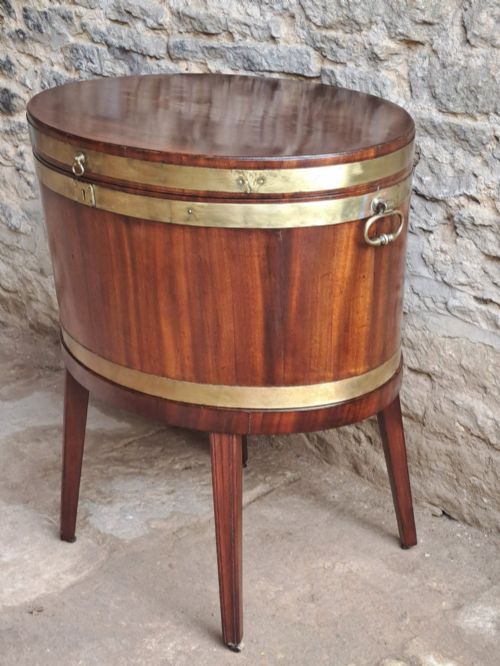
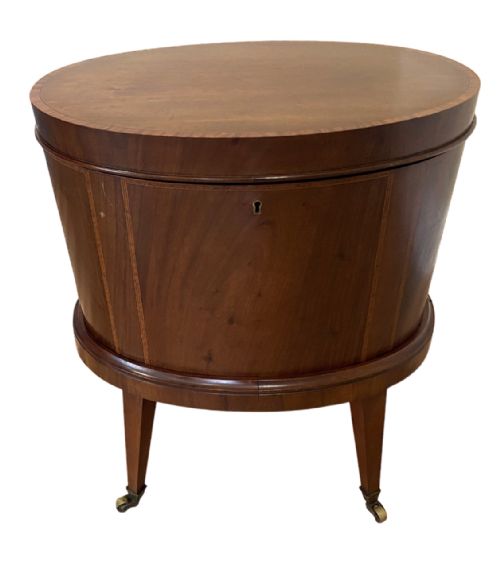
Buyers searching for a georgian drinks chest encounter a specialised form of antique storage designed to hold bottles, decanters and ice for the dining room. These pieces appear under various historical terms such as cellarettes, wine coolers and decanter boxes across this page.
Originating largely from the Georgian and Regency periods, these items range from functional utility pieces to highly decorative works featuring satinwood banding and brass fittings. The selection includes both tabletop boxes and substantial freestanding units designed for elite dining interiors.
Materials and construction methods
Cabinet makers relied heavily on solid mahogany and carefully selected veneers, frequently enhancing surfaces with satinwood, boxwood and kingwood inlay. Metal components such as brass bands, handles and ormolu mounts provided both structural reinforcement and decorative contrast against the dark timber.
Interior architecture required precise joinery to create individual bottle partitions, sometimes augmented with lead linings to hold melting ice without damaging the surrounding wood. Artisans shaped these pieces into octagonal, oval and serpentine forms using advanced bending and carving techniques.
Georgian Drinks Chest Retail Price Guide 2026
Typical asking prices for georgian drinks chest among the pieces listed under this phrase on Sellingantiques today, from the lower quarter to the upper quarter. They describe what is for sale here now, not the wider market.
Listings feature mahogany, satinwood, kingwood and brass across periods spanning the Georgian era to the Edwardian period.
Assessing craftsmanship and distinction
Quality reveals itself in the choice of timber figures, the crispness of inlaid banding and the substantial weight of original brass hardware. Superior pieces display meticulous dovetail joinery in the interior compartments and retain their functional lead linings.
Attribution to documented workshops elevates certain examples, whilst the complexity of the exterior shape - such as serpentine curves or sarcophagus proportions - indicates the original maker's ambition and skill.
Edwards and Roberts·Gillows·Gillows of Lancaster and London·Whytock and Reid
The Georgian Drinks Chest Glossary
- Cellarette
- A lockable container or box designed to hold bottles of wine and spirits, often placed beneath the sideboard. These vessels frequently include internal dividers to keep glass bottles from clinking.
- Sarcophagus
- A monumental cabinet shape tapering towards the base, inspired by classical Roman tombs and popular during the Regency period for large wine coolers. This weighty form often stands on paw feet.
- Bandings
- Thin strips of contrasting wood inlaid around the edges of a surface to create a decorative border. Makers used boxwood and satinwood to form sharp linear contrasts against dark mahogany.
- Ornaments
- Cast or chased metal decorative elements applied to furniture surfaces. Ormolu specifically refers to gilded bronze mounts found on high-status pieces.
- Serpentine
- A furniture front or profile characterised by a gentle convex centre flanked by concave curves. This undulating line requires exceptional skill from the woodworker.
Georgian Drinks Chest: Frequently Asked Questions
What is the difference between a cellarette and a wine cooler?
In historical terminology, the two names often describe the same object used for storing and chilling bottles near the dining table. Cellarette specifically denotes a lockable box, whereas wine cooler sometimes implies a vessel intended to hold ice.
Both forms served the same domestic function in elite dining rooms during the eighteenth and nineteenth centuries. Listings on this page use the terms interchangeably based on how past makers and modern dealers catalogued them.
How were these chests used during dinner parties?
Servants filled the internal compartments with ice and bottles before the meal began, keeping wines chilled close to the dining table. Locking mechanisms ensured valuable spirits remained secure from household staff.
At the end of the evening, the chest contained empty decanters and cooling water, ready to be emptied and cleaned. Their heavy construction meant they remained stationary fixtures in the dining room rather than portable boxes.
How do I tell a Georgian piece from a later copy?
Examine the interior construction, timber shrinkage and secondary woods used for drawer linings and internal partitions. Authentic period pieces show hand-cut dovetails and natural ageing consistent with eighteenth or early nineteenth-century tools.
Later revival pieces from the Victorian or Edwardian eras often display machine-sawn timber and different construction methods beneath the surface. Comparing the hardware fixings and patination provides further clues to the true age of the wood.
Where should I place a drinks chest in a modern home?
These pieces function well as side tables in a living room, dining room or hallway, providing practical surface space and enclosed storage. Their fitted interiors can still accommodate modern bottles, glassware or bar accessories.
Placing them away from direct heat sources and strong sunlight protects the antique wood and prevents the historic veneers from drying out.