





Georgian Dog Portrait
A georgian dog portrait captures canine companions alongside their owners, offering a glimpse into historic British life.
Georgian Dog Portrait
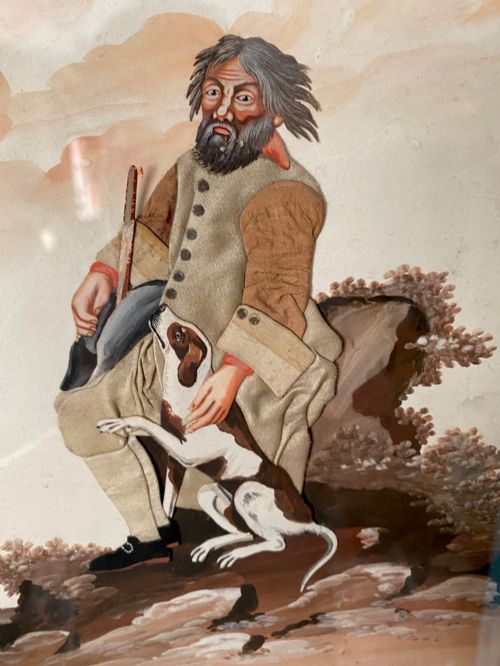
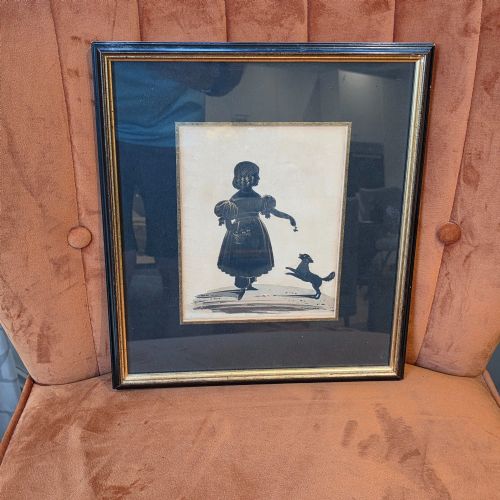
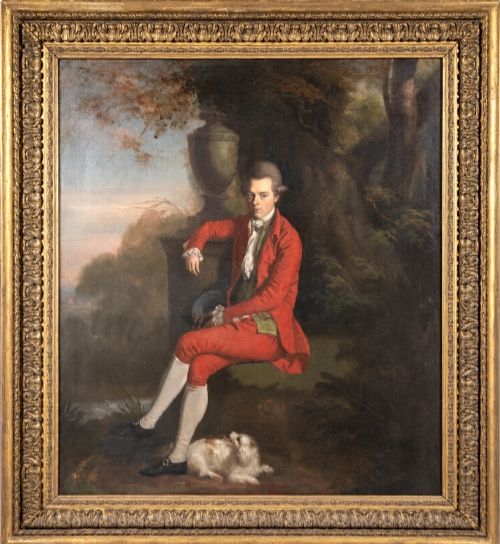
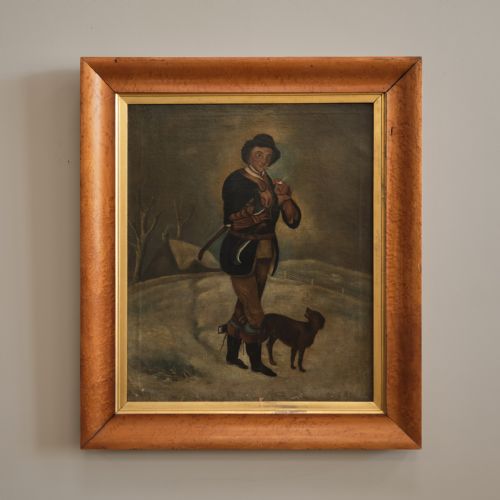
A georgian dog portrait brings together historic animals and their human counterparts, captured across the eighteenth and nineteenth centuries. Buyers searching this phrase encounter framed oil paintings on canvas alongside delicate watercolours and cut paper silhouettes. These works range from naive folk art depictions to sophisticated sporting and formal school pieces.
The subjects appear either alone in landscape settings or posed beside family members, children, and country gentlemen. Spaniels, hounds, and pointers frequently share the composition with their owners, highlighting the long-standing bond between humans and dogs. Most examples originate from British artists working within Georgian and Regency traditions.
How They Were Made
Artists relied primarily on oil on canvas to build rich, layered portraits of dogs and their owners, often framing the finished works in timber such as maple or gilded wood. Watercolours on paper offered a lighter medium, frequently paired with silhouettes cut from paper and finished by hand.
Makers utilised simple wooden frames to house these canvases and paper works, sometimes incorporating glass for protection. Pigments were applied with traditional brushwork, ranging from fine academic technique to the direct lines characteristic of Regency folk art.
Georgian Dog Portrait Retail Price Guide 2026
Typical asking prices for georgian dog portrait among the pieces listed under this phrase on Sellingantiques today, from the lower quarter to the upper quarter. They describe what is for sale here now, not the wider market.
At least one depicted dog answers directly to the name Mr Quiz.
What Varies in Quality
Quality rests on the precision of the animal's rendering and the psychological weight given to both dog and sitter. Stronger pieces display careful handling of light and texture in the animal's coat, whereas simpler works lean towards flat folk art abstraction.
The provenance and attribution to recorded artists or known schools elevate certain works above anonymous regional output. Preservation of the original canvas, paper, and frame also dictates the standing of an individual piece.
William James Hubard·Augustin Edouart·Samuel Raven·J F Marie Huet Villiers·Thomas Beach·James Ward·Frederick Tayler·George Stubbs·George Romney·Samuel John Egbert Jones·Francis Alleyne
The Georgian Dog Portrait Glossary
- Oil on canvas
- Pigment bound in oil medium applied to a woven fabric support. This was the primary method for formal portraits of people and animals throughout the period.
- Watercolour
- A paint consisting of transparent pigment suspended in a water-based solution applied to paper. It allowed artists to produce rapid, portable studies of sporting scenes and sitters.
- Silhouette
- A portrait profile cut from dark paper or painted in solid black against a pale background. Artists sometimes combined this technique with watercolour details to depict figures and their pets.
- Folk art
- Creative work produced by self-taught or provincial makers working outside academic standards. These pieces often display a charming flatness and direct observation.
- Giltwood
- Timber carved and coated with a thin layer of gold leaf. Frames made this way often accompanied formal oil paintings of the period.
Georgian Dog Portrait: Frequently Asked Questions
What animals appear in these portraits?
Spaniels, hounds, and pointers dominate these historic works, often appearing alongside human sitters or hunting parties.
Artists occasionally recorded specific named animals, such as spaniels and hounds belonging to country gentlemen and children.
How should I hang a framed portrait?
These works suit traditional living spaces, positioned away from direct sunlight to protect fragile watercolours, paper silhouettes, and oil pigments.
Original wooden and gilded frames require stable wall fixings that match the weight of the timber and canvas.
How do I identify a Regency period piece?
Regency works display stylistic traits from the early nineteenth century, including specific costume details, distinct canine breeds, and framing materials like maple.
Attributions often point to British schools and named artists active during the Regency era.
What is folk art in these portraits?
Folk art examples show naive rendering by provincial makers rather than academic training, focusing on direct charm rather than formal proportion.
These simplified pieces often feature silhouette work or unpolished oil painting techniques.