


Georgian Dessert Server
These georgian dessert server pieces and related tiered stands offer ingenious tiered surfaces for dining rooms.
Georgian Dessert Server
A georgian dessert server search leads you to tiered serving stands and occasional pieces designed for dining rooms. The pieces appearing here span the Georgian, Regency, and Victorian periods, with George III examples forming a major part of the selection.
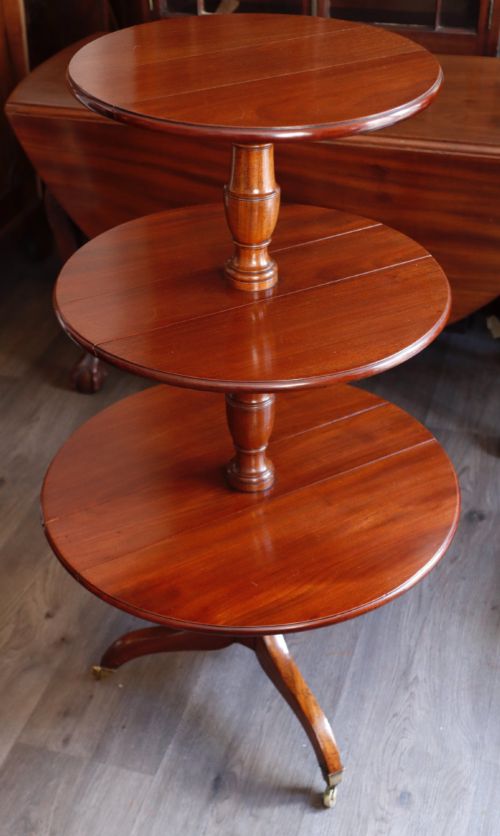
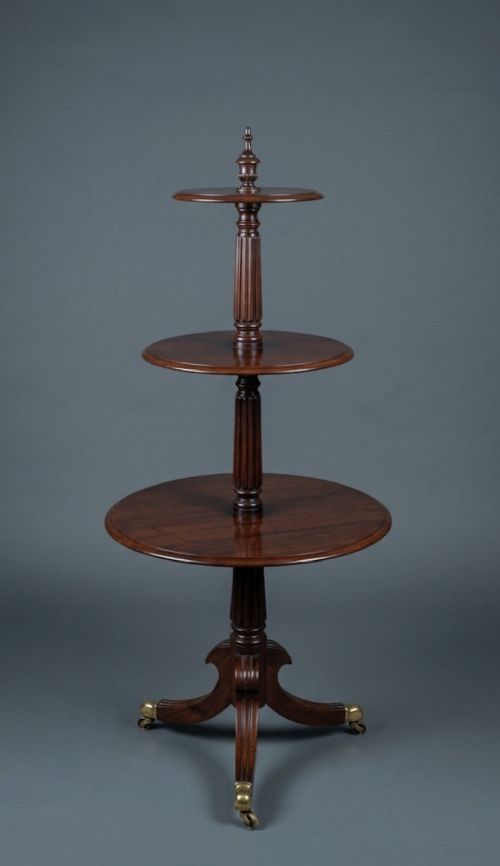
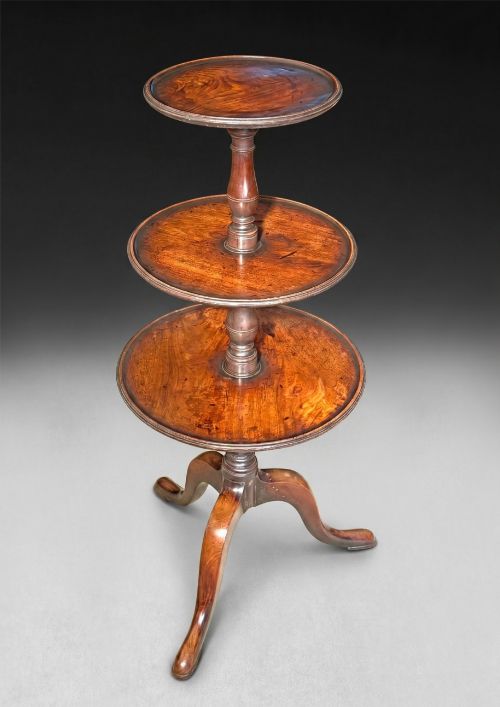
You will most commonly encounter multi-tiered dumb waiters alongside side tables, tazzas, and pedestal table platters. These forms range from two-tier and three-tier circular tiered stands to drop-leaf folding designs and tripod bases.
The materials and styles reflect the cabinet-making standards of the eighteenth and nineteenth centuries. Pieces connect directly to George III, Regency, and William IV design idioms, with some items attributed in manner to Gillows.
Materials and construction methods
Makers utilised solid mahogany and brass fixtures to construct these serving pieces and tables. Mahogany forms the primary structural timber for the circular tiers, columns, and tripod supports found across the inventory.
Joinery techniques include the integration of drop-leaf folding mechanisms, tiered revolving trays, and galleried edges. Brass fittings provide both structural support and decorative contrast on pedestal table platters and tiered stands.
Silent servants that held the Stilton while everyone pretended not to notice.
Quality factors in period stands
Quality reveals itself in the proportion of the graduated tiers and the crispness of the mahogany turning. Finer examples display well-figured timber grain and robust central pillar supports without unnecessary structural bulk.
The sophistication of the mechanical elements, such as folding drop-leaves and rotating tiers, separates standard utility items from exceptional workshop productions. Original brass castors and intact galleries further distinguish superior pieces.
Gillows
The Georgian Dessert Server Glossary
- Dumb waiter
- A tiered freestanding serving table designed to hold dishes without requiring a servant present at the table. These items feature multiple rotating circular trays.
- Tripod
- A three-legged base structure utilised to support the central pedestal of tables and dumb waiters. This configuration provides stability on uneven dining room floors.
- Gallery
- A raised wooden or brass rim surrounding the edge of a serving tier to prevent items from sliding off. Galleried edges appear on specific multi-tiered serving pieces.
- Tazza
- A small decorative pedestal plate or platter used for serving food. These items elevate dishes above the surface of the main dining table.
Georgian Dessert Server: Frequently Asked Questions
What is a dumb waiter?
A dumb waiter is a multi-tiered serving stand used in dining rooms during the eighteenth and nineteenth centuries.
They allowed diners to access extra plates and dishes independently during meals.
How many tiers do these have?
The pieces listed feature either two or three graduated circular tiers mounted on a central pillar.
Some designs also include drop-leaf folding sections to save space when not in use.
What wood was used?
Mahogany served as the primary timber for constructing these serving stands and occasional tables.
Cabinet makers selected it for its strength and rich grain patterns.
How do I date a piece?
Dating relies on identifying period characteristics associated with George III, Regency, or Victorian cabinet making.
Turned column styles, leg configurations, and brass hardware provide key chronological indicators.