





Georgian Desktop Drawers
Georgian desktop drawers bring miniature scale and fine timber to a study, uniting small chests and dressing mirrors from the eighteenth and nineteenth centuries.
Georgian Desktop Drawers
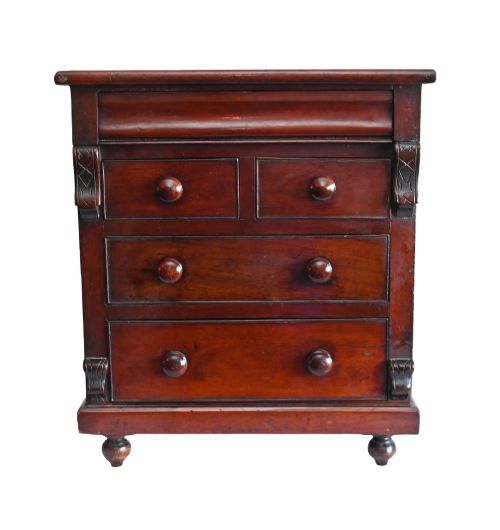
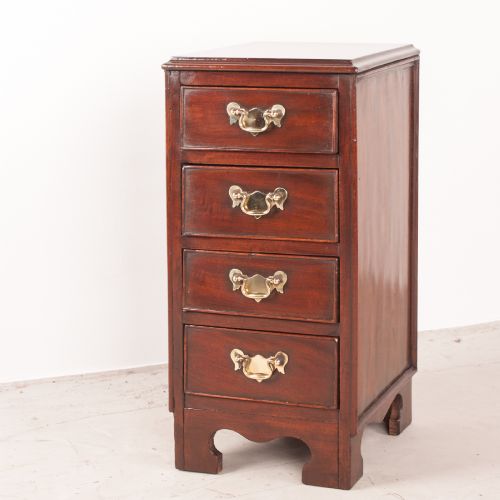
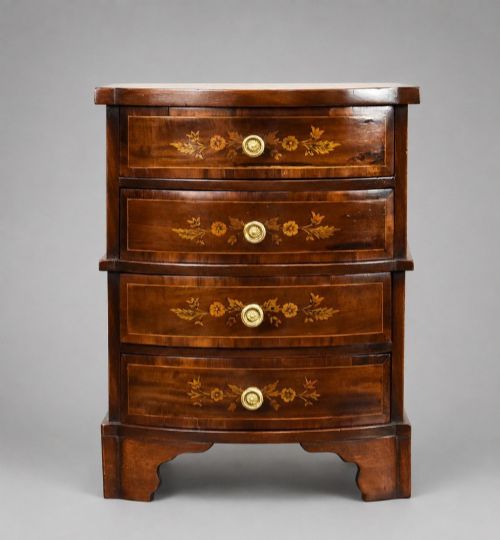
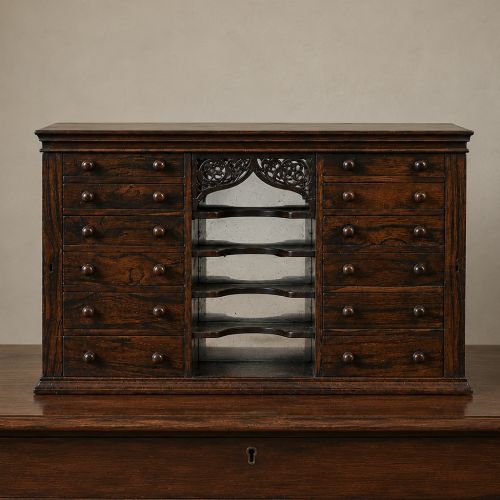
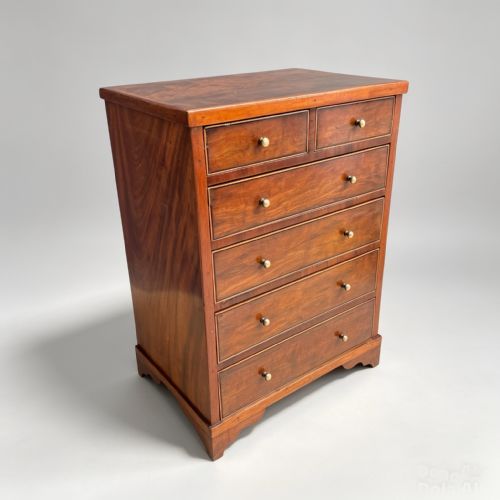
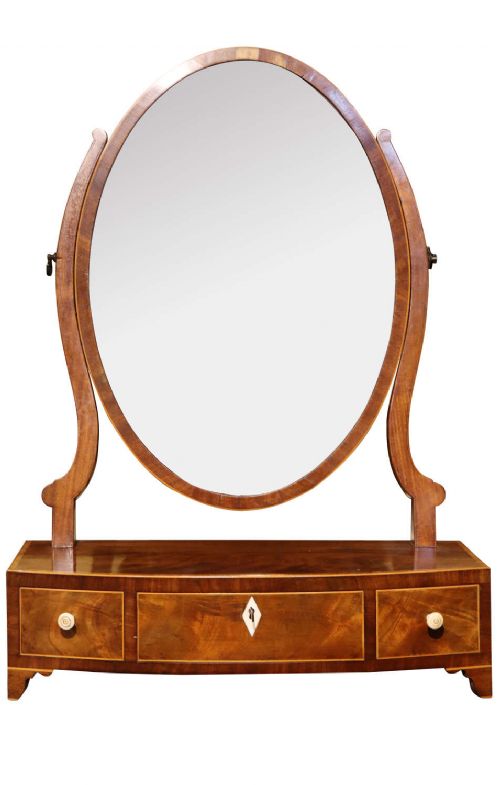
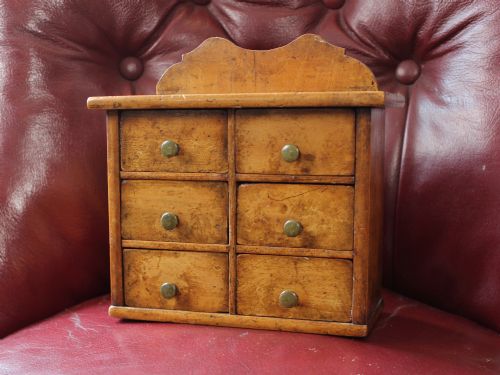
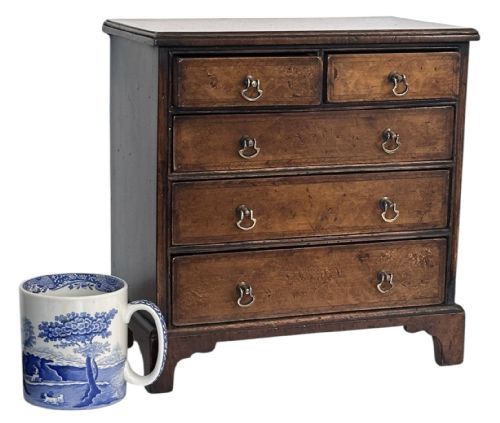
These pieces encompass miniature chests of drawers, apprentice pieces, dressing table mirrors, and small spice cabinets designed for tabletop use. The selection relies heavily on mahogany, oak, and walnut forms dating from the Georgian, Regency, and Victorian periods.
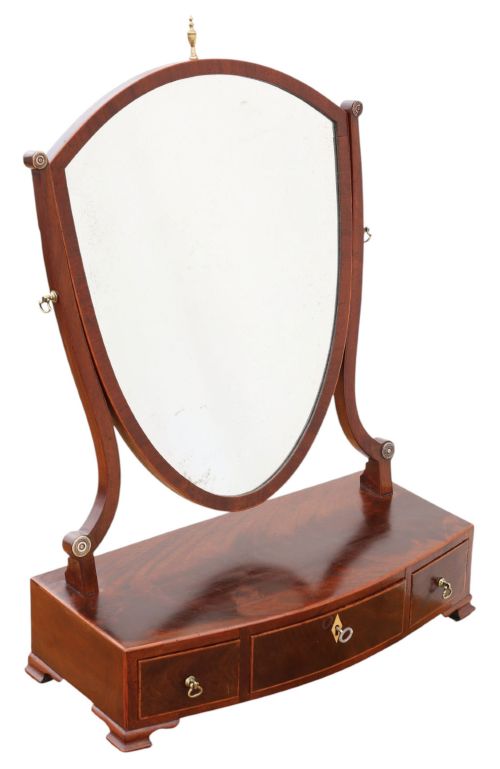
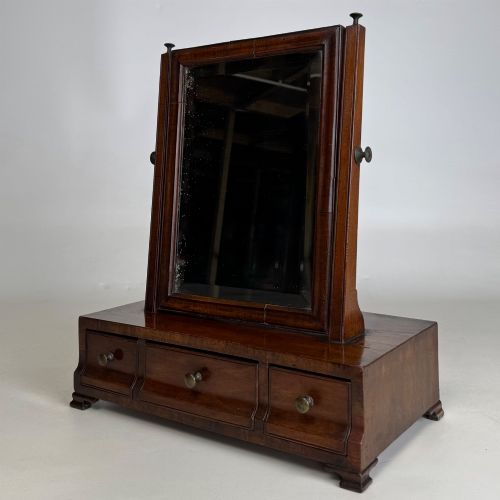
Buyers most frequently encounter compact mahogany chests and swing dressing mirrors featuring small drawers in the base. Miniature chests often replicate full-size furniture styles, including serpentine fronts, bow fronts, and tallboy configurations.
The category also embraces specialty items such as collectors cabinets, desk boxes with secret compartments, and inlaid Dutch marquetry work. Origins span English workshops alongside regional examples in Welsh and Dutch styles.
Materials and Construction
Cabinetmakers utilised dense timbers such as mahogany, walnut, rosewood, and oak, frequently applying crossbanding, veneer, and marquetry inlay for decorative contrast. Secondary woods appeared in concealed areas, while elm and fruitwood served in regional pieces.
Joinery involved precise dovetailing for small drawer construction and frame assembly, supported by brass drop handles, hinges, and swing mirror pivots. Glass found primary use in original mirror plates and occasionally in small cabinet doors.
One listed oak desk box hides a secret drawer for safeguarding small, private treasures.
Evaluating Quality
Distinction across the range rests on the crispness of the timber selection, the subtlety of crossbanding or marquetry, and the fidelity of miniature proportions to full-scale furniture. Superior examples maintain original brass hardware, unblemished mirror glass, and sound structural joinery.
The treatment of secondary surfaces and the depth of patina signal the integrity of the piece. Subtle details, such as finely cut dovetails and neatly fitted secret compartments, separate standard items from finer cabinetwork.
The Georgian Desktop Drawers Glossary
- Apprentice piece
- A small item of furniture demonstrated by a maker to prove mastery of a craft. These miniature chests show the same dovetailing and proportion as full-size pieces.
- Dressing mirror
- A tabletop glass mounted on a frame or small chest containing drawers. These swing mirrors date widely through the Georgian and Regency periods.
- Crossbanding
- A narrow strip of veneer laid across the grain of the primary timber to form a decorative border. It appears frequently on drawer fronts and mirror frames.
- Marquetry
- Fitted patterns of wood veneer forming pictorial or geometric designs. Dutch examples in the listings utilise floral marquetry.
- Serpentine front
- A furniture front curving outward at the centre and inward at the sides. This contour demands skilled woodworking in miniature scale.
- Wellington chest
- A tall, narrow chest of drawers secured by a hinged locking side stile. The records include a mirrored variant in rosewood.
Georgian Desktop Drawers: Frequently Asked Questions
How were apprentice chests used?
Apprentice chests served as scaled-down demonstrations of a woodworker's capability before joining a guild. They replicated full-size case furniture in miniature.
In daily use, owners placed them on desks or tables to store small personal items, jewellery, or documents.
What is the difference between a dressing mirror and a miniature chest?
A dressing mirror incorporates a pivoting glass plate mounted above a small box base or chest of drawers. They sat on dressing tables for grooming.
A miniature chest functions solely as a small set of drawers without an attached mirror, often mimicking full-size chest or tallboy designs.
How do I care for antique desktop drawers?
Keep these items away from direct sunlight and steady heat sources to prevent wood from drying and veneer from lifting. Dust gently with a dry, soft cloth.
Aplying microcrystalline wax occasionally helps protect polished mahogany, walnut, and oak surfaces without building up heavy residue.
How can I tell the period of a piece?
Dating relies on timber choices, construction techniques, hardware style, and overall form. Eighteenth-century pieces frequently feature solid mahogany or walnut with hand-cut dovetails.
Later nineteenth-century and Edwardian examples often introduce different secondary woods, machine-sawn elements, and varied brass fittings.