



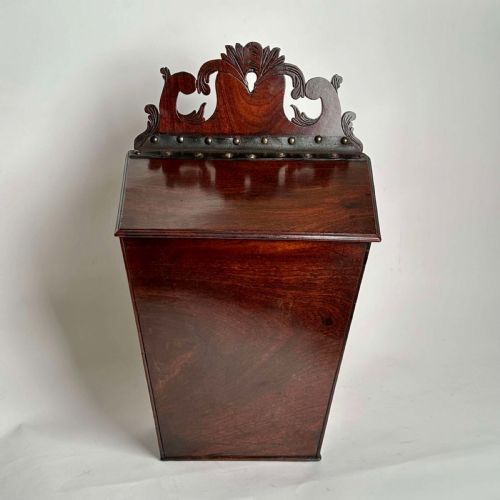


Georgian Cutlery Holder
These georgian cutlery holder pieces combine period utility with fine timber craftsmanship, offering authentic storage for the dining table.
Georgian Cutlery Holder
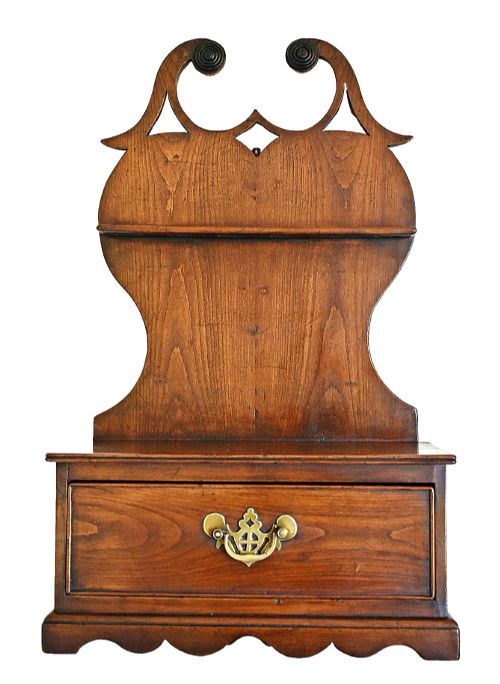
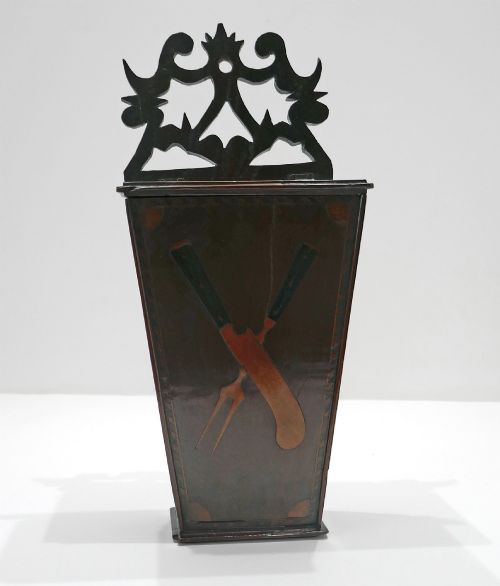
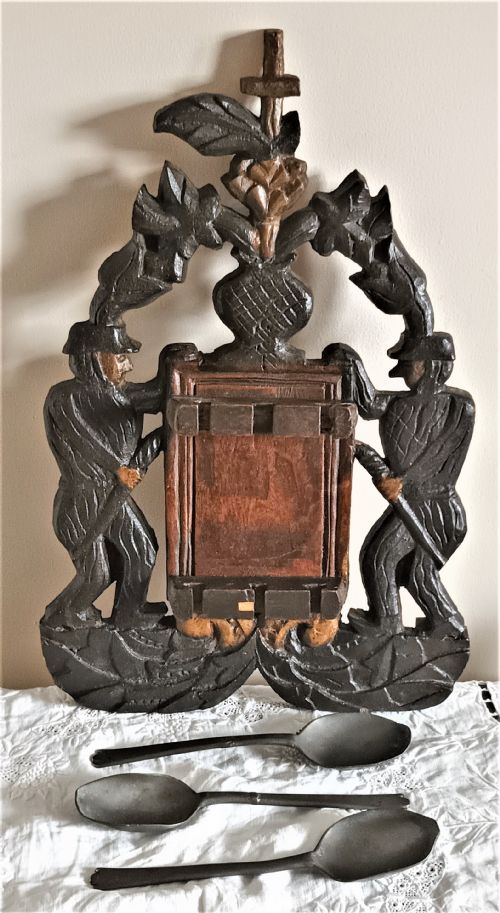
A georgian cutlery holder encompasses specialised wooden boxes, trays, and spoon racks designed to organise domestic tableware. The selections span standard cutlery boxes and knife boxes alongside country house carries, housekeeper's trays, and wall-mounted spoon racks.
Most examples found here date from the eighteenth and nineteenth centuries, reflecting the period focus on dining preparation and table service. Mahogany and oak dominate the offerings, occasionally accompanied by walnut or painted surfaces.
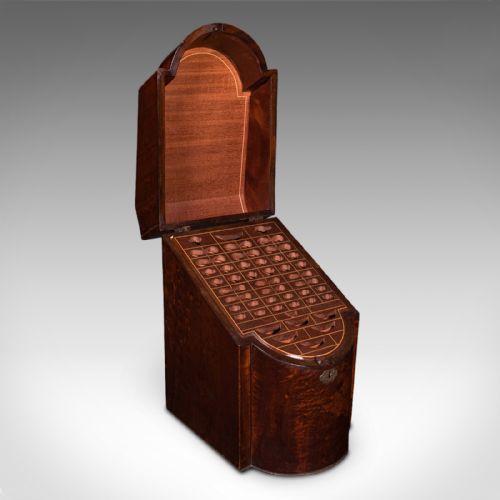
Forms range from sloped knife boxes with inlaid boxwood and ebony patterns to open trays with brass carrying handles and sectioned interiors. Certain pieces adapt easily to stationary storage or bottle carrying alongside traditional cutlery organisation.
Materials and construction
Makers utilised dense native and imported timbers, primarily mahogany and oak, chosen for their durability and grain pattern. Secondary woods like boxwood and ebony provided contrast through delicate stringing and inlay work.
Metal elements such as brass carry handles, hinges, and lock escutcheons added functional strength to wooden frames. Trays and boxes often incorporated fitted interior partitions to keep individual knives, spoons, and forks secure.
Georgian Cutlery Holder Retail Price Guide 2026
Typical asking prices for georgian cutlery holder among the pieces listed under this phrase on Sellingantiques today, from the lower quarter to the upper quarter. They describe what is for sale here now, not the wider market.
Listings feature items built from mahogany, oak, walnut, and boxwood, spanning the eighteenth and nineteenth centuries.
Markers of quality
Superior items display precise dovetail joinery and careful selection of figured timber grain across the visible surfaces. Fine string inlay and well-preserved original brass hardware distinguish finer pieces from plain utilitarian items.
The integrity of the fitted interior and the presence of original hinges or carrying mechanisms influence the overall standard. Pieces retaining their structural stability without excessive timber shrinkage or replacement parts sit higher in the range.
Creswick
The Georgian Cutlery Holder Glossary
- Knife box
- A sloped wooden container specifically built to store dining cutlery upright or flat. These boxes often feature serpentine fronts and inlaid patterns.
- Spoon rack
- A wall-hanging wooden rack designed to display and hold spoons within easy reach. They frequently accompany rural or country house inventories.
- Butler's carry
- A portable wooden tray with a central upright handle used for moving tableware between rooms. Walnut and oak examples appear frequently in country house contexts.
- Sheffield plate
- A fused composite material made by layering silver over a copper base. This technique produced serving trays and knife trays during the Georgian and Regency periods.
- Trefid spoon
- An early form of dining spoon featuring a notched, three-lobed terminal handle. These appear alongside eighteenth-century spoon racks.
Georgian Cutlery Holder: Frequently Asked Questions
What is a georgian cutlery holder used for?
These items were built to store, organise, and transport knives, forks, and spoons around the dining room or country house. They kept sharp steel blades protected and made table setting efficient for domestic staff.
Today, collectors utilise them for period table displays, desk organisation, or general home storage. Their compartmentalised interiors suit modern stationery or decorative items just as well as historic cutlery.
Are knife boxes and cutlery trays the same?
Knife boxes typically feature a tall, sloped lid and a secure lock designed to protect valuable steel cutlery. They often sit on sideboards as formal display pieces.
Cutlery trays and butler's carries are generally open containers with low sides and carrying handles. They prioritised portability and quick access during busy household service.
How can I tell a Georgian piece from a later copy?
Examine the construction methods, such as hand-cut dovetails and timber shrinkage patterns consistent with age. Old oak and mahogany exhibit distinct surface patination and tool marks missing from modern reproductions.
Original hardware like brass hinges, escutcheons, and locks should match the period style and show appropriate wear. Secondary woods used inside drawers or bases should also align with eighteenth or nineteenth-century workshop practices.