


Georgian Crystal Stopper
These georgian crystal stopper items complete period decanters, offering authentic eighteenth and nineteenth-century glass for your table.
Georgian Crystal Stopper
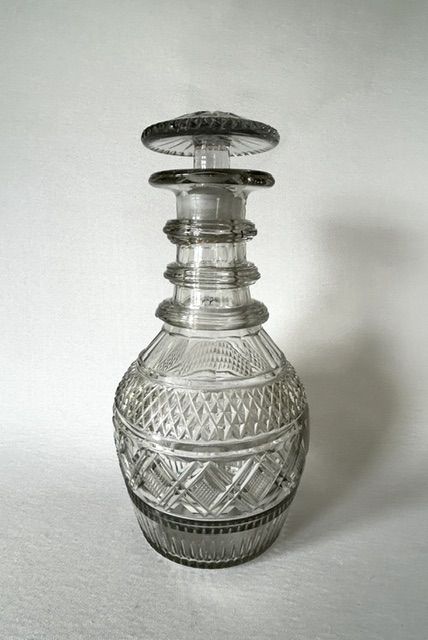
A georgian crystal stopper typically accompanies lead glass decanters from the eighteenth and nineteenth centuries, including shoulder, ship's and three-ring Prussian forms. You are looking at clear glass and cut crystal vessels spanning the Georgian, Regency and Victorian periods.
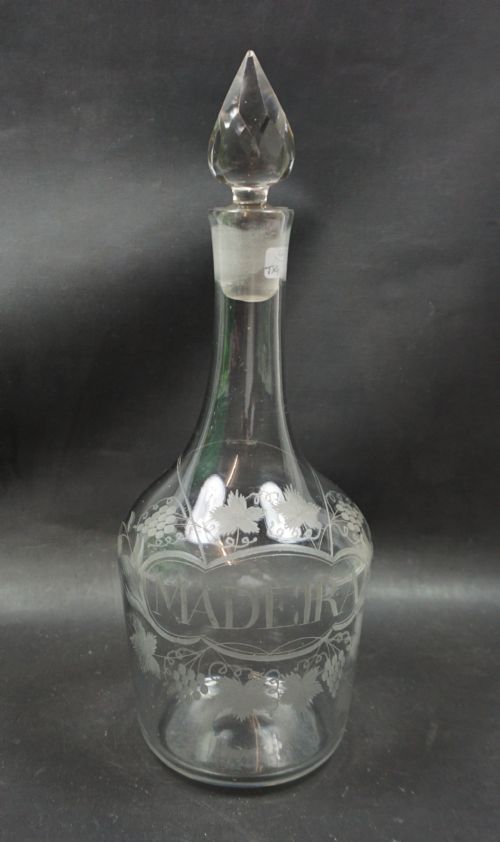
The pieces listed on this page range from plain wine decanters with heart-shaped stoppers to large engraved or cut glass examples. Most items originate from English or Irish makers within the Georgian and Regency eras.
Materials and methods
These items rely on lead crystal, lead glass and clear glass, shaped through traditional blowing and cutting techniques. Artisans achieved the characteristic weight and brilliance of the period using high lead content in the metal.
Decoration involves hand-cutting flutes, panels and rings, alongside surface engraving for wine labels such as Madeira. The stoppers and decanters display the optical clarity and dense refractive qualities typical of Georgian and Regency production.
Listings feature lead crystal, cut glass and clear glass materials across Georgian, Regency and Victorian styles.
Quality and craftsmanship
Quality rests upon the purity of the metal and the crispness of the hand-cut facets. Superior examples display deep, sharp geometric cutting that catches the light cleanly across both vessel and stopper.
The harmony between the decanter body and its matching stopper dictates the overall integrity of the piece. Proportion, weight and the absence of clouding in the lead glass separate finer items from simpler production.
The Georgian Crystal Stopper Glossary
- Lead crystal
- Glass containing lead oxide, which increases weight, brilliance and softness for cutting. This material defines the finer decanters and stoppers of the period.
- Ship's decanter
- A wide-based vessel designed to remain stable at sea. The distinctive low, conical shape prevents tipping on a rolling table.
- Prussian style
- A cylindrical decanter form featuring horizontal applied glass rings around the neck. These rings originally aided grip during pouring.
- Shoulder decanter
- An early form with a sharp shoulder and tapering body. These vessels frequently feature engraved wine labels.
- Cut glass
- Glass decorated by holding the vessel against a rotating abrasive wheel. The resulting facets scatter light and enhance the appearance of the crystal.
Georgian Crystal Stopper: Frequently Asked Questions
What is a georgian crystal stopper?
A georgian crystal stopper is a hand-cut or moulded glass closure designed to seal spirit and wine decanters from the eighteenth and nineteenth centuries. They are made from heavy lead glass to match the optical qualities of the accompanying vessel.
These pieces fit snugly into the neck of period decanters to preserve the contents. They range from simple faceted domes to flat heart-shaped designs.
How do I identify a Regency decanter?
Regency decanters frequently feature three applied glass rings around the neck and deep geometric cutting on the body. The profile tends to be straight-sided or slightly tapered.
Many examples from this period show crisp lead crystal construction with a heavy base. They often house matching stoppers cut in corresponding patterns.
Can I use these decanters daily?
These glass vessels function well for serving wine and spirits on the dining table. Hand washing in lukewarm water protects the historic lead crystal.
Storing liquids in them for extended periods is generally discouraged by collectors. Gentle handling preserves the original cut surfaces and stoppers.
How do I date an old decanter?
Dating relies on the shape of the body, the style of the neck rings and the method of glass cutting. Earlier eighteenth-century vessels often feature shoulder forms and engraved labels.
Nineteenth-century examples move toward three-ring Prussian styles and heavier lead glass weights. The matching stopper often shares the specific facet style of the main body.