
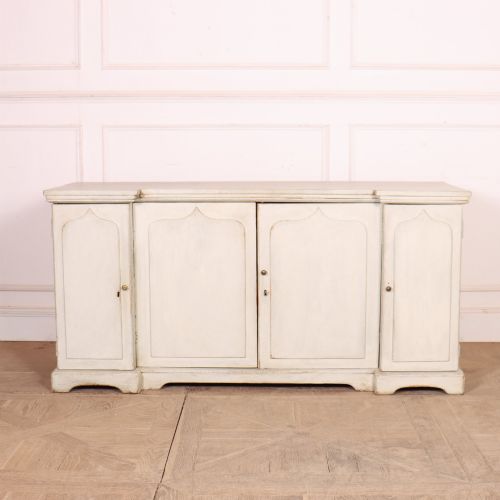
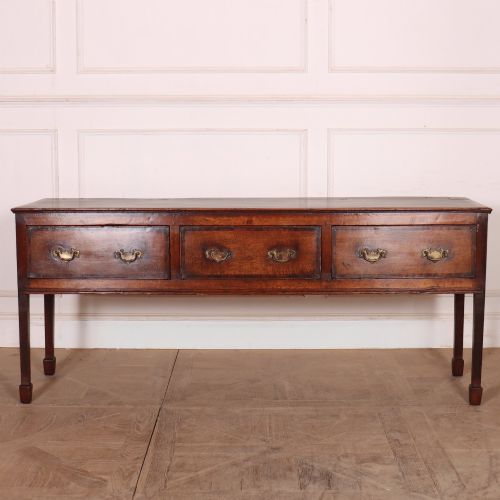
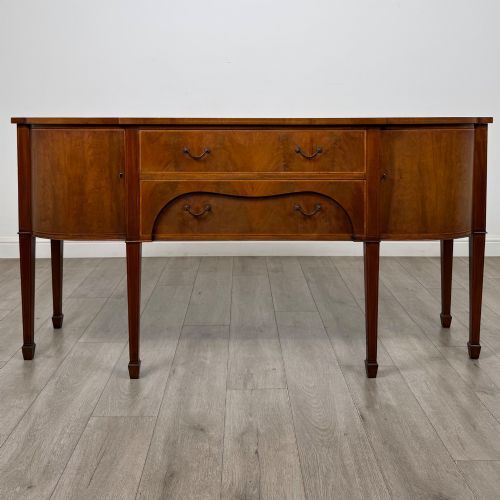

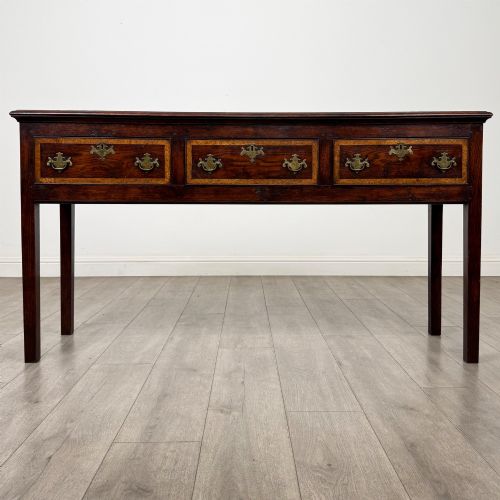
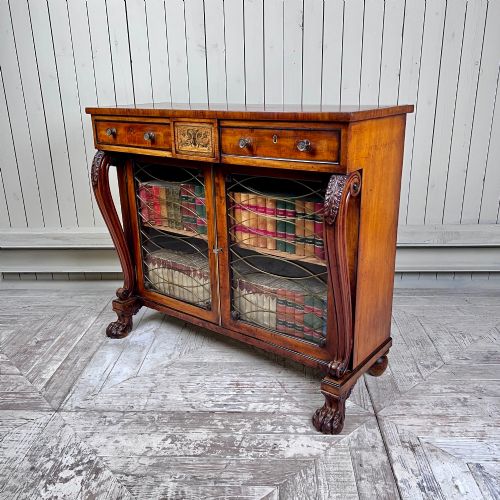
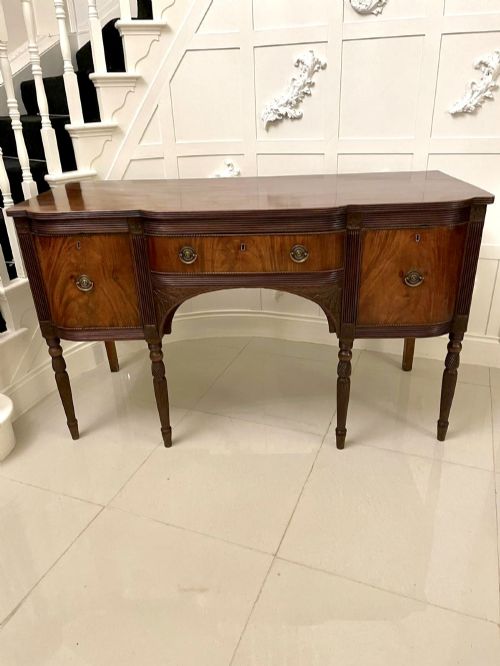
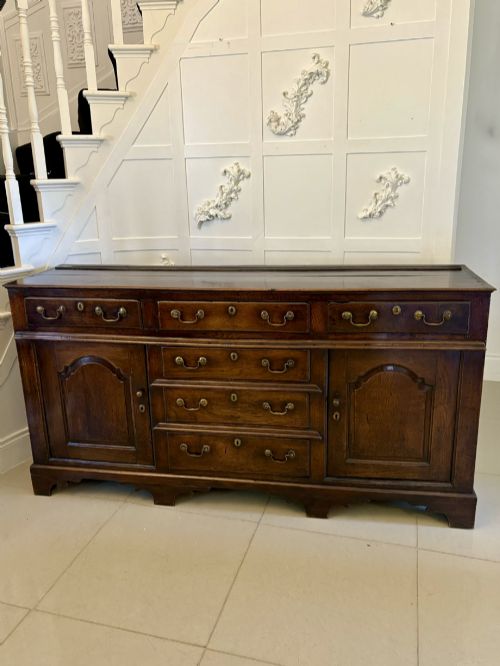
Georgian Credenza Sideboard
A georgian credenza sideboard brings solid timber and proportion to a dining room, combining deep drawers with generous cupboards.
Georgian Credenza Sideboard
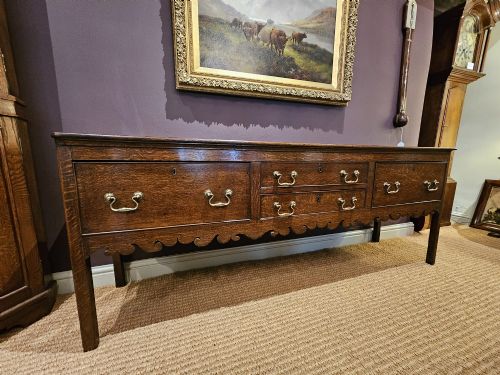
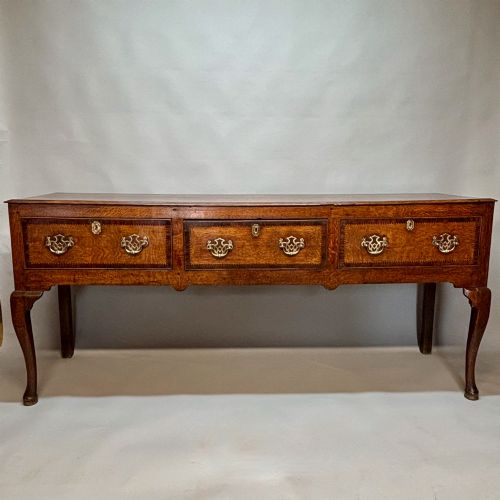
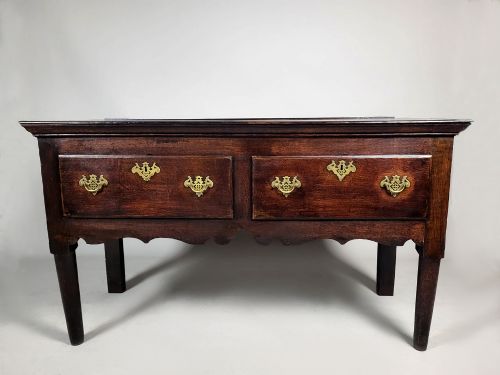
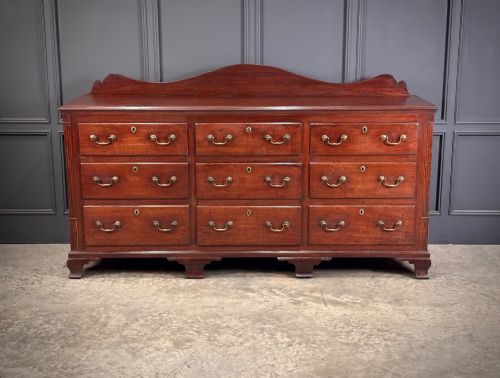
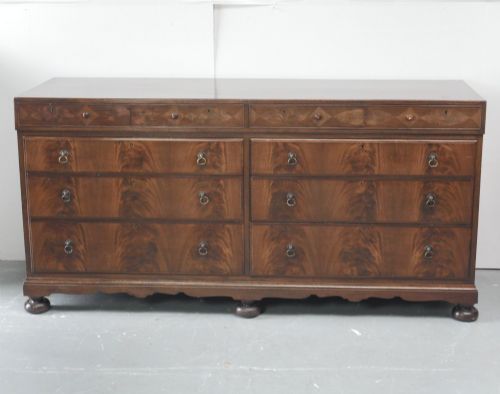
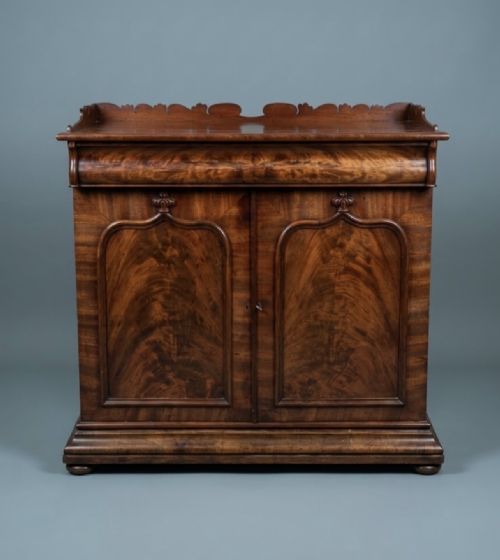
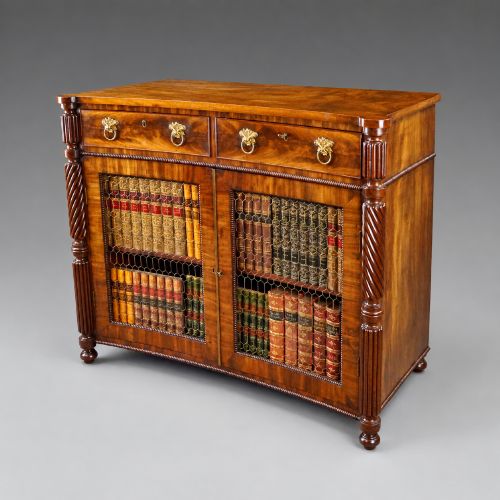
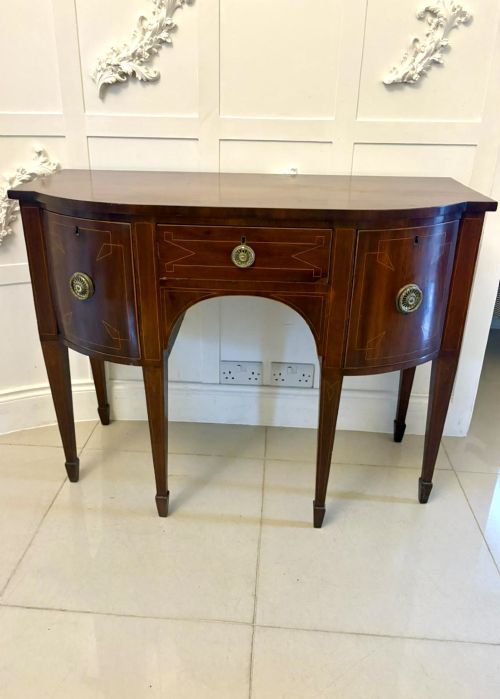
A georgian credenza sideboard encompasses robust timber furniture designed for serving and storage, appearing predominantly as mahogany or oak sideboards, chiffoniers, and dresser bases. The selection ranges from eighteenth-century George III pieces to later nineteenth-century interpretations and twentieth-century revivals.
Buyers frequently encounter bow-front, breakfront, and serpentine configurations alongside simpler rectangular forms. These items originate primarily from British workshops, reflecting the shifting tastes of the Georgian, Regency, and Edwardian eras.
Materials and Joinery
Cabinetmakers constructed these pieces primarily using solid mahogany, flame mahogany veneer, and oak, often highlighting the grain with polished surfaces. Brass hardware, boxwood stringing, and ebony inlay provide structural contrast and decorative detail.
Joinery relies on traditional methods such as dovetailing for drawers and mortise-and-tenon framing for carcases, ensuring stability across centuries of use.
Listings for a georgian credenza sideboard span the eighteenth, nineteenth, and early twentieth centuries, featuring oak, mahogany, and brass.
Distinctions in Craftsmanship
Superior examples display carefully matched flame mahogany veneers that wrap symmetrically across drawer fronts and doors, whereas lesser pieces utilise plain timber or simpler cuts. The crispness of inlaid stringing and the integration of carved details, such as lion paw feet, separate standard production from masterwork output.
Internal construction dictates longevity, with secondary softwood linings and hand-cut drawer runners showing the care taken by the original maker.
Whytock and Reid
The Georgian Credenza Sideboard Glossary
- Serpentine
- A front contour that curves outward in the centre and inward towards the ends. This shape requires advanced woodworking skill to match veneers along the undulating line.
- Breakfront
- A cabinet design where the central section projects forward from the flanking wings. It creates a formal architectural rhythm across the facade of the sideboard.
- Potboard
- An open lower shelf built into oak dresser bases to store heavy kitchenware. It defines vernacular English furniture from the eighteenth century.
- Chiffonier
- A compact low cabinet with shelves or a superstructure on top, popular during the Regency period. It functions as a sideboard variant for smaller rooms.
- Stringing
- Thin inlaid lines of contrasting wood, such as boxwood, set flush into the primary timber surface. It frames drawers and tabletops to add refined linear detail.
Georgian Credenza Sideboard: Frequently Asked Questions
What is a georgian credenza sideboard used for?
These pieces served historically in dining rooms and parlours for storing serving dishes, cutlery, and linens, while the top surface provided space for displaying silver or food during meals.
Today, they function effectively as media consoles, hallway storage units, or dining room buffets that conceal modern items behind traditional timber doors.
How do I identify a George III sideboard?
George III pieces date from the second half of the eighteenth century and typically feature restrained classical proportions, fine mahogany veneers, and subtle inlay rather than heavy carving.
Look for hand-cut dovetails in the drawers and vernacular timber choices like oak if the piece originates from a regional country workshop rather than a metropolitan cabinetmaker.
Are Regency sideboards different from Georgian ones?
Regency sideboards emerge from the early nineteenth century and often incorporate bolder architectural motifs, such as brass lion paw feet, lion mask ring handles, and stepped pedestal ends.
While sharing the foundational Georgian lineage, Regency pieces lean towards classical antiquity with heavier brass inlay and distinct staged superstructures like chiffonier cabinets.
How should I care for antique mahogany wood?
Keep timber furniture away from direct heat sources and strong sunlight to prevent the mahogany veneer from drying out, splitting, or fading unevenly over time.
Apply a traditional beeswax polish sparingly and buff with a soft cloth to maintain the natural lustre without building up heavy residue on the surface.