


Georgian Country House Bench
A georgian country house bench brings robust vernacular seating and formal mahogany frames together for generous everyday interiors.
Georgian Country House Bench
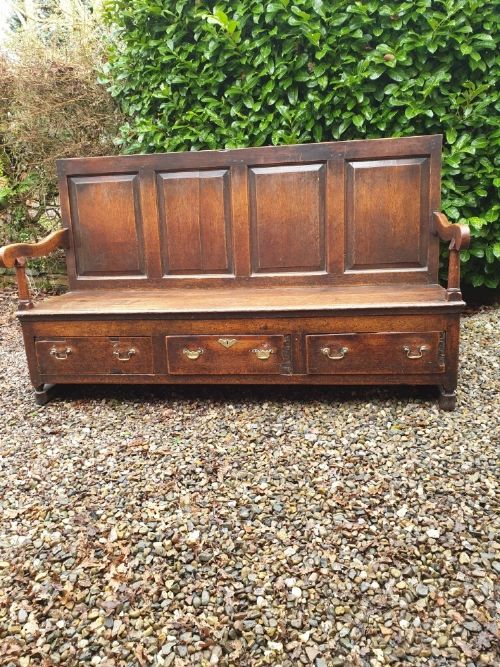
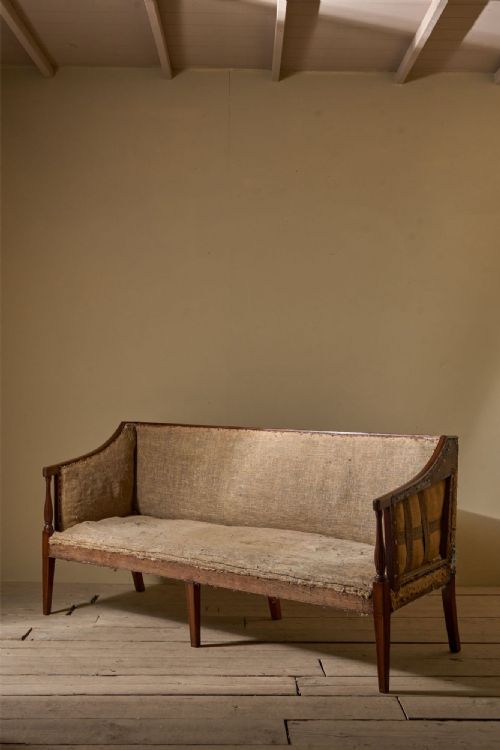
When you search for a georgian country house bench, you encounter a varied collection of heavy seating ranging from rural oak box settles to polished mahogany hall sofas and painted country varieties. These pieces reflect both the practical demands of historic households and the evolving tastes of the period.
You are most likely to meet sturdy oak box settles and settle benches originating from the eighteenth century, alongside later nineteenth-century painted storage benches and occasional mahogany framed sofas. The selection spans straightforward vernacular forms and refined styles like Regency and George III.
Regional variations feature strongly among these offerings, with examples identified as Welsh vernacular, West Country oak, or English country styles. This mix reveals how local workshops adapted standard seating forms to suit specific domestic requirements.
How they were made
Construction relies heavily on solid native timbers such as oak, elm, and pine, frequently chosen for their durability and availability in rural workshops. Carpenters built box settles and settle benches with panelled backs and integrated storage compartments designed to keep living areas free from draughts.
More formal pieces utilise mahogany, rosewood, and walnut frames, sometimes incorporating shaped and slatted woodwork or upholstered surfaces covered in fabric, hessian, or paint. Brass details and iron fixings appear on specific items, adding functional strength to structural joints.
Several items include dedicated bacon settles and dog beds, proving historic households kept comfort in mind for both the larder and the hounds.
What varies in quality
The standard of a georgian country house bench rests on the integrity of its timber selection, the crispness of its joinery, and the preservation of its original surface patination. Pieces that retain untouched timber surfaces and honest structural repairs sit at the upper end of the scale.
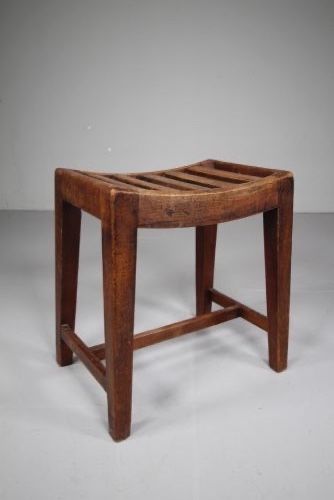
Proportion and decorative restraint also separate standard utility seating from finer parlor or hall furniture, particularly where shaped slats, mahogany frames, or painted finishes display deliberate craftsmanship rather than purely functional assembly.
The Georgian Country House Bench Glossary
- Box settle
- A high-backed wooden bench featuring a closed base that doubles as a storage chest. This form kept occupants sheltered from cold draughts in historic halls and farmhouses.
- Settle bench
- A long wooden seat with armrests and a solid back panel designed for communal rooms. These pieces often exhibit vernacular carpentry techniques particular to their region of origin.
- Vernacular
- Architecture and furniture built by local craftsmen using traditional regional methods and materials rather than high-style academic designs. Such pieces reflect local domestic customs.
- Patina
- The surface sheen and colour developed on timber through decades of handling, polishing, and natural ageing. A rich patina indicates long use and careful maintenance.
- Barrel back
- A seating design featuring a curved, enclosing upper back that wraps around the occupant. This form provides extra shelter against cold room environments.
Georgian Country House Bench: Frequently Asked Questions
What is a country house settle?
A country house settle is a long wooden bench with a high back, solid arms, and often an enclosed storage base beneath the seat. These heavy pieces were designed to sit near hearths and block cold draughts in large historic rooms.
Over time, they served multiple domestic purposes, offering both communal seating and a secure place to store household goods in busy rural homes.
How do I identify a Georgian bench?
You can identify a Georgian bench by examining its timber species, construction joints, and stylistic details associated with the eighteenth century. Look for solid oak, elm, or mahogany framing, hand-cut joinery, and vernacular design elements that reflect the period.
Comparing the piece against documented examples from George III or Regency eras helps clarify its chronological origin and regional workshop style.
Where were settles used historically?
Settles were traditionally placed in the main halls, kitchens, and entranceways of large country houses, farmhouses, and taverns. Their high backs and solid sides offered practical protection against cold stone walls and winter drafts.
In daily life, they provided ample seating for family members and guests gathered around the central fireplace for warmth and meals.
How do I live with a wooden settle?
Living with a wooden settle involves placing it against a sturdy wall where its high back and substantial proportions can anchor the room. It functions well in hallways, large kitchens, or living spaces as a primary seating anchor.
To care for the timber, keep the piece away from direct heat sources and sudden humidity changes to protect the historic wood and its natural surface finish.