



Georgian Country Farmhouse Table
A georgian country farmhouse table brings honest utility and centuries of timber character straight into a modern dining room.
Georgian Country Farmhouse Table
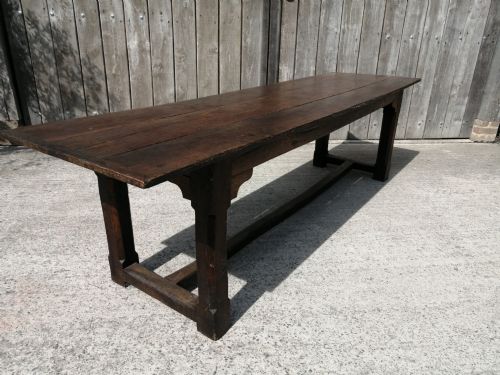
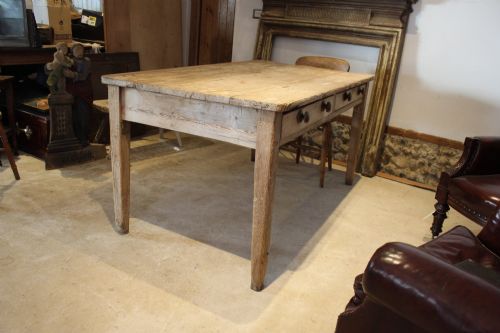
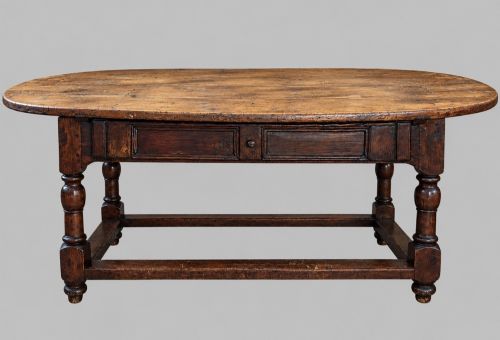
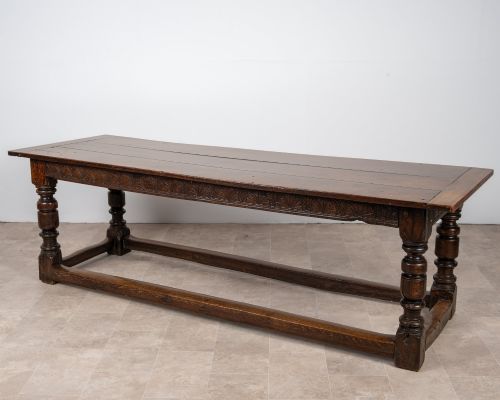
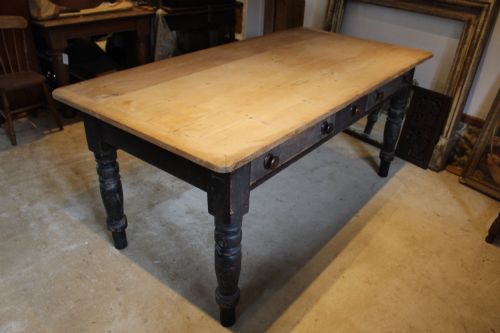
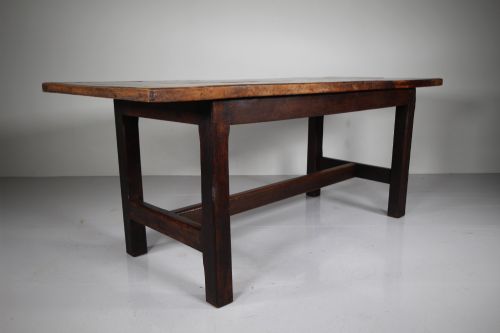
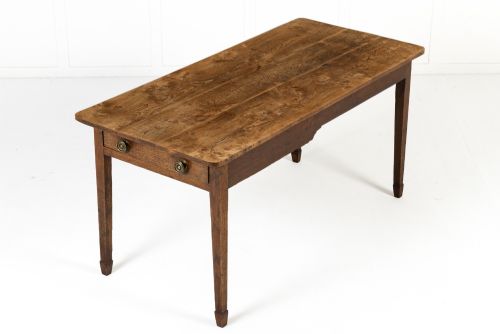
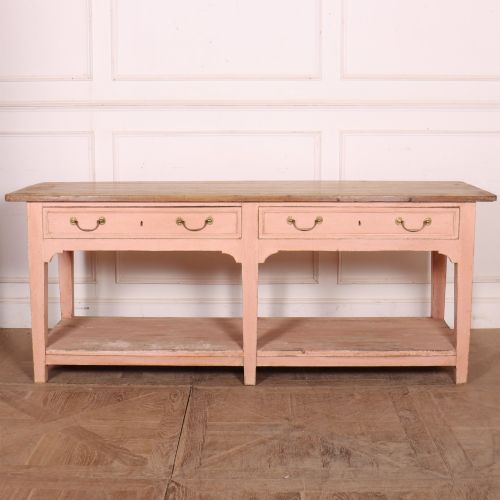
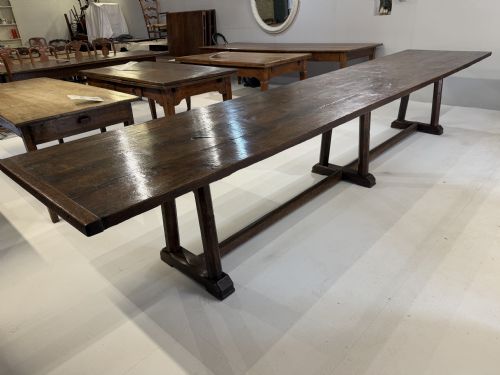
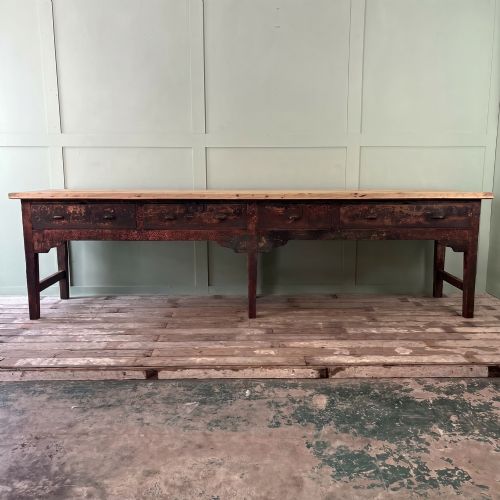
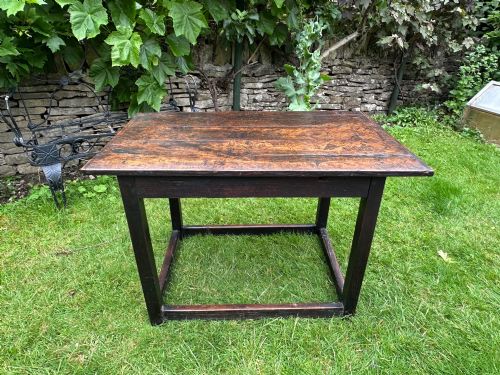
A georgian country farmhouse table is a heavy, hard-wearing dining piece built for domestic work and communal meals in rural homes. These tables span the eighteenth and nineteenth centuries, taking the form of sturdy refectory boards, serving surfaces, and gate-leg designs.
Makers utilised whatever strong timber grew locally, meaning each example carries the distinct grain and marks of its particular provincial origin. Their straightforward construction prioritised strength and daily service over ornate decoration.
Assessing quality and character
Quality in these tables rests upon the integrity of the original timber and the proportion of the structure. Untouched plank tops with deep, honest patination stand apart from examples that have suffered aggressive modern scraping or excessive timber replacement.
The balance between the legs and the top dictates the visual weight of the piece, with provincial regional variations displaying charming quirks in their turning and stretcher placement. A desirable table retains its original height and structural soundness without relying on remedial props.
Georgian Country Farmhouse Table Retail Price Guide 2026
Typical asking prices for georgian country farmhouse table among the pieces listed under this phrase on Sellingantiques today, from the lower quarter to the upper quarter. They describe what is for sale here now, not the wider market.
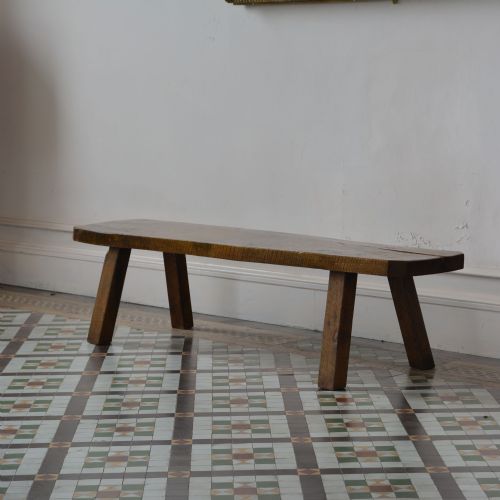
Listings feature oak, pine, elm, walnut, fruitwood, and beech across eighteenth and nineteenth-century dining, serving, and coffee table forms.
The Georgian Country Farmhouse Table Glossary
- Plank top
- A table surface constructed from broad, solid boards joined edge to edge. This method allows the natural grain and historic wear of the wood to remain prominent.
- Potboard
- An open slatted lower shelf fitted between the legs of a table or dresser base. It provided a dry storage area for heavy kitchen pots and earthenware.
- Refectory table
- A long, narrow dining table traditionally built for communal eating halls. Georgian country versions adapted this form for domestic farmhouse kitchens.
- Gate-leg table
- A table with hinged drop leaves supported by swinging legs that pivot outward like a gate. This design allowed the surface area to expand or fold down when space was needed.
- Patina
- The deep sheen and surface texture developed on wood over many decades of handling, cleaning, and light exposure. It serves as a visual record of an antique's age.
Georgian Country Farmhouse Table: Frequently Asked Questions
How do I clean my table?
Wipe surfaces down using a damp cloth without harsh chemical detergents. Apply natural beeswax periodically to nourish the historic timber.
Avoid placing tables near direct heat sources or strong sunlight to prevent the old boards from splitting. Gentle maintenance preserves the accumulated patina built up over centuries.
Were these tables actually used in kitchens?
Yes, these surfaces served as the central workspace for domestic preparation, baking, and family meals in rural homes. Their robust construction handled daily farm life and heavy culinary chores.
Over generations, the timber absorbed the marks of everyday utility, which contributes directly to their character today.
How can I tell pine from hardwood?
Pine is a softwood that typically shows a lighter colour with prominent growth rings and knots. Hardwoods like oak, elm, and fruitwood feel considerably heavier and display denser, tighter grain patterns.
Examining the underside or framing joints often reveals the unpainted core timber.
Do these tables fit modern chairs?
Many historical pieces sit lower or feature thicker underframes than modern factory-made dining furniture. Checking the clearance beneath the apron ensures standard chairs slide underneath comfortably.
Pairing them with simple benches or mismatching antique chairs maintains the traditional vernacular aesthetic.