

Georgian Collectors Chest
A georgian collectors chest is a compact, multi-drawer cabinet built to house specimens or valuables, prized for fine proportions and dense timbers.
Georgian Collectors Chest
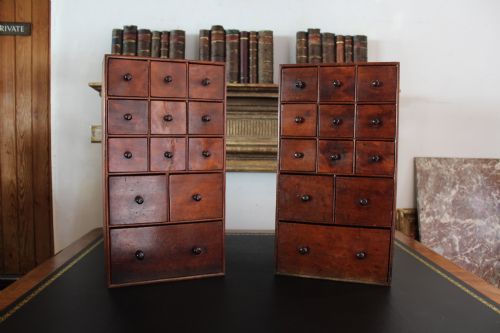
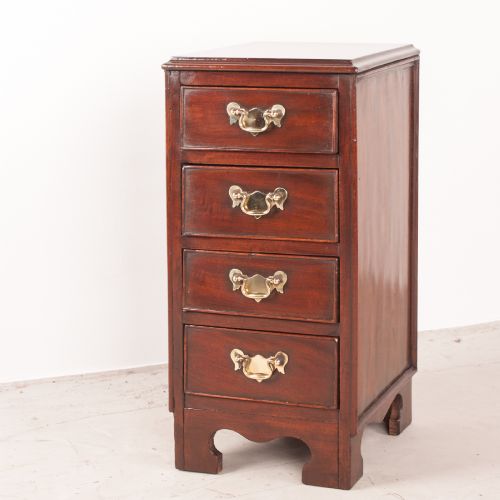
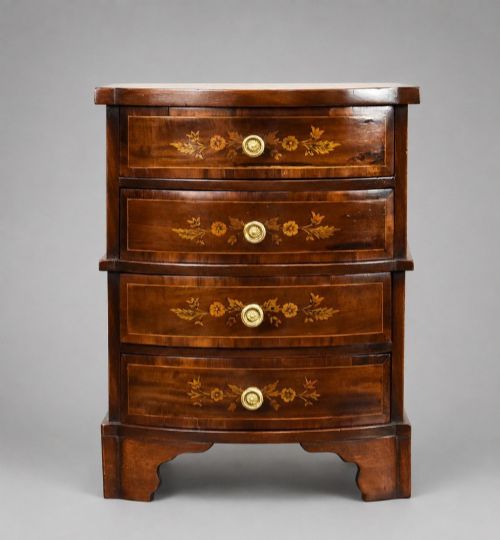
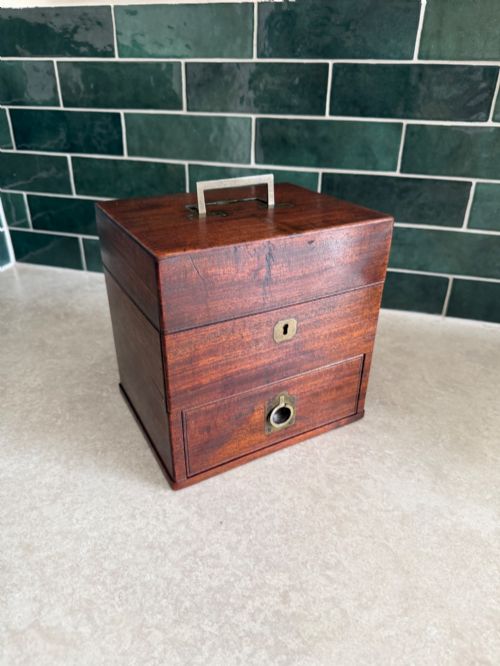
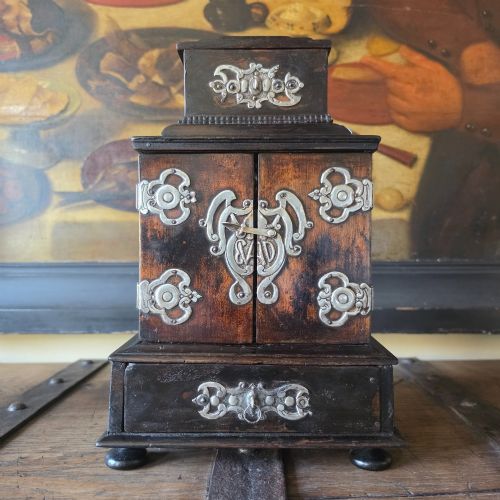
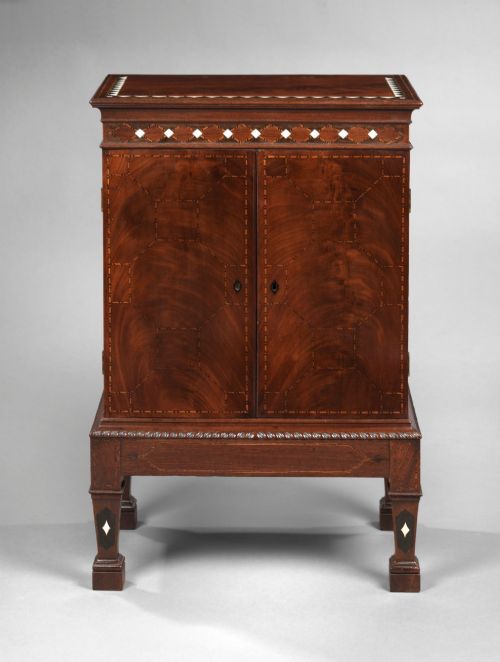
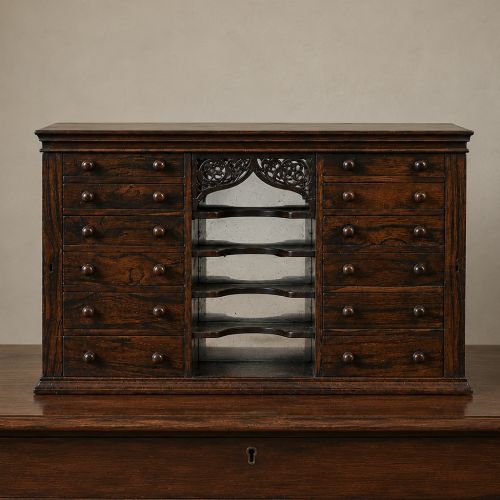
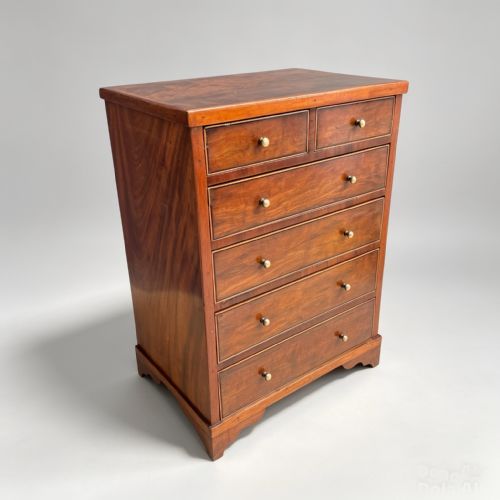
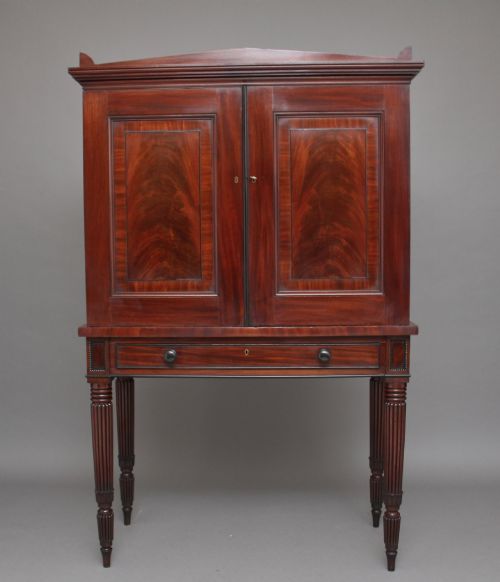
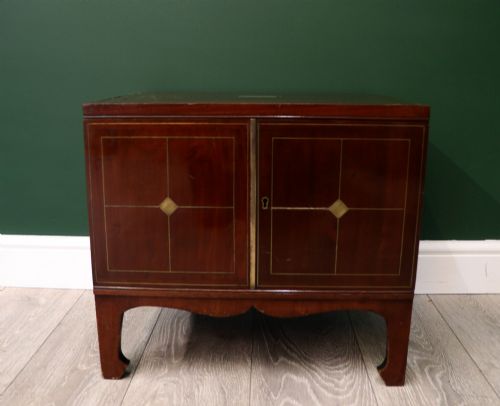
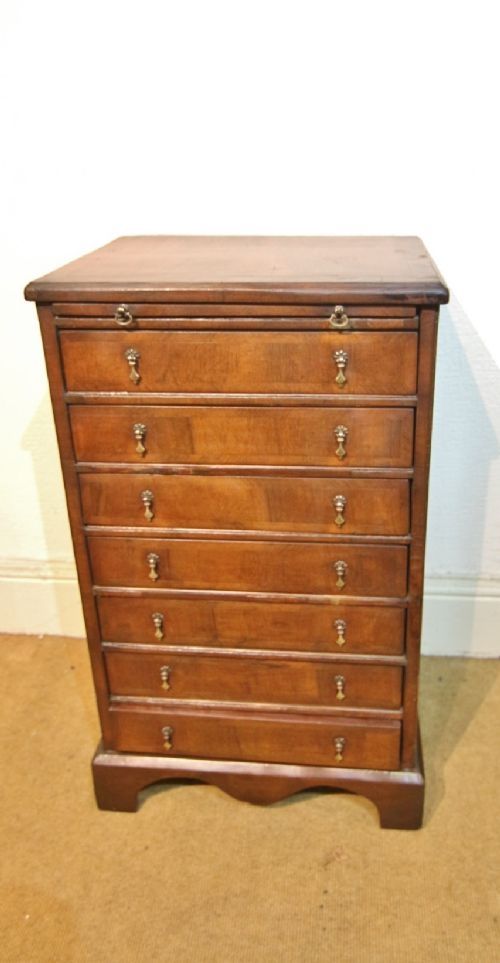
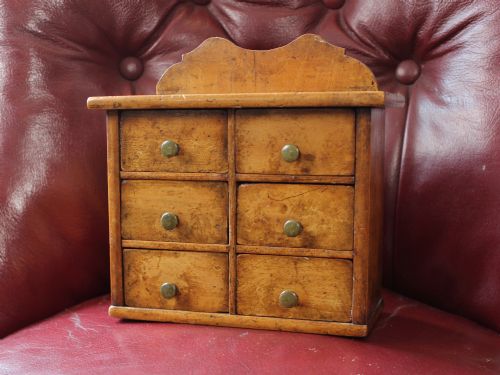
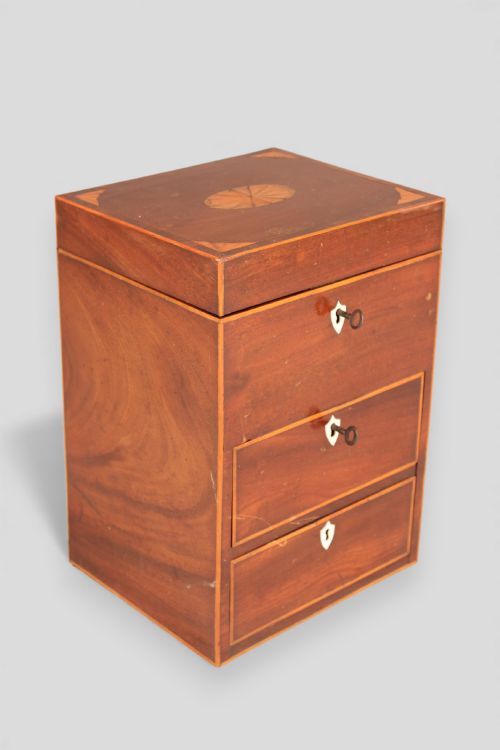
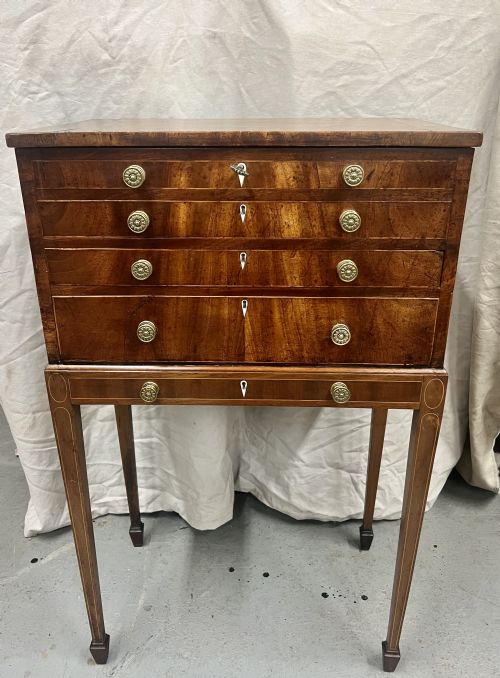
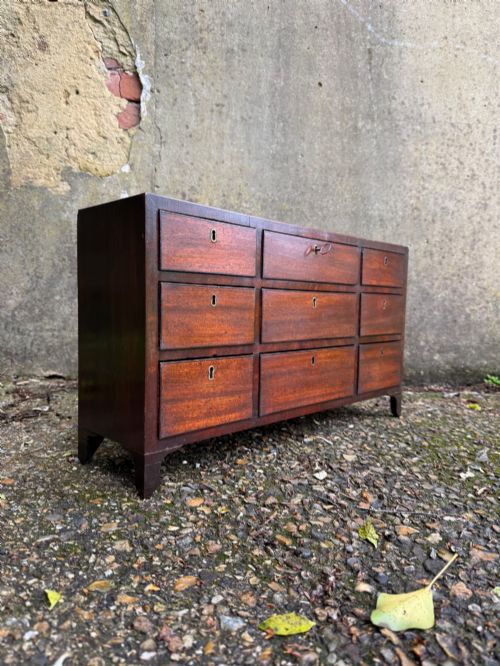
A georgian collectors chest brings together small-scale cabinetry and functional storage designed to hold coins, shells, minerals, or jewellery. These pieces take several forms, including miniature chests of drawers, table cabinets, spice drawers, and apothecary boxes.
The pieces seen here span the eighteenth and nineteenth centuries, alongside later revivals and related formats such as apprentice pieces, Wellington chests, and tallboys. Mahogany remains the dominant timber, accompanied by walnut, oak, rosewood, fruitwood, and burr yew.
Buyers encounter variations ranging from floor-standing estate cabinets and chests on stands to tabletop boxes with numerous internal drawers. Many incorporate brass carrying handles, drop handles, and inlaid details that reflect the standards of period cabinet-making.
Materials and Construction
Cabinet-makers relied on dense hardwoods such as mahogany, walnut, and oak to construct the main carcases and drawers, often adding decorative veneers like burr walnut, rosewood, and amboyna on primary surfaces. Secondary timbers inside drawer linings frequently include oak or pine.
Joinery techniques involve precise dovetail joints on the drawer construction, letting small drawers slide smoothly within tight tolerances. Brass is utilised for drop handles, escutcheons, and campaign-style flush fittings.
Surface finishes range from polished French polish on mahogany to waxed patinas on eighteenth-century elm and oak, highlighting the natural grain of the wood without heavy pigments.
Georgian Collectors Chest Retail Price Guide 2026
Typical asking prices for georgian collectors chest among the pieces listed under this phrase on Sellingantiques today, from the lower quarter to the upper quarter. They describe what is for sale here now, not the wider market.
Listings feature mahogany, oak, walnut, rosewood, fruitwood, and brass across items dated from the eighteenth century through the 1920s.
Factors That Separate Examples
The calibre of a georgian collectors chest rests on the precision of its internal drawer construction and the density of the primary timber used. Pieces featuring numerous well-fitted drawers with fine dovetails sit above simpler multi-drawer carcases.
The integrity of the surface timber and original hardware dictates the standing of a piece. Examples retaining matching brass drop handles, undisturbed secondary woods, and balanced veneer selections on the drawer fronts command greater attention from collectors.
CHARLES WILLIAM SCHOFIELD
The Georgian Collectors Chest Glossary
- Apprentice piece
- A small-scale item created by a craftsman to demonstrate skill before attaining master status. These miniature chests replicate full-size furniture details precisely.
- Tallboy
- A tall chest of drawers consisting of one chest stacked on top of another. Welsh oak examples from the eighteenth century appear frequently in this format.
- Wellington chest
- A tall, narrow chest of drawers secured by a hinged locking side pilaster. This locking mechanism protects the small internal drawers.
- Escutcheon
- A protective plate surrounding a keyhole, usually cast in brass. These plates prevent the surrounding timber from wearing down through repeated use of the key.
- Dovetail joint
- An interlocking wood joint formed by wedge-shaped fingers. This method provides high tensile strength for drawer construction.
Georgian Collectors Chest: Frequently Asked Questions
What were collectors chests used for?
These cabinets stored delicate items such as coins, medals, natural history specimens, and jewellery. The numerous small drawers kept collections organised and protected from dust and light.
Today, they serve similar purposes on a smaller scale or function as decorative storage on tabletops and sideboards.
How do I tell an original from a revival?
Original eighteenth and nineteenth-century pieces show hand-cut dovetails, timber shrinkage appropriate to age, and secondary woods consistent with the period. Revivals and later copies often display uniform machine milling and modern adhesives.
Examining the drawer linings and backboards reveals the age of the timber and the methods used in assembly.
Where should I place a miniature chest?
Because of their compact proportions, these chests sit comfortably on desks, tabletops, or dedicated stands. They require stable humidity levels away from direct heat sources to prevent timber movement.
Placing them at eye level allows the detail of the drawer fronts and brass hardware to be appreciated fully.
What is the difference between an apothecary chest and a collectors chest?
Apothecary chests were designed specifically for storing medicines, herbs, and vials, often featuring small compartments and labelled drawers for remedies. Collectors chests focus on uniform rows of shallow drawers intended for flat items or specimens.
Both share small proportions and fine mahogany or walnut construction, but their internal layouts reflect their distinct original uses.