


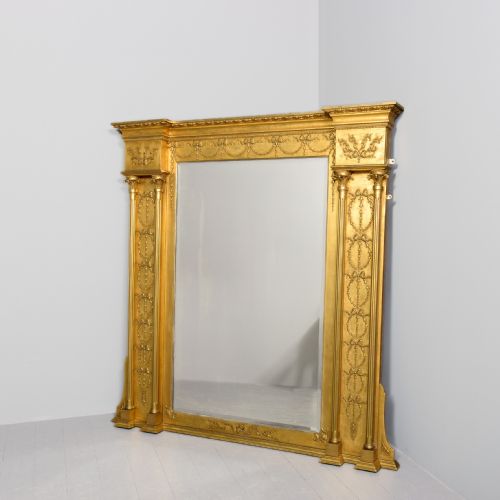
Georgian Chimney Mirror
A georgian chimney mirror sits above the hearth to bounce daylight and candle flame across the room.
Georgian Chimney Mirror
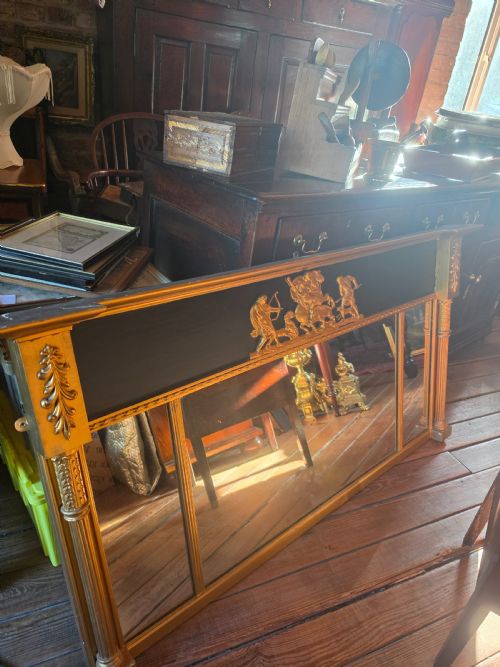
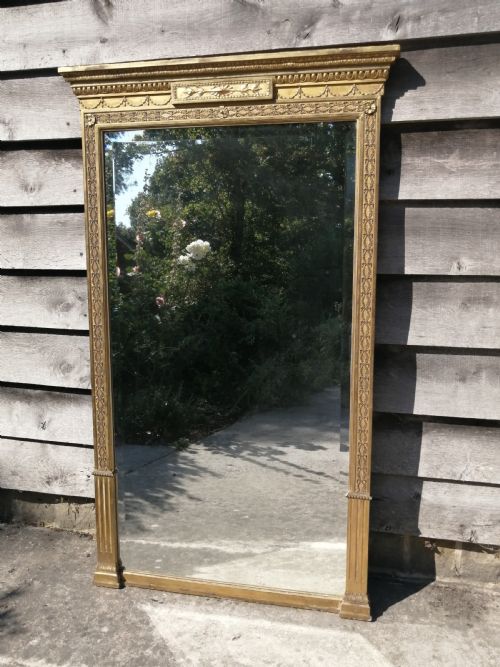
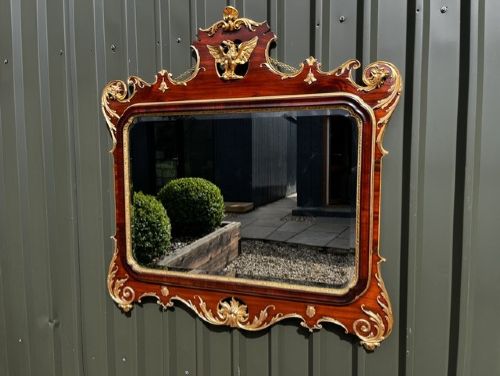
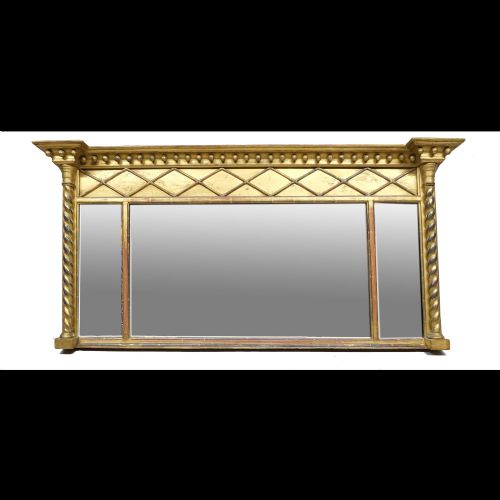
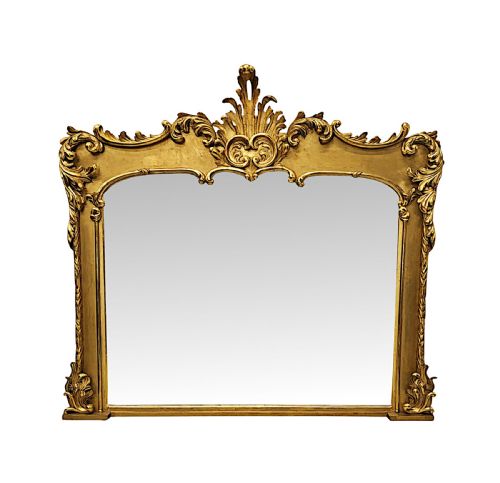
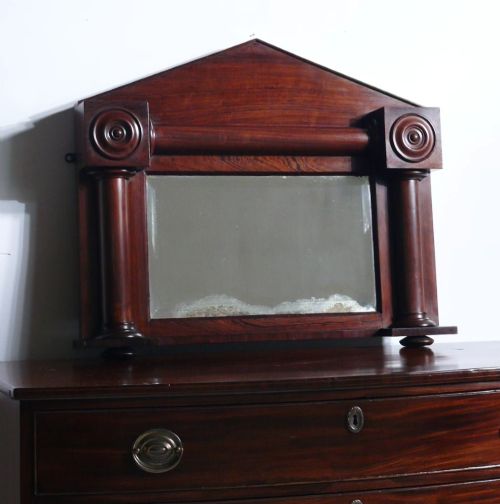
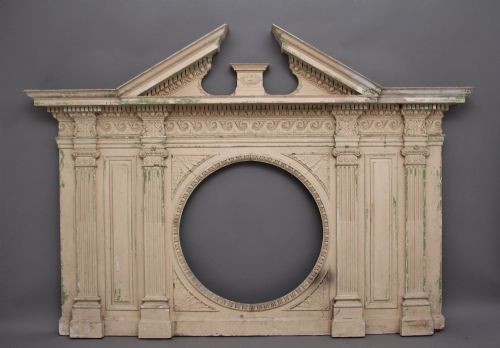
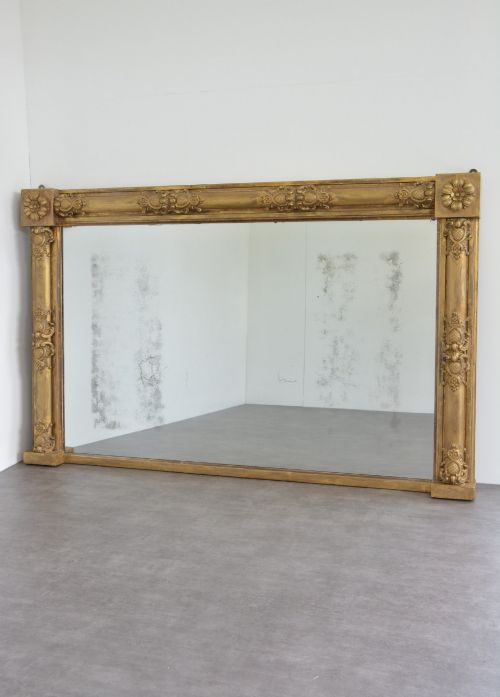
A georgian chimney mirror is an architectural frame designed to hang above a fireplace mantel, taking forms such as overmantels, pier mirrors, and landscape glasses. These pieces span the eighteenth and nineteenth centuries, including Regency, Victorian, and later revival styles.
Most examples found here present as wide horizontal overmantels or tall vertical pier mirrors, fashioned to command the chimney breast.
Makers shaped these grand frames in carved timber, gesso, and giltwood, often incorporating multi-plate glass configurations suited to domestic spaces.
Materials and Construction
Craftsmen built these frames from woods such as mahogany, rosewood, satinwood, walnut, and pine, applying layers of gesso to carve intricate ornamentation.
Guilders covered the surfaces in gold leaf or paint, while specialised joiners fitted mirror glass plates, sometimes creating triptych or compartmental layouts.
An eighteenth-century Irish mirror hides tiny carved Ho Ho birds and squirrels among its scrolling foliage.
Judging Quality and Execution
The distinction between standard domestic pieces and grand country house examples lies in the depth of the wood carving and the crispness of the gesso mouldings.
Original mirror plates with natural foxing and silvering demonstrate greater authenticity than later replacements, while unified proportions elevate the visual balance of the frame.
Ciceri and Co
The Georgian Chimney Mirror Glossary
- Overmantel
- A large mirror designed specifically to hang on the wall directly above a fireplace mantelpiece. They often span the full width of the hearth.
- Pier glass
- A tall, narrow mirror intended to be hung on the strip of wall between two windows. These pieces frequently match the height of adjacent chimney glasses.
- Giltwood
- Timber that has been coated with a thin layer of gold leaf. This technique provides the bright reflective surface seen on classical frames.
- Gesso
- A plaster mixture applied to wood frames to create a smooth surface for carving and gilding. It allows for intricate relief ornamentation.
- Triptych
- A mirror plate divided into three distinct vertical sections within a single frame. This style was popular during the Regency period.
Georgian Chimney Mirror: Frequently Asked Questions
How do I hang a heavy overmantel mirror?
These large frames require secure fixing directly into masonry or substantial wall studs to support their considerable weight safely.
Professional mirror fixings distribute the load evenly across the structure of the wall.
Were these mirrors always placed above fireplaces?
While primarily built for chimney breasts, many similar large glasses served as pier mirrors between windows.
Their proportions dictated their placement within formal reception rooms.
What is foxed glass?
Foxing refers to the aged spots and discoloration that develop behind the glass plate over many decades.
This natural oxidation indicates an original or early mirror plate.
How do I tell a Regency mirror from an earlier piece?
Regency frames often display classical Neoclassical motifs, ebony reeding, and triptych divisions.
Earlier eighteenth-century pieces favour heavier carved giltwood with more pronounced Rococo scrolls.