

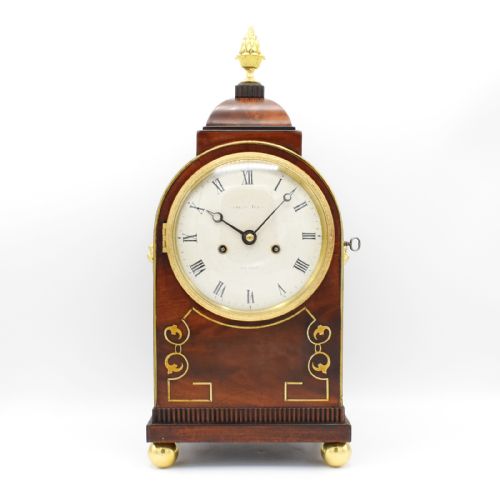


Georgian Chiming Table Clock
A georgian chiming table clock sits on a bracket or surface, sounding the hours and quarters with mechanical precision.
Georgian Chiming Table Clock
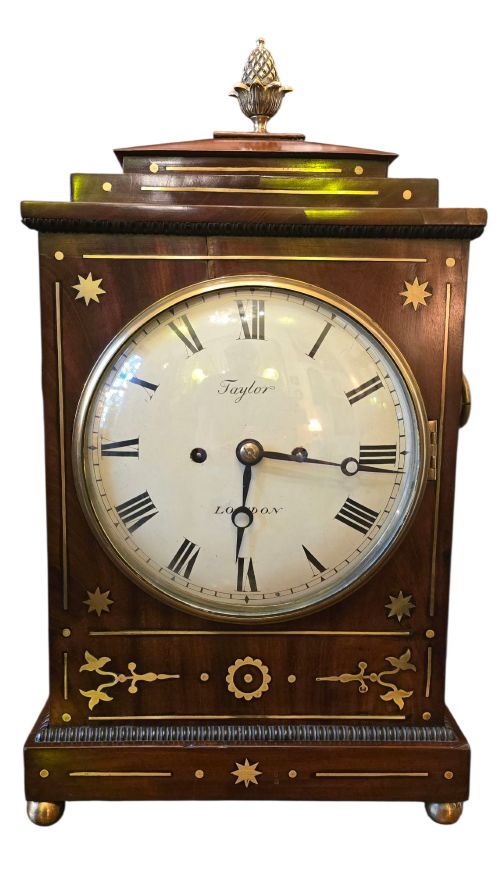
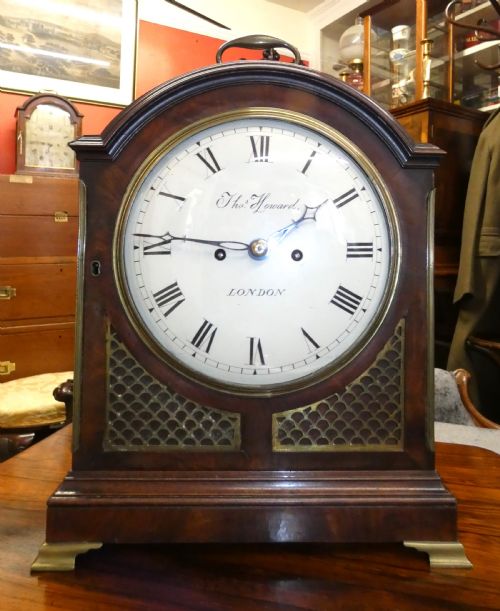
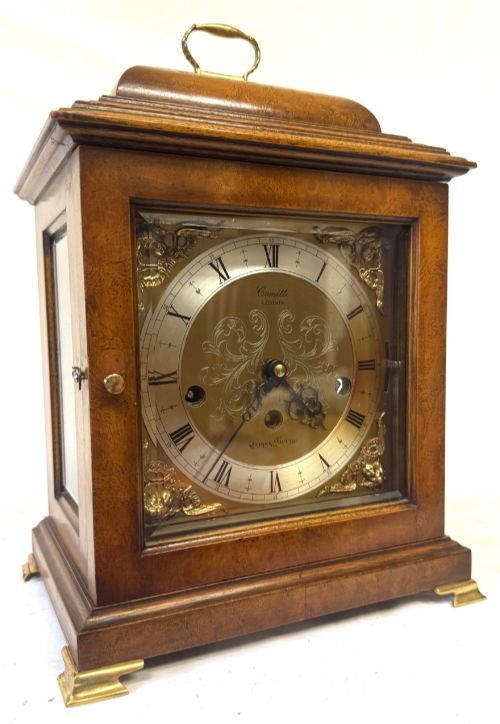
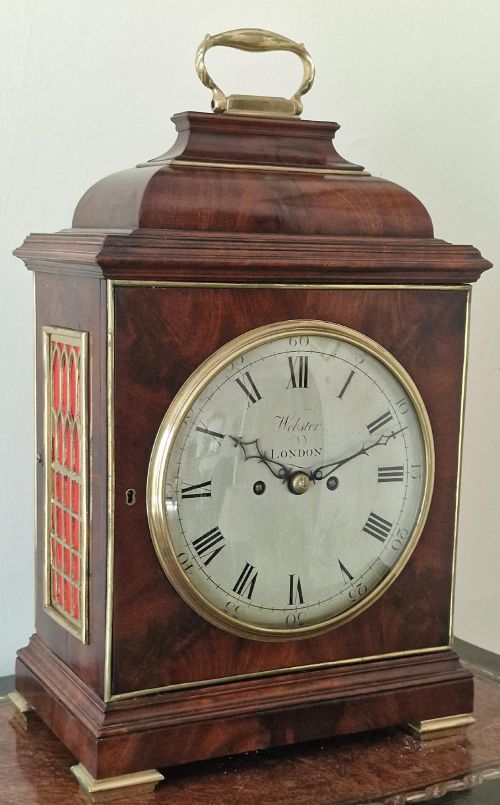
A georgian chiming table clock is primarily represented on this page by bracket clocks and mantel clocks originating from the Georgian, Regency, and eighteenth-century periods. These timepieces take the form of table clocks housed in wooden cases designed to stand on furniture rather than hang on walls.
Makers such as Francis Perigal, William Withers, and John Taylor appear alongside later revivals, showing how the form persisted through subsequent centuries. The selection encompasses plain mahogany cases, ebonised wood, and decorated surfaces like black chinoiserie lacquer.
Buyers encounter variations that include musical movements playing multiple tunes, quarter-repeating mechanisms, and twin or triple fusee trains. While many bear the names of London watch and clock makers, others reflect later manufacturing dates while retaining traditional proportions.
Distinctions in quality
Quality rests heavily on the sophistication of the movement, separating simpler timepieces from complex triple-fusee musical or quarter-repeating mechanisms. The crispness of dial engraving and the retention of original brass mounts also define superior examples.
Case materials play a significant role, with figured burr walnut, intricate lacquerwork, and solid mahogany outperforming plain secondary timbers. The survival of signed movements by prominent makers elevates the standing of an individual clock.
Georgian Chiming Table Clock Retail Price Guide 2026
Typical asking prices for georgian chiming table clock among the pieces listed under this phrase on Sellingantiques today, from the lower quarter to the upper quarter. They describe what is for sale here now, not the wider market.
Several makers fitted their musical boxes with multiple tune selections to entertain guests in Georgian drawing rooms.
Francis Perigal·William Withers·John Taylor·Chater And Son·John Ellicott·Richard Peckover·William Smith·Percy Webster·Cording Of London·Taylor Of London·J Condliff Liverpool·Agar Of Malton·Berguer Of The Strand·Frodsham And Baker·Elliott London·Comitti Of London
The Georgian Chiming Table Clock Glossary
- Bracket clock
- A portable table clock traditionally designed to sit on a matching wall bracket or a chest of furniture. These pieces usually feature a carrying handle on top.
- Fusee
- A conical pulley used in mechanical clocks to equalise the diminishing power of the mainspring as it unwinds. This mechanism ensures consistent force is applied to the gear train.
- Chinoiserie
- A decorative style employing European interpretations of Chinese artistic motifs, often seen in lacquered clock cases finished in green, gold, or black. It was popular in eighteenth-century cabinet making.
- Quarter-repeating
- A mechanism that sounds the last quarter-hour as well as the hour when a cord or lever is pulled. It allowed owners to tell the time in a dark room.
- Silvered dial
- A clock face made of brass treated with a silver solution to create a matte metallic finish for engraved numerals. The technique provides high legibility against dark bezels.
Georgian Chiming Table Clock: Frequently Asked Questions
What is a bracket clock?
A bracket clock is a portable timepiece designed to sit on a table, desk, or architectural wall bracket. The term originally referred to the wooden shelf that supported the clock.
Over time, the name became applied to the clock itself, regardless of whether it was placed on a bracket or stood freely on furniture.
How do fusee movements work?
A fusee movement uses a conical pulley connected to the mainspring via a fine chain or cord. As the spring unwinds and loses tension, the chain moves to a wider part of the cone.
This clever geometric design maintains equal torque across the gear train, helping the clock keep accurate time throughout its running cycle.
Where were these clocks placed?
These clocks served as prominent furnishings in hallways, drawing rooms, and dining rooms of large houses. Their portable nature allowed owners to move them between rooms as needed.
They stood securely on mantelpieces, chests of drawers, or dedicated wall brackets where their chimes could be heard through the house.
How do I identify a Georgian clock?
Georgian clocks generally display classical architectural proportions, clean lines, and high-quality timber such as mahogany or ebonised wood. Dials often feature engraved brass or silvered chapter rings.
Maker signatures inscribed on the dial or backplate help confirm the period, alongside construction details like tapered plates and handmade gear teeth.