
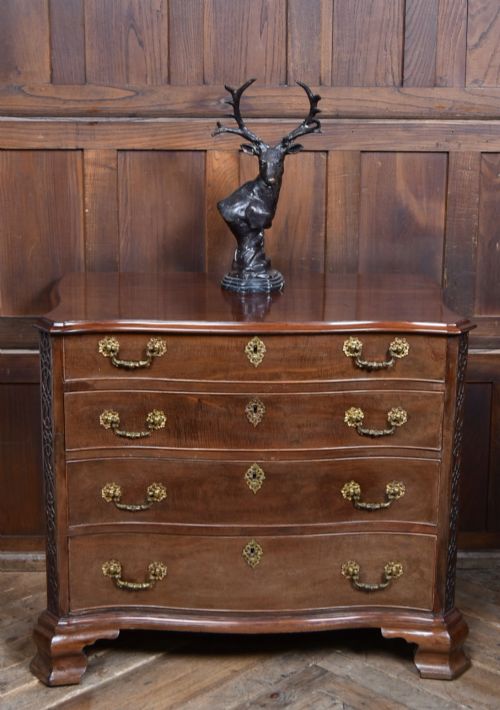
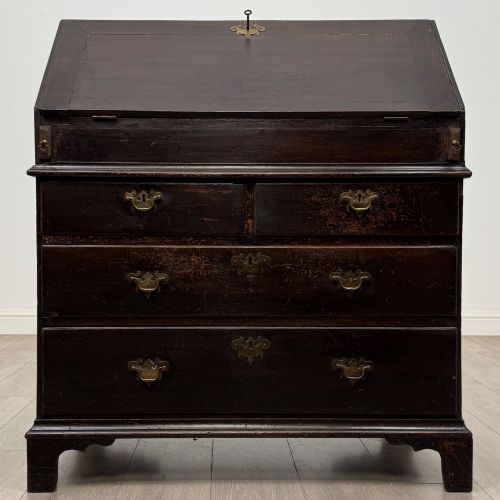
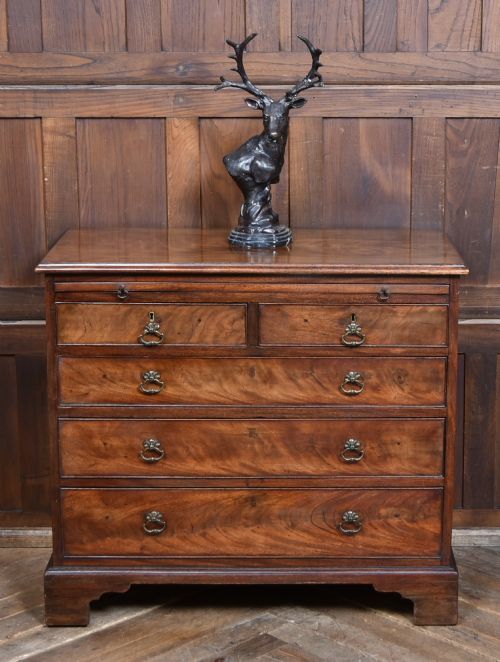
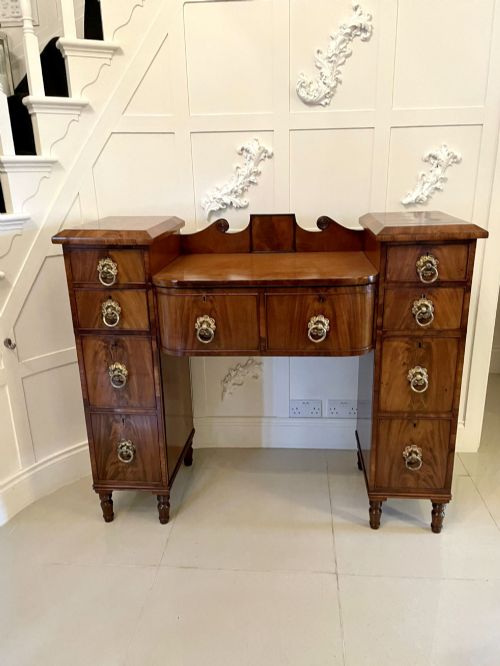
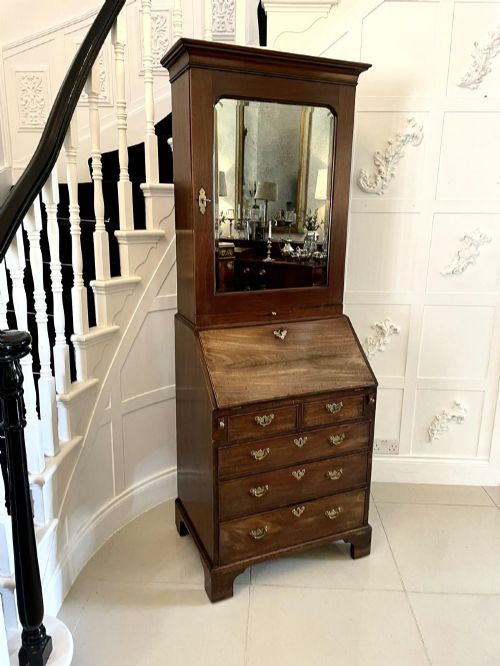
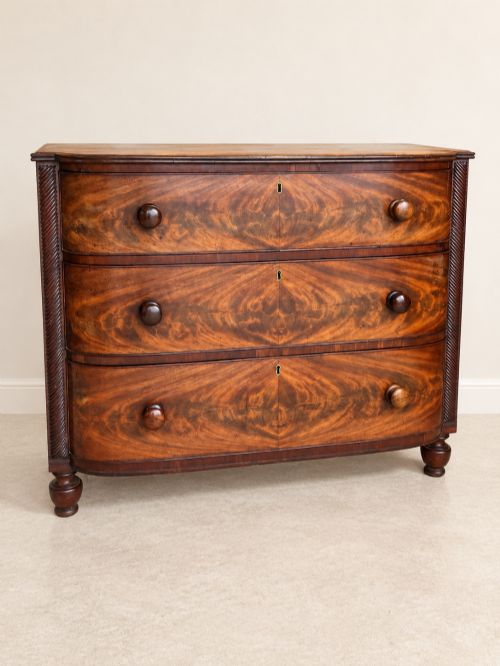


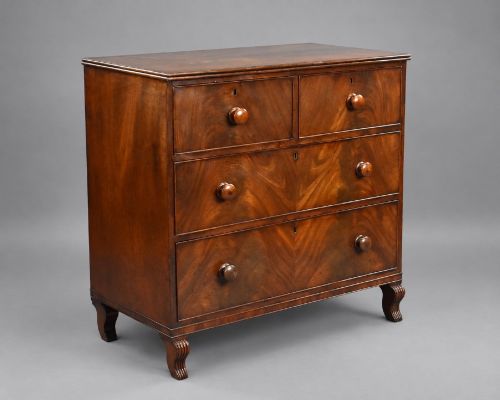
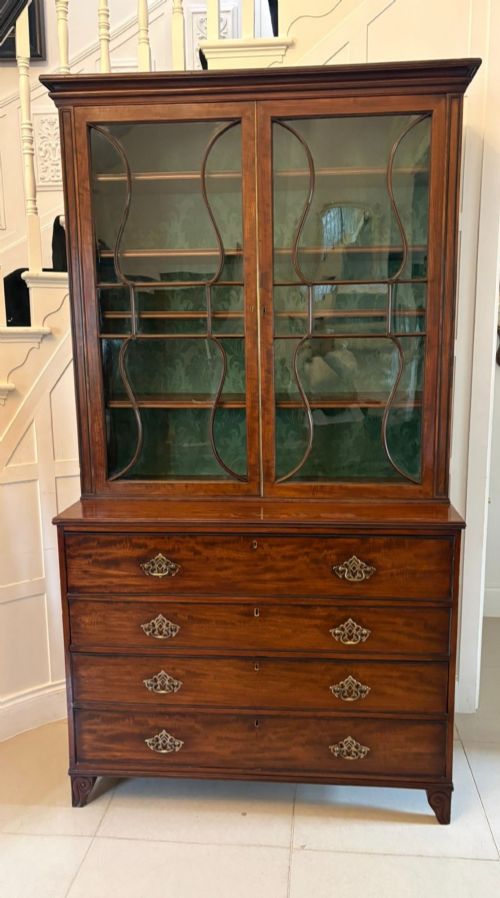
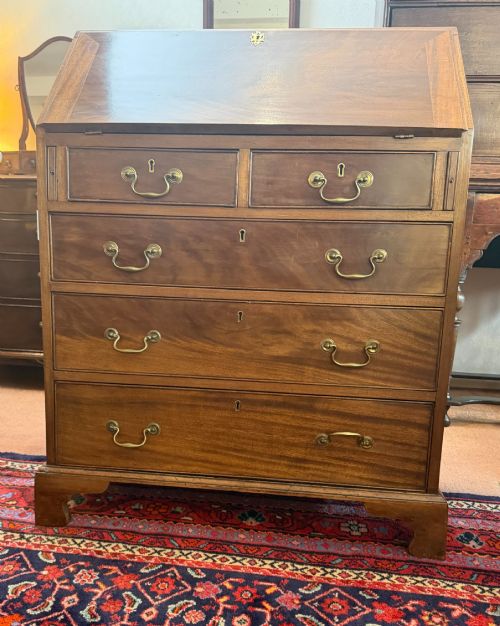
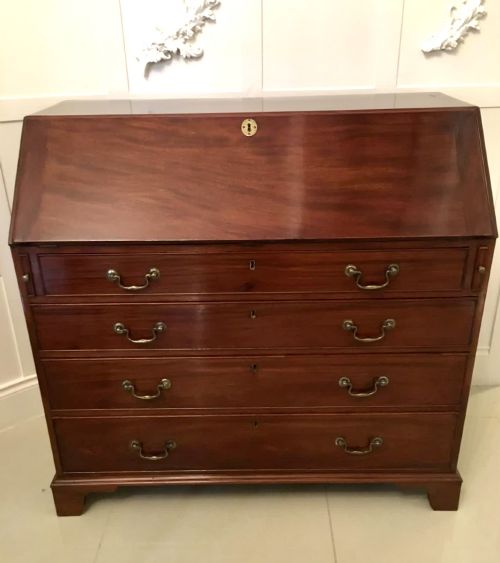
Georgian Chest with Bureau
A georgian chest with bureau combines two essential forms of domestic furniture, offering a secure writing surface alongside generous drawer storage.
Georgian Chest with Bureau
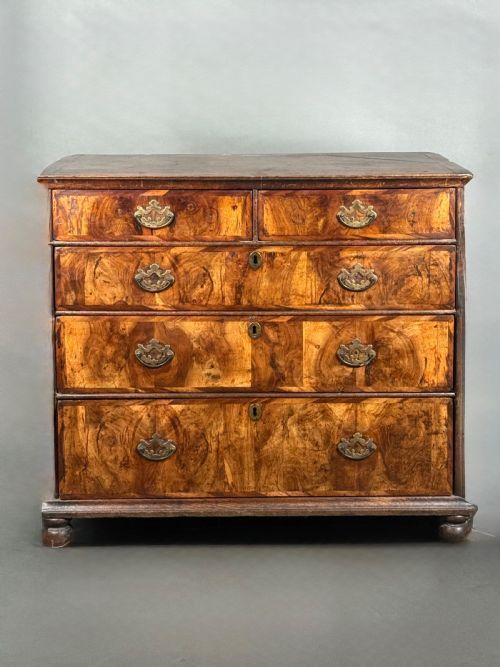
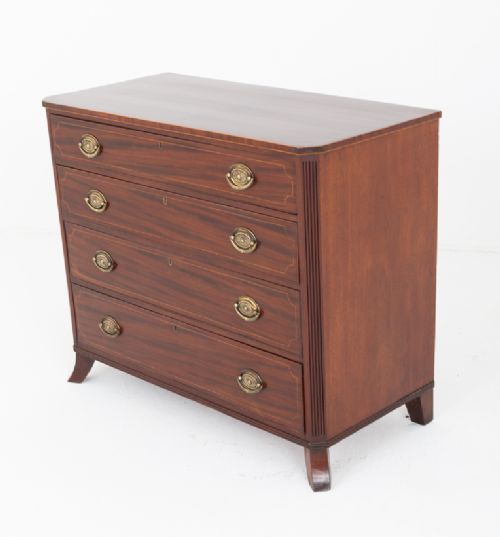
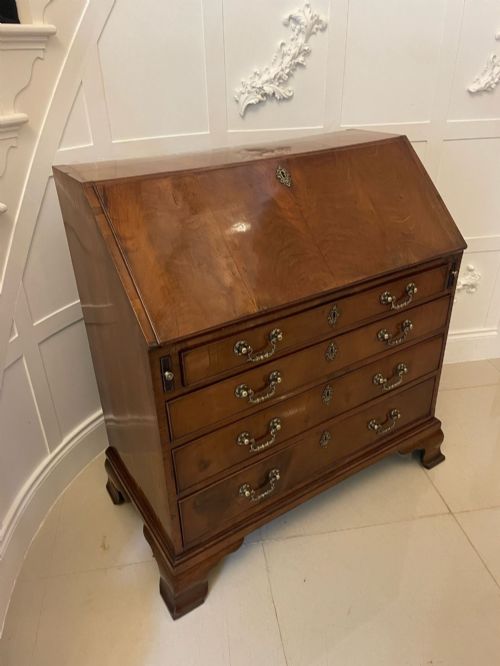
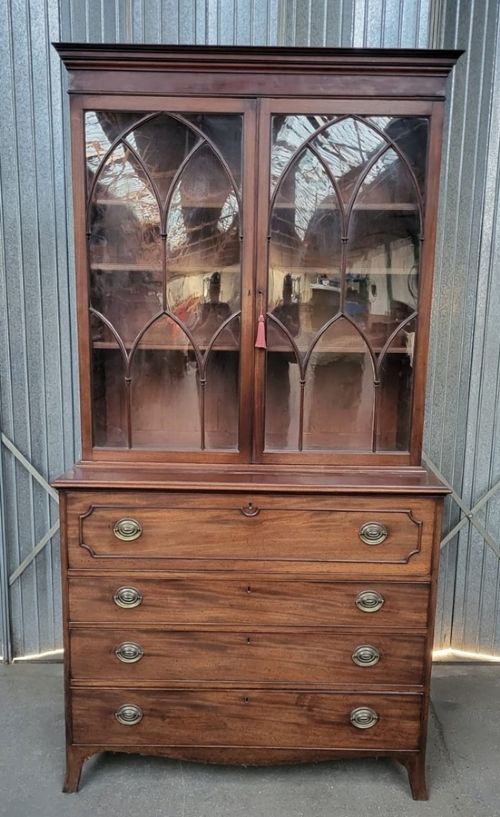
A georgian chest with bureau typically presents as a solid case piece of furniture housing a fitted writing compartment alongside multiple drawers. The pieces appearing on this page span the 18th century, the Georgian period, and later revivals, reflecting the evolution of domestic writing furniture.
Materials and Construction
Cabinetmakers predominantly utilised figured mahogany, walnut, burr walnut, and oak, often enhancing the timber surfaces with feather-banded borders or intricate inlay. Solid constructions meet veneered applications across the inventory, demonstrating the high level of technical skill possessed by period artisans.
Functional hardware such as brass handles, original ironwork, and leather writing surfaces complete the construction. These elements were integrated thoughtfully to support daily writing tasks while maintaining the structural integrity of the drawer units.
Some early 18th-century examples retain secret compartments hidden behind internal pigeonholes for storing private letters.
Judging Quality
Quality rests upon the selection of timber figures, the precision of internal drawer pigeonholes, and the retention of original hardware such as brasses or ironwork. Pieces exhibiting well-matched wood veneers and carefully executed joinery command higher regard among collectors.
The degree of preservation in the writing surface and the subtlety of decorative details, such as inlaid borders, distinguish finer examples from standard vernacular pieces.
The Georgian Chest with Bureau Glossary
- Bureau
- A desk equipped with a sloping lid or fall-front that covers a fitted interior of pigeonholes and small drawers.
- Brushing slide
- A pull-out wooden shelf positioned above the main drawers, traditionally used for dusting clothing or resting a ledger.
- Escritoire
- A tall writing cabinet or desk, originating in the late 17th or early 18th century, featuring a drop-down writing flap.
- Secretaire
- A piece of furniture containing a concealed writing drawer or compartment disguised as a standard drawer front.
Georgian Chest with Bureau: Frequently Asked Questions
How do I use a bureau desk?
The fall-front or sloping lid folds down to create an immediate writing surface supported by internal arms. This reveals a fitted interior designed for correspondence and paperwork.
When writing is finished, documents remain safely stored inside the compartment before the lid is closed and secured.
What is a brushing slide used for?
The slide pulls out smoothly from the upper section of the chest, sitting just beneath the writing flap or top surface. Historically, it served as a convenient platform for examining ledgers or brushing garments.
In modern rooms, it functions well as an auxiliary shelf when writing space is needed temporarily.
How do I date a walnut bureau?
Dating relies heavily on examining the timber grain, secondary woods, construction methods, and hardware fixings. Early 18th-century pieces often utilise solid walnut or rich burr veneers applied to oak carcases.
Later revivals mimic these early forms but generally display machine-sawn timbers and different internal construction details.
Where should I place a chest with bureau?
These versatile items suit studies, living rooms, and bedrooms due to their dual function as storage chests and desks. Positioning them away from direct sunlight and heat sources protects the timber and delicate veneers.
Ensure adequate clearance in front of the piece for the fall-front flap to open completely.