
Georgian Chest Press
A georgian chest press combines deep drawer storage with upper cupboard space, offering a practical storage solution that anchors a bedroom.
Georgian Chest Press
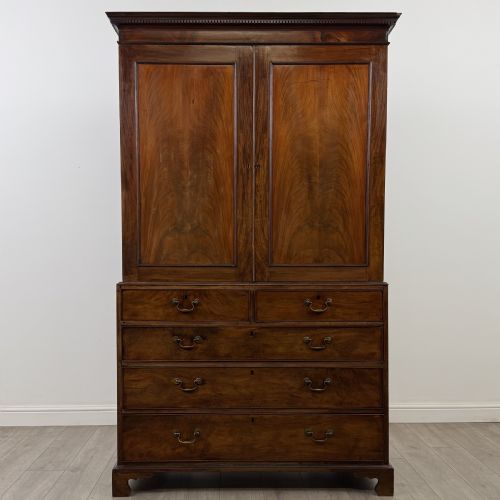
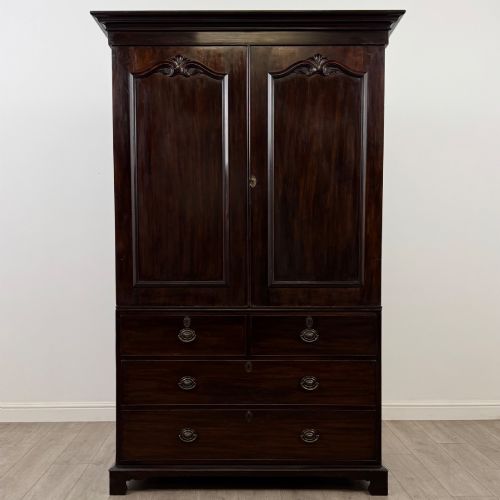
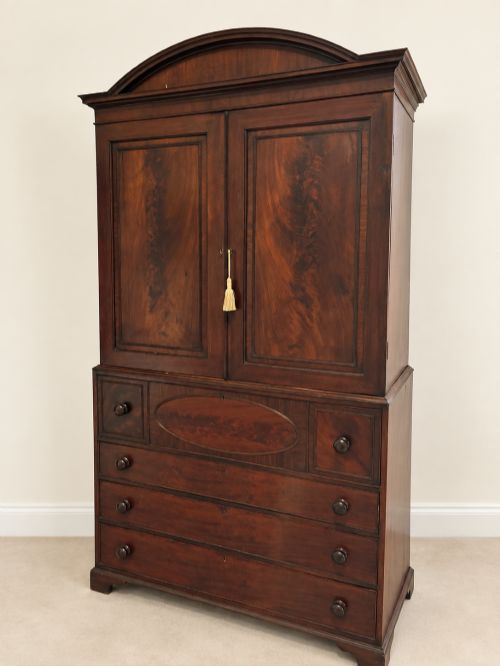
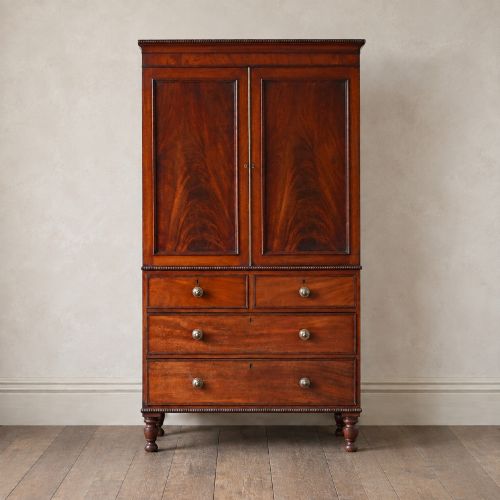
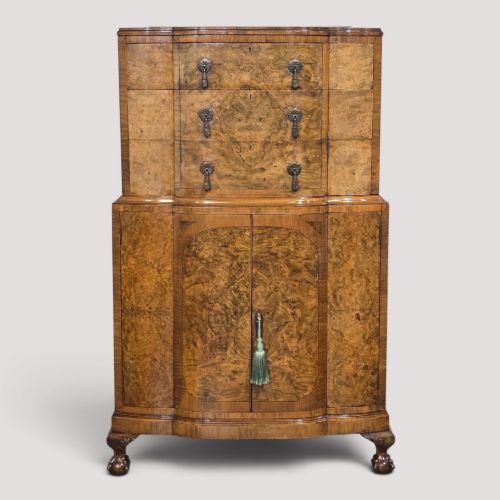
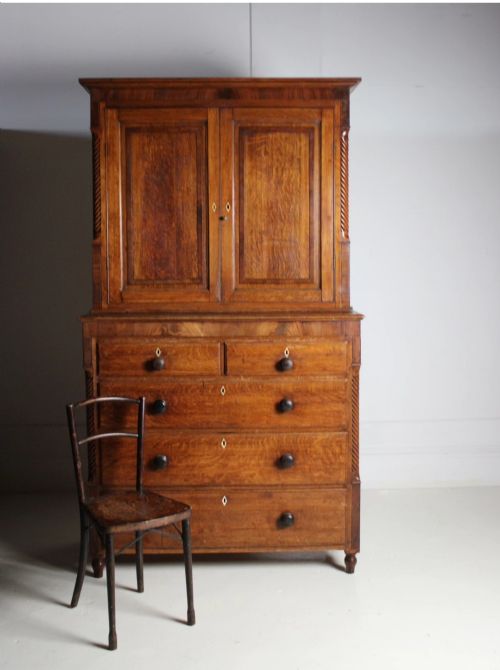
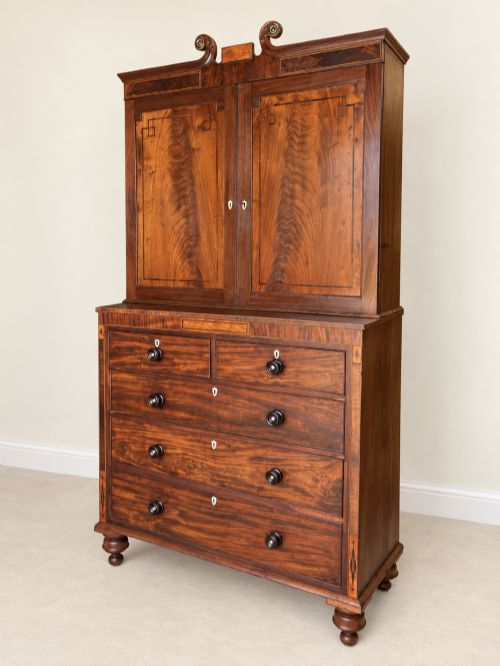
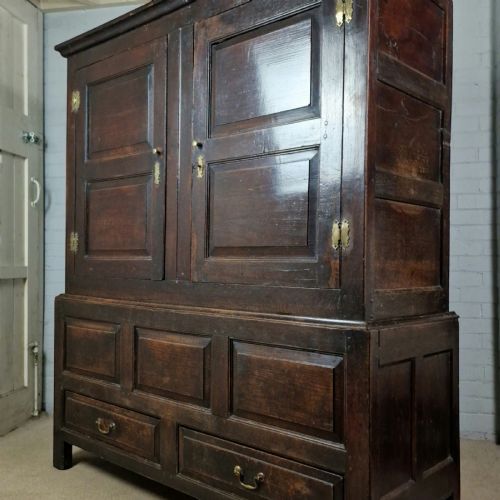
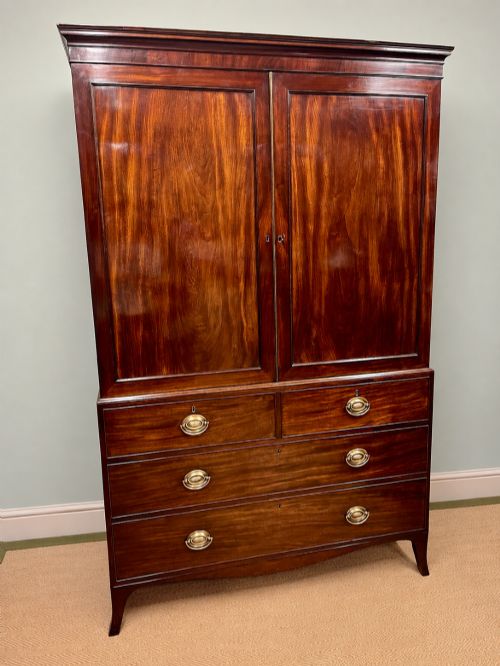
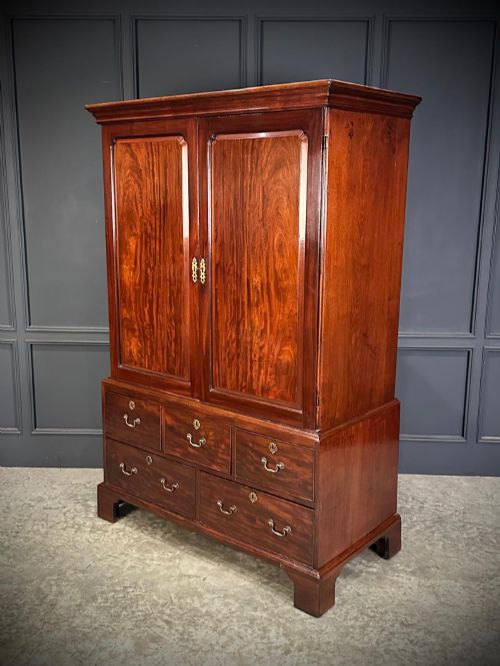
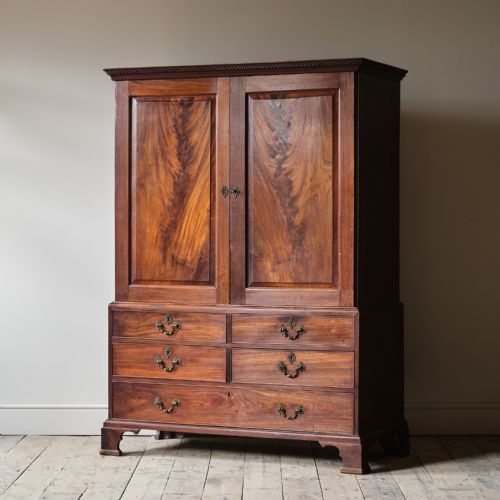
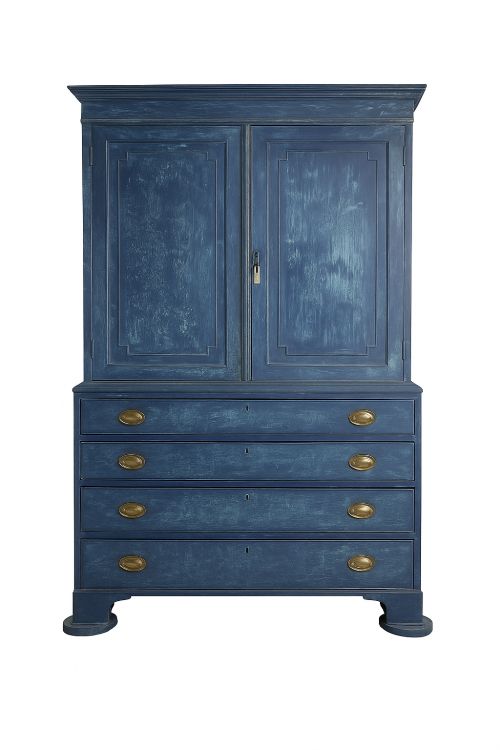
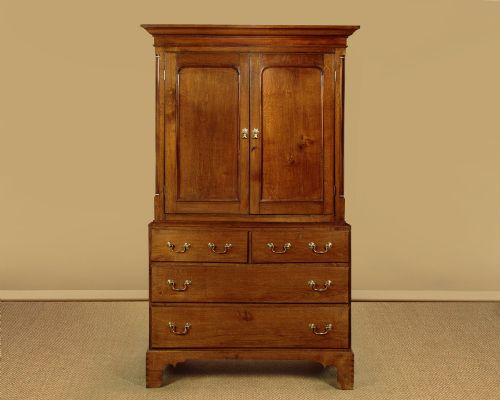
A georgian chest press is a substantial storage piece uniting a chest of drawers at the base with a double cupboard or press section above. These items emerge from the eighteenth and nineteenth centuries, taking forms such as linen presses, housekeepers cupboards, and clothes press armoires.
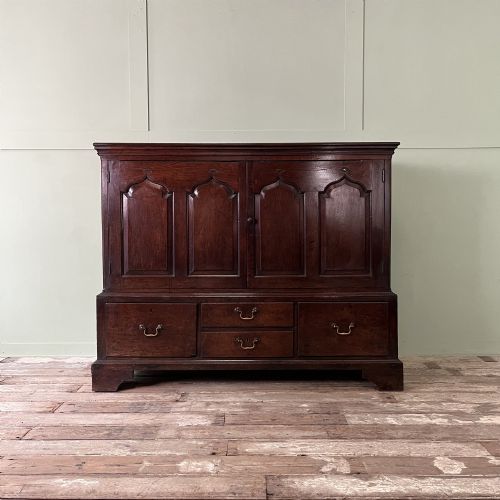
Mahogany and oak dominate the available selection, ranging from vernacular Welsh country pieces to refined George III designs. Buyers frequently encounter variations featuring upper doors that conceal sliding trays or clothes hanging space above a multi-drawer chest.
What varies in quality
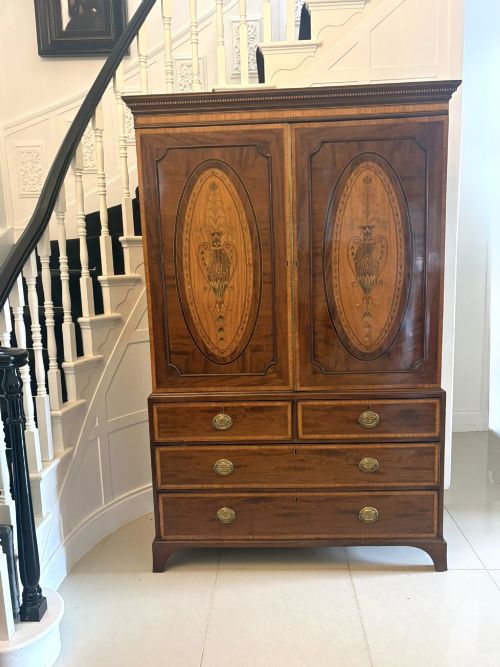
The choice of timber grain dictates the visual impact, with figured mahogany and burr walnut representing the higher end of cabinet work. Selection of matching veneers across drawer fronts and cupboard doors separates ambitious pieces from utilitarian provincial furniture.
Proportion and structural restraint govern the design success of each press. Subtle details like fine stringing, crisp carving, and original brass fittings elevate the standing of a cabinet.
Several provincial pieces include internal wooden screw mechanisms designed to press linen flat without the aid of modern irons.
The Georgian Chest Press Glossary
- Linen press
- A tall cupboard containing sliding trays historically used for storing pressed linen and textiles flat. The upper section sits directly upon a chest of drawers base.
- Crossbanding
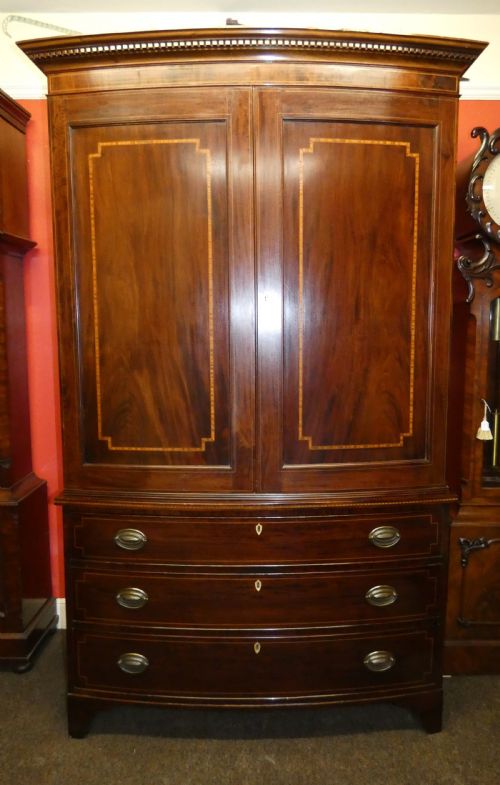
- A narrow strip of veneer applied perpendicularly to the grain of the primary surface to form a contrasting border. This technique frames drawer fronts and door panels on refined cabinets.
- Mule chest
- A storage chest featuring one or more drawers at the base beneath a hinged lid compartment. These pieces bridge the transition between simple blanket boxes and multi-drawer chests.
- Secretaire
- A desk component fitted with a drop-front writing flap that conceals small pigeonholes and drawers. It integrates into the upper chest or middle section of a larger press.
- Cornice
- The moulded projection running along the top edge of a tall piece of furniture. It crowns the cabinet and often incorporates dentil moulding or carved friezes.
Georgian Chest Press: Frequently Asked Questions
What is a georgian chest press used for?
These cabinets serve as substantial wardrobes and linen stores for bedrooms or dressing rooms. The upper cupboards house clothes or sliding shelves, while the lower chest drawers hold folded garments.
Historically, they stored household linens pressed flat to save space. Today, they function as versatile storage furniture in period and modern interiors alike.
How do I date a georgian chest press?
Dating relies upon timber choice, construction methods, and stylistic details across the piece. Eighteenth-century examples often feature solid oak or early mahogany with hand-cut dovetails and pegged frames.
Nineteenth-century pieces frequently display applied veneers, flame mahogany, and machine-sawn components. Hardware styles and foot configurations also shift from bracket feet to turned feet over time.
Will a georgian chest press fit in a modern bedroom?
These presses arrive as large, heavy items requiring careful measurement of ceiling height and floor space. Most models separate into upper and lower sections for easier transport and positioning.
Interior depths accommodate modern hangers and folded clothes despite their antique origins. Placement requires stable walls and adequate clearance for opening large cupboard doors and pull-out drawers.
What is the difference between an oak and a mahogany press?
Oak presses generally originate from provincial workshops or earlier eighteenth-century Welsh and English vernacular traditions. They display robust construction, visible grain patterns, and simpler decorative schemes.
Mahogany presses align with more formal urban cabinet making, utilising rich grain figures and polished surfaces. Finer examples introduce satinwood inlay, crossbanding, and architectural cornices.