




Georgian Chamberstick
A georgian chamberstick brings the low-slung, portable candlelight of the Georgian parlour directly to a modern table.
Georgian Chamberstick
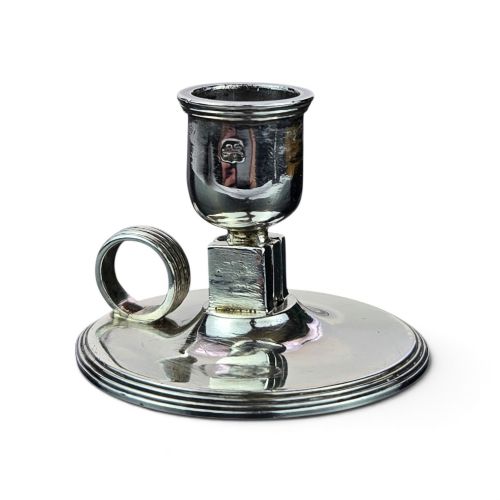
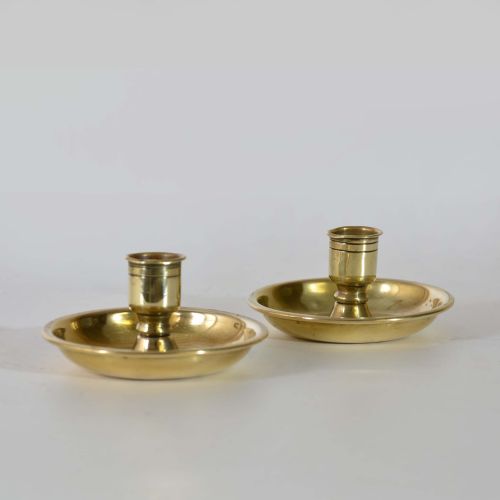
When you search for a georgian chamberstick, you are looking at low, saucer-based candleholders designed for carrying through a house before gaslight or electricity. The pieces on this page span the Georgian, Regency, and 19th-century periods, with related examples reaching into the Edwardian era and the 1920s.
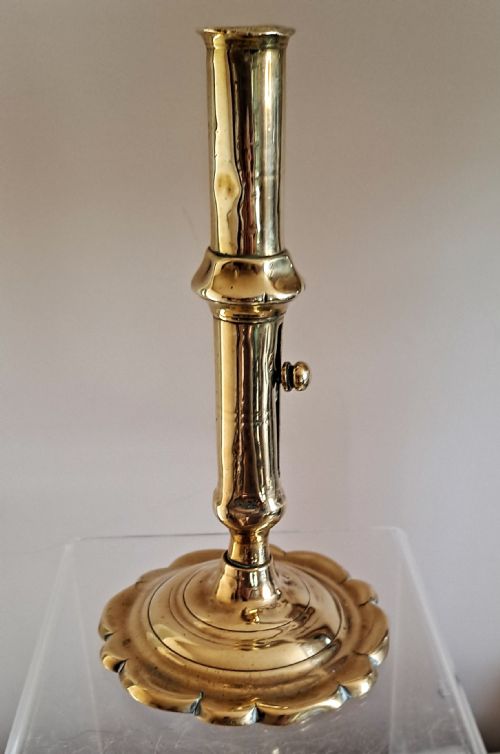
You will encounter various forms here, ranging from simple brass petal-based designs and silver-plated chamber sticks to porcelain figures and compact travelling models known as Brighton buns. Materials include brass, copper, silver plate, solid silver, paktong, glazed porcelain, enamel, olive wood, and gold leaf.
Styles stretch across Georgian, Regency, Rococo, campaign, and Victorian aesthetics. Some pieces take the form of single candlesticks or pairs, while others are companion go-to-bed candlesticks featuring putti or modelled figures.
How they were made
Makers utilised cast and sheet metals, forming brass, copper, paktong, and silver plate into saucers, sockets, and loop handles. Old Sheffield plating fused a thin layer of silver over a copper base, creating durable vessels for daily use.
Porcelain examples, such as those from Spode, Derby, and Minton, required moulded clay bodies finished with glaze and enamel decoration, sometimes enhanced with gold leaf. Wood turners shaped portable items like olive wood Brighton buns from dense timber.
Listings feature brass, silver plate, copper, paktong, and glazed porcelain across the Georgian, Regency, and 19th-century periods.
What varies in quality
Quality rests in the crispness of casting and the integrity of the materials, whether in the sharp relief of a petal base or the fine detail moulded into porcelain figures like mandolin players and putti. Heavier gauge metals and clean joints distinguish superior metalwork.
For plated pieces, the preservation of the silver layer over the copper or base metal dictates the grade. In porcelain, the precision of the hand-painted enamel patterns and the stability of the glaze mark out the finer examples.
Spode·Derby·Minton
The Georgian Chamberstick Glossary
- Chamberstick
- A short candlestick set in a shallow pan with a handle, used for lighting a bedchamber or navigating dark hallways. These portable holders often included a small detachable nozzle or cone snuffer.
- Brighton bun
- A compact, screw-together travelling candlestick shaped like a rounded bun. These practical items protect the candle and snuffer safely inside the wooden or metal halves during transit.
- Old Sheffield plate
- An early fusing technique where a sheet of silver is melted onto a thicker copper ingot and rolled together. This method produced domestic wares with genuine silver surfaces prior to modern electroplating.
- Paktong
- A strong copper-nickel-zinc alloy imported from China, prized for its bright silvery appearance and resistance to tarnish. It was frequently cast into candlesticks and fireplace equipment during the eighteenth century.
- Go-to-bed
- A small nineteenth-century term for a miniature chamberstick or pocket candlestick used specifically when retiring for the night. They are often modelled with figural supports such as putti.
Georgian Chamberstick: Frequently Asked Questions
What is a chamberstick used for?
A chamberstick provided portable illumination before modern electric lighting existed. People carried them by the loop handle to light their way up staircases and through dark corridors.
The shallow saucer caught any dripping wax, protecting hands and carpets. Many included a small cone-shaped snuffer tucked into the side to extinguish the flame.
How do I spot Old Sheffield plate?
Old Sheffield plate shows a copper seam or faint pinkish copper showing through where the thin silver layer has worn thin over generations of polishing. This fusion technique differs entirely from later nineteenth-century electroplating.
The metal weight feels substantial because the core is copper rather than a cheaper white metal alloy. Makers utilised this method extensively around the turn of the nineteenth century.
What is a Brighton bun?
A Brighton bun is a travelling candlestick that unscrews into two hemispherical halves to form a neat, self-contained pod. Travellers packed them into luggage without risking damage to the nozzle or socket.
They appear in brass, silver, and dense woods like olive wood. The clever screw mechanism kept the candle and components secure on journeys.
How do I date a brass chamberstick?
Dating relies on construction methods, socket design, and base shapes such as petals or plain saucers. Eighteenth-century examples often display hollow-cast bases and distinct paktong or brass compositions.
Nineteenth-century versions introduced heavier machine-turned components and varied handle placements. Comparing the form against documented period lighting helps narrow the decade.