


Georgian Ceramic Candlesticks
Georgian ceramic candlesticks bring remarkable sculptural form and colour to a table, combining utility with the finest modelling of the period.
Georgian Ceramic Candlesticks
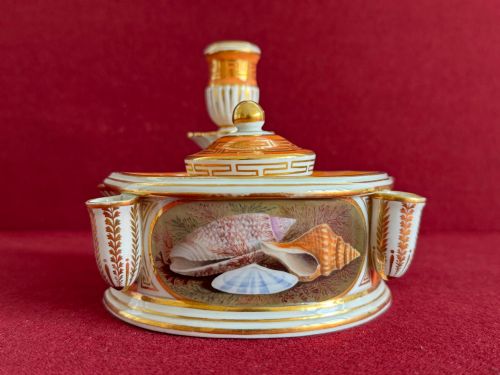
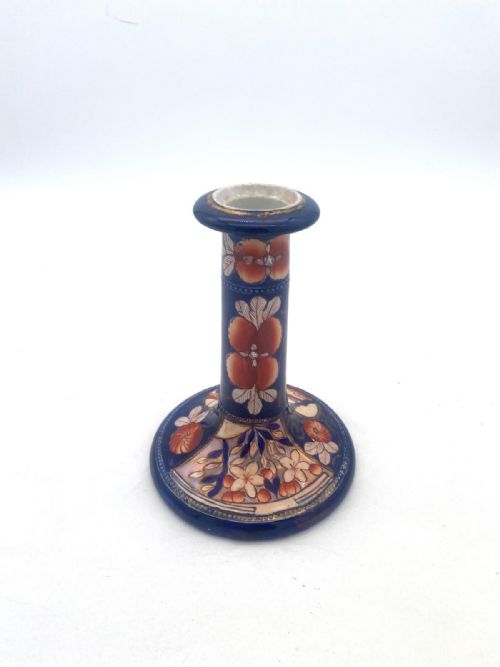
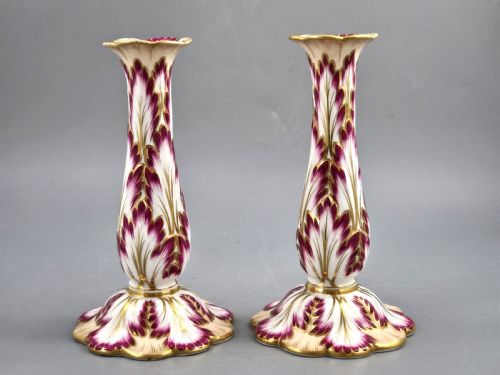
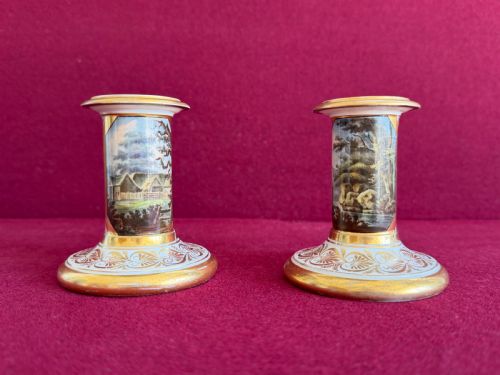
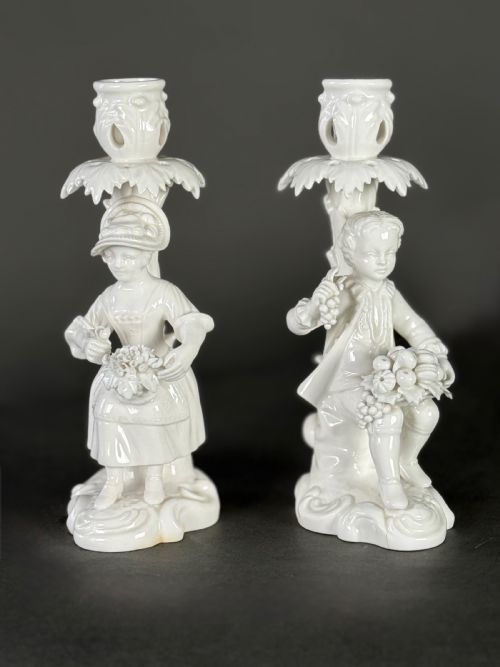
When you search for georgian ceramic candlesticks, you encounter pieces that range from functional holders to elaborate figural compositions made by premier English factories. The selection spans structural forms and sculptural groups, often featuring figures or detailed foliage.
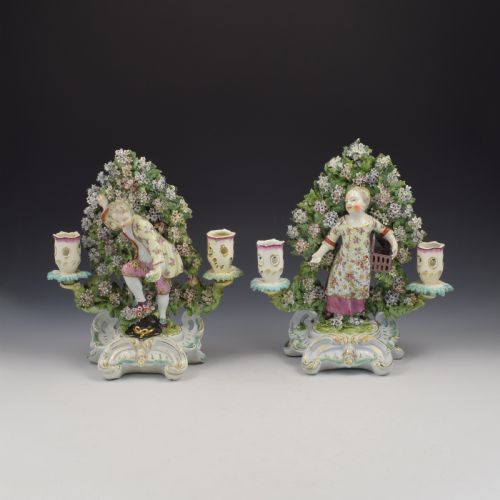
You are most likely to meet soft-paste porcelain or hard-paste porcelain pairs adorned with rococo or neoclassical styling. Many of these survivals incorporate bocage backgrounds or figural subjects such as musicians and dancers.
Originating from renowned workshops active during the eighteenth and nineteenth centuries, these items reflect the stylistic shifts from ornate rococo curves to clean neoclassical lines. Makers such as Derby, Minton, and Wedgwood dominate the offerings across this category.
How they were made
Potters shaped these objects using porcelain, ironstone, and jasperware, frequently applying enamels and gilding to enhance the surface detail. Soft-paste and hard-paste porcelain formed the primary body for the detailed figural groups and simple columns alike.
Artisans applied polychrome enamels and gold leaf by hand, firing the pieces multiple times to fix the colours and metallic accents. Bocage elements, representing leafy arbours, required intricate hand-building before being attached to the main candlestick body.
Listings span the eighteenth and nineteenth centuries, incorporating both soft-paste and hard-paste porcelain alongside ironstone and jasperware.
What varies in quality
The sophistication of the modelling and the crispness of the porcelain pressings dictate the standing of an individual piece. Earlier examples from the patch-mark period show distinct potting characteristics compared to later Regency productions.
The application of enamel colours and the preservation of the delicate bocage foliage determine the visual success of figural pairs. Completeness of original sconces and uniformity in matched pairs also define the finer specimens in this group.
Masons Ironstone·Ridgway·Barr Flight And Barr·Derby·Spode·Chelsea·Minton·Bow·Wedgwood
The Georgian Ceramic Candlesticks Glossary
- Bocage
- Background of applied ceramic foliage and flowers found behind figures on eighteenth-century candlesticks. This decorative technique creates a leafy arbour effect typical of English porcelain.
- Patch-mark
- Unglazed circular blemish on the base of early Derby porcelain caused by tripod spacers used in the kiln. Collectors look for these marks to date eighteenth-century pieces accurately.
- Blanc de Chine
- White porcelain produced without coloured glaze, relying entirely on the purity of the body and the quality of the modelling. This style highlights sculptural form without the distraction of enamel paints.
- Ironstone
- A heavy, durable type of earthenware patented in the nineteenth century for domestic utility and tableware. It provides a robust alternative to softer porcelain bodies.
- Jasperware
- Fine-grained, unglazed vitrified stoneware developed by Wedgwood, usually featuring white relief designs against a coloured ground. This matte ceramic became a staple of neoclassical design.
Georgian Ceramic Candlesticks: Frequently Asked Questions
What are bocage candlesticks?
Bocage candlesticks feature applied ceramic foliage and leaves that frame the central figures, creating a naturalistic background scene. These intricate arbours were painstakingly built by hand before firing.
Such pieces date predominantly to the eighteenth century from factories like Derby and Bow. They were designed to catch the candlelight amidst thickets of porcelain leaves.
How do I identify a patch-mark?
A patch-mark is an unglazed spot on the base left by the tripod supports used inside the kiln during firing. These marks serve as a helpful indicator for identifying eighteenth-century Derby porcelain.
They appear because the porcelain body softened significantly at high temperatures and required spacers to prevent warping. Finding them helps confirm the production period of early figures.
Were these candlesticks used for lighting?
These pieces served practical lighting needs in homes while simultaneously acting as decorative sculptural mantel or table ornaments. Wealthy households utilised them in pairs to illuminate rooms with wax or tallow candles.
Over time, many survived primarily as display items rather than functional lighting instruments. Their figural subjects made them conversation pieces in period interiors.
How do I care for antique porcelain?
Antique porcelain requires gentle cleaning with a soft, dry cloth to remove dust without harming fragile enamels or gilding. Water and chemical cleaners should be avoided to protect old adhesives and delicate ceramic bodies.
Keep these items away from direct sunlight and areas prone to accidental knocks. Securing stable placement protects brittle bocage work and protruding sconces from damage.