






Georgian Ceramic Animals
Georgian ceramic animals bring the vitality of the eighteenth and early nineteenth centuries into a room through modelled figures of stags, lions, leopards, boars, sheep, and gundogs.
Georgian Ceramic Animals
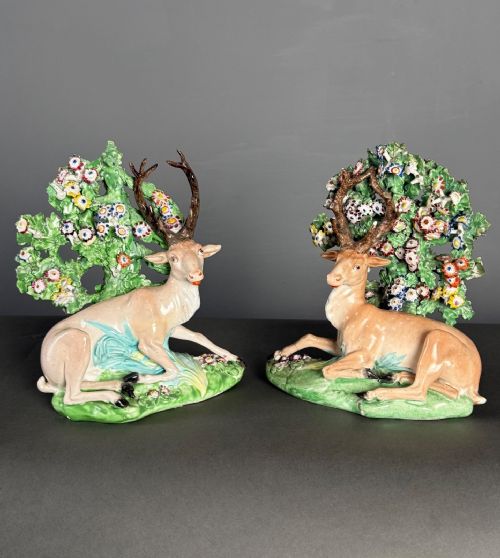
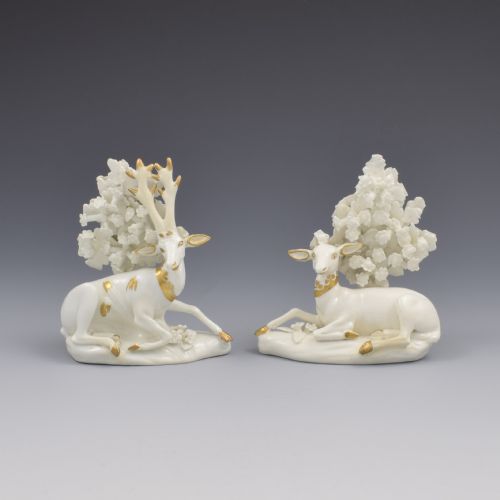
Georgian ceramic animals comprise decorative figures and decorative objects shaped as wildlife and domestic livestock. Collectors seeking georgian ceramic animals encounter fine pairs of recumbent stags, wild boars, snow leopards, and sheep.
The objects stem predominantly from the Georgian period, including the George III and Regency eras, with some items produced in the nineteenth century. Production encompasses porcelain figures, pearlware models, and earthenware pottery.
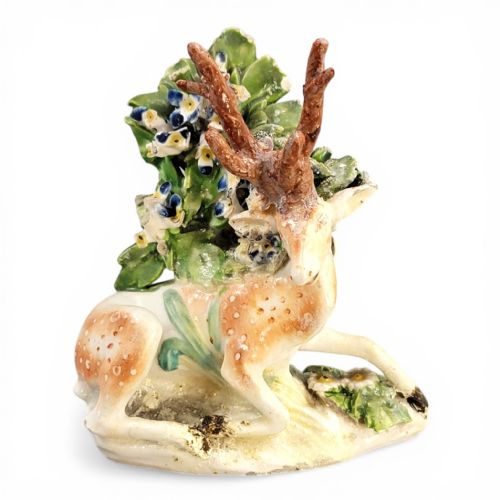
Forms range from single animals to matched pairs and models incorporating botanical backgrounds known as bocage. These pieces served as mantel ornaments and tabletop decorations in period interiors.
How they were made
Potters shaped these figures using soft-paste porcelain, earthenware, and pearlware, applying lead glaze to seal the body. Many models incorporate detailed surface painting using enamel colours.
Techniques varied between factories, with specific workshops utilising slip-casting or press-moulding methods to form the bodies of deer, lions, and sheep. Skilled modellers added floral backdrops, known as bocage, behind the animal subjects.
Early ceramic leopards and boars occasionally stare with expressions of mild confusion rather than ferocity.
What varies in quality
The sophistication of the composition separates standard figures from exceptional works, particularly in paired models like stags and does or snow leopards. Presence of original decorative elements like bocage significantly influences the artistic success of a piece.
Derby·Staffordshire·Walton·Minton
The Georgian Ceramic Animals Glossary
- Bocage
- A decorative background of modelled leaves and branches applied behind a ceramic figure. This technique was popular in eighteenth-century porcelain production.
- Pearlware
- A refined earthenware developed by British potters, featuring a bluish glaze that pooled in recesses. It frequently served as a substitute for porcelain.
- Soft-paste porcelain
- A ceramic composition fired at lower temperatures than hard-paste porcelain, common in eighteenth-century English factories. It produces a warm, slightly translucent body.
- Lead glaze
- A glossy coating applied to pottery before firing to waterproof the clay and brighten surface colours. It is characteristic of early ceramic figures.
- Enamel
- Vitreous colours painted onto the fired glaze surface and fixed in a muffle kiln. This allowed for vibrant decoration on porcelain and earthenware animals.
Georgian Ceramic Animals: Frequently Asked Questions
What animals appear in Georgian ceramics?
Makers modelled a wide variety of creatures including stags, does, lions, leopards, wild boars, sheep, lambs, and gundogs. These subjects reflected both exotic species and familiar farm animals.
Pairs of deer and sheep were particularly common as mantelpiece ornaments during the eighteenth century.
How do I identify a pearlware animal?
Pearlware figures display a refined earthenware body covered in a distinctive pale blue-tinted glaze that pools around the base and crevices. Potters utilised this ceramic body extensively in the late eighteenth and early nineteenth centuries.
Makers such as Walton frequently employed pearlware for sheep and lion figures.
What is bocage on a figure?
Bocage is a ceramic representation of leafy foliage or flowering branches arranged behind the main animal subject. Factories added these leafy screens to create a naturalistic woodland setting.
Derby figures frequently incorporate this delicate modelled background.
Where were these ceramic animals made?
Production centred on major British ceramic hubs, notably the Derby porcelain works and various Staffordshire potteries. Factories in these regions employed skilled modellers and painters to produce decorative figures.
Regional differences in clay and glaze help distinguish the origin of each piece.