

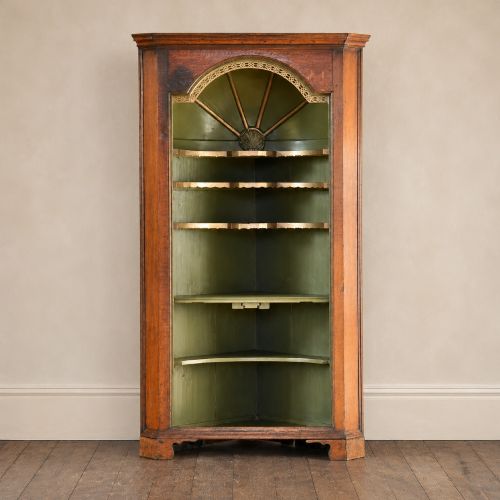

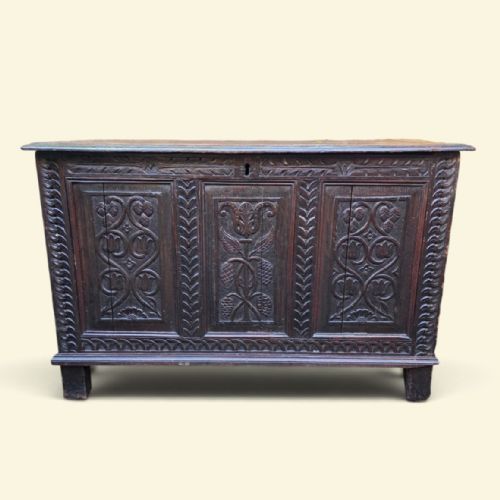
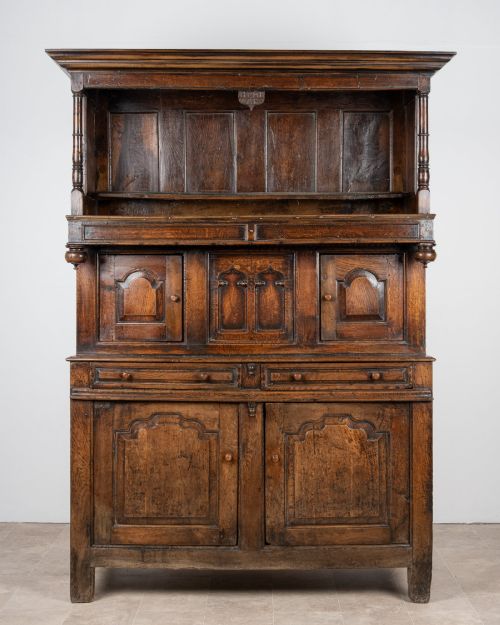
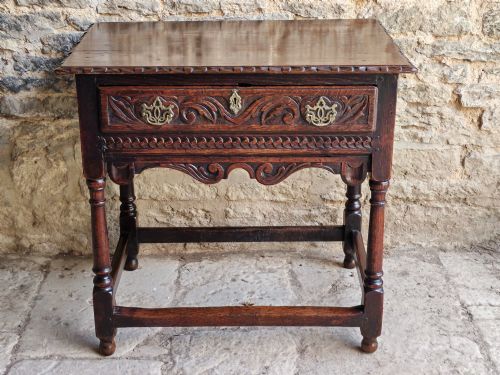
Georgian Carved Oak Furniture
Georgian carved oak furniture brings sturdy domestic history into a room, offering practical storage and rich grain that settles gracefully into everyday spaces.
Georgian Carved Oak Furniture
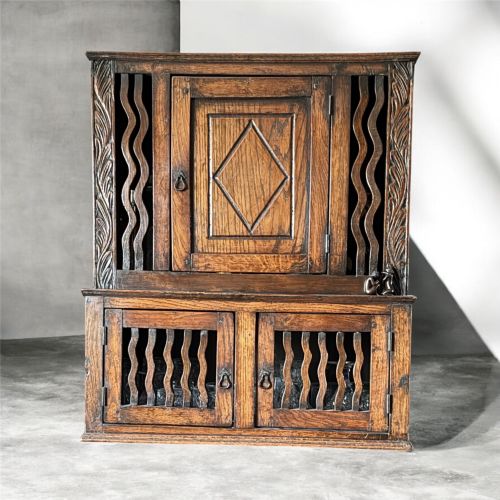
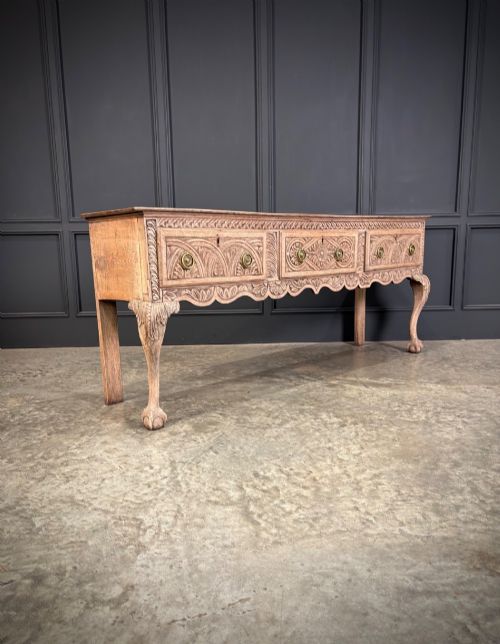
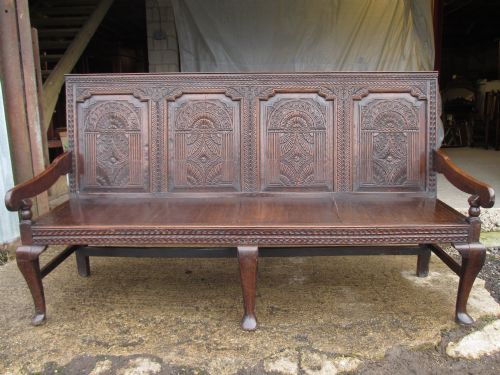
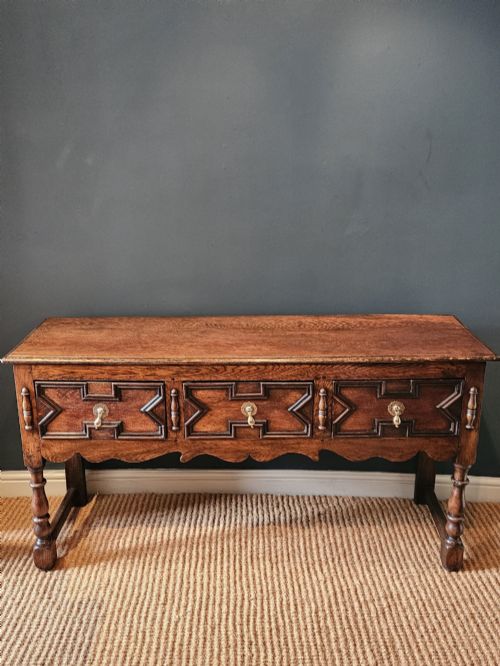
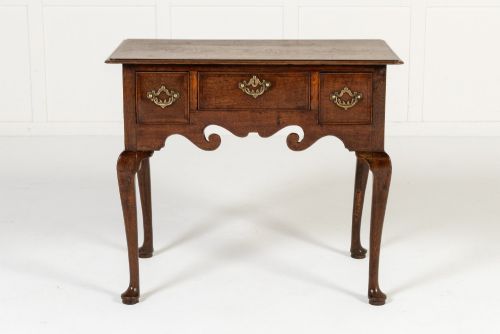
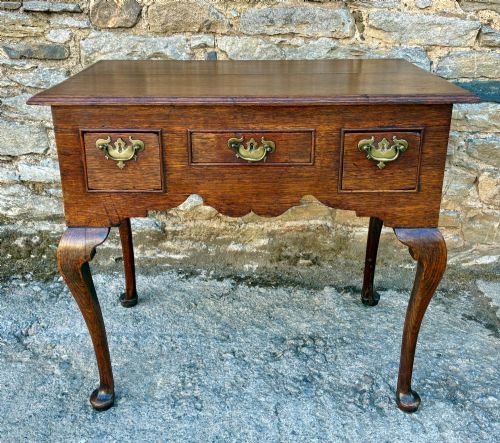
Georgian carved oak furniture encompasses a robust range of domestic items designed for everyday utility, from lowboys and dressers to settles and coffers. Buyers seeking these works will frequently encounter regional pieces, particularly Welsh country examples alongside formal Georgian designs.
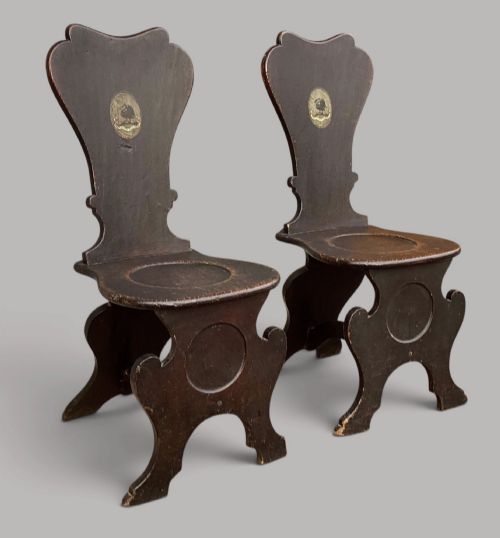
The material vernacular relies heavily on solid oak, occasionally enhanced by burr or pollard oak variations, brass, and iron hardware. Forms span from press cupboards and tridarns to side tables and hall chairs, reflecting the varied needs of seventeenth, eighteenth, and early nineteenth-century interiors.
Rural workshops and provincial cabinet makers produced much of this material, leading to distinct regional characteristics in dressers and cupboards. These pieces combine straightforward utility with carved panels and geometric mouldings characteristic of the period.
How they were made
Makers utilised solid timber construction, employing traditional joinery methods such as mortise and tenon joints to ensure structural endurance. Oak boards were frequently hand-sawn and planed, displaying natural grain patterns that define the exterior surfaces.
Decorative enrichment was achieved through chip carving, geometric moulding, and occasional panel inserts. Iron hinges, brackets, and brass handles provided functional security and contrast against the dark timber.
Georgian Carved Oak Furniture Retail Price Guide 2026
Typical asking prices for georgian carved oak furniture among the pieces listed under this phrase on Sellingantiques today, from the lower quarter to the upper quarter. They describe what is for sale here now, not the wider market.
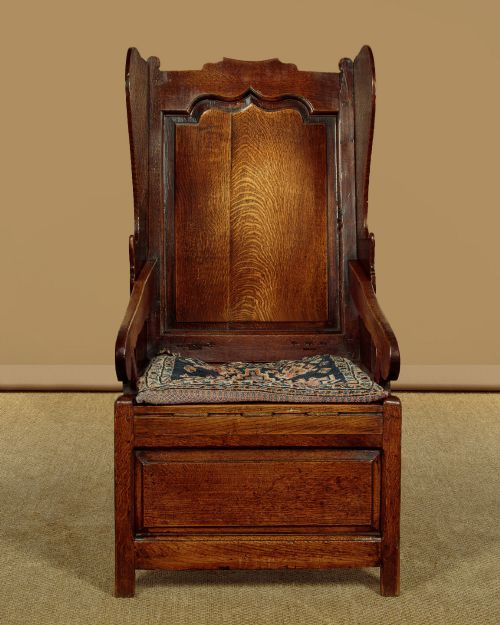
Lambing chairs provided a warm, enclosed seat by the fire where shepherds could nurse newborn lambs during freezing winter nights.
What varies in quality
Quality diverges between utilitarian provincial items and pieces displaying refined architectural proportions and deliberate decorative carosting. The crispness of carved details on panels and drawer fronts distinguishes more ambitious workshop production from basic domestic utility.
The selection of timber plays a significant role, with figured burr oak or pollard oak sections marking out superior output. Original hardware and minimal alteration to the structural timber retain the integrity expected by discerning buyers.
The Georgian Carved Oak Furniture Glossary
- Lowboy
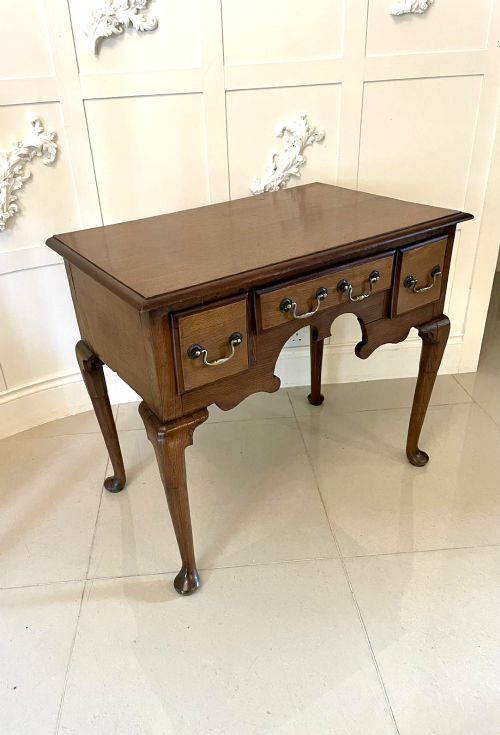
- A small side table with drawers, typically standing on four legs, often used as a dressing table or side storage.
- Tridarn
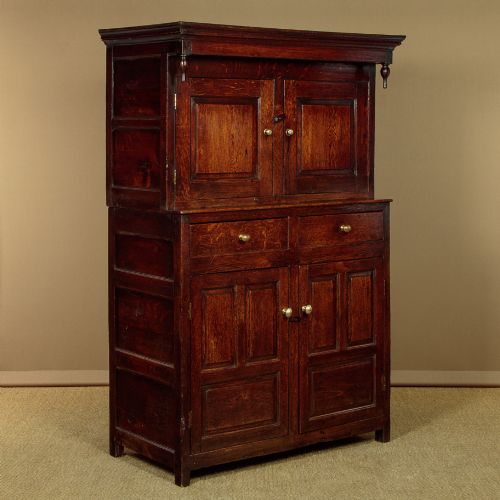
- A large Welsh three-tiered cupboard used for display and storage, featuring enclosed upper and lower sections.
- Mule chest
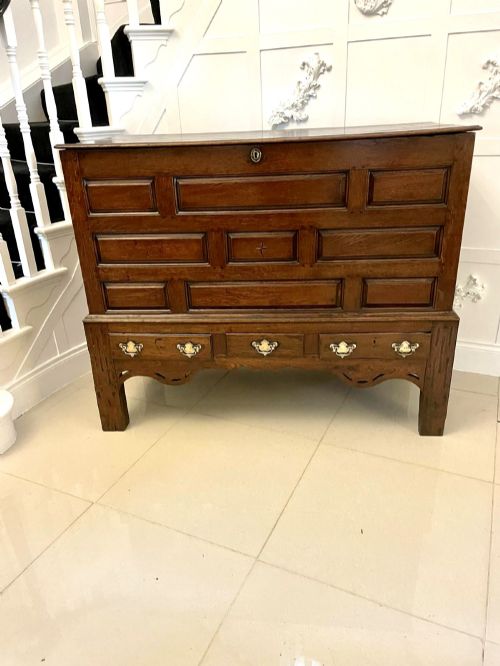
- A blanket chest fitted with one or more drawers at the base, bridging the form of a coffer and a chest of drawers.
- Settle
- A wooden bench with a high solid back, arms, and enclosed base designed to block draughts in older homes.
- Joint stool
- A sturdy wooden stool constructed with mortise and tenon joints, common in domestic settings before chairs became universal.
Georgian Carved Oak Furniture: Frequently Asked Questions
What is a lowboy used for?
A lowboy served historically as a small side table or dressing table with convenient drawer storage. In modern rooms, it functions well as a compact desk or hallway table.
Its shallow proportions allow it to fit easily into narrow spaces while providing surface area and enclosed storage.
How do I identify Welsh oak furniture?
Welsh oak furniture often displays distinctive regional forms such as the tridarn, deuddarn, or regional dresser. These pieces frequently feature vernacular carving and sturdy proportions typical of rural production.
Local timber selection and traditional construction methods further distinguish these items from metropolitan English cabinet work.
Where should I place a settle?
A wooden settle works effectively in a hallway or against a living room wall where its high back creates a defined seating area. Originally designed to block cold draughts, it provides substantial presence in a room.
Pairing it with a simple low table creates a traditional seating arrangement that highlights the architectural woodwork.
How do I care for antique oak?
Antique oak benefits from simple dusting with a dry cloth and occasional application of traditional beeswax to nourish the timber. Keeping pieces away from direct heat sources prevents the wood from drying out.
Proper humidity control helps maintain the stability of joints and panels over time.