
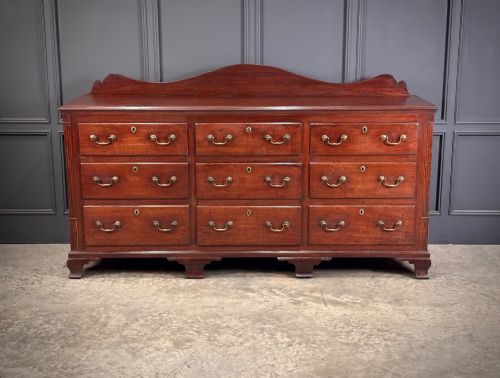
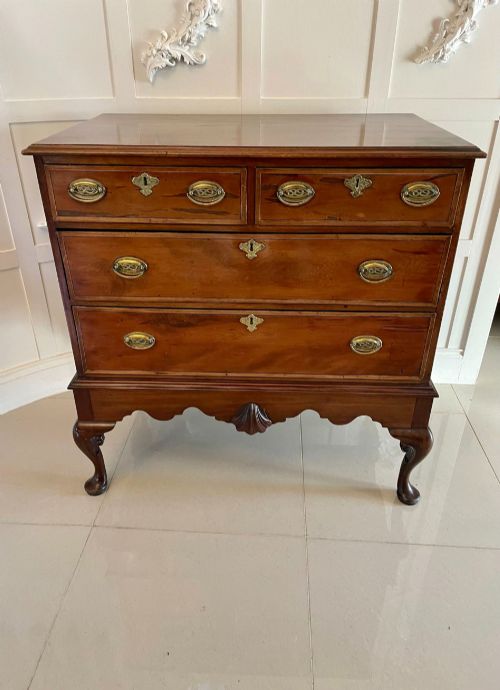
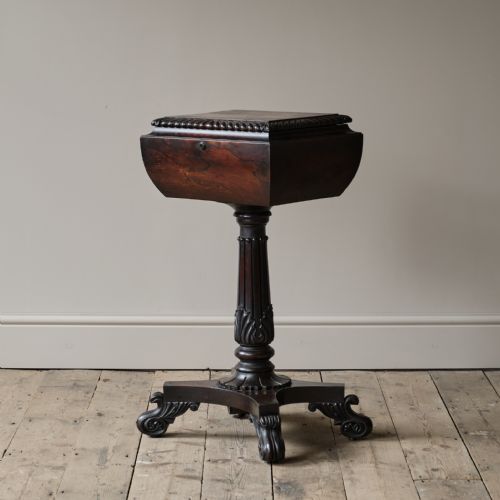
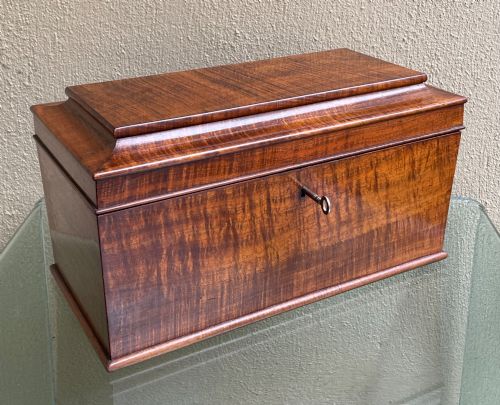
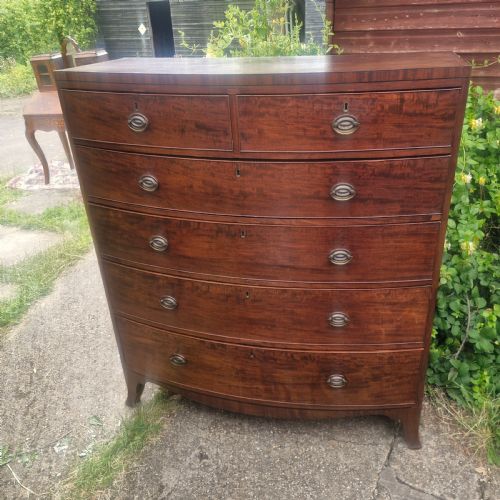

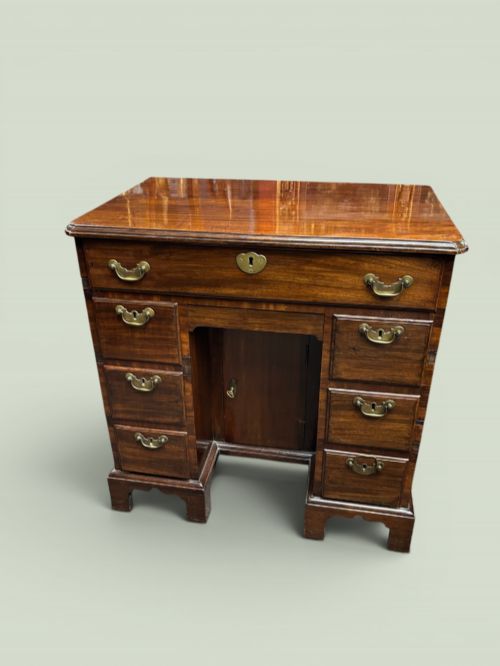
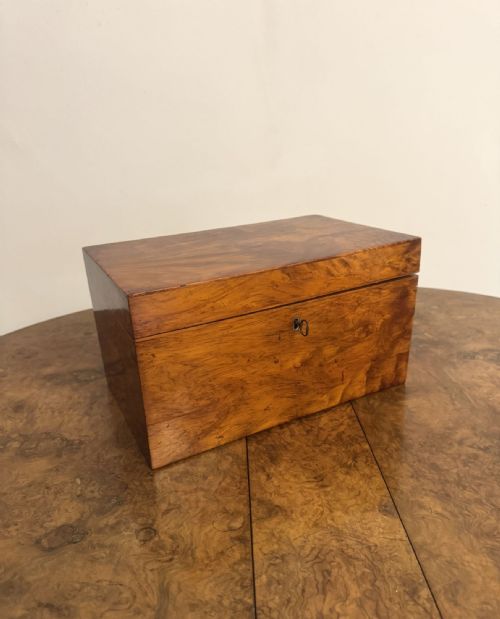
Georgian Carved Mahogany Chest
A georgian carved mahogany chest brings dense grain and architectural presence into a room, offering deep drawers built to last centuries.
Georgian Carved Mahogany Chest
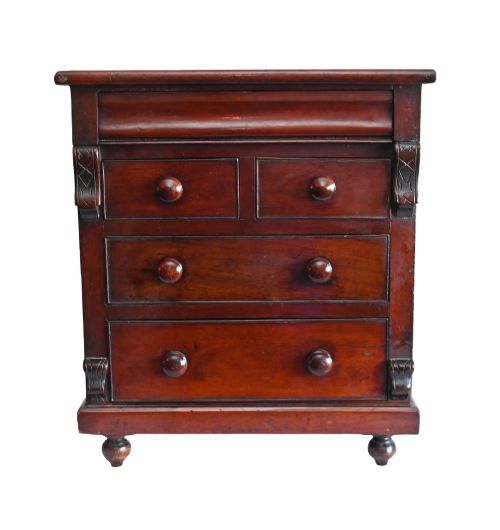
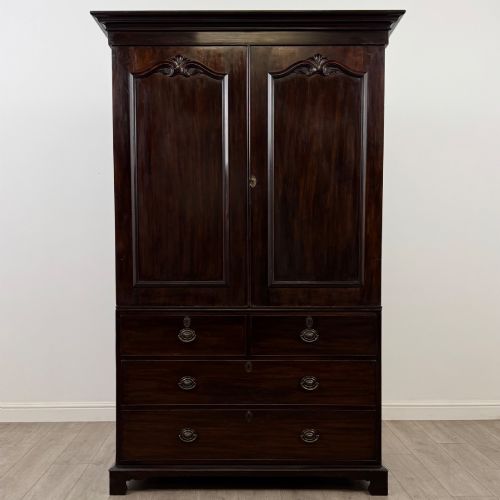
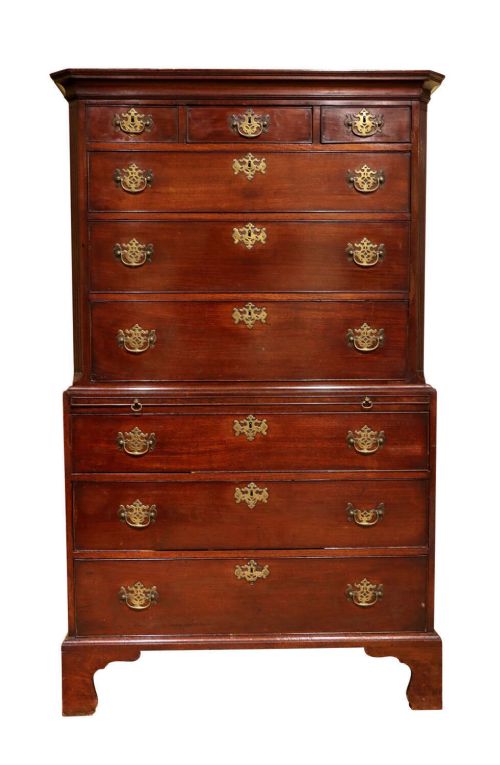
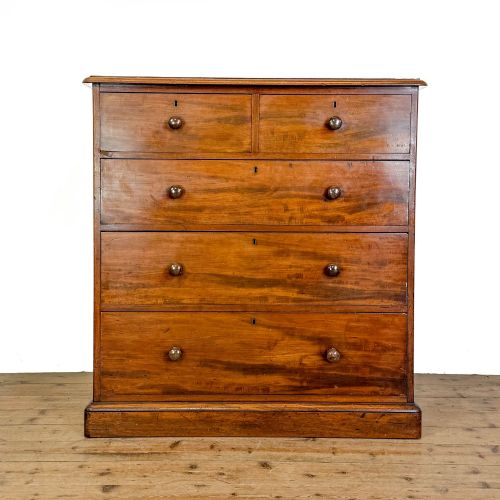
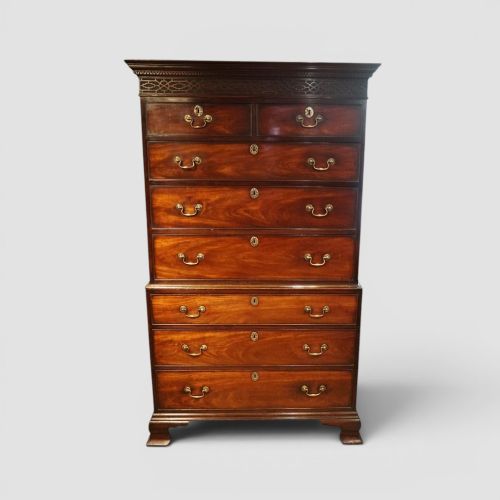
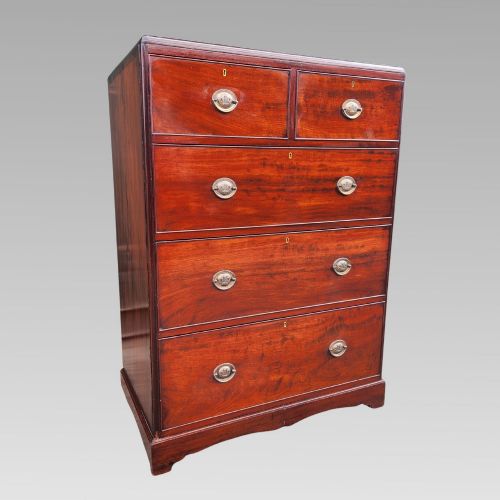
A georgian carved mahogany chest primarily encompasses chests of drawers, tallboys, chests on chests, and linen presses originating from the eighteenth and nineteenth centuries.
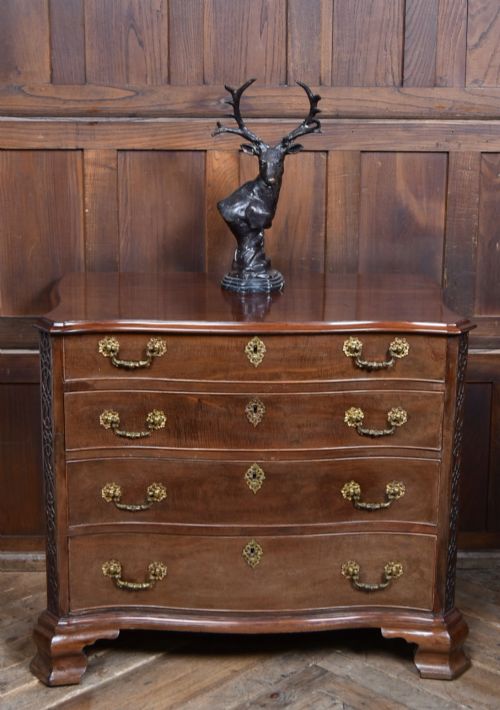
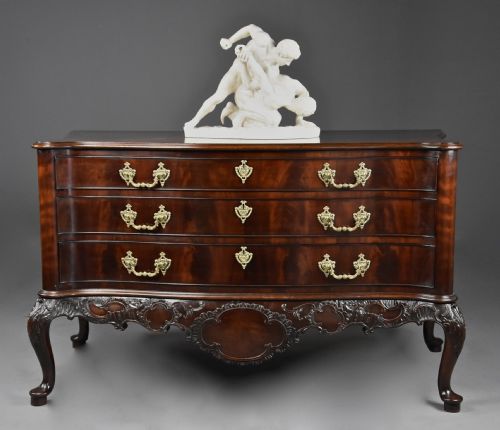
Buyers encounter variations ranging from bow front and serpentine shapes to pieces featuring blind fret cornices, original brasses, and carved bracket feet.
The selection includes specific regional and period pieces spanning George III, Regency, and Chippendale style revivals executed in solid timbers and veneers.
Materials and Construction
Cabinet makers utilised solid mahogany and flame mahogany veneer laid over secondary woods like oak, pine, and walnut to achieve varied surface figures.
Joinery relied on dovetailed drawer construction and pegged frames, while decorative elements incorporated carved mouldings, blind fretwork, and brass handles or escutcheons.
Listings feature periods spanning the eighteenth, nineteenth, and twentieth centuries, incorporating Georgian, Regency, and Victorian eras.
Distinctions in Execution
Quality rests upon the selection of timber figures, where heavily figured flame mahogany or Cuban mahogany displays superior depth compared to plain stock.
The crispness of the carving, the retention of original brass hardware, and the structural integrity of the internal drawer linings determine the standing of an individual piece.
The Georgian Carved Mahogany Chest Glossary
- Chest on Chest
- A tall storage unit comprising one upper chest stacked directly upon a slightly larger lower chest, often called a tallboy.
- Serpentine
- A curved drawer front or top shaped with a convex centre flanked by concave ends.
- Blind Fret
- Carved ornamental fretwork applied directly to a flat wooden surface without a pierced background.
- Flame Mahogany
- Timber cut from the fork of the mahogany tree to produce a distinctive flickering grain pattern.
- Escutcheon
- A protective brass plate surrounding a keyhole on a drawer or door.
Georgian Carved Mahogany Chest: Frequently Asked Questions
How do I date a mahogany chest?
Dating relies on observing construction methods, timber choice, and hardware styles across periods like George III and Regency. Hand-cut dovetails and original brasses often point to earlier eighteenth-century origins.
Later nineteenth-century pieces in the Chippendale style frequently exhibit machine assistance or different secondary woods like pine inside the carcase.
What is a linen press?
A linen press is a tall cabinet featuring upper doors that enclose sliding trays for fabric storage, set above a base of wider drawers.
These pieces provide substantial storage capacity while displaying decorative paneling and carved cornices characteristic of the Georgian period.
How should I care for antique mahogany?
Maintain antique mahogany by placing the piece away from direct heat sources and strong sunlight to prevent the timber from drying and fading. Regular dusting with a dry cloth preserves the polished surface without the need for heavy silicones.
Applying occasional traditional wax feeds the wood and maintains the natural lustre built up over generations.
What distinguishes a tallboy from a chest on chest?
A chest on chest strictly consists of two distinct cabinet sections built to stack together, creating a tall vertical storage unit.
Tallboy can refer to this same stacked form or to a single tall chest of drawers raised on legs or a base.