
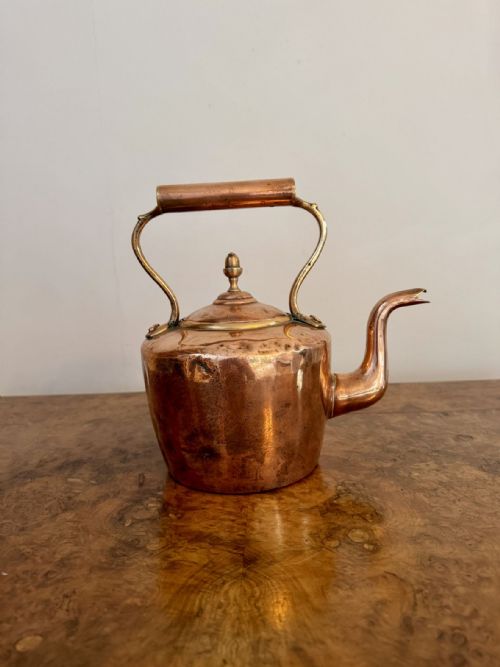
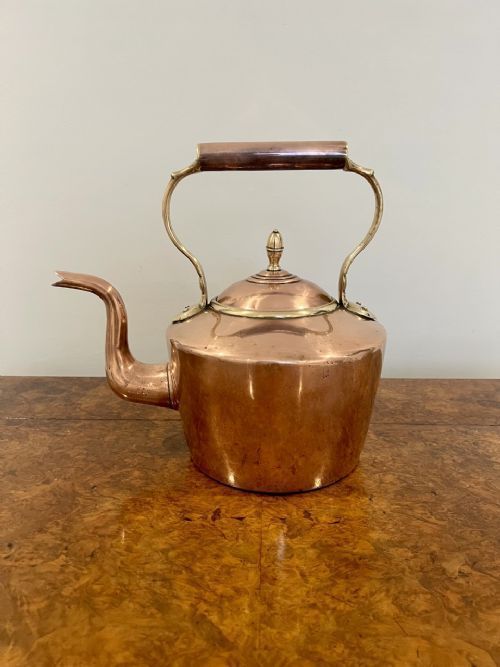
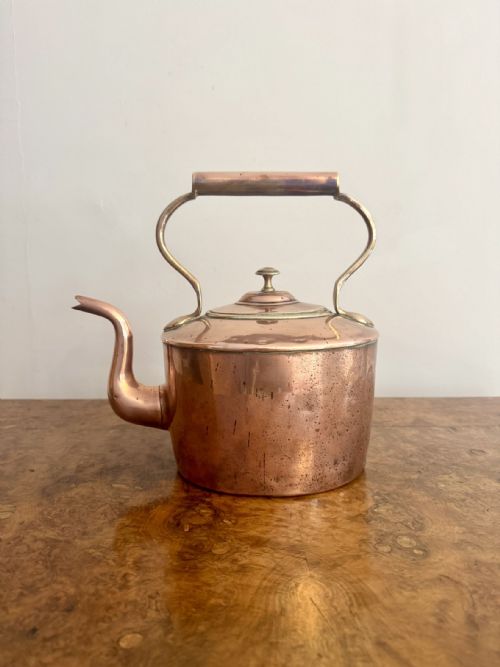
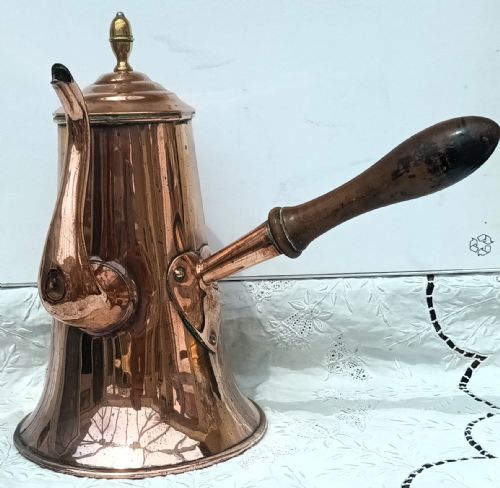
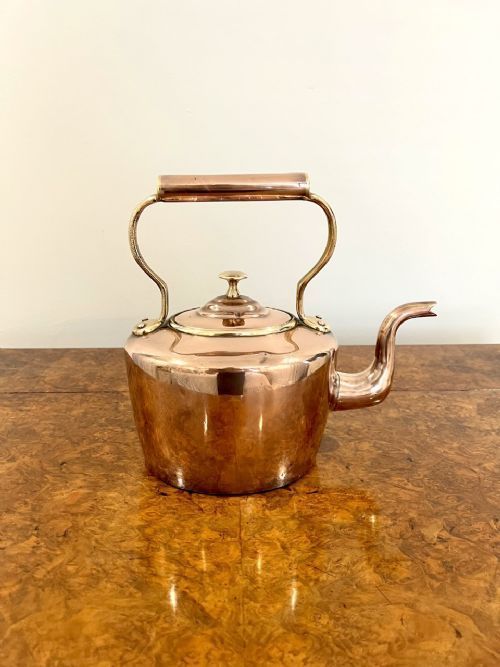


Georgian Brass Copper Kettle
These Georgian brass copper kettle pieces offer period hearth utility and warm metal tones that anchor a traditional room.
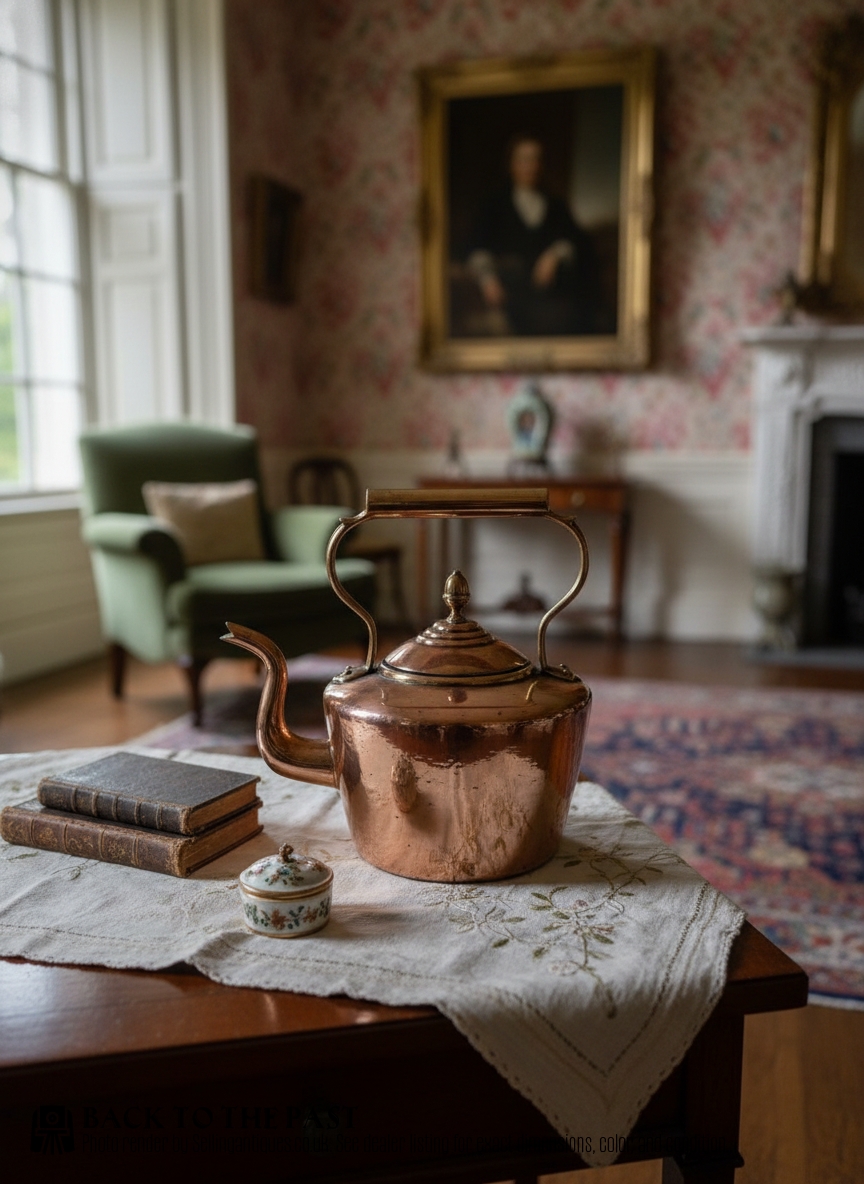
Georgian Brass Copper Kettle
A georgian brass copper kettle comprises practical hearth vessels designed for heating water, appearing primarily in George III and broader Georgian styles.
The inventory on this page centres on copper kettles, tea kettles, coffee pots, and hanging water urns produced around eighteen hundred.
Buyers encounter variations in scale from small portable items to large oval shaped vessels incorporating wood and iron elements.
How they were made
Makers shaped sheet copper into functional bodies, combining brass fittings and handles constructed from wood or iron.
Construction methods from the period rely on hand beating and joining metal sheets to create durable vessels for daily use.
Listings feature copper and brass items from the Georgian period, including coffee pots and hanging water urns.
What varies in quality
Distinction in quality rests upon the crispness of the form, particularly in oval shapes, and the integrity of the original construction.
Proportion and surface finish separate standard utility items from finer examples that retain balanced handles and well fitted lids.
William Soutter & Sons
The Georgian Brass Copper Kettle Glossary
- George III
- A stylistic period spanning the reign of King George III, noted for refined domestic metalwork and classical proportions. Pieces from this era often display specific regional construction traits.
- Copper
- A malleable reddish metal used historically for heavy domestic vessels due to its thermal conductivity. It develops a natural patina over centuries of exposure.
- Brass
- An alloy of copper and zinc utilised for handles, spouts, and decorative accents on hearth equipment. It provides a contrasting golden tone against the darker copper body.
- Water urn
- A large vessel designed to hold and heat substantial quantities of water, frequently fitted with a tap and handles for suspension or table placement.
Georgian Brass Copper Kettle: Frequently Asked Questions
How do I date a Georgian kettle?
Dating relies on stylistic markers associated with the George III period around eighteen hundred, alongside construction techniques typical of early nineteenth century metalworking.
Examining the method of sheet joining and handle attachment helps distinguish these pieces from later Victorian reproductions.
Were these kettles used on open fires?
These vessels were built for daily use on hearths, functioning as practical water heaters before the advent of modern kitchen ranges.
Their heavy copper construction allowed them to withstand direct heat from coal or wood fires.
What is the difference between an urn and a kettle?
Kettles are generally smaller vessels equipped with a swinging handle for boiling water, whereas water urns are larger and often feature stationary handles or taps.
Urns were typically used for serving hot water over longer periods in domestic settings.
How should I clean polished copper?
Many collectors prefer to maintain a warm patina rather than polishing the metal to a bright shine, allowing the age of the piece to show.
If cleaning is necessary, mild non abrasive metal cleaners help preserve the historic surface without removing detail.