


Georgian Bracket Side Table
A georgian bracket side table brings architectural lines and rich timber into a room, offering both surface utility and period presence.
Georgian Bracket Side Table
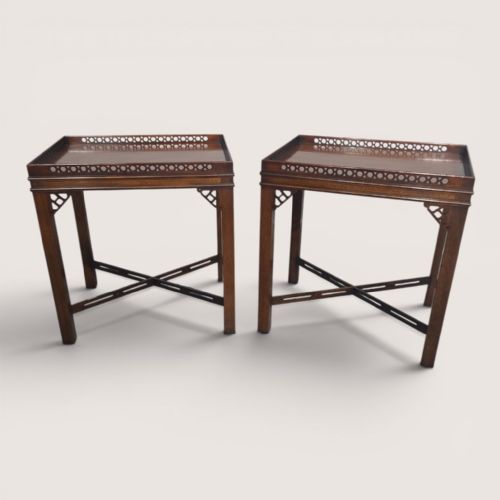
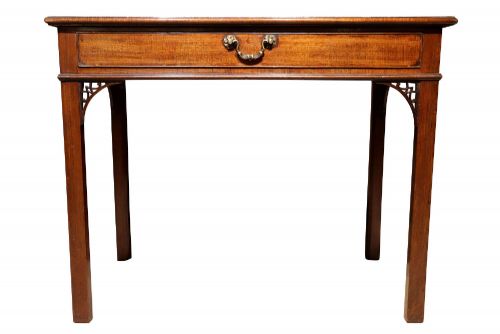
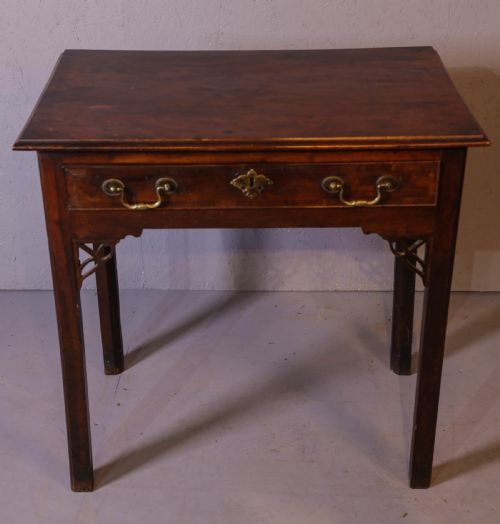
When you search for a georgian bracket side table, you encounter furniture designed for domestic display and practical use across the eighteenth and nineteenth centuries. The listings show forms ranging from side tables with gothic pierced brackets to low boys and console tables, spanning the eighteenth century, nineteenth century, and later interpretations.
Most examples you meet here utilise mahogany, yew wood, or walnut, often associated with traditional English, Chippendale, Neoclassical, and Baroque styles. Alongside true period pieces, the inventory includes later reinterpretations from nineteen ten and nineteen sixty that echo earlier designs.
How they were made
Cabinetmakers constructed these tables using dense hardwoods like mahogany, burr walnut, and yew, frequently pairing timber frames with brass hardware or glass and marble surfaces. Carving and joinery techniques define the structural integrity of the pieces, from solid wood tops to detailed framework.
Decorative elements involve carved walnut, architectural brackets, and serpentine shaping, executed by hand to achieve the finished profile. These methods reflect the workshop practices of Georgian and later craftspeople.
The listings span from the eighteenth century through the nineteenth century, with materials including mahogany, yew, burr walnut, marble, and brass.
What varies in quality
The distinction between standard examples and superior pieces rests on the depth of timber figure, such as burr walnut or rich mahogany, and the crispness of carved details like the eagle console or gothic brackets. Finer construction shows careful attention to grain direction and stable joinery across the frame.
Proportion and stylistic consistency also separate the items, with well-balanced tables maintaining harmonious lines between the top surface and the supporting legs or brackets.
The Georgian Bracket Side Table Glossary
- Bracket
- A structural or decorative support projecting from a vertical surface. In these tables, brackets often feature pierced gothic decoration.
- Concertina action
- A folding mechanism that expands to support a table top, commonly found on card tables.
- Low boy
- A small leg table with drawers, frequently used as a side table or dressing table in country houses.
- Serpentine
- A gently curved line featuring a convex centre flanked by concave curves, seen on table fronts.
- Yew wood
- A durable timber with a distinct grain pattern utilised for cabinetmaking.
Georgian Bracket Side Table: Frequently Asked Questions
What defines a Georgian side table?
These tables feature timber construction, typically mahogany or walnut, with formal styling ranging from plain country house designs to carved Chippendale and Neoclassical forms.
They serve as functional surface furniture for display or holding objects within a room.
Where were side tables placed?
In period interiors, side tables stood against walls in halls, reception rooms, or parlours to display decorative items.
Their compact proportions allowed them to fit into narrower spaces than large dining or centre tables.
How do I care for antique timber?
Keep wooden surfaces away from direct heat sources and strong sunlight to prevent the timber from drying out or fading over time.
Apply gentle wax polish occasionally to maintain the sheen and nourish the grain.
Are all these tables eighteenth century?
The selection includes true eighteenth-century items alongside nineteenth-century pieces and later twentieth-century interpretations.
Reviewing the listed periods and styles helps determine the exact era of manufacture for each piece.