


Georgian Box with Inlay
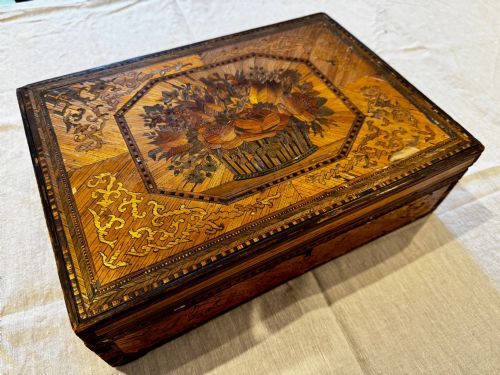
A Georgian box with inlay brings together dense tropical hardwoods and pale contrasting stringing to hold tea, letters or medicines.
Georgian Box with Inlay
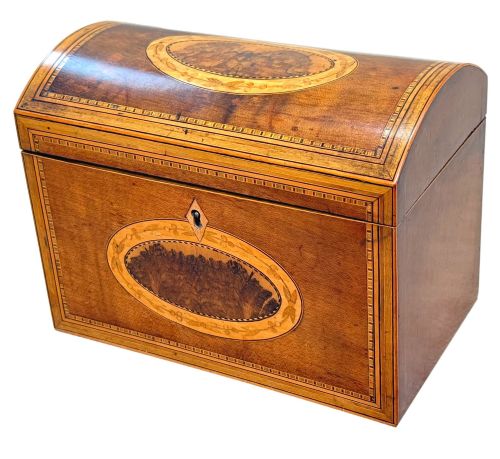
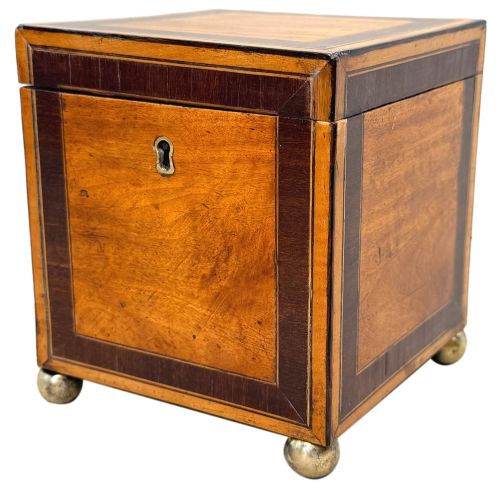
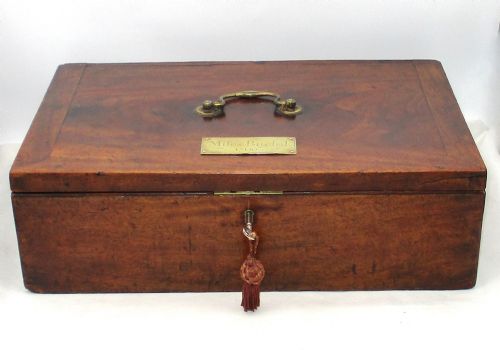
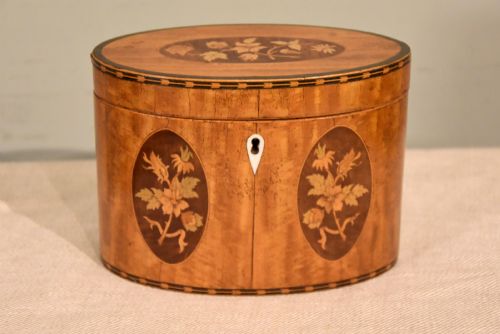
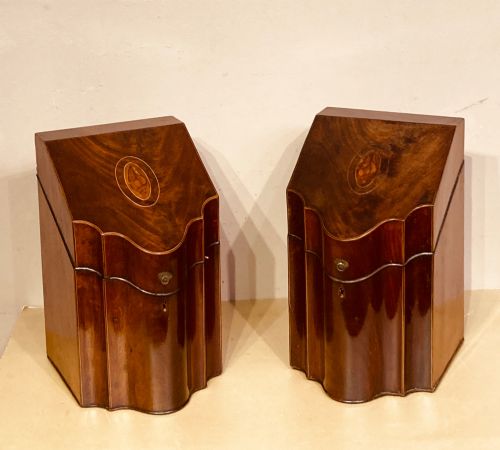
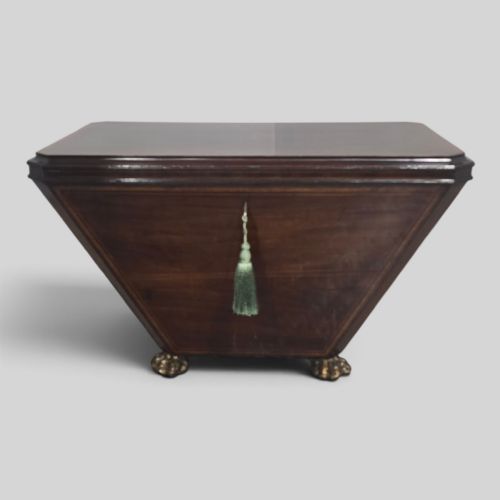
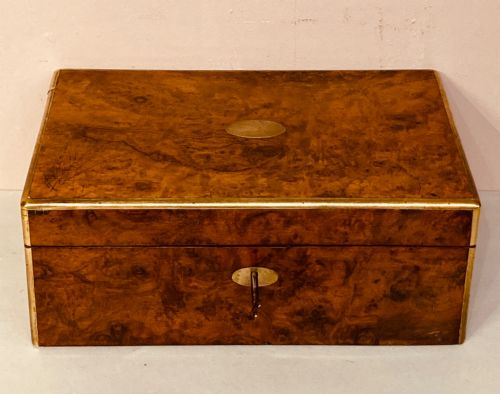
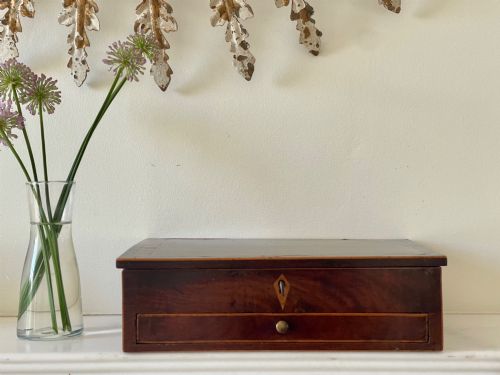
A georgian box with inlay encompasses functional household objects built during the eighteenth and nineteenth centuries, spanning domestic accessories like tea caddies, writing slopes, and dressing mirrors. These pieces use dark primary timbers such as mahogany and rosewood, enlivened by contrasting botanical details.
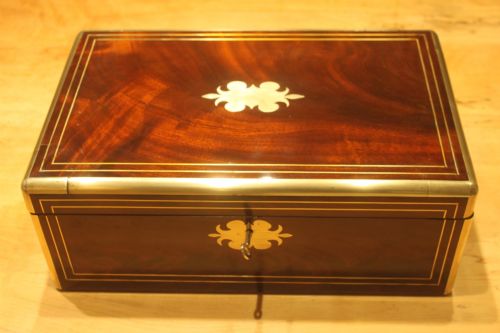
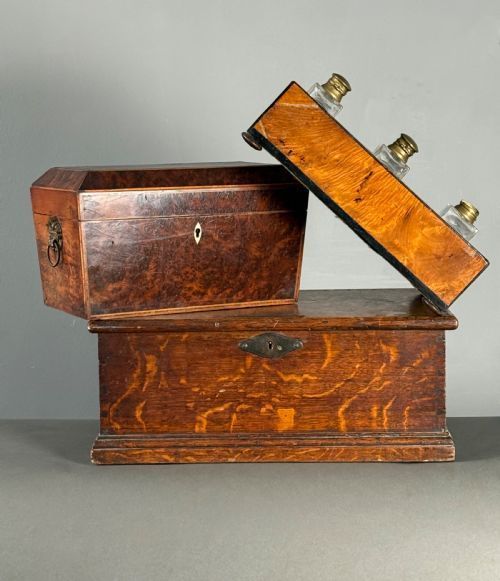
Tea caddies and writing boxes dominate the examples seen here, often fitted with internal compartments, secret drawers, and glass inkwells. Alongside these are larger coffers and apothecary chests designed to sit upon tables or desks.
Origins stretch from Welsh vernacular oak workboxes to refined Regency rosewood slant-front desks, reflecting domestic storage needs across several stylistic periods including Georgian, Regency, and Victorian.
Materials and construction
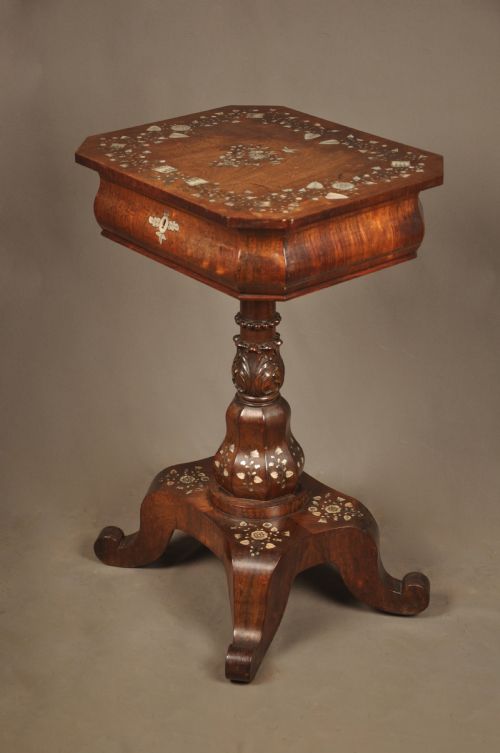
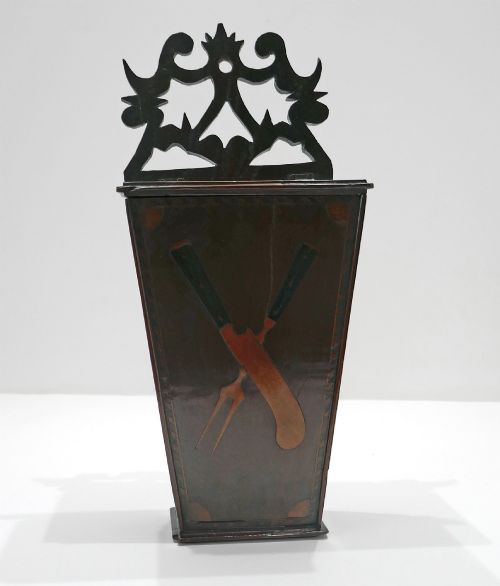
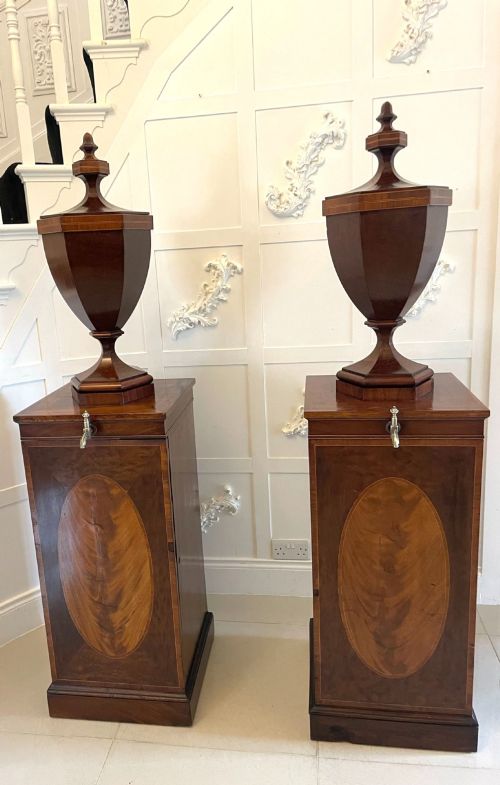
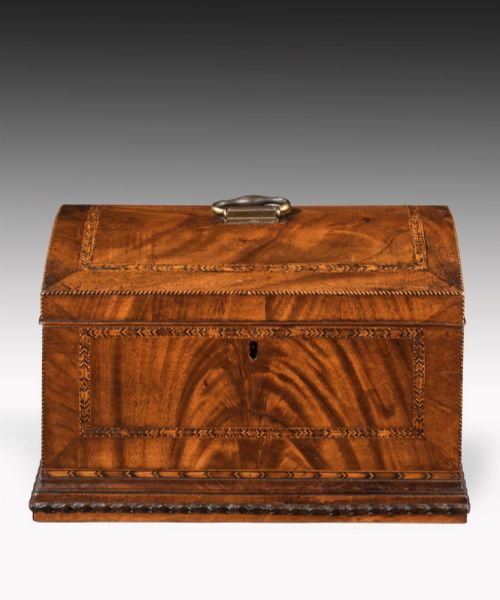
Cabinetmakers constructed carcases in mahogany, rosewood, oak, and satinwood, applying thin veneers of contrasting timber to the exterior surfaces. Boxwood, ebony, holly, and bog oak provide the pale lines and geometric stringing that define the inlaid decoration.
Surface ornamentation relies on contrasting botanical and geometric motifs, incorporating shell inlays, brass pique work foliage, and mother of pearl details. Metal hinges, escutcheons, and brass inlay complete the assembly of these wooden containers.
Georgian Box with Inlay Retail Price Guide 2026
Typical asking prices for georgian box with inlay among the pieces listed under this phrase on Sellingantiques today, from the lower quarter to the upper quarter. They describe what is for sale here now, not the wider market.
Object forms span from 18th-century oak coffer baches and tea caddies to 19th-century apothecary chests and dressing mirrors.
Factors of quality
The standard of a georgian box with inlay depends upon the precision of the cabinetwork and the complexity of the contrasting timber details. Crisp mitres, tight joints, and well-fitted internal compartments distinguish finer examples from simpler vernacular pieces.
The selection of primary timbers and the intricacy of the decorative motifs govern the visual merit of each piece. Finely figured rosewood or satinwood paired with delicate shell or mother of pearl inlays demonstrates higher workshop proficiency than plain surfaces.
The Georgian Box with Inlay Glossary
- Tea Caddie
- A lidded box designed to store loose tea leaves, often featuring internal compartments and fitted metal canisters. These containers were kept locked to protect expensive dry goods.
- Writing Slope
- A desk accessory with a hinged sloping lid that opens to provide a slanted surface for correspondence. Inside are typically found spaces for inkwells, pens, and secret drawers.
- Apothecary Box
- A portable wooden chest fitted with internal partitions to hold glass medicine bottles and small medical supplies. They allowed physicians to carry remedies securely.
- Stringing
- Thin lines of contrasting wood inlay used to edge panels, lids, and drawers on cabinet furniture. It accentuates the structural lines of the box.
- Tunbridge Ware
- Small wooden objects decorated with intricate mosaic patterns built from tiny blocks of naturally coloured woods. The technique creates pictorial or geometric surface designs.
Georgian Box with Inlay: Frequently Asked Questions
What were tea caddies used for?
Tea caddies served to store expensive black and green teas safely under lock and key in the formal rooms of the house.
Servants or the master of the house kept the keys to control the daily distribution of tea leaves.
How do I identify a Regency box?
Regency boxes often utilise dark exotic timbers like rosewood combined with bright brass inlay or delicate mother of pearl detailing. The forms reflect neoclassical influences popular during the early nineteenth century.
Proportions tend to be bold and architectural, contrasting with the simpler mahogany and satinwood pieces of the earlier Georgian decades.
What is inside a writing slope?
A writing slope opens to reveal a leather-lined writing surface alongside compartments for pens, nibs, and glass inkwells. Secret drawers are frequently concealed beneath internal partitions.
These compartments held personal correspondence, postage items, and private documents securely away from prying eyes.
How should I clean inlaid wood?
Dust inlaid wooden surfaces gently with a dry, soft cloth to prevent moisture damage to delicate stringing and veneers. Avoid modern chemical polishes that can degrade old finishes.
Traditional beeswax applied sparingly helps nourish the timber and maintains a soft, natural sheen across the box exterior.