




Georgian Bowfront Drawer Table
A georgian bowfront drawer table brings gentle curves and rich timber into a room, offering practical surface space alongside concealed storage.
Georgian Bowfront Drawer Table
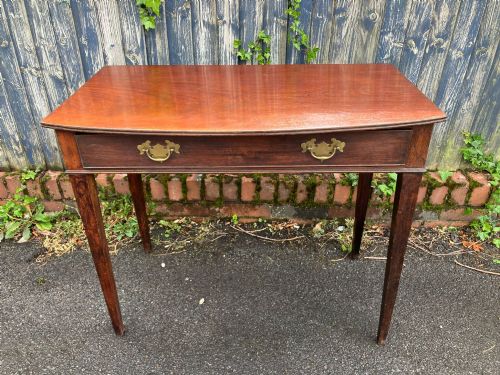
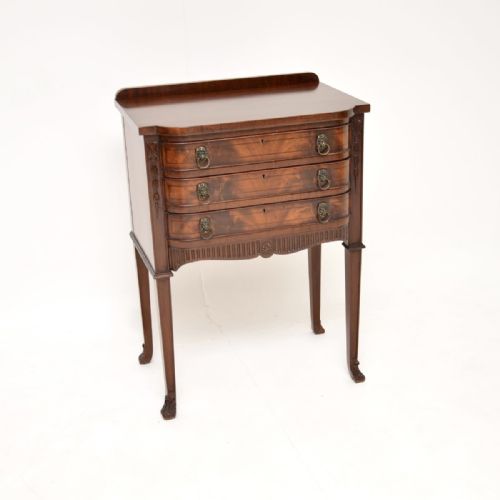
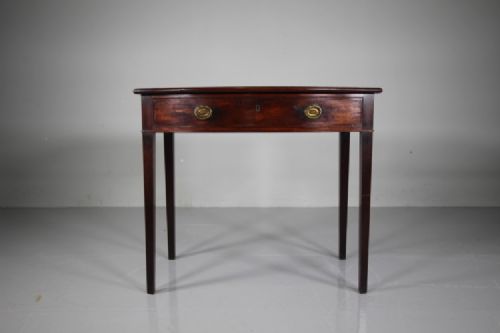
A georgian bowfront drawer table typically appears as a side table, lamp table, or writing table featuring a curved front facade and integrated drawers. These pieces span the Georgian, Regency, and Victorian periods, often constructed during the eighteenth and nineteenth centuries.
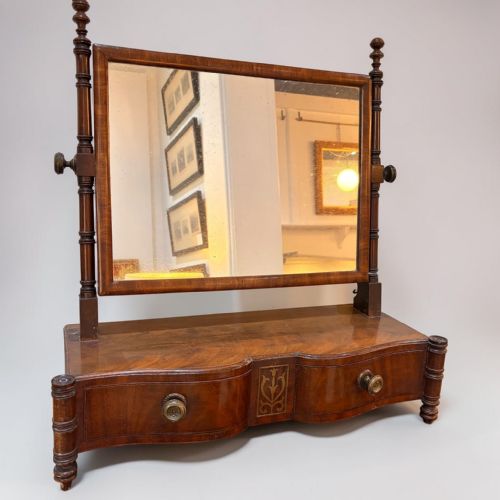
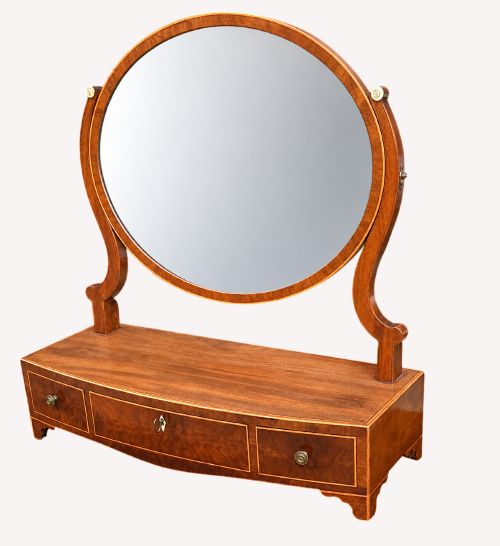
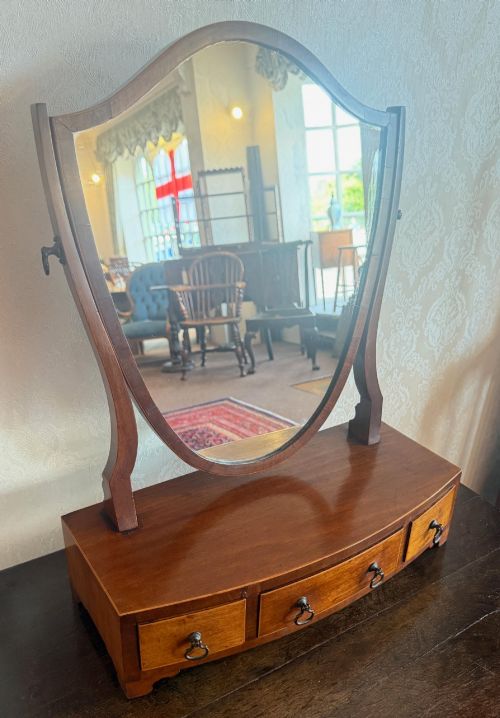
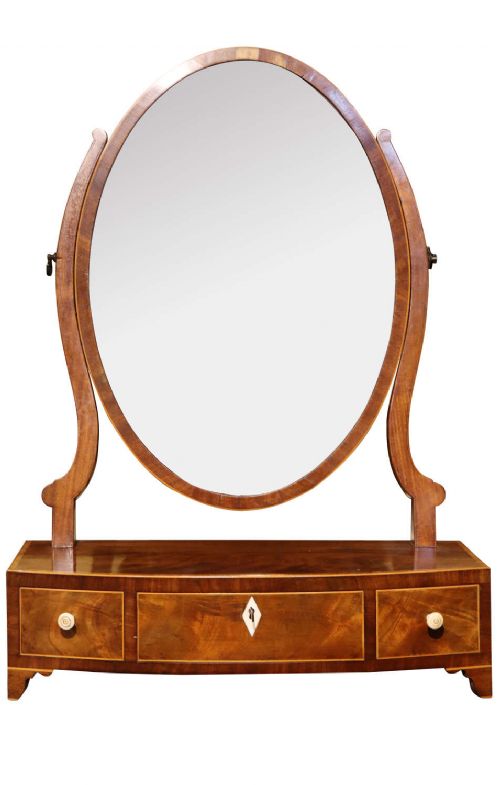
Side tables and bedside cabinets dominate the selection, accompanied by dressing table mirrors that incorporate small drawer boxes beneath the glass. Walnut, satinwood, and burr maple also emerge alongside the predominant mahogany.
The curved outline softens the rigid geometry common in older furniture, making these tables adaptable for hallways, bedrooms, and living spaces alike.
Materials and construction
Mahogany serves as the primary timber, complemented by decorative boxwood inlay and crossbanding that frame the drawer fronts and tabletops. Cabinetmakers shaped the curved front rails by bending timber or constructing layered assemblies to achieve the distinct bowfront profile.
Brass handles, glass mirrors, and occasional bone escutcheons complete the hardware, reflecting the standard joinery methods of the period.
Some dressing table mirrors hide tiny secret compartments behind the main drawer bank for storing trinkets and coins.
Quality and craftsmanship
Superior examples display careful timber selection, such as figured mahogany or burr maple matched symmetrically across the drawer fronts. Finer execution shows in the precision of the boxwood inlay and the seamless integration of the curved drawers within the framework.
Simpler interpretations rely on plain mahogany planks with minimal decorative banding, while later revivals from the twentieth century exhibit different interior secondary woods and altered construction methods.
The Georgian Bowfront Drawer Table Glossary
- Bowfront
- A convex curved front contour found on chests, sideboards, and tables. This shape softens corners and creates a more fluid silhouette.
- Crossbanding
- A strip of veneer applied to the border of a tabletop or drawer front with the grain running perpendicular to the surrounding surface. It provides a neat, contrasting perimeter.
- Frieze drawer
- A drawer fitted into the upper band of a table or cabinet directly beneath the top surface. These pull-out compartments often feature small brass drop handles.
- Satinwood
- A lustrous, hard timber native to India and the Caribbean with a pale yellow colour. It was frequently used for fine inlay work during the late eighteenth century.
Georgian Bowfront Drawer Table: Frequently Asked Questions
How do I spot a genuine Georgian table?
Examine the secondary woods inside the drawers and check for hand-cut dovetails that indicate older construction methods.
Look closely at the timber grain, wear patterns around the handles, and the overall joinery rather than relying solely on surface appearance.
Where should I place a bowfront table?
These tables suit narrow hallways, landings, or bedside areas where the curved front prevents sharp corners from jutting into walking space.
They also function effectively as dressing tables or compact writing desks in smaller rooms.
What is the difference between side and writing tables?
Side tables offer a flat surface with shallow frieze drawers primarily meant for display and light storage.
Writing tables typically provide deeper or multiple drawer arrangements designed specifically to accommodate writing materials and documents.
How do I care for mahogany furniture?
Keep mahogany pieces away from direct sunlight and radiators to prevent the timber from drying out or splitting.
Dust regularly with a soft, dry cloth and apply occasional natural wax to maintain the sheen of the polished wood.