
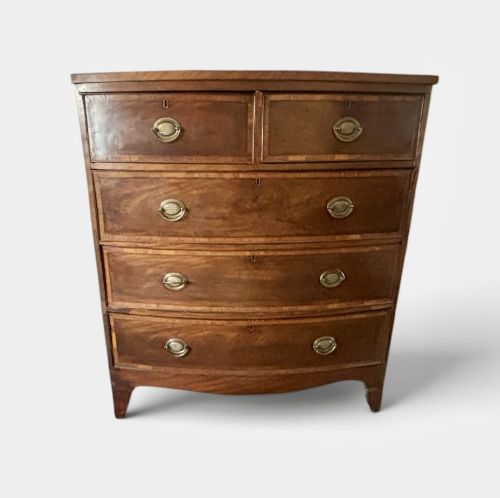

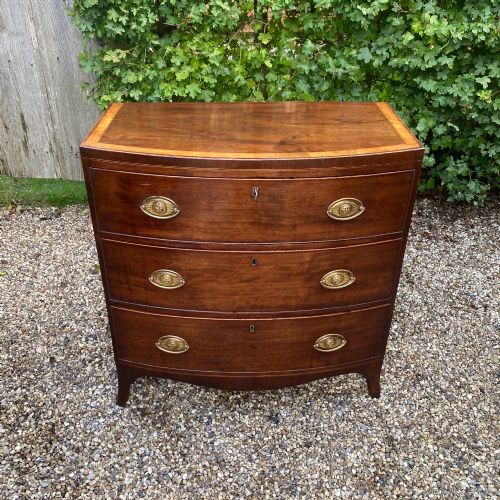
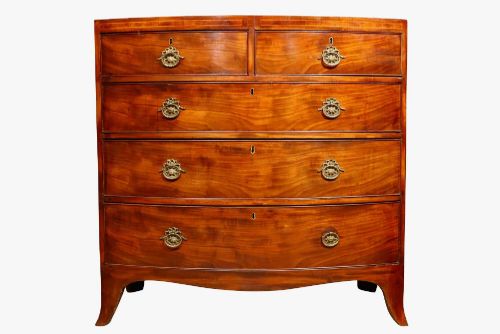
Georgian Bow Fronted Drawers
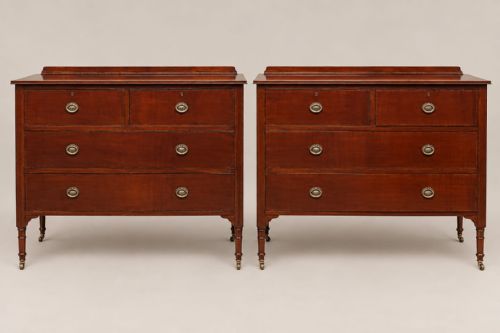
Georgian bow fronted drawers bring a subtle, curved presence to a room, offering generous storage wrapped in the warmth of figured woods.
Georgian Bow Fronted Drawers
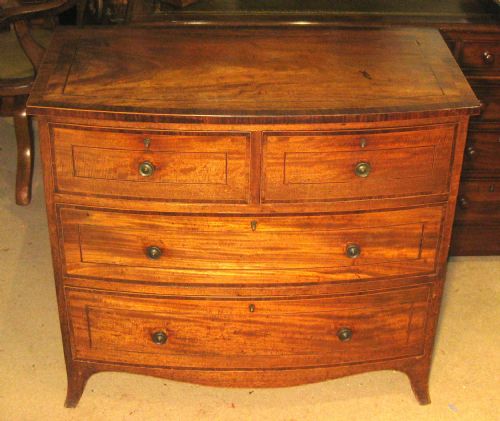
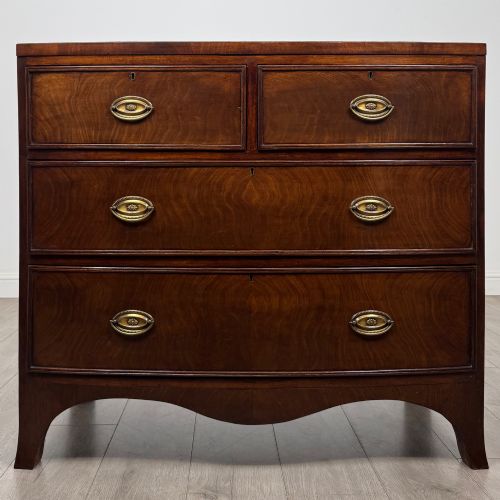
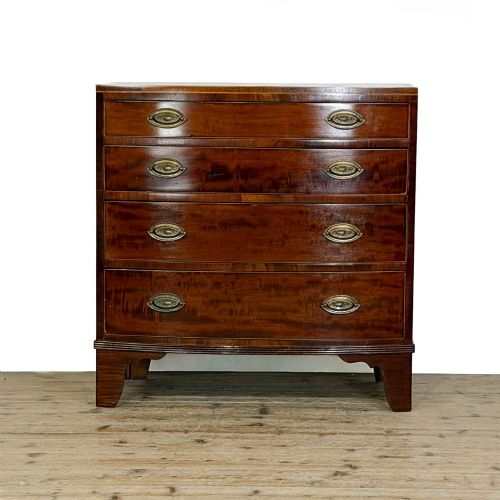
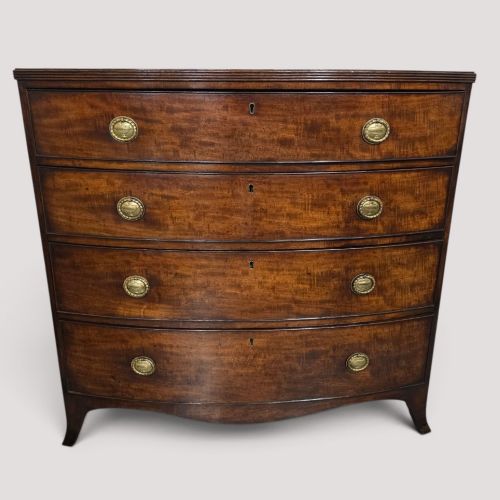
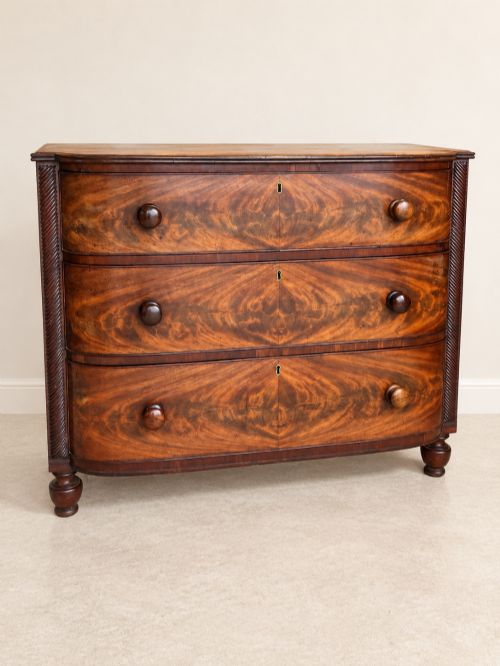
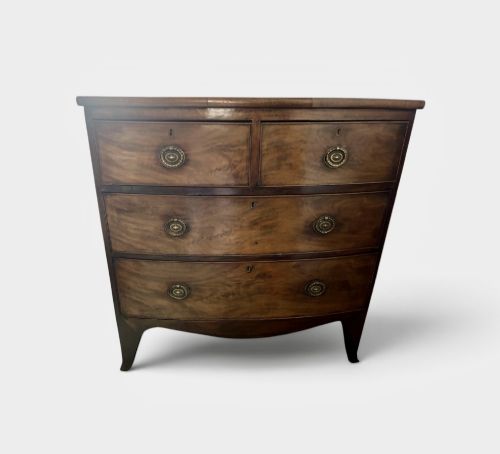
When you search for georgian bow fronted drawers, you encounter pieces defined by a gently curving convex front that softens the standard rectangular silhouette of case furniture. The form emerged strongly during the late eighteenth century and continued through the Regency period, surviving later revivals into the twentieth century.
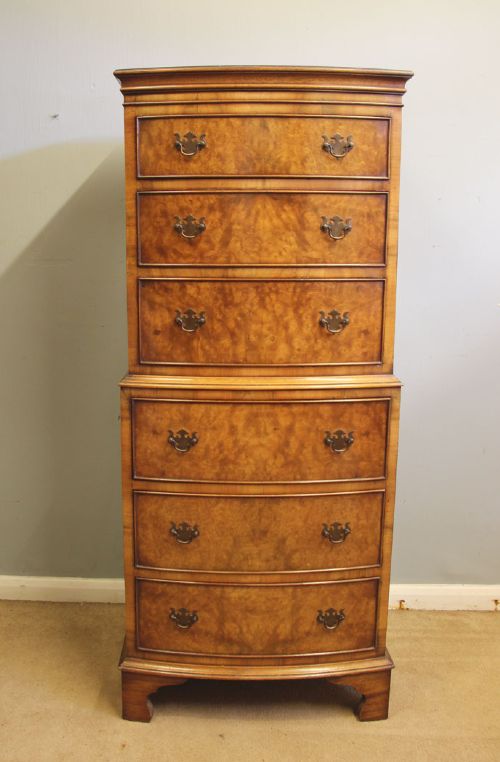
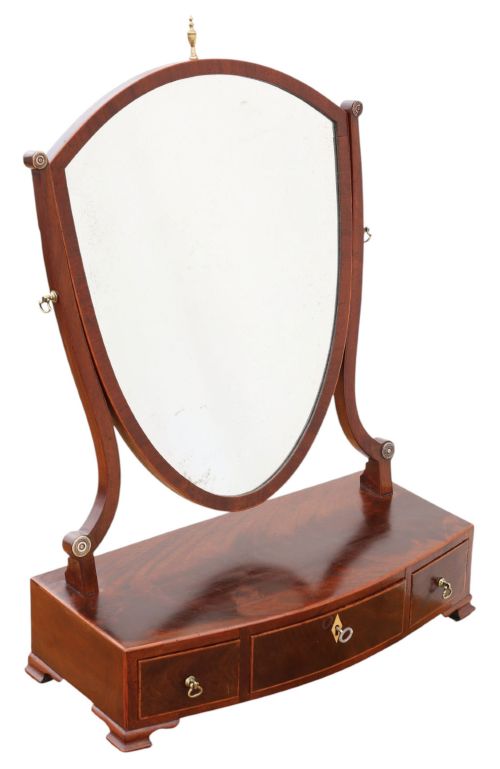
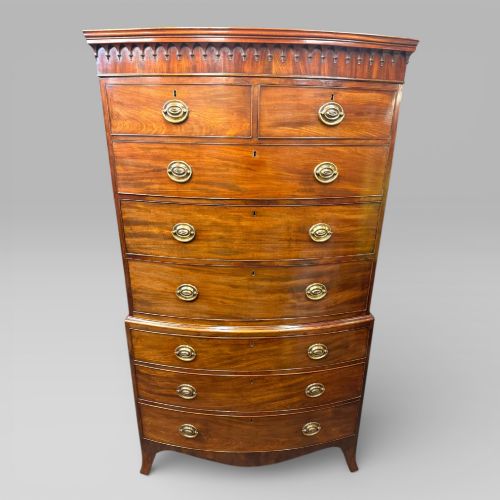
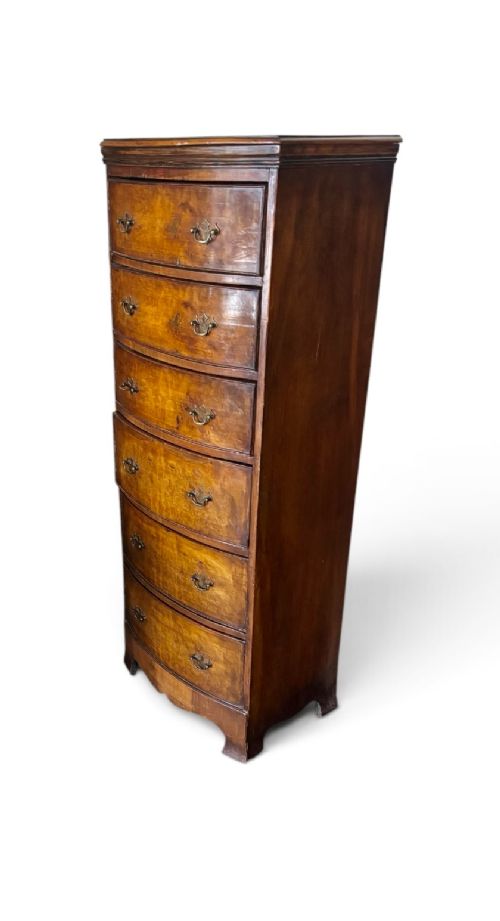
The selections on this page centre predominantly on chests of drawers alongside related forms such as tallboys, dressing chests, and miniature pieces. Mahogany forms the vast majority of surviving examples, often enriched with flame veneers, satinwood banding, or walnut.
Makers designed these items to fit domestic bedchambers and parlours, balancing decorative presence with practical drawer space. Regional variations, including Scottish and Welsh examples, appear alongside classic English proportions.
What Varies in Quality
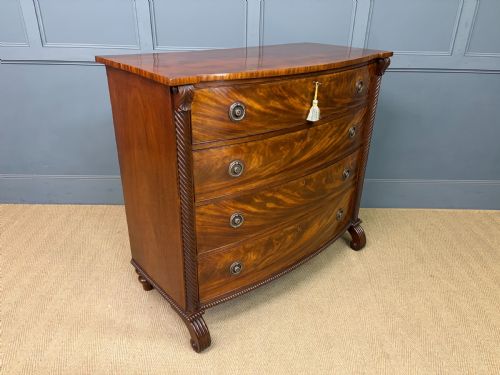
The ambition of the timber selection dictates much of the distinction between pieces, with matched flame mahogany veneer or highly figured burr walnut marking out superior workshops. Grain continuity across multiple drawers demonstrates the precision applied by the original cabinet maker.
Proportion and execution of the curved front reveal the maker's skill, particularly where side returns meet the sweeping drawer edges. Secondary wood choices, such as oak drawer linings rather than deal, indicate higher standards of construction.
Listings feature mahogany predominantly, complemented by satinwood, walnut, burr walnut, and oak across various chests.
Gillows
The Georgian Bow Fronted Drawers Glossary
- Bow front
- A convex curved cabinet front that projects outward in an arc. This shaping required specialist carpentry to bend or laminate timbers and veneers.
- Flame mahogany
- A veneer cut from timber where the grain branches, creating a distinctive pattern resembling flickering flames. It was highly prized for principal drawer fronts.
- Crossbanding
- A border of veneer laid perpendicular to the surrounding grain. It creates a neat visual frame around drawer edges and table tops.
- Tallboy
- A case piece featuring one tall chest stacked upon another, or built as a single tall unit. They maximised vertical storage in period bedchambers.
- Graduated drawers
- A set of drawers decreasing in depth from bottom to top. This arrangement maintained visual balance and structural stability.
Georgian Bow Fronted Drawers: Frequently Asked Questions
How do I spot a true period piece?
Examine the internal construction of the drawers, looking for hand-cut dovetails and oak or mahogany secondary woods rather than modern substitutes. Period pieces exhibit subtle hand-planing marks and timber shrinkage consistent with age.
Check the uniformity of the drawer linings and the fixing methods of the brass hardware. Original backboards and undisturbed blocks beneath the carcase also support a period attribution.
Where should I place a bow front chest?
These chests suit bedrooms, hallways, or living rooms where their curved outline softens rigid architectural corners. Their generous depth provides substantial storage without dominating smaller wall spaces.
Keep them away from direct heat sources and strong sunlight to protect vulnerable mahogany and walnut veneers from drying and splitting.
What is the difference between George III and Regency styles?
George III pieces often display restrained classical proportions with subtle stringing and bracket feet. The later Regency era introduced bolder flame veneers, heavier brass lion paw feet, and richer satinwood contrasts.
Regency examples can also feature turned columns flanking the drawer stacks, moving away from the sleeker lines of the earlier eighteenth-century designs.
How do I care for antique veneer?
Dust the surfaces regularly with a soft, dry cloth to prevent grit from accumulating in the grain. Apply a quality beeswax occasionally to nourish the timber and maintain a gentle sheen.
Avoid liquid polishes containing silicones, and maintain stable room humidity to prevent the veneer from lifting off the oak or pine carcase.