

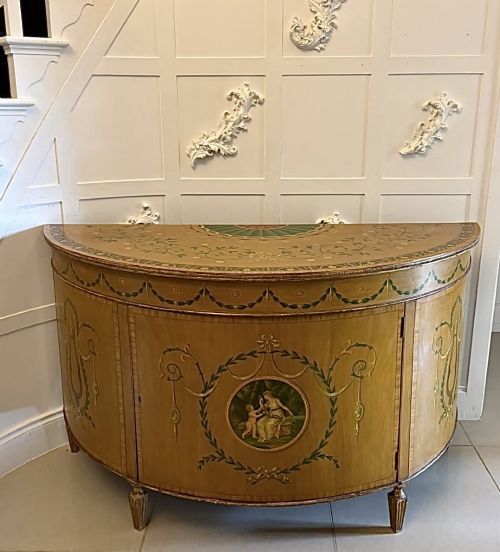
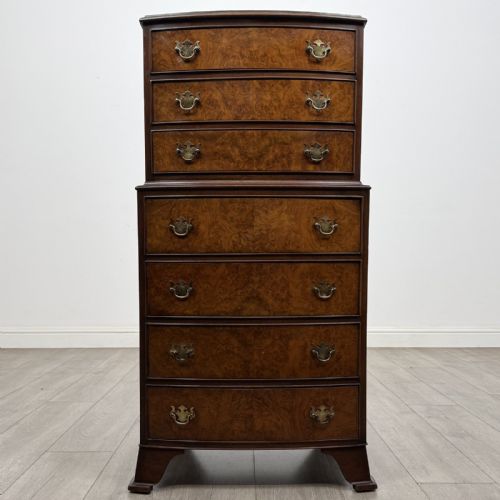
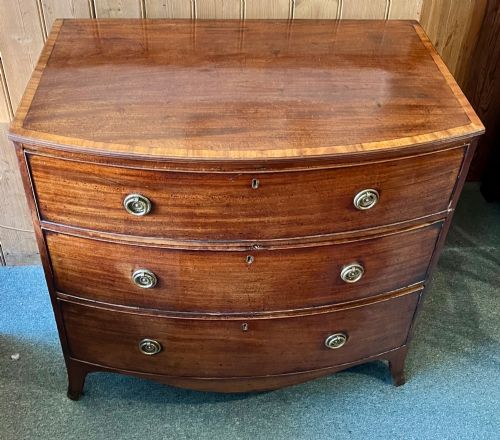
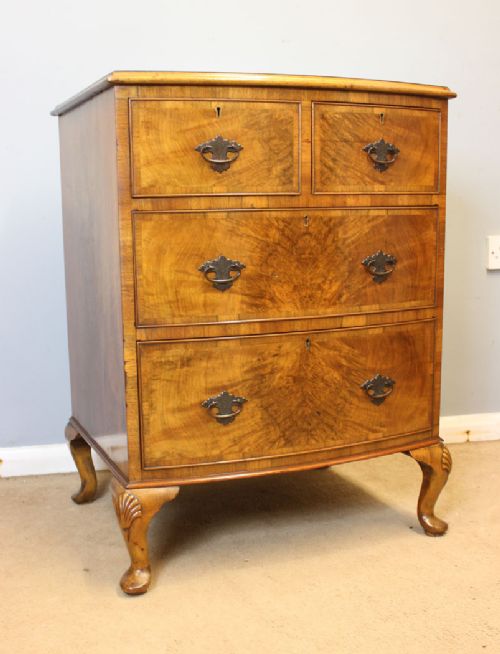
Georgian Bow Front
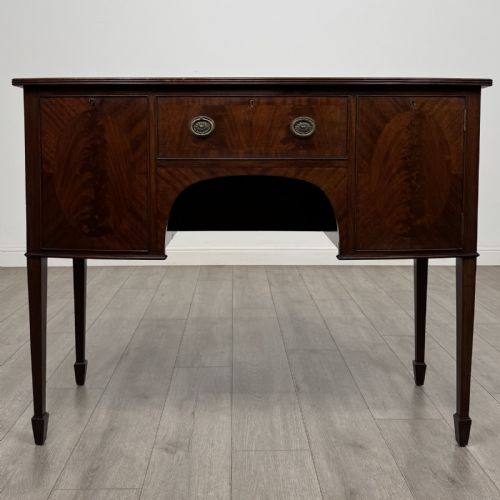
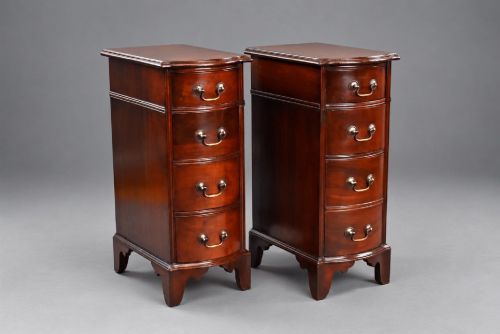
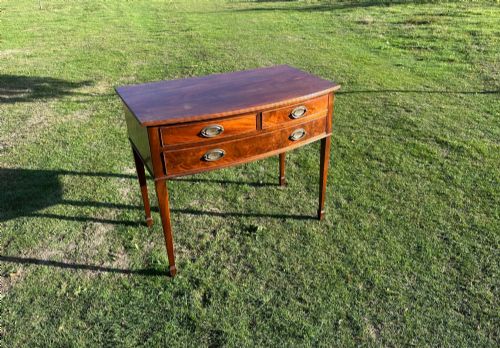
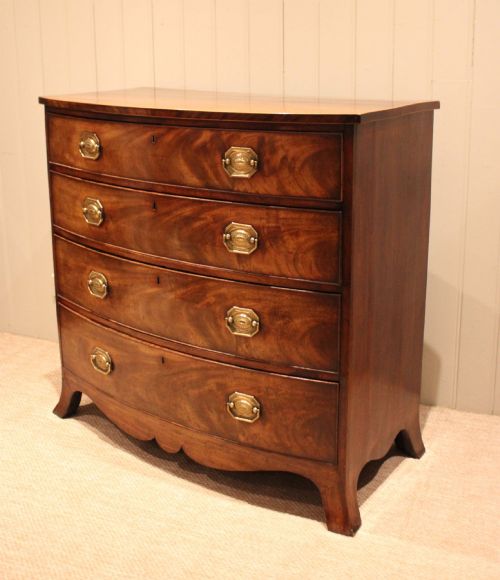
These pieces of georgian bow front furniture bring curved fronts and rich timber to a room, offering practical storage with distinct architectural lines.
Georgian Bow Front
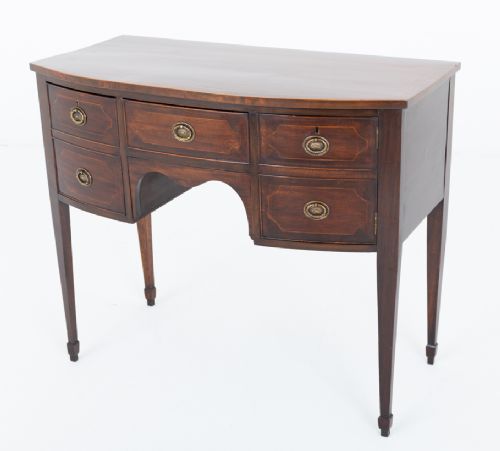
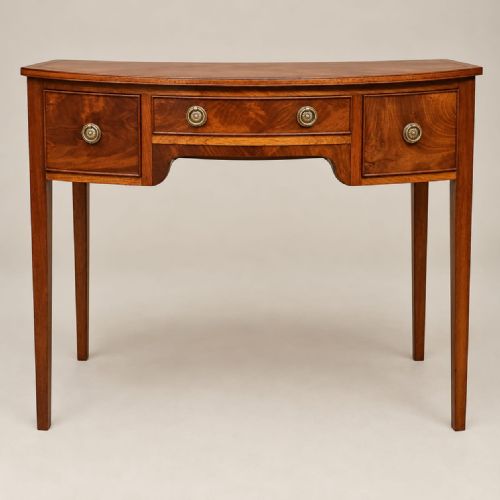
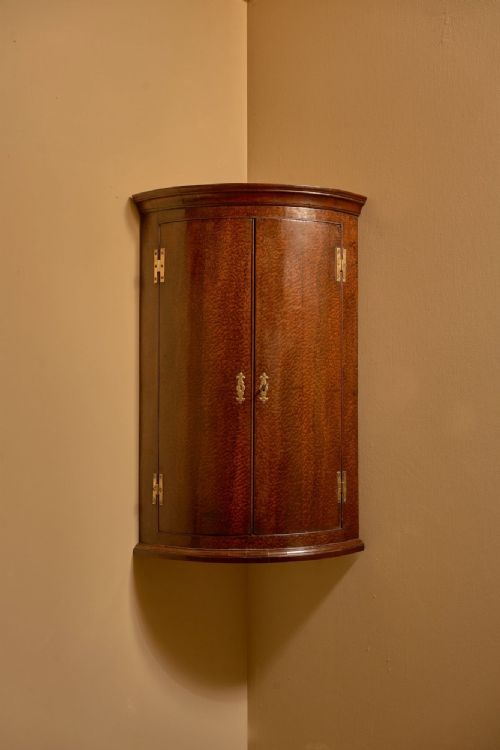
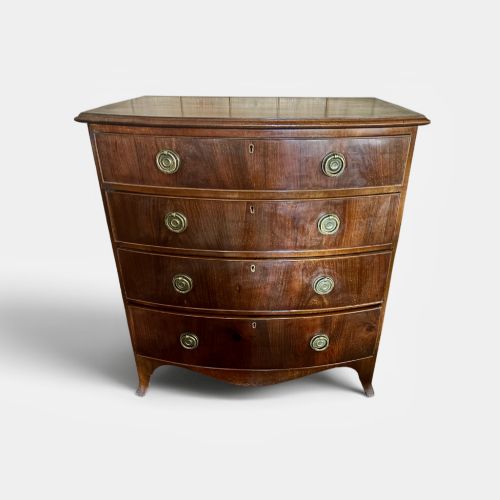
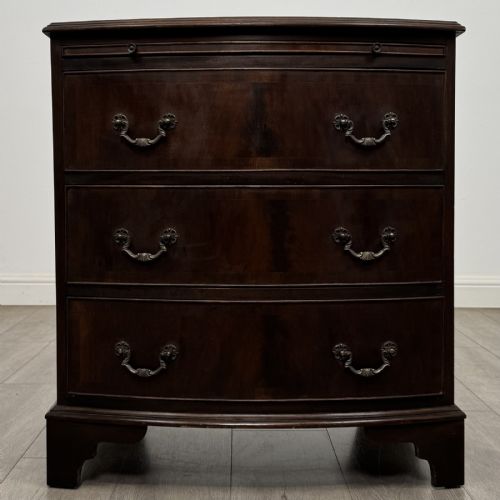
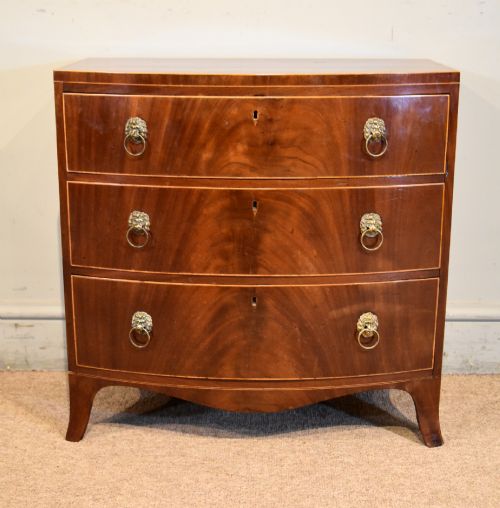
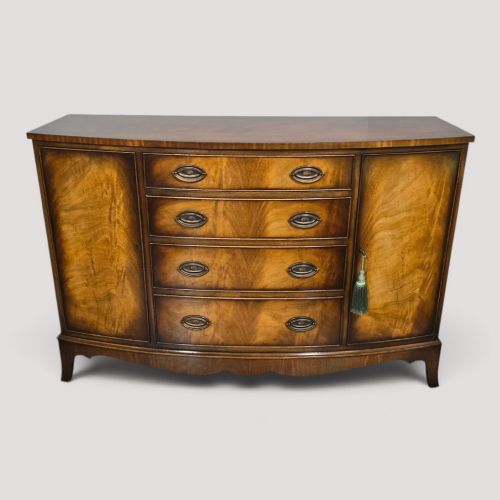
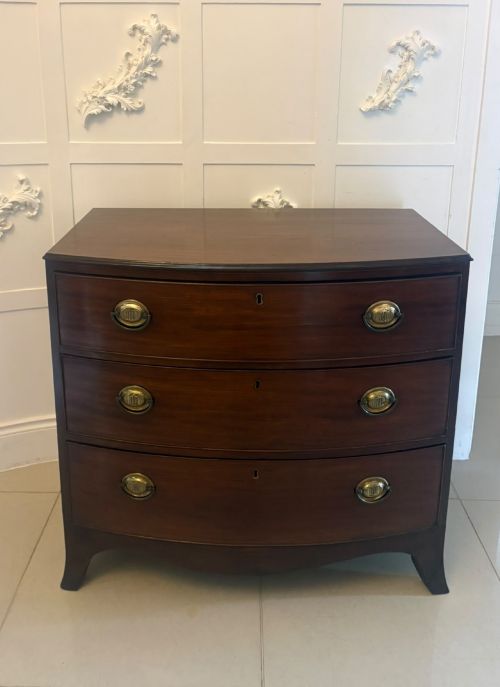
A georgian bow front search brings up a distinct group of curved furniture pieces designed to soften the corners of a room while providing deep storage. The most common form met here is the chest of drawers, alongside sideboards, corner cupboards, and side tables.
The material record spans the 18th century through to later revivals, showing predominantly mahogany alongside burr walnut, satinwood, and oak. Pieces emerge from periods including Georgian, Regency, and later revival years up to the 1930s.
Makers and cabinetmakers produced these curved fronts using solid timber and finely figured veneers. The forms range from full-sized bedroom chests down to miniature furniture and bedside chests.
How they were made
Makers built these curved structures primarily using mahogany, often selecting figured timber or applying satinwood bandings and boxwood stringing to accent the sweeping lines. Brass handles and bracket feet complete the construction of the case pieces.
Cabinetmakers shaped the characteristic bow front by steaming timber or constructing layered segments to achieve the outward curve. Corner cupboards and sideboards utilise similar framing techniques to fit flush against walls or stand freely as serving tables.
Georgian Bow Front Retail Price Guide 2026
Typical asking prices for georgian bow front among the pieces listed under this phrase on Sellingantiques today, from the lower quarter to the upper quarter. They describe what is for sale here now, not the wider market.
A lone stick barometer joined the furniture ranks, proving that even barometers wanted to curve forward.
What varies in quality
The choice of timber creates the primary distinction across these pieces, moving from plain mahogany boards to highly figured plum pudding mahogany, burr walnut, and contrasting satinwood bandings. The skill in matching grain across multiple drawers defines the upper tier.
Construction details such as dovetailed drawer linings, original brass hardware, and well-proportioned bracket feet or slender legs separate standard workshop output from finer cabinetmaking.
The Georgian Bow Front Glossary
- Bow front
- A convex curved front elevation on a cabinet or chest of drawers. This curved design softens room angles and expands internal storage capacity.
- Crossbanding
- A strip of veneer applied across the grain of the primary surface. It creates a contrasting border around drawer fronts and table tops.
- Bracket feet
- Support feet shaped like a bracket, often found on Georgian case pieces. They lift the cabinet cleanly off the floor.
Georgian Bow Front: Frequently Asked Questions
Where did people place bow front chests?
These chests functioned primarily in bedrooms and hallways where their curved profile prevented bruised hips in tight spaces.
They provided deep drawer storage while maintaining a softer visual footprint than flat-fronted furniture.
How do I spot a Regency piece?
Regency items often feature bolder brass fittings, contrasting satinwood stringing, and sharper architectural lines inspired by classical antiquity.
Cabinetmakers working in this period favoured dramatic grain patterns and sometimes incorporated reeded legs.
What is a corner cupboard used for?
Corner cupboards made efficient use of unused room angles to display porcelain or store household goods securely behind panelled doors.
They fit directly into wall junctions, appearing as hanging wall units or tall floor-standing cabinets.
Are miniature chests genuine antiques?
Miniature chests served as apprentice pieces or salesman samples to demonstrate cabinetmaking skill on a small scale.
They feature the same dovetailing and timber selection as full-sized furniture.