





Georgian Birdcage Tripod Table
A georgian birdcage tripod table combines a tilting top and a rotating action on a three-legged base, offering both utility and clever engineering.
Georgian Birdcage Tripod Table
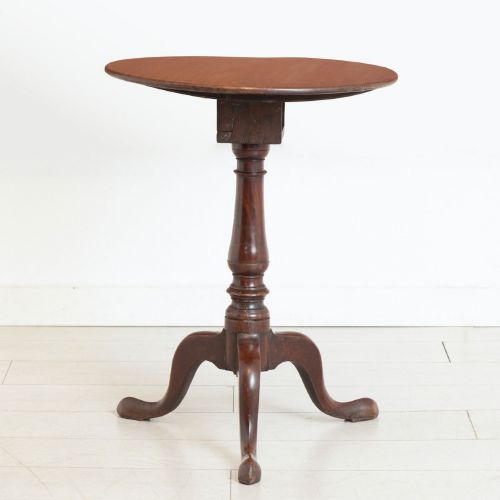
A georgian birdcage tripod table is a versatile antique designed for dining, supping, or occasional use in domestic interiors. These pieces appear primarily in mahogany, though oak examples also occur, spanning periods from the eighteenth century through to the Edwardian era.
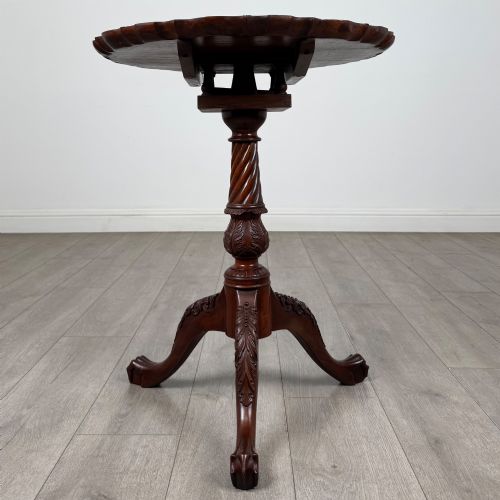
The defining feature of this form is the clever birdcage mechanism positioned beneath the tabletop. This wooden frame allows the surface to tilt upward for storage and revolve independently on its vertical shaft.
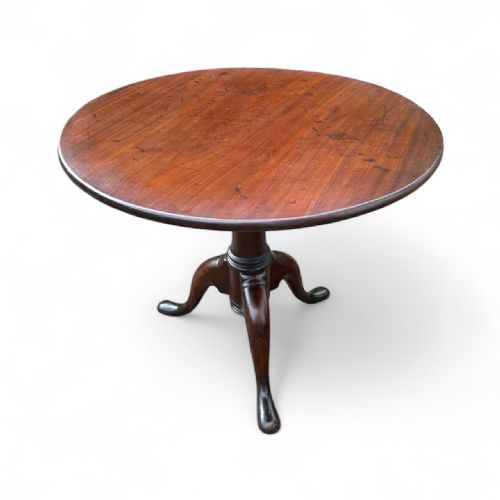
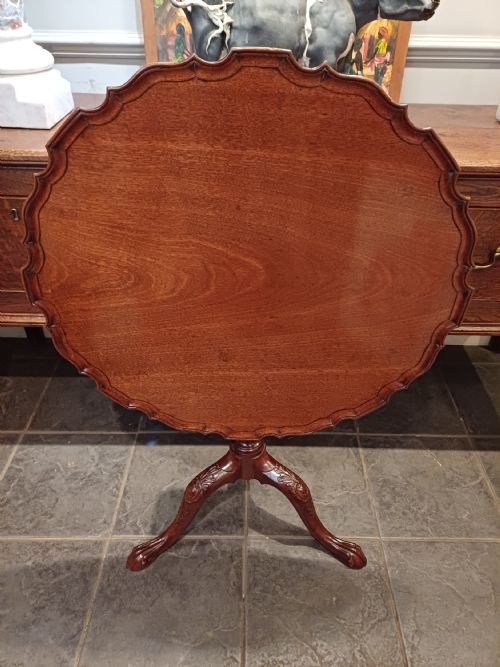
Buyers encounter various top configurations on this page, including circular one-piece boards, dish tops, octagonal shapes, and decorative piecrust edges. Occasional, side, wine, and supper tables dominate the selections currently available and recorded in the archive.
How they were made
Cabinetmakers constructed these tables predominantly using solid mahogany, paired occasionally with oak for country pieces and brass or iron for internal fittings. The timber was selected carefully, particularly for circular surfaces fashioned from a single, wide board of mahogany.
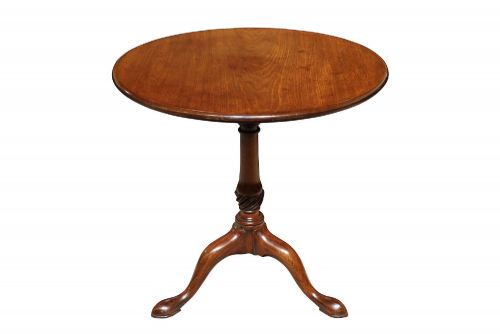
The birdcage mechanism relies on precise joinery, consisting of small parallel blocks and turned wooden spindles that permit rotation without wobbling. This assembly connects to a turned pillar supported by three outward-curving tripod legs, often terminating in pad or claw and ball feet.
The birdcage action allowed eighteenth-century diners to literally sweep the table out of the way once the wine was finished.
What varies in quality
Quality in a georgian birdcage tripod table rests largely on the timber selection for the top and the precision of the turning on the central pillar and legs. One-piece timber tops and carved details such as piecrust borders or claw and ball feet indicate higher levels of original craftsmanship.
The integrity of the birdcage mechanism itself dictates much of the functional standard. Smooth rotation and a secure tilt action without excessive play in the joints separate superior pieces from simpler utilitarian versions.
John Bivins
The Georgian Birdcage Tripod Table Glossary
- Birdcage
- A wooden frame beneath the tabletop that permits both tilting and revolving actions. This assembly uses small turned spindles resembling a cage.
- Tilt top
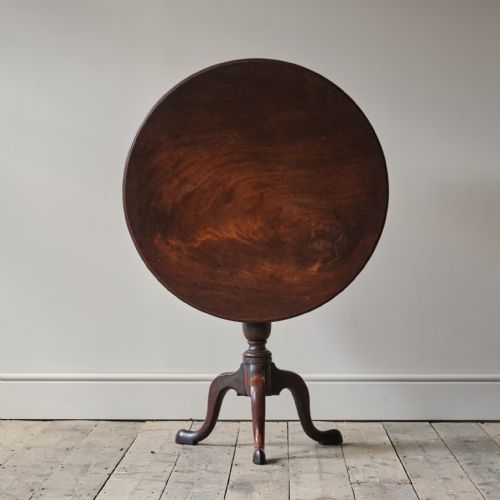
- A tabletop hinged to tip into a vertical position when not in use. This allowed tables to be stored flat against a wall to save floor space.
- Tripod base
- A support structure comprising three legs radiating from a central turned column. It provided stability on uneven eighteenth-century floors.
- Piecrust edge
- A raised, decorative carved border shaped along the perimeter of a circular tabletop. This style appears on finer supper and tea tables.
- One piece top
- A circular tabletop fashioned from a single wide board of timber rather than joined planks. It represents superior material selection by the maker.
Georgian Birdcage Tripod Table: Frequently Asked Questions
What is a georgian birdcage tripod table used for?
These tables served primarily as flexible furniture for dining, drinking wine, or holding lamps in reception rooms. The tilting top allowed them to be moved aside easily against a wall when floor space was required.
Today, they function well as decorative occasional or side tables in sitting rooms and hallways. Their compact footprint and pivoting action make them practical for displaying small objects or serving drinks.
How does the birdcage mechanism work?
The mechanism consists of a small square wooden frame containing four turned pillars, positioned between the tabletop and the central shaft. This frame allows the entire top to revolve horizontally on the column.
A separate hinge pin or catch lets the tabletop tilt vertically. Together, these two movements provide versatile positioning for the user.
How can I tell an eighteenth-century table from a later copy?
Eighteenth-century examples display hand-cut joinery, timber shrinkage appropriate to age, and wear patterns consistent with long domestic use. The quality of the turning on the pillar and legs often shows greater refinement.
Later nineteenth-century and Edwardian revivals tend to use machine-cut components and different finishing techniques. Examining the underside of the top and the internal pivot blocks reveals the construction methods.
Why do some tops feature a single piece of wood?
Cabinetmakers selected exceptionally wide trees to harvest a single board for the tabletop, avoiding the need to join multiple planks together. A one-piece top provided a smoother, more uniform surface for dining and showed off the grain of the mahogany.
Finding a large, unjoined circular board indicates a table of higher status and cost. These tables are particularly sought after by collectors.