
Georgian Bedroom Storage Furniture
Georgian bedroom storage furniture comprises chests of drawers, linen presses, and wardrobes built for domestic utility and lasting presence.
Georgian Bedroom Storage Furniture
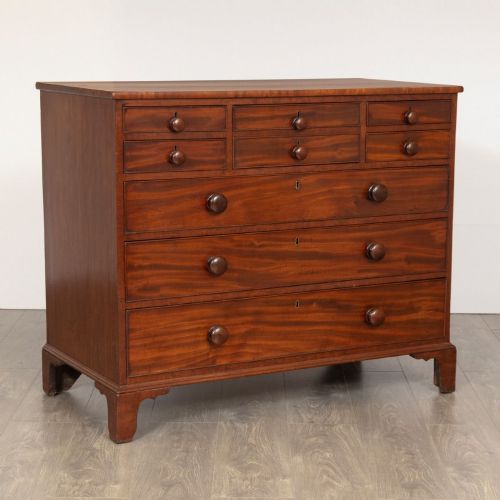
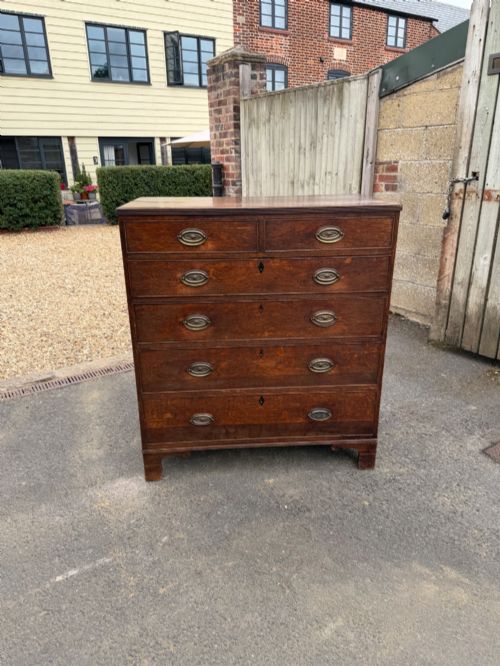
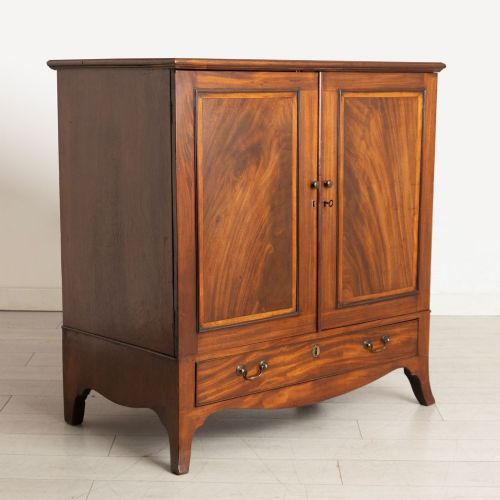
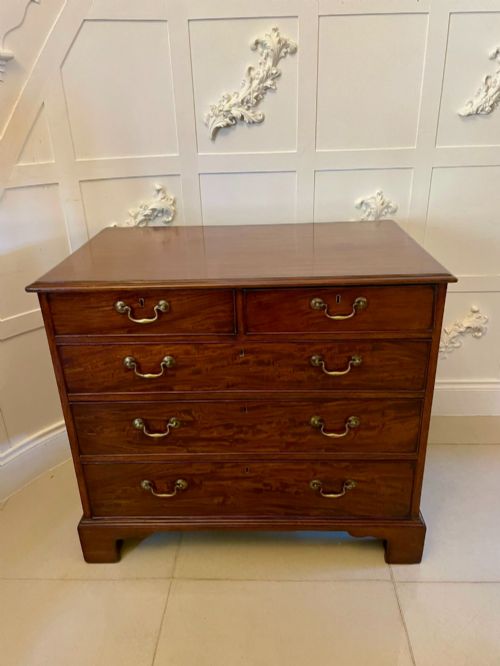
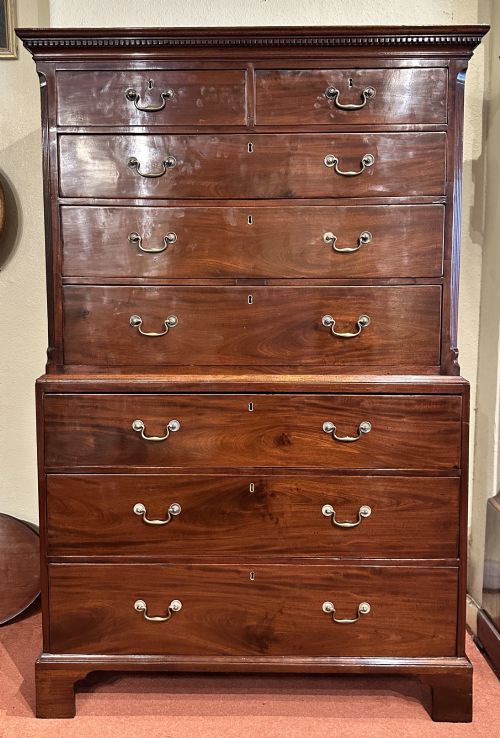
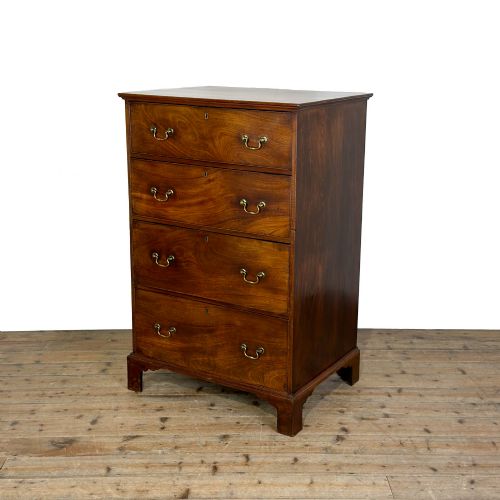
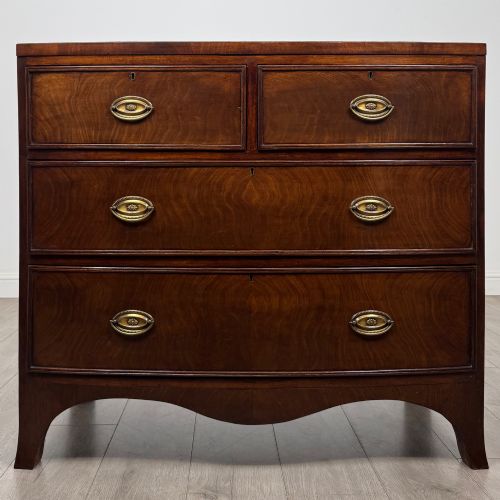
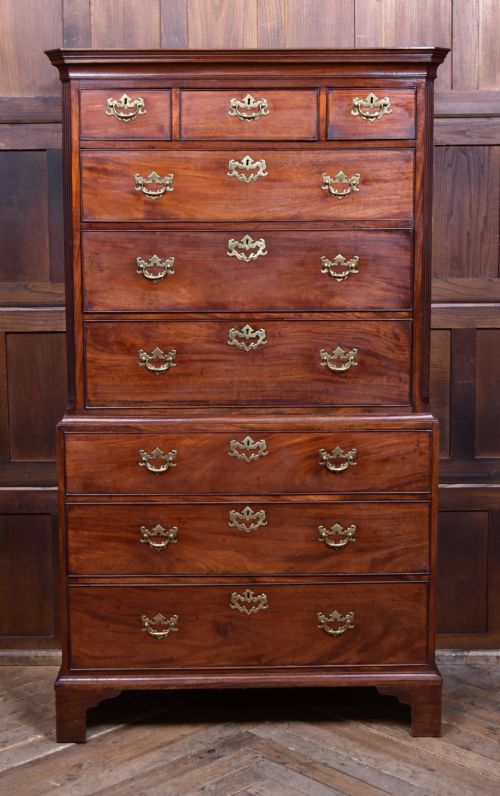
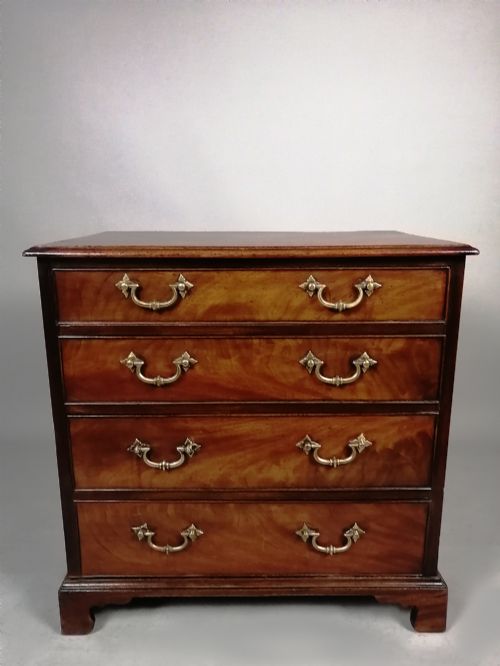
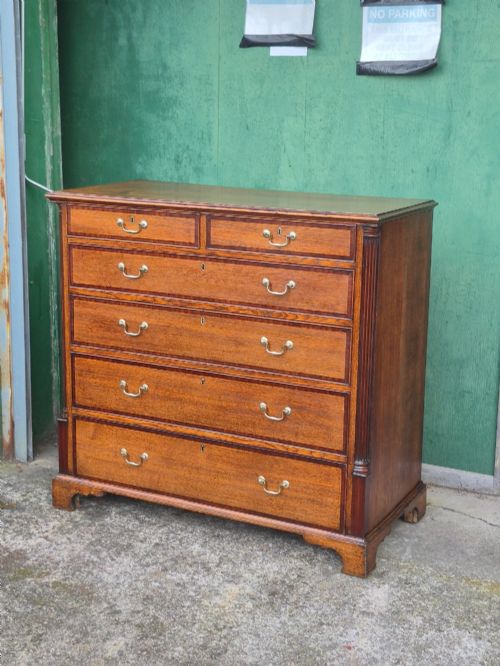
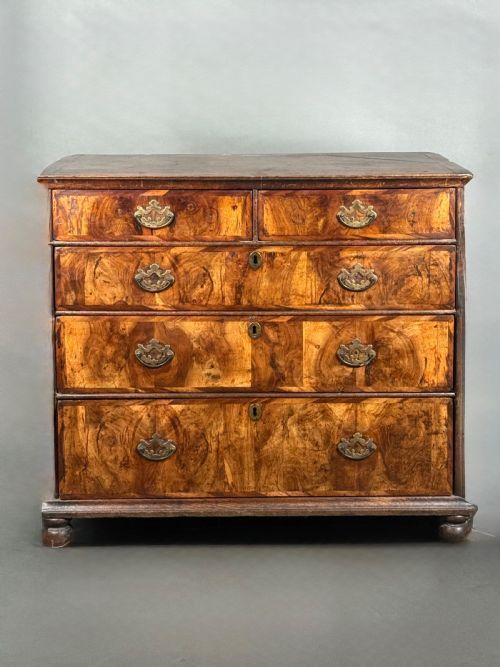
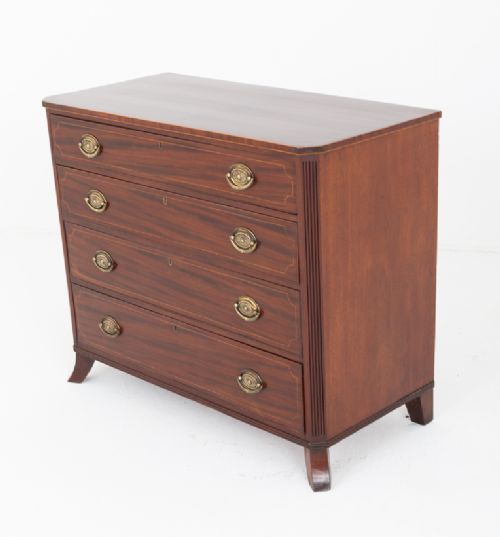
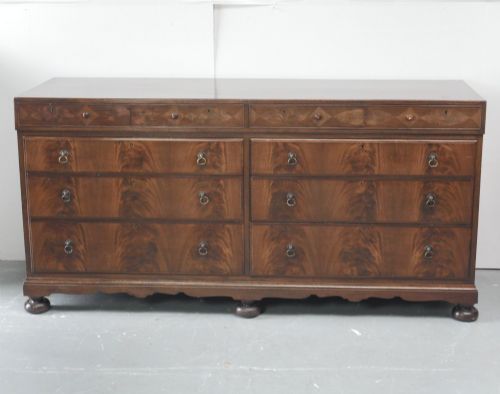
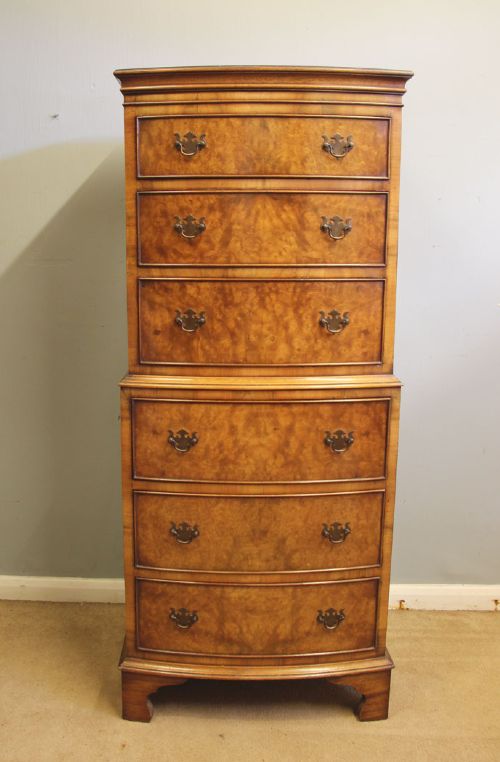
Georgian bedroom storage furniture primarily encompasses chests of drawers and linen presses designed to organise clothing and linens in the sleeping quarters. Buyers selecting georgian bedroom storage furniture encounter pieces ranging from compact four-drawer formats to tall chest on chest designs.
The materials span native and imported timbers, with mahogany, oak, and walnut forming the backbone of the category. Pieces emerge from the Georgian and Regency periods alongside later revival interpretations from the early twentieth century.
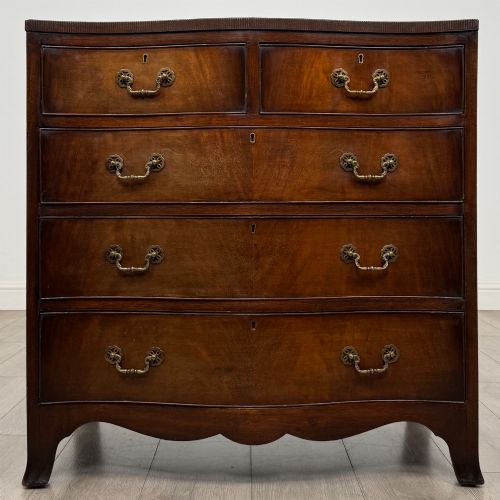
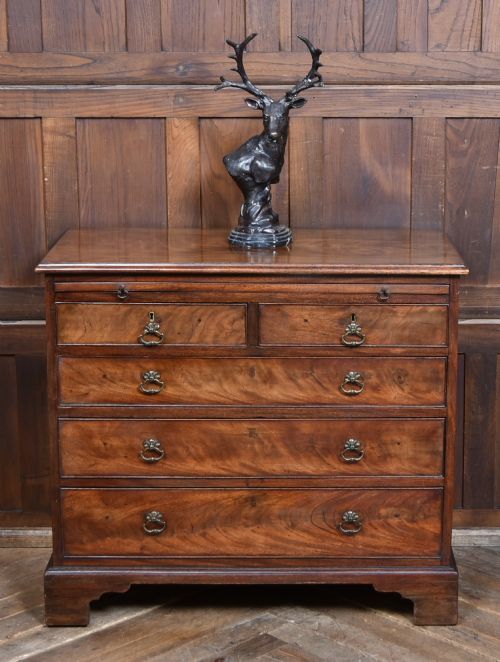
Forms include bow front, serpentine, and straight configurations, often fitted with brass handles and occasional brushing slides. The variety reflects changing domestic needs across the eighteenth century and subsequent revival periods.
How they were made
Cabinet makers utilised solid timbers and veneers applied to secondary woods, employing flame mahogany, burr walnut, and figured grain to create decorative surfaces on drawer fronts and tops. Crossbanding and stringing often frame these panels, demonstrating precise carpentry skills.
Joinery techniques relied on dovetailed drawer construction and framed panels to accommodate timber movement over time. Brass hardware, including swing handles and lock escutcheons, was fitted to secure and operate the compartments.
Listings feature mahogany, oak, walnut, and yew wood alongside revival periods spanning the 1900s to the 1930s.
What varies in quality
Quality rests upon the selection of timber figures, such as highly grained burr walnut or figured mahogany, and the precision of the veneer work across the facade. Grain matching and balanced proportions separate ambitious cabinet work from standard utility pieces.
The integrity of the internal drawer construction, including hand-cut dovetails and original secondary woods, signals the standard of manufacture. Retained original brass handles and smooth drawer action further distinguish superior examples.
Whytock and Reid
The Georgian Bedroom Storage Furniture Glossary
- Bow front
- A convex curved cabinet front that projects outward in the centre. This shape softens the profile of large chests and appears frequently in Regency pieces.
- Chest on chest
- A tall storage unit comprising one chest stacked directly upon a slightly larger lower chest, often called a tallboy. This form maximises vertical storage capacity.
- Brushing slide
- A pull-out shelf integrated into the upper section of a chest, historically used for folding garments or grooming. It slides flush into the cabinet frame when not in use.
- Crossbanding
- A border of veneer laid around the perimeter of a drawer front or top with the grain running perpendicular to the central panel. This technique frames the primary timber figure.
- Linen press
- A tall piece featuring upper doors enclosing sliding trays or shelves for textiles, above a base of lower drawers. These served as primary wardrobe storage before fitted closets existed.
Georgian Bedroom Storage Furniture: Frequently Asked Questions
How do I spot a genuine Georgian chest?
Examine the drawer construction for hand-cut dovetails and inspect the secondary timbers inside the carcase, such as oak or pine.
Original hardware placement and timber shrinkage patterns also help confirm the period of manufacture.
What is a chest on chest used for?
A chest on chest provides tall vertical storage, combining the footprint of a standard chest with extra drawer capacity.
Historically placed in bedrooms, the upper tiers held smaller garments while deeper lower drawers accommodated bulkier items.
How do I care for antique mahogany furniture?
Keep wooden pieces away from direct heat sources and fluctuating humidity to prevent timber splitting and veneer lifting.
Apply traditional beeswax periodically to nourish the surface and maintain a natural sheen.
Are revival pieces considered authentic antiques?
Revival pieces date from later periods like the Edwardian era or the 1920s and 1930s, copying earlier eighteenth-century designs.
While well-made, they represent distinct historical revivals rather than original Georgian production.