


Georgian Baluster Candlestick
A georgian baluster candlestick brings weight and proportion to a table, combining simple columnar stems with sturdy bases in brass, silver, or wood.
Georgian Baluster Candlestick
A georgian baluster candlestick forms part of a long tradition of domestic lighting, designed to hold wax or tallow tapers securely upon a table or mantelpiece. When you search for this phrase, you encounter forms that span from the seventeenth century through the nineteenth century, reflecting stylistic shifts from plain turned stems to more ornate moulded shapes.
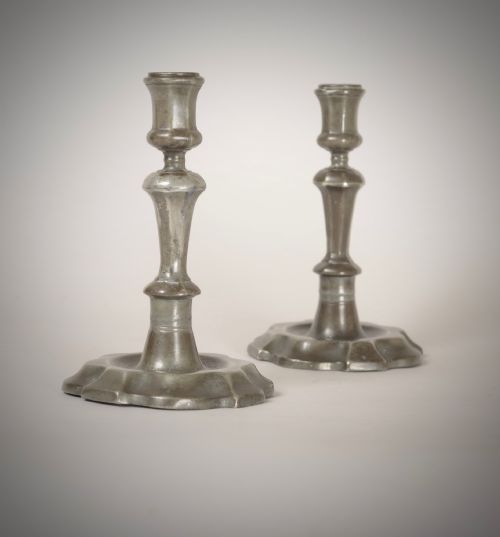
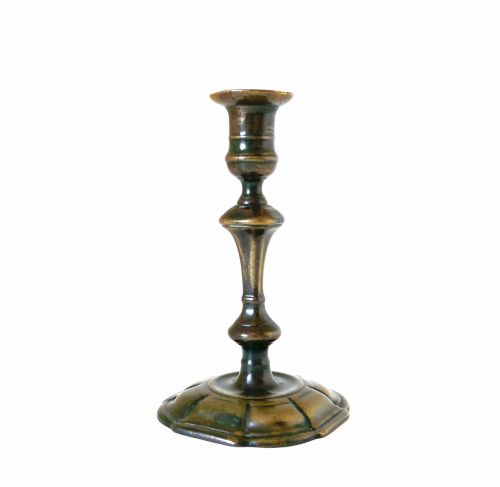
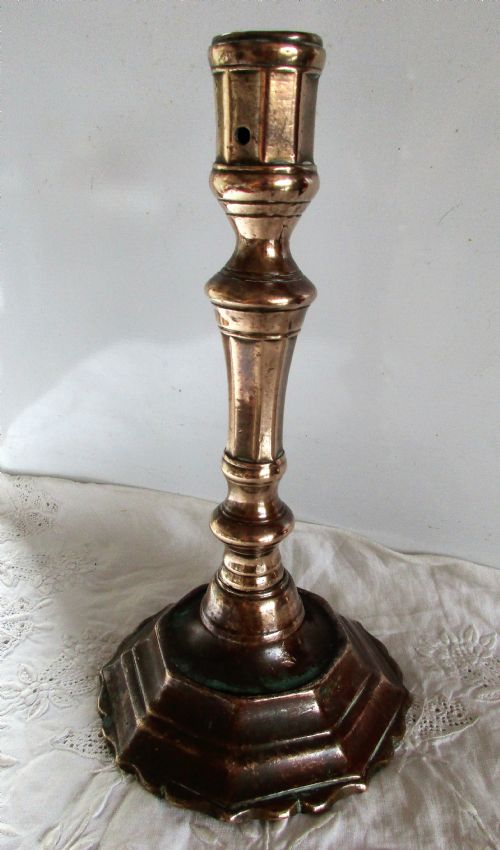
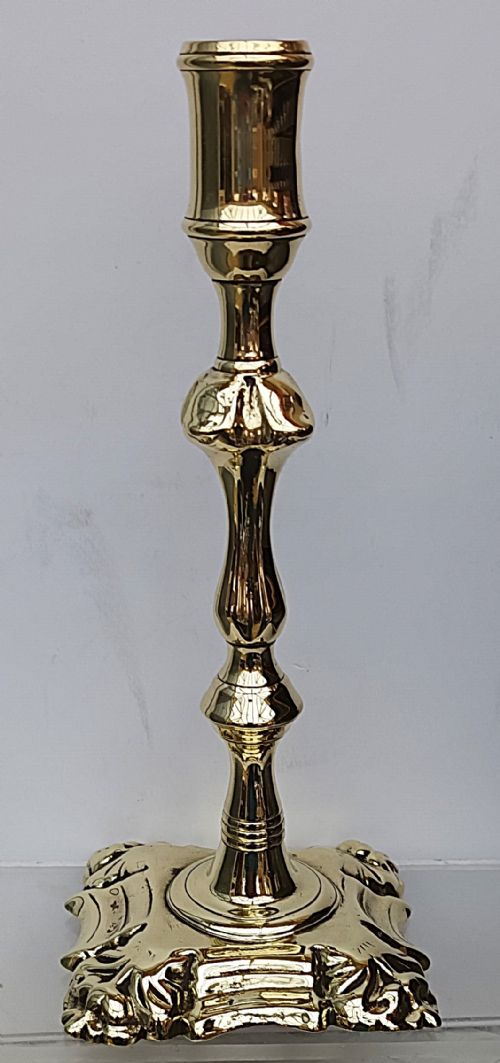
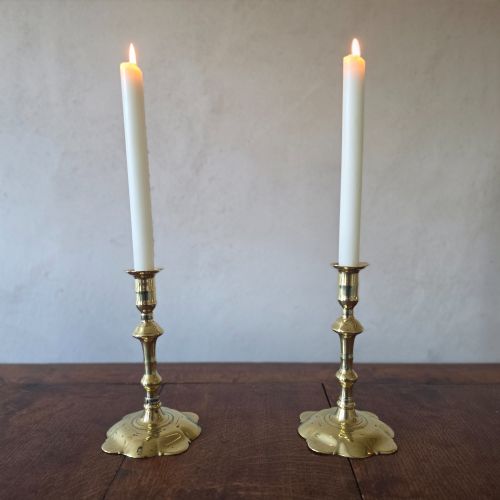
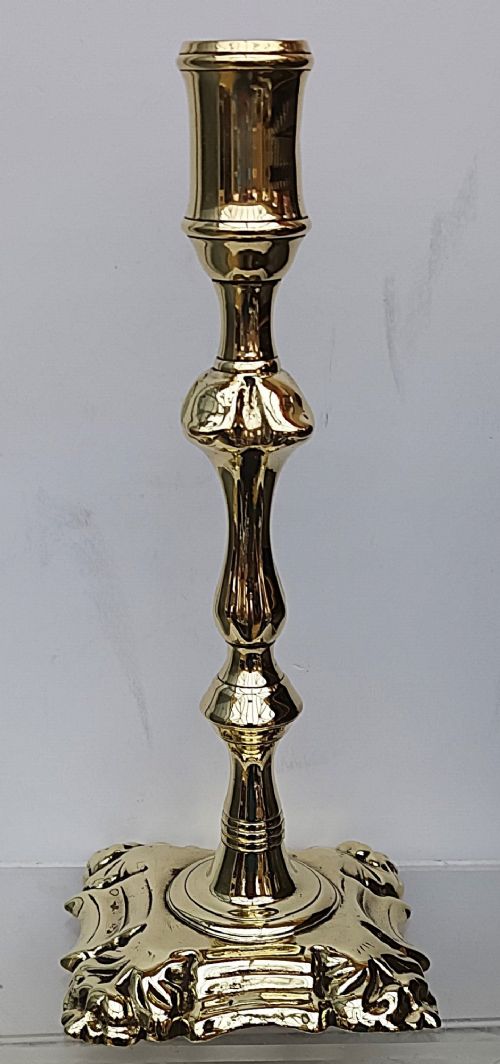
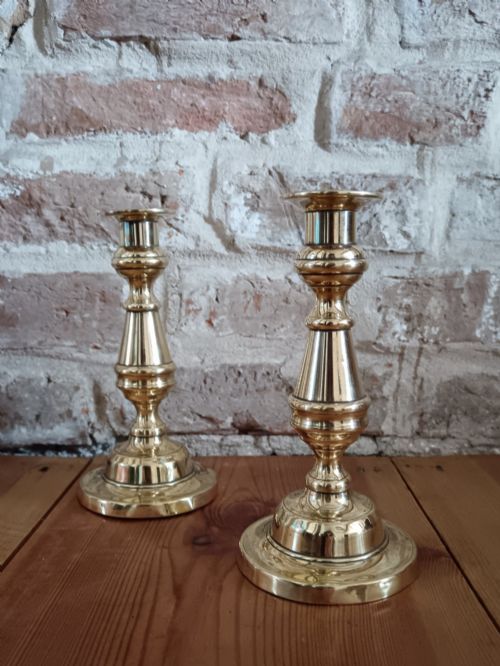
Brass examples dominate the selection, often featuring distinct octagonal or petal bases that ground the central baluster shaft. Alongside metal works, pieces emerge in copper, silver, pewter, bronze, and turned lignum vitae treen, providing varied tactile qualities for domestic interiors.
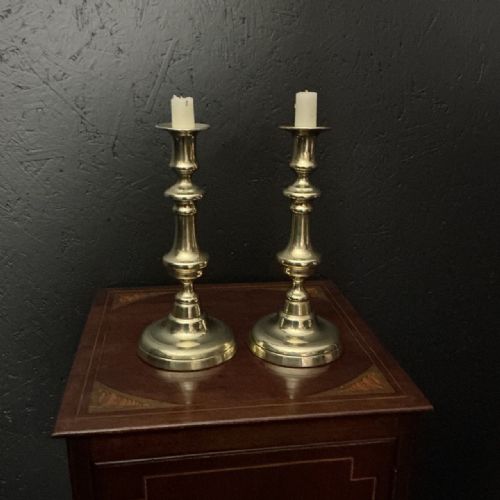
The most common formats on this page are pairs, though single surviving items and larger sets also appear. Makers varied from anonymous brass foundries to documented silversmiths working in London and Sheffield, encompassing genuine eighteenth-century productions alongside later nineteenth-century revivals.
Materials and construction methods
Metal candlesticks of this era typically rely on casting techniques, where molten brass, bronze, or silver poured into moulds created the hollow stems and heavy weighted bases. Seamed construction is common in early silver and brass work, where sheet metal was rolled and soldered or joined along a vertical line before finishing on a lathe.
Turned wooden pieces utilise dense timbers such as lignum vitae, shaped entirely on a lathe to exploit the natural grain and weight of the material. Glass examples, such as hollow-stem blown glass pieces, require skilled manipulation of molten metal to achieve the characteristic swelling baluster profile.
A single lone glass stem survives from the early nineteenth century, proving that even fragile materials occasionally outlast their heavier metal cousins.
Factors separating the finest examples
Quality rests upon the crispness of the casting and the integrity of the original components, where sharp mould lines and well-defined facets reveal superior craftsmanship. Heavy gauge metal and balanced proportions indicate better workshops, whereas worn details or heavy polishing can obscure the original profile.
The presence of matching pairs, original ejector mechanisms, and intact hallmarks on silver pieces elevate the standing of a candlestick. Surface patination, untouched by over-cleaning, retains the character acquired through centuries of domestic use.
David Green·James Dixon & Sons·J.T. & Co
The Georgian Baluster Candlestick Glossary
- Baluster
- A moulded column with a swelling profile that tapers towards the top and bottom. This architectural form provides stability and visual weight to the stem of the candlestick.
- Ejector
- A concealed internal mechanism operated by a slide on the stem to push out the remaining candle stump. It is frequently found on nineteenth-century brass examples.
- Treen
- Small handmade wooden household objects turned on a lathe. Lignum vitae treen candlesticks showcase the dense grain and rich colour of the timber.
- Britannia Standard
- A higher grade of silver purity introduced by English law in 1697, containing ninety-five point eight percent pure silver. Items from this standard often bear the maker mark of silversmiths such as David Green.
- Petal Base
- A moulded foot shaped like overlapping flower petals, commonly seen on brass candlesticks from the early eighteenth century. This design adds both decorative flair and a wider footprint for stability.
Georgian Baluster Candlestick: Frequently Asked Questions
How do I clean an antique brass candlestick?
Maintenance requires gentle dusting and occasional wiping with a soft cloth to preserve the natural patinated surface accumulated over centuries. Avoid harsh chemical cleaners that strip away the aged character and original colour of the metal.
For silver items, use a specialist silver cloth rather than liquid dips to protect any engraved details or maker marks from abrasive wear.
What is a taperstick?
A taperstick is a smaller version of a standard candlestick, designed specifically to hold thin wax tapers used for melting sealing wax on correspondence. These miniature pieces mirror the baluster forms and moulded bases of their larger counterparts.
Collectors often group tapersticks with standard candlesticks for display on desks and writing tables.
Are these candlesticks safe to use with modern candles?
Most antique sockets accommodate standard taper candles, though slight variations in manufacture mean a snug fit is not guaranteed. Checking the base diameter ensures stability before lighting.
Using dripless candles or small candle rings helps protect the antique metal or wood surface from wax spillage during use.
How do I distinguish eighteenth-century brass from later copies?
Early brass production often involves distinct casting flaws, file marks, and multi-piece construction joined by internal threading or brazing. The weight distribution and hand-finished details differ visibly from later mass-produced Victorian or twentieth-century reinterpretations.
Examining the base and interior surfaces reveals the working methods of the period, confirming whether the piece aligns with early production techniques.